Pager Codes: 15 Secret 90s Beeper Messages Decoded
By 1994 there were more than 61 million pagers clipped to belts and stuffed in backpacks around the world, and not one of them could send a single letter of the alphabet. That limitation didn’t kill the pager — it turned an entire generation into amateur cryptographers. A screen that showed nothing but digits forced teenagers, drug dealers, doctors, and lovesick 14-year-olds to invent a shared code out of thin air, and most of us still remember our favorites decades later.
What Were Pager Codes?
Pager codes were the shorthand people used to send real messages through a device that could only receive numbers. A beeper had no keyboard, no letters, and usually a screen barely wide enough for ten digits. When your pager buzzed, all you got was a string of numbers — normally a callback phone number — and you were expected to find a phone and call it back. Codes filled the gap between “someone wants me” and “here’s what they actually mean.”
The genius of it was that the whole system ran on numbers you already understood. A phone number told you who paged you. A short code tacked onto the end told you why. Your mom might send her work number followed by 911, and you’d know to sprint to the nearest payphone. Your girlfriend might send her number followed by 143, and you’d float there instead.
The Retro Almanac
A monthly roundup of "on this day" highlights from that month, decades back — plus first dibs on new retro merch drops. No spam, just the good stuff.
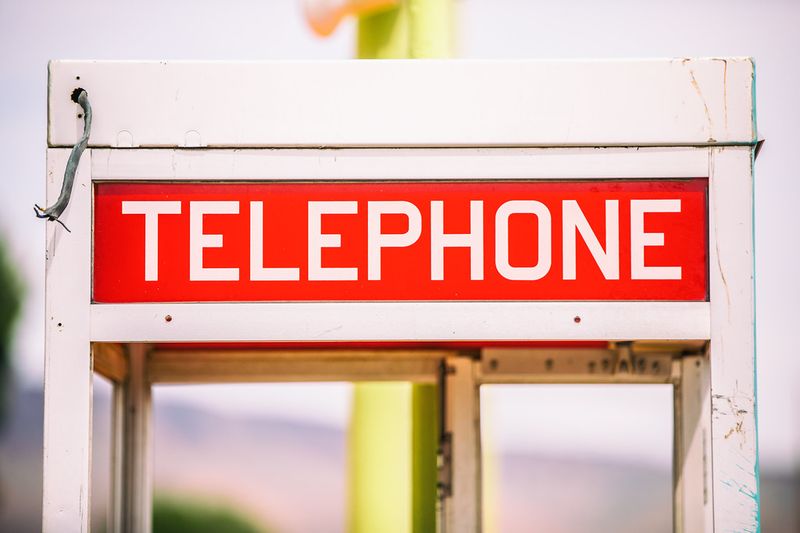
The phone booth was command central — where a buzzing pager code turned into an actual conversation.
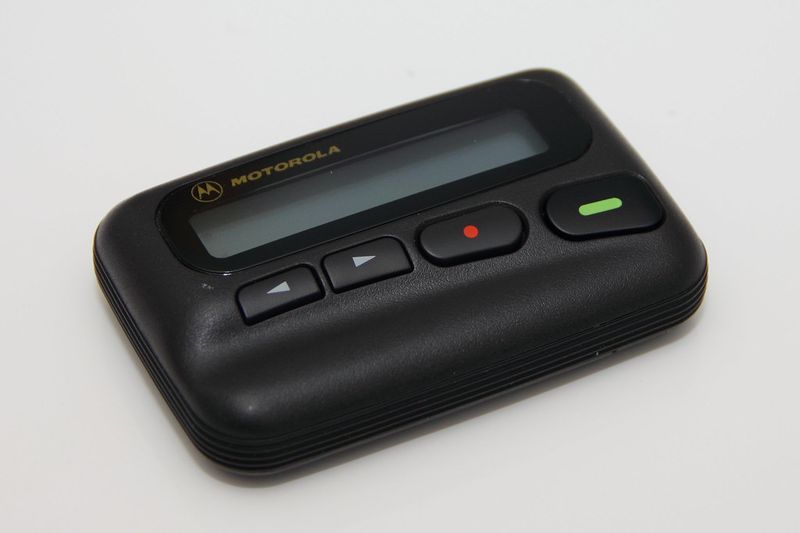
A basic numeric Motorola beeper — the digital-only screen that made pager codes necessary.
How Pager Codes Actually Worked
Two methods did most of the heavy lifting, and they were completely different in spirit. The first was practical and quiet. The second was pure playground genius.
Method one was letter counting. You spelled a phrase by counting the letters in each word and stringing the totals together. “I love you” becomes 1-4-3: one letter, four letters, three letters. “Always and forever” turns into 637. It only worked for phrases both people had already agreed on, which is exactly why it felt like a secret handshake. If you didn’t know 143 meant “I love you,” it was just a random number. If you did, it was a heartbeat.
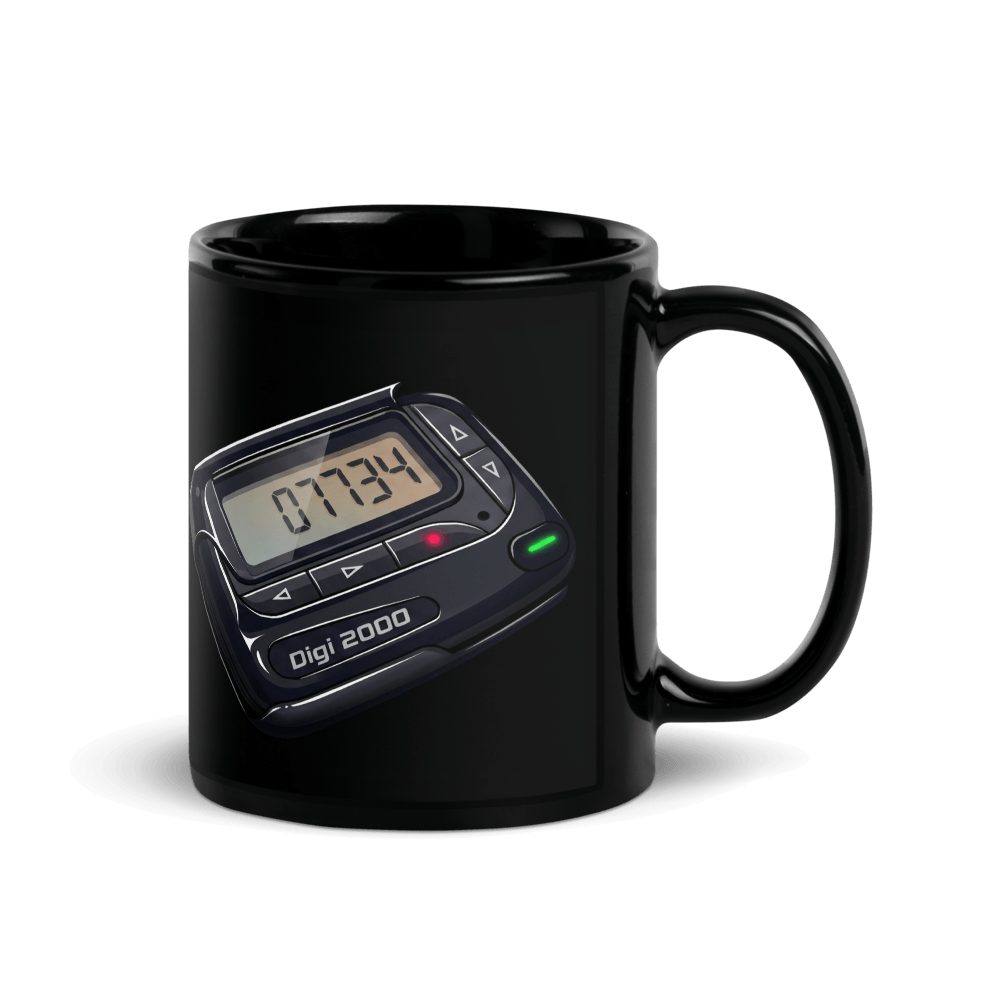
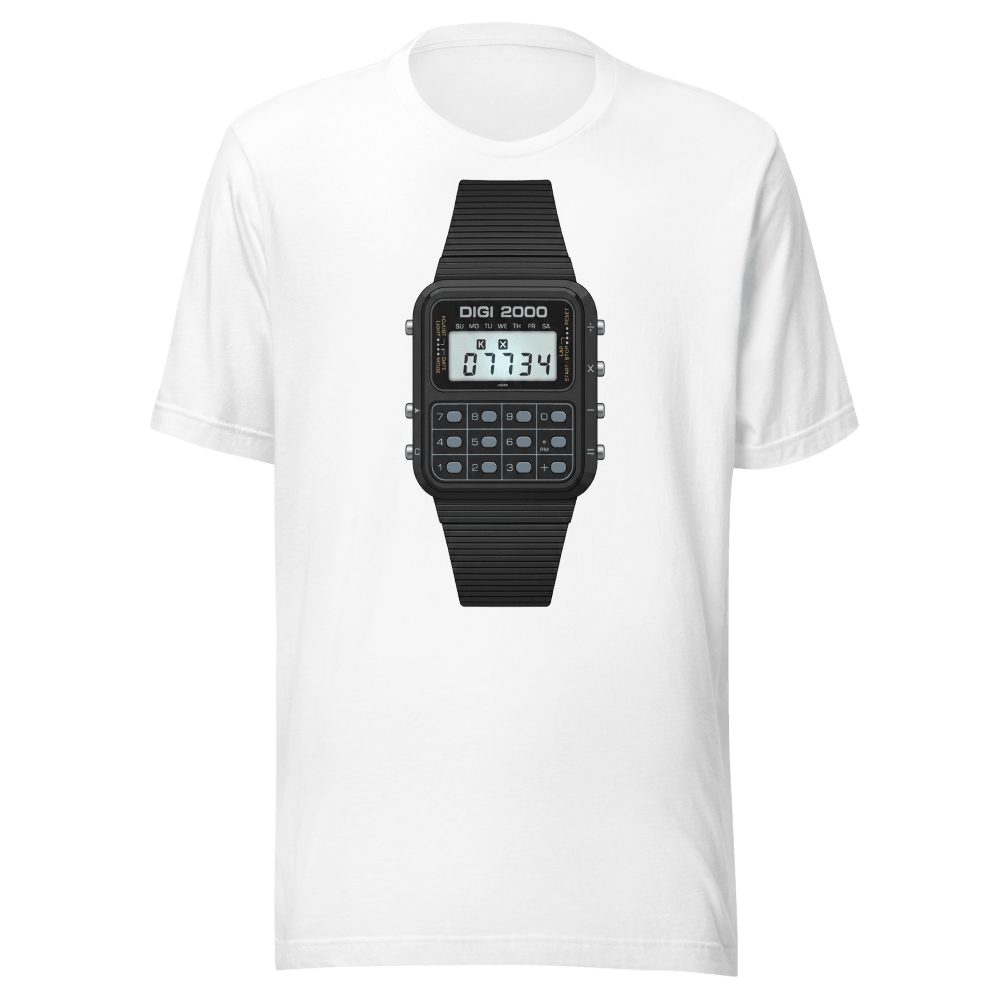
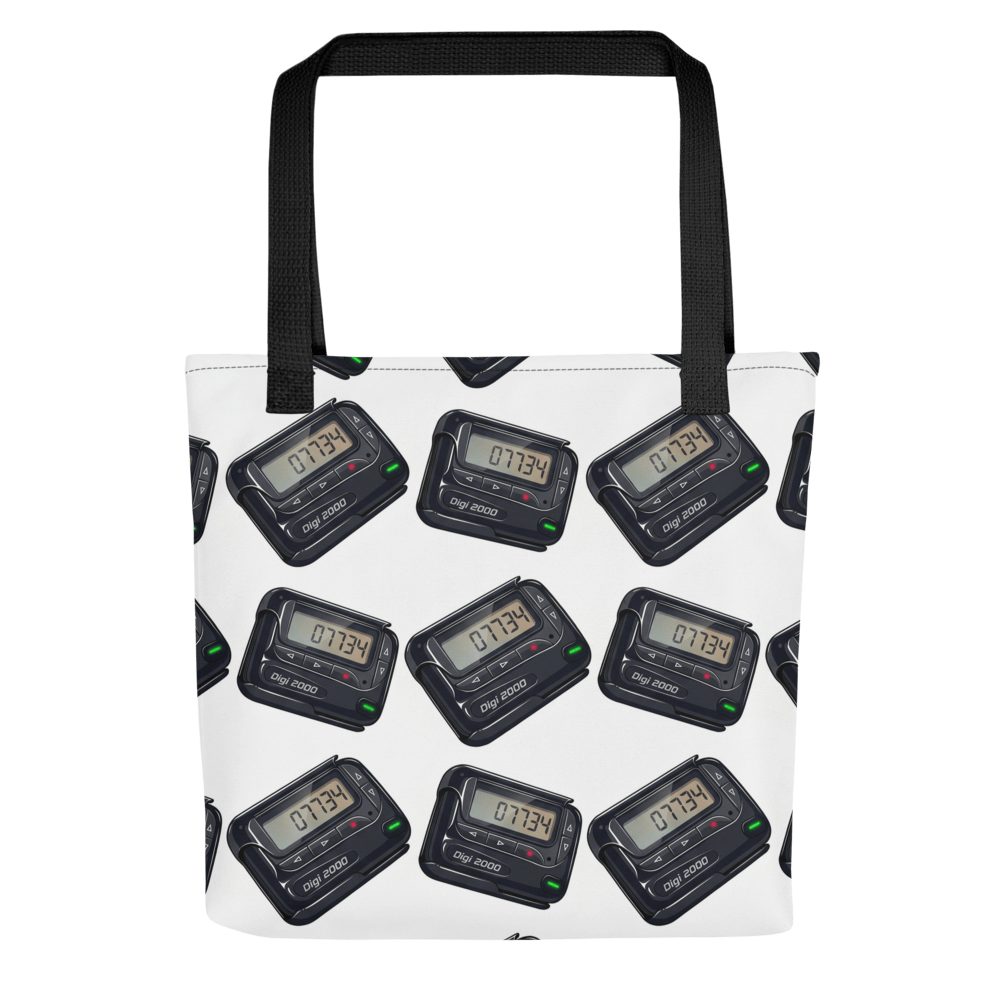
Method two was the upside-down calculator trick, the same one kids used to spell “BOOBLESS” on a math test. Because a seven-segment display renders numbers as blocky shapes, flipping the pager 180 degrees turns digits into rough letters — 0 becomes O, 7 becomes L, 4 becomes h, 3 becomes E. Type 07734, flip your beeper over, and it reads “hELLO.” This is the trick that gave us one of the most beloved codes of the entire decade.
The 15 Pager Codes Everyone Knew
Some codes were regional, some were personal, and a handful were universal enough that you could send them to a stranger and get understood. Here are the ones that defined beeper culture, sorted from sweet to shady.
- 143 — I love you (1, 4, and 3 letters). The undisputed king of pager codes.
- 07734 — Hello. Flip the pager over to read it.
- 911 — Emergency, call me right now. No decoding required.
- 411 — Give me the info / what’s the word, borrowed from the directory-assistance number.
- 187 — Danger or a threat, lifted from the California penal code for homicide.
- 831 — I love you, a second way: 8 letters, 3 words, 1 meaning.
- 637 — Always and forever (6, 3, and 7 letters).
- 823 — Thinking of you.
- 121 — I need to talk to you, one on one.
- 20 — Where are you? Borrowed straight from CB radio’s “what’s your 20.”
- 1174 — Let’s party / meet up, often flashed before a night out.
- 143637 — I love you always and forever, the two romantic codes fused into one.
- 420 — Let’s meet up, with the not-so-secret second meaning.
- 6969 — You can probably figure that one out yourself.
- 88 — Hugs and kisses, or simply “bye for now.”
Notice how many of these are about love. Pagers landed right in the hands of teenagers, and teenagers had a lot to say and no privacy to say it. A three-digit code you could fire off from a school payphone between classes was the closest thing 1996 had to a text message.

A lineup of Motorola pagers — Minicall, Bravo Express, and friends — each one a tiny screen full of coded numbers.
07734 and the Upside-Down Calculator Trick
If letter-counting was the poetry of pager codes, the upside-down method was the comedy. It leaned on the exact same seven-segment display that powered calculator watches and pocket calculators, which is why anyone who ever spelled a rude word in math class already knew the alphabet. The vocabulary was limited — you could reliably make O, I, E, h, S, L, g, B, and Z — but that was enough for “hello,” “boo,” “hi,” and a few words your parents wouldn’t approve of.
07734 became shorthand for the whole era. It shows up on merch, in nostalgia reels, and in the memory of anyone who ever flipped a beeper to make it say hi. It’s a perfect little artifact of a time when the technology was dumb and the people using it were endlessly clever.
Why 143 Became the Most Famous Code of All
Plenty of codes came and went, but 143 stuck. It survived the pager, jumped to early cell phones and instant messenger away messages, and it still turns up in text threads today. Mister Rogers used to point out that 143 was his lifelong reminder of “I love you,” and he reportedly kept his weight at 143 pounds because of it — the code was bigger than the hardware that birthed it.
The reason it lasted is simple: it was easy, it was sweet, and it was deniable. You could send 143 to someone you were too shy to actually call, and if they didn’t feel the same way, well, it was only a number. That plausible deniability made it the perfect first move for a generation of nervous teenagers, and it’s why 143 outlived the beeper by thirty years and counting.
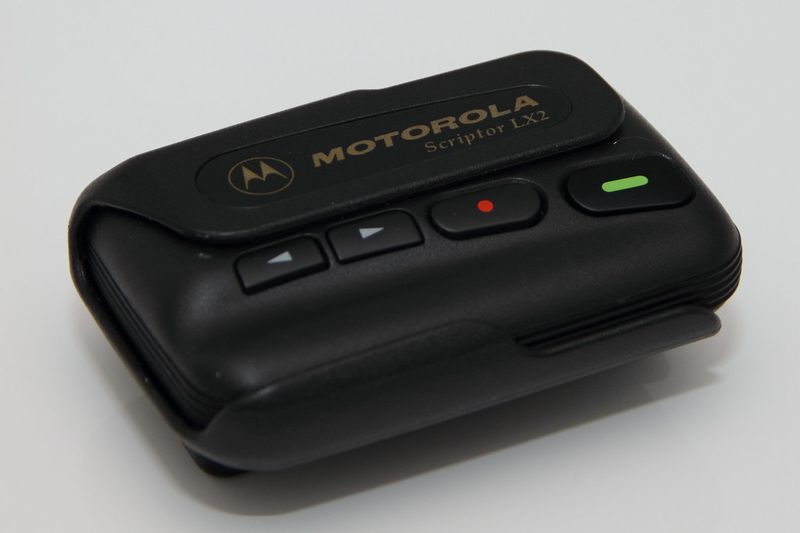
The Motorola Scriptor LX2, a workhorse beeper that buzzed with codes all through the 90s.
The Darker Codes: 187, 411, and Street Slang
Not every code was a valentine. Pagers were the communication tool of the early hip-hop and street economy, and the code vocabulary reflected that. 187 — the California penal code section for murder, immortalized by Dr. Dre’s “Deep Cover” — became shorthand for a threat. 5-0 warned that police were around. Numbers stood in for quantities, prices, and meeting spots, which is exactly why beepers got a reputation in the news as “drug dealer devices” and why some schools banned them outright in the early 90s.
That reputation was mostly unfair. The overwhelming majority of pagers were carried by doctors on call, delivery drivers, parents, and kids who just wanted their friends to page them back. But the codes did double duty, and part of what made them feel so cool to a teenager was that whiff of danger — the sense that you were speaking a language adults couldn’t read over your shoulder.
How You Actually Sent a Pager Code
Here’s the part that sounds absurd now. To send someone a code, you first had to find a phone — ideally a payphone, since you were out in the world when the urge struck. You’d dial the person’s pager number, wait for the beep or the automated prompt, then punch in the digits you wanted to appear on their screen, usually followed by the pound key. Seconds later, across town, their beeper buzzed and lit up with your message.
If you wanted a callback, you entered your own number. If you wanted to say “I love you,” you entered 143. And if the payphone ate your quarter, you started over. There was a real physical ritual to it — hunting for a phone, digging for change, memorizing codes because you couldn’t look them up. That friction is exactly what made a returned page feel like it mattered.
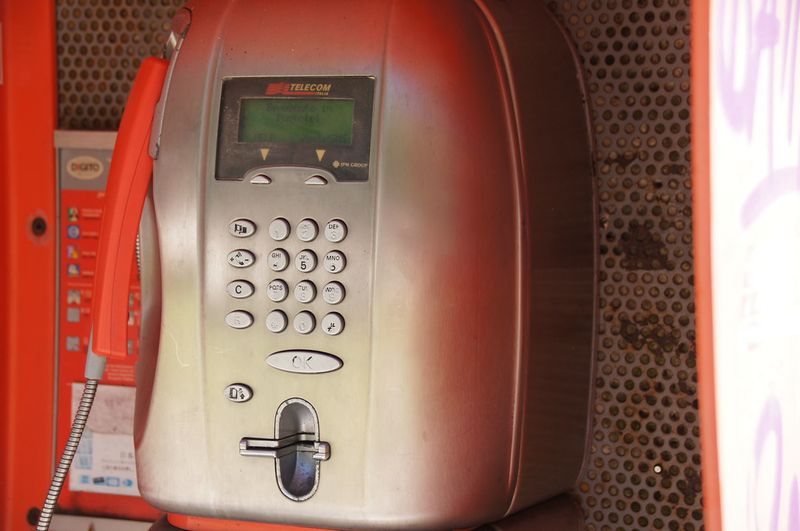
The other half of the system: a payphone keypad, where you’d punch in your callback number and your code.
What Pagers Looked Like — and Why Collectors Still Want Them
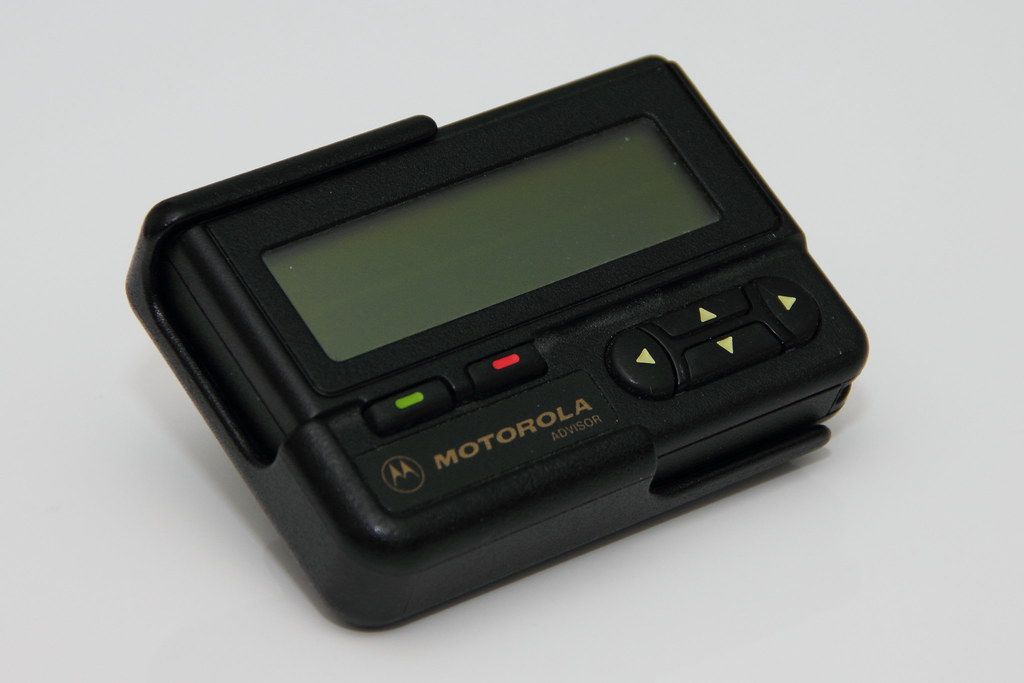
The hardware was as much a part of the culture as the codes. Motorola dominated with models like the Advisor, the Bravo Express, and the Scriptor, and the color of your beeper said something about you. A see-through blue or purple clear-plastic pager was a status symbol on a middle-school hallway. Doctors carried plain black. The cool kids wanted the smallest one that still had a backlight.
Today those same devices sell to collectors and prop houses, and a working 90s Motorola pager can fetch more than it cost new. Part of that is nostalgia, part of it is that a single-purpose gadget with a two-week battery life feels almost radical in an age of always-on phones. There’s something appealing about a device that could do exactly one thing and do it for a fortnight without a charge.
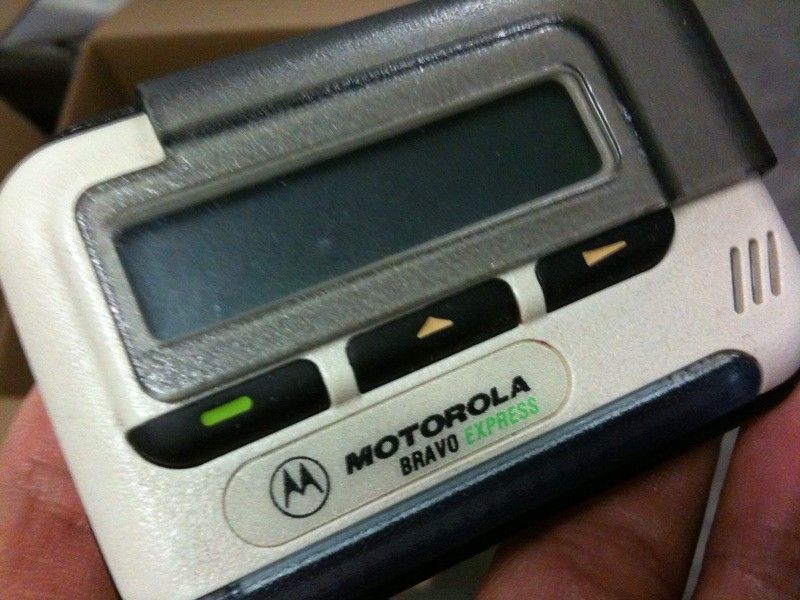
A Motorola Bravo Express in the palm — the exact object millions of us checked a hundred times a day.
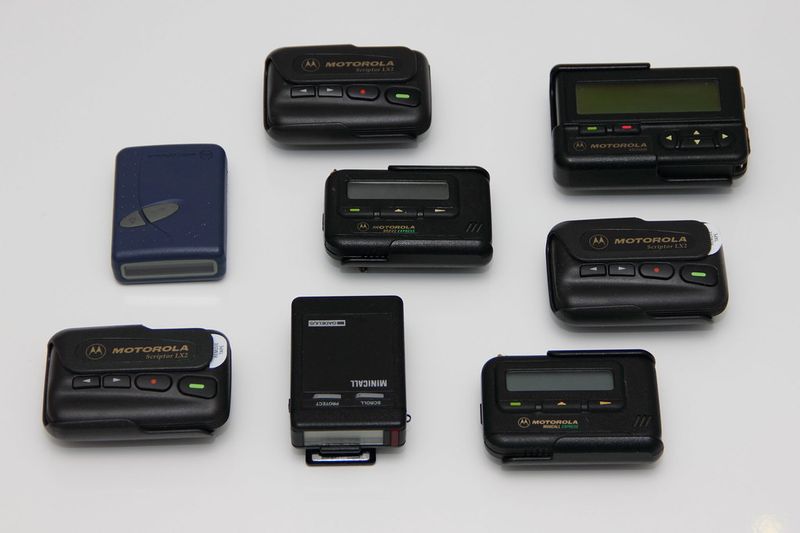
A collector’s spread of 90s beepers — the kind of hardware that turned pager codes into a language.
Whatever Happened to Pager Codes?
Text messaging killed the pager code, and it did it fast. Once phones could send actual words, there was no reason to count letters or flip your screen upside down. But the instinct never died — it just changed clothes. LOL, BRB, and 143 all come from the same place: a tiny screen, a slow input method, and people who would rather be clever than type the whole thing out. Every abbreviation in your phone right now is a descendant of a beeper code.
Pagers themselves never fully disappeared, either. Hospitals still lean on them because they work when cell networks are jammed, and restaurants hand you a buzzing puck that is, functionally, a one-message pager. But the codes — the secret romantic math of 143 and the upside-down joke of 07734 — belong to the 90s, and they’re one of the warmest artifacts that decade left behind. If you carried a beeper, you already know what 143 means. And you probably still smile when you see it.
Want more on the little gadgets that ran our lives before smartphones? Dig into the full rise and fall of the beeper, the strange world of 1-900 numbers and party lines, and how 90s internet culture finally connected us all.
Sources
- PagerCodes.com — List of Common Pager (Beeper) Codes — reference list of widely used numeric codes.
- Retrowave — Vintage Pager Codes: The Original Secret Agent Texting — history of code methods and culture.
- Rice2k — Retro Pager Codes & 1990s Beeper Decoder — decoder and letter-count explanations.
- Wikipedia — Pager — technical background and adoption figures.
Browse retro and vintage-inspired apparel at the RetroRadical shop →
The Retro Almanac
A monthly roundup of "on this day" highlights from that month, decades back — plus first dibs on new retro merch drops. No spam, just the good stuff.