Menace II Society 1993: 9 Reasons This Hood Film Still Hits
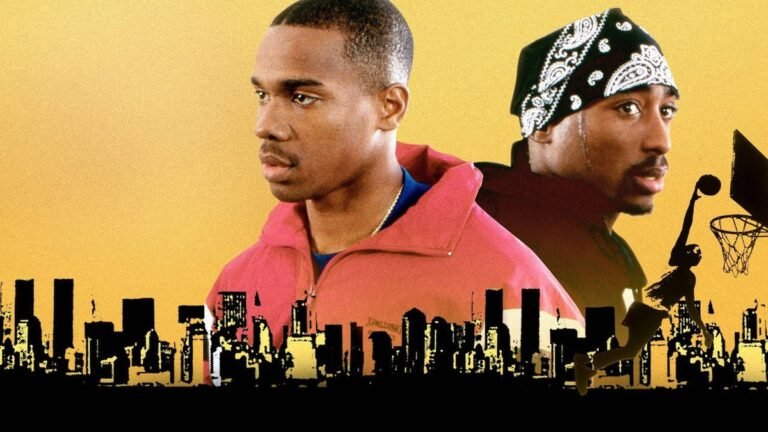
Menace II Society opens with a Korean liquor store owner saying “I feel sorry for your mother.” Forty-seven seconds later, both shopkeepers are dead. That cold open — written, shot, and cut by two 20-year-old twins from Detroit — announced the arrival of a sharper, meaner hood film than anything Hollywood had served before. Hughes Brothers debut. Larenz Tate’s grin. A movie that arrived two years after Boyz n the Hood and refused to soften a single edge.
Released by New Line Cinema on May 26, 1993, Menace II Society grossed $27.9 million on a $3.5 million budget and earned the Hughes Brothers an MTV Movie Award for Best New Filmmaker. More than three decades on, it still tops “greatest hood movies” lists. Here are nine reasons why this 1993 classic refuses to age out.
The Retro Almanac
A monthly roundup of "on this day" highlights from that month, decades back — plus first dibs on new retro merch drops. No spam, just the good stuff.
1. The Opening Scene Set a New Bar for Hood Films
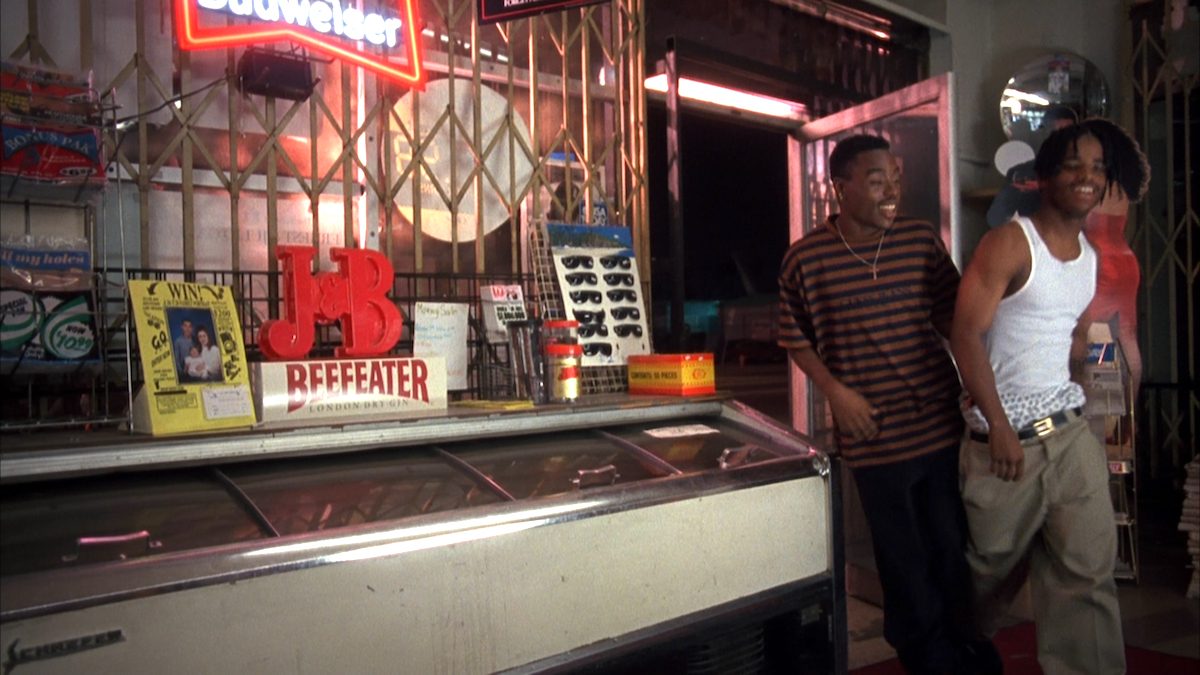
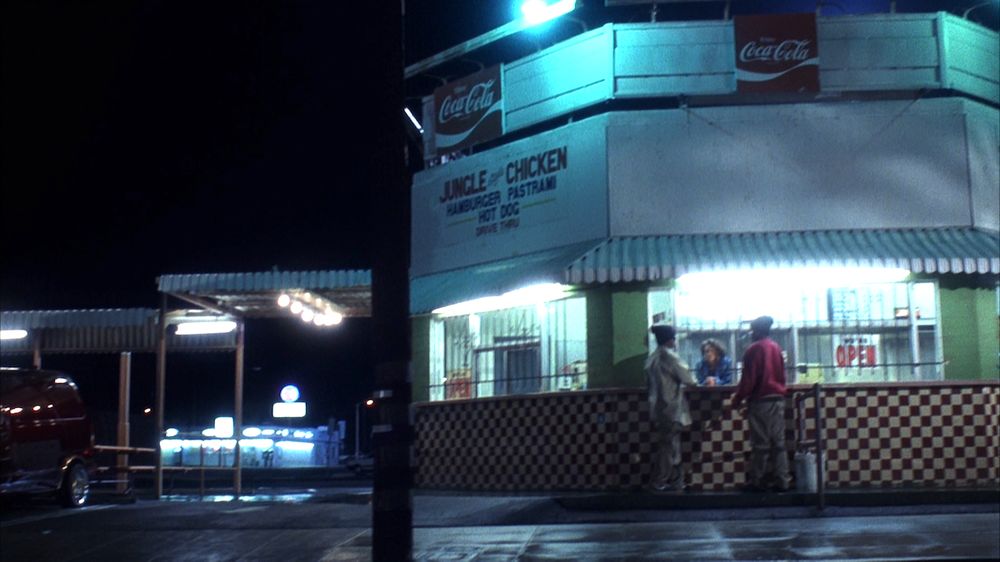
The first three minutes of Menace II Society remain one of the most jarring openings in early-90s American cinema. Caine (Tyrin Turner) and O-Dog (Larenz Tate) walk into a corner store for a beer. The Korean owner mutters under his breath. O-Dog escalates. Within seconds, two people are bleeding on the floor and O-Dog is rewinding the security tape so he can show it to friends. Roger Ebert called it “the most powerful sequence in the film” — and the film is two hours long.
The Washington Post revisited the scene in 2018 and noted that audiences who first saw it in 1993 reported physical reactions: gasps, walkouts, total silence. The Hughes Brothers shot it without music. Just bad fluorescent light and the squeak of bullet casings on linoleum. Nobody warned the audience. That was the point.
2. The Hughes Brothers Were 20 Years Old When They Made It
Albert and Allen Hughes — twins from Pomona, California — were 20 when they finished editing Menace II Society. Twenty. They’d been making short films since they were 12, paid for by their mother Aida, who fronted them money for a VHS camcorder. By 1989 they were directing music videos for Tone Lōc and Tupac. By 1991 they had a script by Tyger Williams (also in his early twenties) and a $3.5 million green light from New Line.
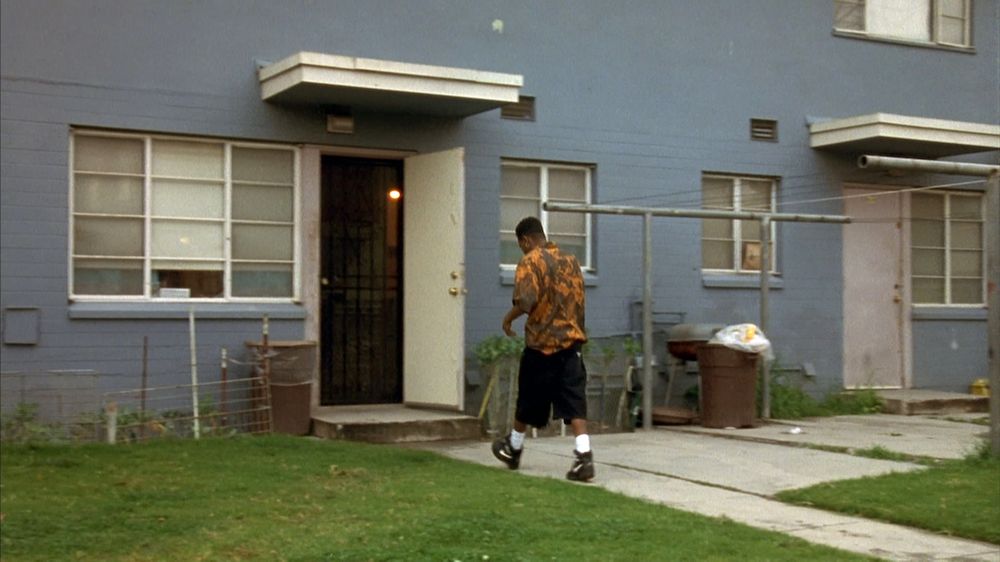
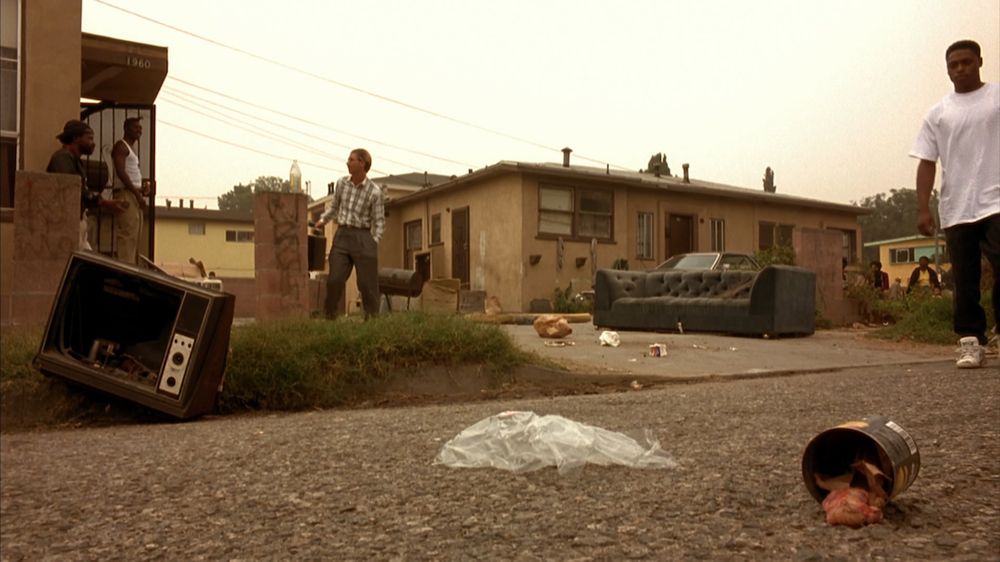
What’s wild isn’t just their age. It’s that they shot most of the film in Jordan Downs, the Watts housing project where real residents — many of them gang-affiliated — served as background extras and consultants. The Hughes Brothers paid local Crips and Bloods to keep the set safe. The reciprocal arrangement: nobody got shot during a 42-day shoot. Compare that to Singleton, who had LAPD escorts for Boyz n the Hood. The Hughes approach was riskier and gave the film its documentary edge.
3. Larenz Tate’s O-Dog Stole the Whole Movie
Tate was 17 when he auditioned. He’d grown up middle-class in suburban Chicago, raised on theater. The producers wanted somebody from the streets. Tate read for O-Dog — the wild-card sociopath who films murders, gets high at funerals, and laughs through everything — and the room went quiet. He booked it that day.
O-Dog became one of the most cited screen villains of the decade. Tupac referenced him on All Eyez on Me. Director Quentin Tarantino put Tate on a shortlist for Pulp Fiction on the strength of this single role. The grin Tate flashes after the liquor store killing — that’s the thing nobody can shake. He plays joy where you expect remorse, and that imbalance is what makes the character terrifying.

4. The Soundtrack Was a Who’s Who of West Coast Rap
The Menace II Society soundtrack went platinum within three months. MC Eiht’s “Streiht Up Menace” — written for Caine’s character — became the film’s defining anthem and reached #16 on Billboard’s R&B chart. Spice 1 contributed “Trigga Gots No Heart.” Too $hort, DJ Quik, and Pete Rock all delivered tracks. Even Pharcyde showed up.
The film essentially functioned as a feature-length music video for early-90s gangsta rap. That wasn’t accidental. The Hughes Brothers came from the video world and treated music as character. When MC Eiht’s track plays under Caine’s voiceover, you’re hearing the Watts that survived the riots a year earlier — angry, fatalist, beat-driven. The album sold 500,000 copies on the back of the film alone.
5. Samuel L. Jackson Owns His 90 Seconds of Screen Time
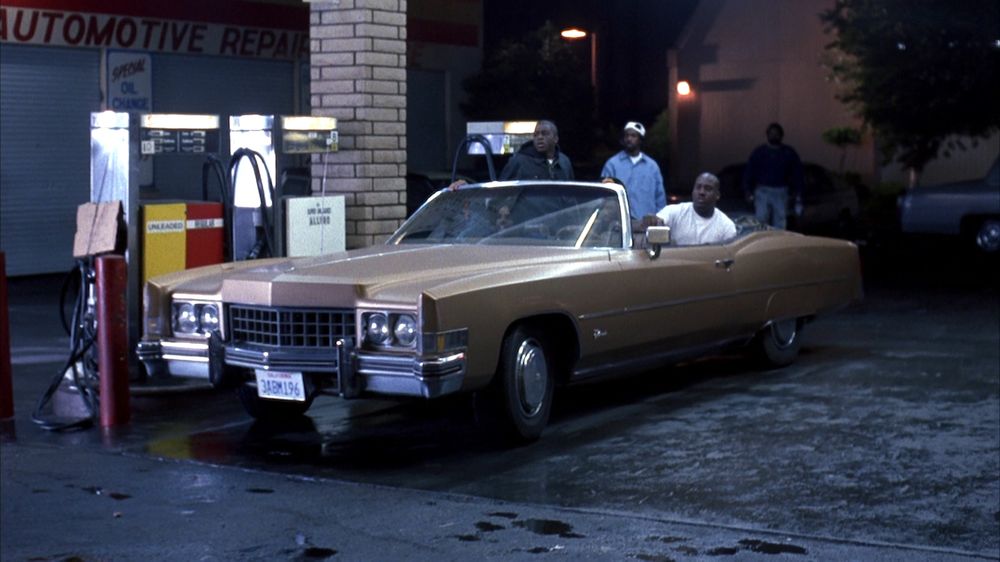
Jackson appears as Caine’s drug-dealing father in a single flashback scene at a card party. He’s on screen for roughly 90 seconds. He shoots a man in the chest for cheating at cards, then continues a conversation about his son. The scene is brutally quick and tells you everything you need to know about why Caine grew up the way he did.
This was 1993 Sam Jackson — pre-Pulp Fiction, mid-rebuild. He’d been sober for three years and was taking every role he could find. He’d already done Jungle Fever for Spike Lee, but Menace sits in a specific bracket: a string of supporting parts where Jackson keeps stealing scenes from leads who haven’t figured out their own characters yet. He shot the cameo in one day for scale.
6. Jada Pinkett’s Theatrical Debut Anchored the Film’s Heart
Pinkett plays Ronnie — Caine’s neighbor, single mother, and the closest thing he has to a way out. She’d come up on TV (A Different World) and this was her first feature. The character could’ve been thin; in Pinkett’s hands she’s the only adult voice in Caine’s life who isn’t drunk, dealing, or dead. When she tells him “you and your boys ain’t gonna be around forever” she’s not preaching — she’s reporting.
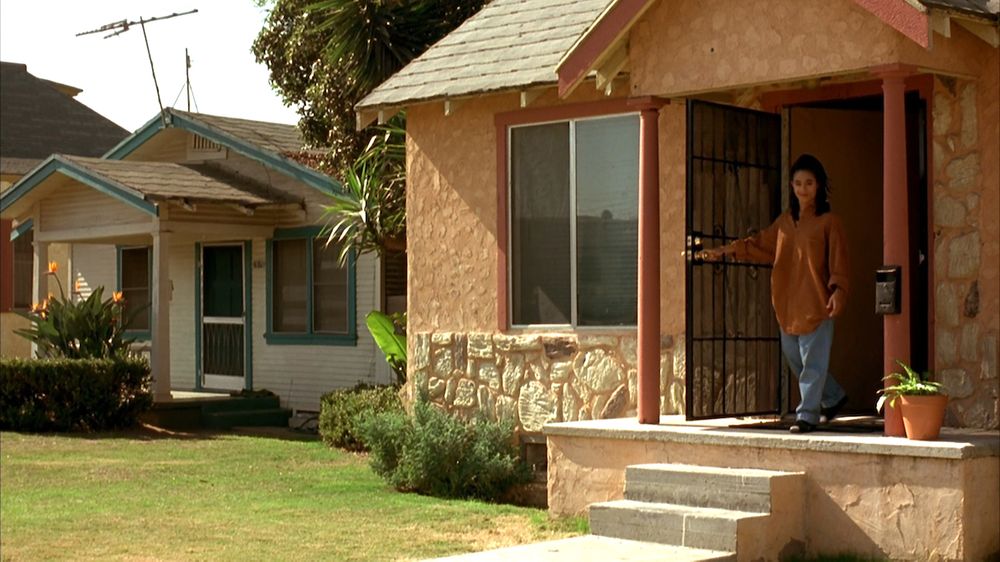
Pinkett’s screen test sealed her career. By 1995 she was in Demon Knight and Set It Off. By 1996 she was Mrs. Will Smith. None of that arc happens without Ronnie. The scene where she invites Caine to follow her to Atlanta and start over — that’s a real offer, and Caine’s hesitation is what makes the film’s ending land the way it does. Watch closely and you’ll see Pinkett doing things with her eyes most veteran actors save for the back third of a career.
7. The Hughes Brothers Almost Didn’t Get to Make It
The original script by Tyger Williams sat at New Line for nearly a year because no executive could agree the Hughes twins should direct. They had no feature credits. They were 19. New Line’s Bob Shaye reportedly told a development meeting “if you fire them off this, I’ll fire you” — but only after the brothers shot a six-minute proof-of-concept reel using $40,000 of borrowed money and footage they edited overnight in their mother’s house.
That reel survived. It’s screened occasionally at film schools. The opening sequence in the finished movie — Caine and O-Dog walking into the liquor store — is almost shot-for-shot the reel they used to convince New Line. Once Shaye green-lit them, he stayed out of the way. The Hughes Brothers got final cut at 20. That basically never happens.
8. The Critical Reception Surprised Everybody
Critics expected another Boyz n the Hood. They got something colder. Roger Ebert gave it four stars and called it “one of the year’s best films.” The New York Times’ Janet Maslin called the brothers “filmmakers of authority and feeling.” Even outlets that hated the violence — and many did — couldn’t dismiss the craft. The film holds an 84% on Rotten Tomatoes and 76 on Metacritic, both of which rank it above several Best Picture nominees from that year.
What separates Menace from the wave of hood films that followed — and there were many, most forgettable — is its refusal to moralize. John Singleton’s Boyz n the Hood had a clear moral spine: education, fatherhood, escape. The Hughes Brothers built a movie around the opposite premise: that the structures pulling Caine down aren’t ones a sermon can fix. Ebert noted the film “doesn’t preach; it shows.” That distinction is what makes it last.

9. The Ending Still Hurts 30 Years Later
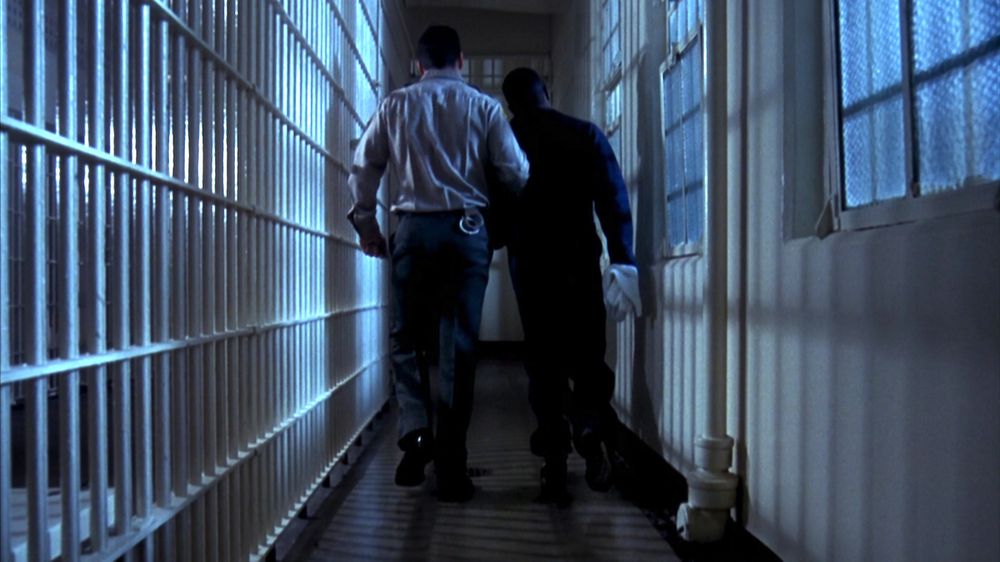
No spoilers in detail — but the closing minutes of Menace II Society remain one of the most devastating endings in 90s cinema. Caine has just decided to leave Watts. He’s packing the car. His voiceover starts laying out the future Ronnie has talked him into. And then the film does what it’s been threatening to do for two hours.
The ending works because the Hughes Brothers earned it. Every choice Caine makes through the film is set up by his environment, his father, his friends, his refusal to walk away from a kid who hits him in a parking lot. The final scene isn’t punishment for any single decision — it’s the bill arriving for all of them. Audiences in 1993 sat in stunned silence through the credits. Three decades later, the film still pulls that same reaction at the BFI Southbank, the Academy Museum, and Criterion’s recent restoration screenings.
Where Menace II Society Fits in the Hood Film Canon
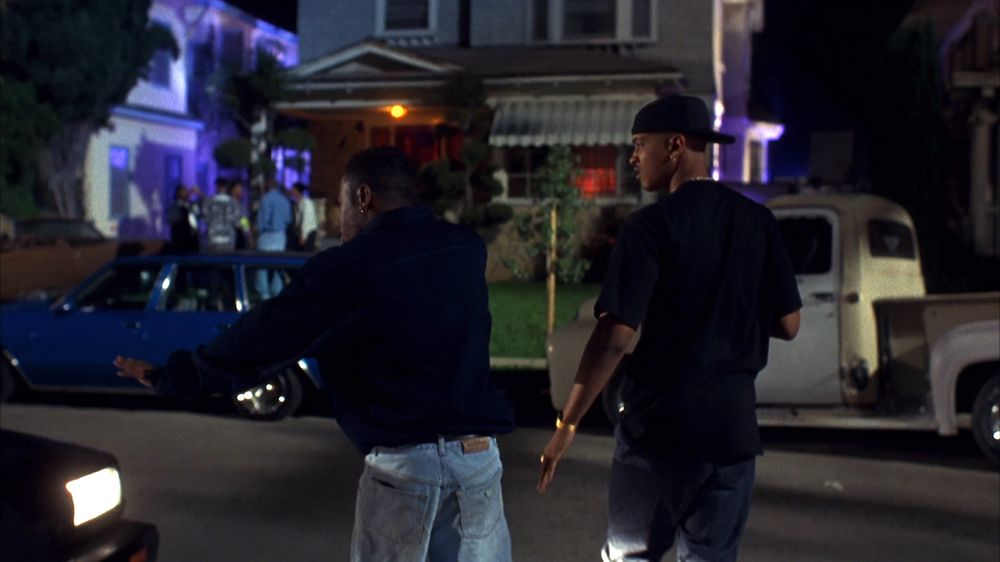
If Boyz n the Hood (1991) was the genre’s birth certificate and New Jack City (1991) was its commercial green light, Menace II Society is the entry that proved the form could be cinema with a capital C. It influenced everything that came after — Juice, Dead Presidents, Set It Off, even the early Safdie Brothers. The neon-soaked nighttime cinematography by Lisa Rinzler became a template hip-hop video directors borrowed for the rest of the decade.
The Hughes Brothers followed up with Dead Presidents in 1995 and From Hell in 2001. Neither hit the same. But Menace was always the high-water mark — a one-shot statement piece that captured a specific place at a specific moment with a clarity nobody since has matched. The Criterion Collection added it to their library in 2021. Watts changed. The film didn’t.
Watch the Original Trailer
Why Menace II Society Still Matters
Pop in the Criterion disc, watch the first liquor store sequence, and try to name three movies from 1993 that hit harder. You won’t get there. Schindler’s List won the Oscar. Jurassic Park printed money. The Fugitive did procedural better than anyone since. But none of them spoke to and about a generation of Black America the way the Hughes Brothers’ debut did. The film grossed $27.9 million in theaters; it has been streaming, screening, and selling on physical media nonstop ever since.
If you grew up in the early 90s and somehow missed it, fix that this weekend. If you’ve seen it five times, watch it a sixth — preferably the Criterion 4K restoration. And if you want to keep digging into the era that produced it, our breakdown of Dennis Hopper’s Colors (1988) traces the LA gang film back to its roots, and our piece on John Singleton’s Boyz n the Hood covers the film Menace was answering. The Hood Film canon runs through all three — and Menace II Society is the entry that pushed the form past coming-of-age into pure tragedy.
Sources
- Wikipedia — Menace II Society — production, cast, box office, and release history
- The Criterion Collection — Menace II Society — restoration notes and director commentary
- The Washington Post — The opening scene of Menace II Society still delivers a jolt — retrospective analysis 25 years on
- L.A. Taco — Photographing the Filming Locations of Menace II Society — location stills and present-day comparisons
- IMDb — Menace II Society (1993) — full cast, crew, awards, and production credits
- TV Tropes — Menace II Society — scene breakdowns and cultural references
- NPR — Allen and Albert Hughes 1993 interview — Hughes Brothers on directing at 20
Browse retro and vintage-inspired apparel at the RetroRadical shop →
Shop on Amazon
Retro Collectibles on Amazon →
As an Amazon Associate we earn from qualifying purchases.
Shop on eBay
Retro Collectibles on eBay →
We may earn a commission when you shop through our eBay links.
The Retro Almanac
A monthly roundup of "on this day" highlights from that month, decades back — plus first dibs on new retro merch drops. No spam, just the good stuff.