
How Three Cities Turned the 90s Into Rap’s Golden Age
For one impossible stretch between 1990 and 1999, it felt like every city in America was trying to reinvent rap at the same time. Turn on Yo! MTV Raps in 1993 and you might catch a grimy Staten Island crew, a Long Beach kid draped in Chuck Taylors, and a pair of Atlanta teenagers in bell-bottoms all in the same half hour — each of them convinced their block had cracked the code. That collision is exactly what people mean when they talk about the golden age of hip-hop. It wasn’t one sound or one scene. It was three regions elbowing each other for the crown, and the friction is what made the whole decade catch fire.
Hip-hop had already survived its awkward adolescence in the 80s. What changed in the 90s was ambition. The music got denser, the storytelling got sharper, and the stakes got real — platinum plaques, magazine covers, and a national argument about whose coast ran the game. This is the story of how New York, Los Angeles, and eventually Atlanta each built a sound of its own, and how their rivalry turned a genre into the defining pop culture of the decade.
New York Reloaded Its Golden Age
New York invented the culture, but by the early 90s it needed to prove it still owned it. It answered with one of the greatest three-year runs any city has ever put together. In 1993, a nine-man collective from Staten Island called Wu-Tang Clan dropped Enter the Wu-Tang (36 Chambers), a record that sounded like it was recorded in a boiler room and mixed on purpose to feel dangerous. RZA’s dusty, off-kilter beats and a rotating cast of MCs — Method Man, Ghostface Killah, Raekwon, GZA — made the whole thing feel like a movie you weren’t supposed to be watching.
The Retro Almanac
A monthly roundup of "on this day" highlights from that month, decades back — plus first dibs on new retro merch drops. No spam, just the good stuff.
Then 1994 arrived and raised the bar again. A 20-year-old from the Queensbridge projects named Nas released Illmatic, ten tracks of cinematic street poetry that critics still hold up as the most perfect rap album ever sequenced. The same year, a charismatic Brooklyn hustler named Christopher Wallace — the Notorious B.I.G. — turned his life story into Ready to Die, blending menace and pop instinct in a way that made the whole country pay attention. Add A Tribe Called Quest’s jazzy warmth and Mobb Deep’s ice-cold minimalism, and New York had rebuilt its golden age from the ground up.
The West Coast Answered With G-Funk
While New York doubled down on lyrical density, Los Angeles was chasing something the East Coast couldn’t touch: sunshine you could feel in the low end. Dr. Dre had already helped detonate the genre with N.W.A in the 80s, but in 1992 he walked away, co-founded Death Row Records, and released The Chronic. It was a sonic left turn — slow, funky, built on live basslines, whining synth leads, and the ghost of Parliament-Funkadelic. Dre called it G-funk, and it swallowed radio whole.
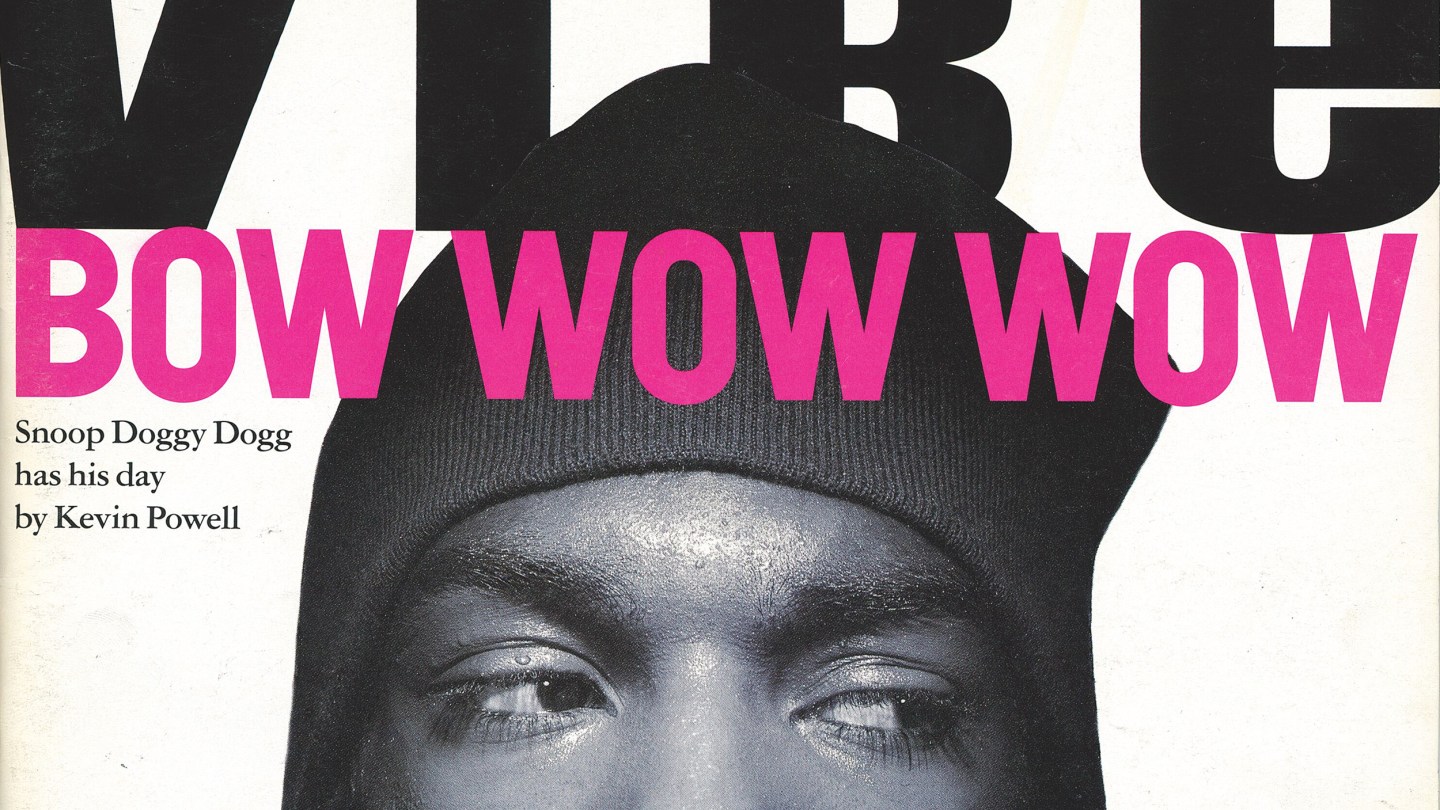
The album’s secret weapon was a rail-thin, honey-voiced Long Beach newcomer named Snoop Doggy Dogg, whose lazy, melodic flow sounded like nothing anyone had heard before. When Snoop’s own debut Doggystyle hit in 1993, it entered the charts at number one — the first debut album ever to do so. Suddenly the West Coast wasn’t the challenger; it was setting the pace. G-funk was on car commercials, in mall food courts, blasting out of every Jeep in America. The golden age of hip-hop now had two capitals, and they were watching each other closely.
Bad Boy, Death Row, and a Rivalry That Went Too Far
Every golden age has a shadow, and hip-hop’s arrived in the form of a feud that started as label competition and curdled into something far more serious. On the East Coast, a young executive named Sean “Puffy” Combs built Bad Boy Records into a hit factory, with the Notorious B.I.G. as his crown jewel and a glossy, sample-heavy sound engineered for the mainstream. On the West, Death Row’s Suge Knight ran his roster like a fortress, with Dre, Snoop, and — after his 1995 signing — Tupac Shakur out front.
Tupac was the decade’s most magnetic contradiction: a tender, revolutionary poet one minute and a snarling provocateur the next. His double album All Eyez on Me (1996) sold like a pop record while carrying the weight of a man who felt time running out. The press turned the Bad Boy–Death Row tension into a coast-versus-coast war, and interviews, diss tracks, and magazine covers poured gasoline on it. Then the tragedies came: Tupac was murdered in Las Vegas in September 1996, and Biggie was killed in Los Angeles six months later. Both were in their mid-twenties. The rivalry that helped define the era had taken its two brightest stars.
“Reality is wrong. Dreams are for real.” The line, often attributed to Tupac, became shorthand for an artist whose ambition outran the industry that surrounded him.
The losses forced the culture to grow up fast. The bicoastal shouting match that had powered so much great music suddenly looked like exactly what it was — a marketing narrative with real bodies attached. By 1998, the industry was quietly looking for a third way, and it didn’t have to look far.
Atlanta Crashed the Party
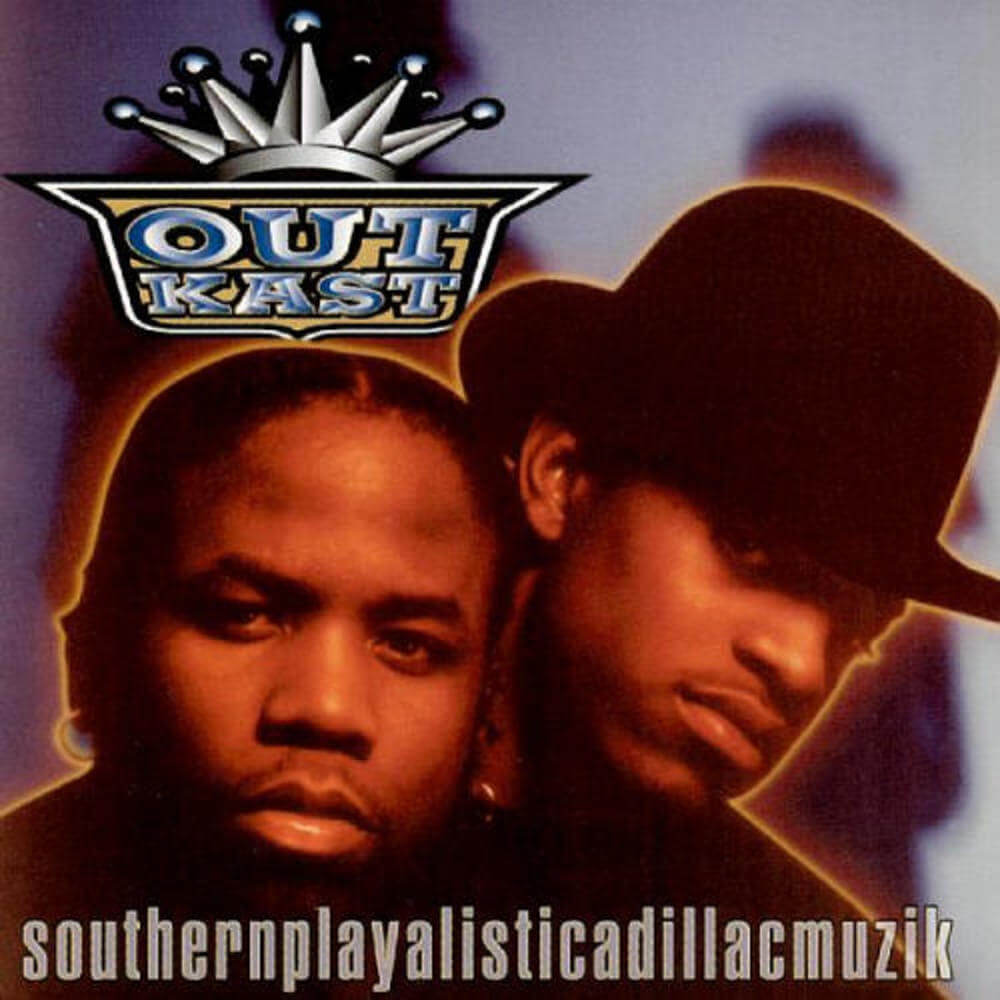
While New York and LA traded blows, the South had been building something the coasts ignored at their own peril. In 1994, two Atlanta teenagers named André Benjamin and Antwan Patton — OutKast — released Southernplayalisticadillacmuzik, a laid-back, live-instrument-driven record that announced Dirty South rap as a legitimate third pole. When André grabbed a Source Award in 1995 and told a booing New York crowd that “the South got something to say,” it wasn’t a boast. It was a forecast.
By the back half of the decade, the map had genuinely redrawn. Master P’s No Limit Records turned New Orleans hustle into a tank-logo empire, moving millions of units with almost no radio support. Cash Money Records, home to a teenage Lil Wayne, was right behind it. OutKast’s 1998 masterpiece Aquemini proved the region could out-art anyone. The golden age of hip-hop had started as a two-coast argument and ended as a genuinely national conversation — which is exactly why its influence spread so far.
Why the 90s Still Sound Golden
Nostalgia usually softens the edges of an era, but 90s hip-hop holds up because the competition was real and the standards were brutal. When Wu-Tang, Nas, Dre, and OutKast were all releasing generation-defining records within a few years of each other, nobody could coast. You either said something new or you got left behind. That pressure produced an absurd density of classic albums — the kind of run that, three decades later, still fills every “greatest of all time” list.
It also matters that the golden age was regional before it was global. Because New York, LA, and Atlanta each protected their own accent, the decade left behind a genuine variety of sounds rather than one homogenized formula. That’s why a 1994 Illmatic verse and a 1994 OutKast groove can both feel essential and sound nothing alike. The friction between cities didn’t dilute hip-hop — it multiplied it.
If you grew up taping songs off the radio and squinting at liner notes, the 90s weren’t just good music — they were a map of America told in beats and bragging rights. You can still hear it every time a modern artist borrows a G-funk synth, a Wu-Tang snarl, or a Dirty South bounce. Want to revisit the era for yourself? The classics are all still in print. Browse the golden-age catalog here and start with whichever coast raised you.
Sources
Browse retro and vintage-inspired apparel at the RetroRadical shop →
Shop on Amazon
90s Collectibles on Amazon →
As an Amazon Associate we earn from qualifying purchases.
Shop on eBay
90s Collectibles on eBay →
We may earn a commission when you shop through our eBay links.
The Retro Almanac
A monthly roundup of "on this day" highlights from that month, decades back — plus first dibs on new retro merch drops. No spam, just the good stuff.