
Best Seinfeld Episodes: 15 Funniest, Ranked
“The Contest” aired on November 18, 1992, never once said the word it was about, and still won a Primetime Emmy for its writing. That is the whole magic of Seinfeld in a single half hour — a show that turned a bet over self-restraint into network television’s most quoted episode without ever being explicit. Jerry Seinfeld and Larry David built 180 episodes out of waiting rooms, parking garages, and soup lines, and the best of them hold up better in 2026 than most comedies made last year. Here are the 15 funniest episodes, ranked, plus the characters and catchphrases that earned the show its second life in streaming reruns.
What Makes the Best Seinfeld Episodes So Rewatchable
The best Seinfeld episodes share one structural trick: four separate plots, one per character, braided so tightly that the ending pays off all of them at once. Larry David called it “no hugging, no learning,” and that rule is why the show aged so well. Nobody grows. Nobody apologizes. The petty stays petty.
Compare that to the sitcoms running beside it on NBC’s Thursday “Must See TV” block, most of which leaned on warm resolutions and a swelling music cue. Seinfeld refused both. The truth is, a lot of “classic” 90s comedy is unwatchable now because it stopped to teach you something — Seinfeld never did, and that is exactly why a 30-year-old episode about a missing car in a parking garage still lands.
The Retro Almanac
A monthly roundup of "on this day" highlights from that month, decades back — plus first dibs on new retro merch drops. No spam, just the good stuff.

The 15 Best Seinfeld Episodes, Ranked
This ranking weighs three things: how often the episode gets quoted, how cleanly its plots converge, and whether it produced a phrase that escaped the show entirely. Season and original air date are noted for each.
1. The Contest (Season 4, 1992)
The gang bets on who can go longest as “master of their domain.” It is the cleanest example of the show’s discipline: a premise the network was terrified of, executed entirely through euphemism. Julia Louis-Dreyfus reportedly fought to be included in the bet, and the episode is sharper for it. If you show one episode to a newcomer, show this one.
2. The Soup Nazi (Season 7, 1995)
“No soup for you!” entered the language because of Larry Thomas’s seven minutes of screen time here. The gang becomes obsessed with a brilliant, tyrannical soup vendor, and Elaine’s refusal to follow his ordering rules costs everyone. Thomas earned an Emmy nomination for a guest role most actors would have played too broad — he played it deadly serious, which is why it works.
3. The Marine Biologist (Season 5, 1994)
George pretends to be a marine biologist to impress a woman, then gets called to save a beached whale. His closing monologue — “the sea was angry that day, my friends” — ties into a Kramer subplot about hitting golf balls into the ocean in a way you do not see coming until the final line. It is the single best example of Seinfeld’s converging-plot structure.
4. The Comeback (Season 8, 1997)
George spends an entire episode crafting the perfect retort to an insult he already lost — “Well, the jerk store called, and they’re running out of you.” The petty obsession is the whole joke, and Jason Alexander makes George’s wounded pride feel genuinely heroic. Anyone who has thought of the right comeback an hour too late owns this episode.
5. The Opposite (Season 5, 1994)
George decides that every instinct he has is wrong, so he starts doing the exact opposite — and his life immediately improves. He gets a girlfriend, a Yankees job, and self-respect, all by ignoring himself. Meanwhile Elaine’s life collapses in perfect inverse. It is the closest the show ever came to a thesis statement about its own worldview.
6. The Hamptons (Season 5, 1994)
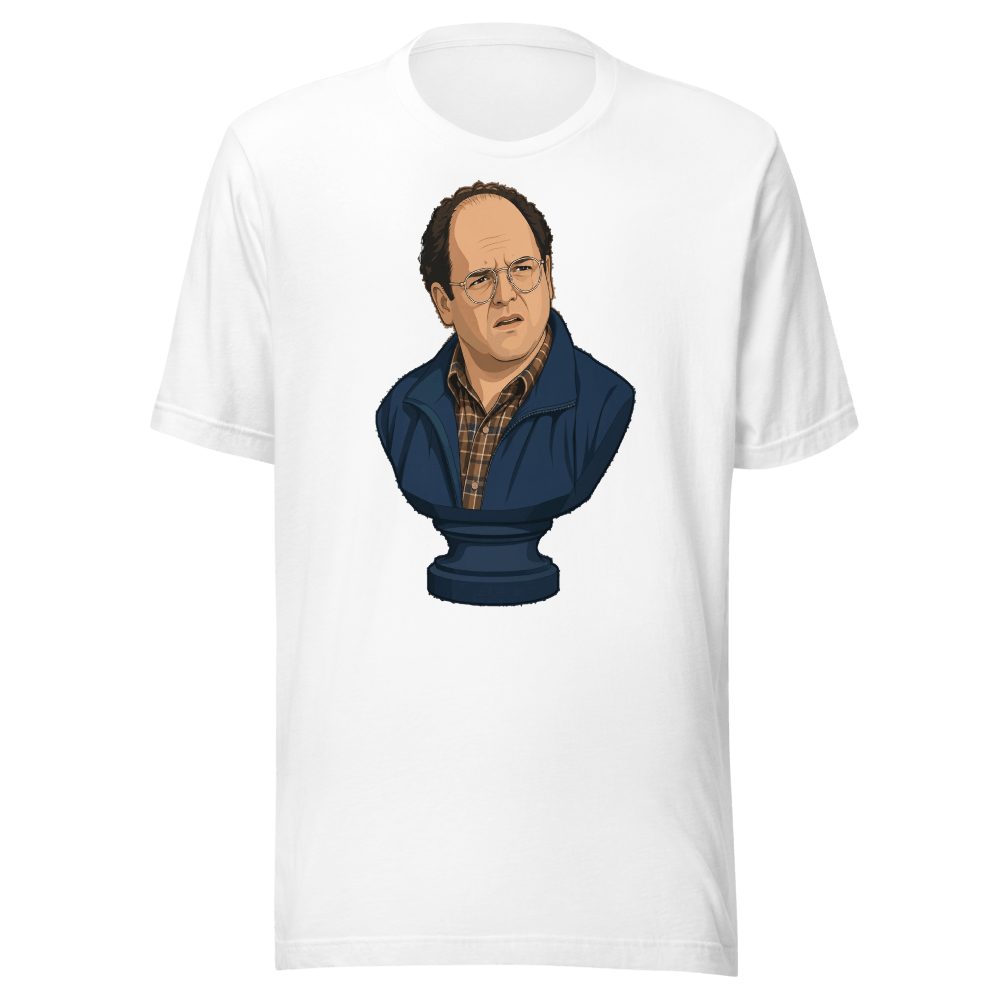
This is the “shrinkage” episode, and it is also the one that gave us “she’s giving me the big head.” A weekend trip turns into a series of small humiliations, capped by George being caught in an unflattering moment after a swim. The vocabulary it added to dating conversations alone earns its spot.
7. The Junior Mint (Season 4, 1993)
Jerry and Kramer watch a surgery from the observation deck, drop a Junior Mint into the open patient, and the patient recovers anyway. “Who’s gonna turn down a Junior Mint? It’s chocolate, it’s peppermint, it’s delicious.” Jerry’s inability to remember a girlfriend’s name — it rhymes with a body part — runs underneath the whole thing.

8. The Puffy Shirt (Season 5, 1993)
Jerry agrees to wear a ridiculous pirate shirt on national TV because he could not hear Kramer’s “low talker” girlfriend say so. “But I don’t wanna be a pirate!” The actual shirt now lives in the Smithsonian’s National Museum of American History, which tells you how far this one traveled past the screen.
9. The Outing (Season 4, 1993)
A reporter overhears Jerry and George and assumes they are a couple. Their frantic denials birthed “not that there’s anything wrong with that,” a line that managed to be the joke and the disclaimer at the same time. It was a daring premise for 1993 network TV, and the writing threads the needle carefully enough that it still plays.
10. The Parking Garage (Season 3, 1991)
Four people cannot find their car in a mall garage for an entire episode. That is it. That is the plot. Bladders fill, an air conditioner melts, Kramer carries it the whole way, and the car will not start in the final shot. It is the purest “show about nothing” episode the writers ever attempted, shot almost entirely on one repeating set.
11. The Chinese Restaurant (Season 2, 1991)
The gang waits for a table. For 22 minutes. NBC executives reportedly hated it and nearly refused to air it — a real-time episode with no plot movement and no laugh-track relief felt like a mistake. It became one of the most studied half hours in sitcom history and proved the format could carry a whole series.
12. The Yada Yada (Season 8, 1997)
This one literally added a phrase to the dictionary. A girlfriend who skips the details with “yada yada yada” sets up an episode about what people leave out, and George spends it suspicious of what his own date is glossing over. Few sitcom episodes can claim to have changed how a generation talks.
13. The Bizarro Jerry (Season 8, 1996)
Elaine befriends a trio who are the polite, considerate opposites of Jerry, George, and Kramer. The episode also gave us “man hands” and Kramer accidentally getting a job at a company he does not work for. It is the show at its most self-aware, gently mocking its own characters by showing what decent people would look like.
14. The Switch (Season 6, 1995)
The mechanics of George’s plan to date two roommates is the A-plot, but this episode matters for one reveal: Kramer’s first name is Cosmo. Six seasons of mystery, paid off in a single quiet line. The long con of that delayed answer is exactly the kind of patience modern sitcoms rarely have.
15. The Bubble Boy (Season 4, 1992)
A Trivial Pursuit game with a boy in a plastic bubble ends in a fight over a misprinted card — “the Moors” versus “the Moops.” George’s stubbornness over a typo nearly kills a sick kid, and somehow it is hilarious. It is peak Seinfeld cruelty, played for laughs and getting them.

The Characters Behind the Best Seinfeld Episodes
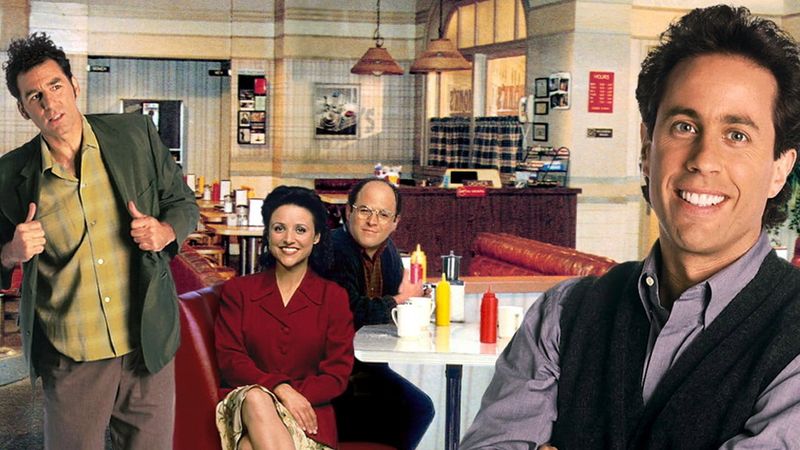
None of these episodes work without four actors who never broke. Jerry Seinfeld played a lightly fictionalized version of himself — the observer, the one with standards, the still center the chaos orbits. He is the least showy of the four on purpose.
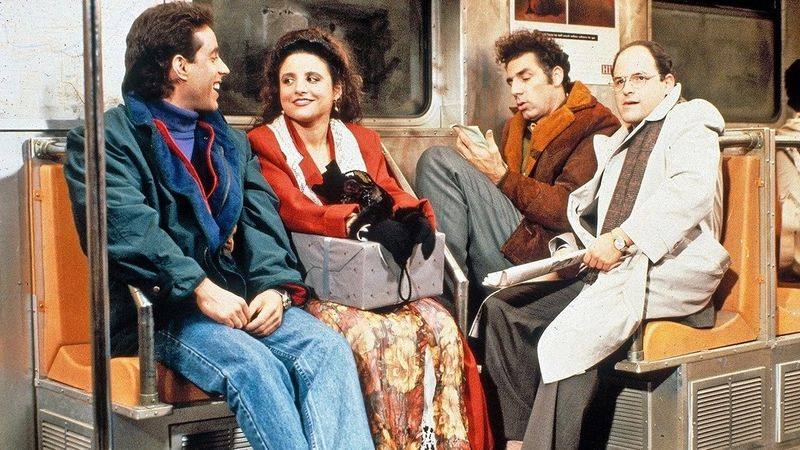
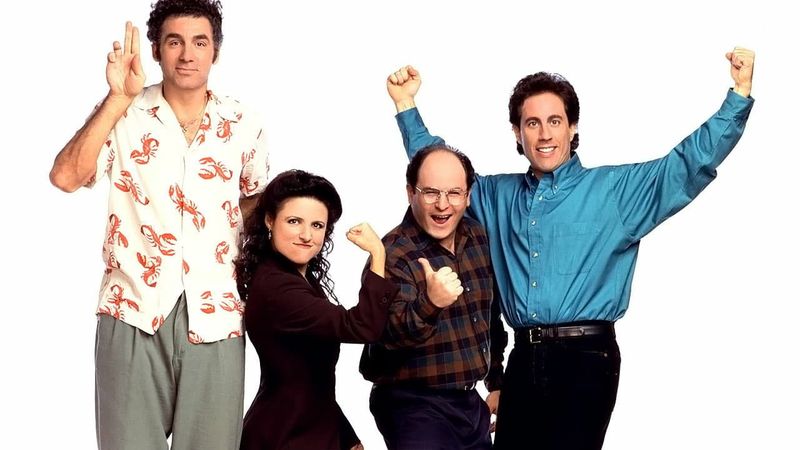
Jason Alexander’s George Costanza is the engine of most of the best episodes. Petty, cheap, dishonest, and weirdly relatable, George does the things you only think about doing. Michael Richards turned Cosmo Kramer into physical comedy’s last great practitioner — the slides through the apartment door alone are a master class. And Julia Louis-Dreyfus made Elaine Benes the rare 90s sitcom woman who was exactly as selfish and ridiculous as the men around her, which was its own quiet revolution. If you grew up on this era of TV, it pairs naturally with the golden age of 90s sitcoms that NBC built its Thursday lineup around.

Seinfeld Catchphrases That Still Get Quoted
Part of what keeps these episodes alive is how many of their lines escaped into everyday speech. Three decades later, people quote them without knowing where they came from:
- “No soup for you!” — the Soup Nazi’s verdict, now shorthand for any abrupt denial.
- “Yada yada yada” — skipping the boring or inconvenient middle of any story.
- “Not that there’s anything wrong with that” — the reflexive disclaimer.
- “These pretzels are making me thirsty” — Kramer’s one line in a movie, repeated for no reason at all.
- “Serenity now!” — Frank Costanza’s anger-management mantra that absolutely does not work.
- “Master of my domain” — the entire plot of “The Contest,” sanitized into a phrase you can say at dinner.
That kind of cultural saturation is rare. The show ended in 1998, and people who were not born yet still say “yada yada” to skip a story.
Where to Watch and Why Seinfeld Still Holds Up
All nine seasons stream on Netflix, which paid a reported $500 million for the global rights in 2019 — a number that only made sense because the rewatch value never dropped. Start with “The Contest” or “The Marine Biologist” if you are new, then go straight to the season 4-7 stretch, which is the show operating at full power.
The reason it survives is the reason it almost did not get made: it refuses to be about anything but the small, selfish mechanics of how people actually behave. That is harder to date than topical jokes or sentiment. When you finish the run, the controversial 1998 series finale is worth revisiting on its own terms, and the broader history of 80s and 90s network sitcoms shows just how different Seinfeld’s no-lessons approach really was. Pick any episode on this list and you are two minutes of converging plot away from remembering why it mattered.
Sources
- Variety — The 20 Best ‘Seinfeld’ Episodes, Ranked — critical ranking of the series’ top episodes.
- DIRECTV Insider — The 25 Best ‘Seinfeld’ Episodes — episode guide with air dates and plot summaries.
- Smithsonian National Museum of American History — The Puffy Shirt — museum record for the actual shirt prop.
- Wikipedia — List of Seinfeld episodes — complete episode log with original NBC air dates.
Browse retro and vintage-inspired apparel at the RetroRadical shop →
The Retro Almanac
A monthly roundup of "on this day" highlights from that month, decades back — plus first dibs on new retro merch drops. No spam, just the good stuff.