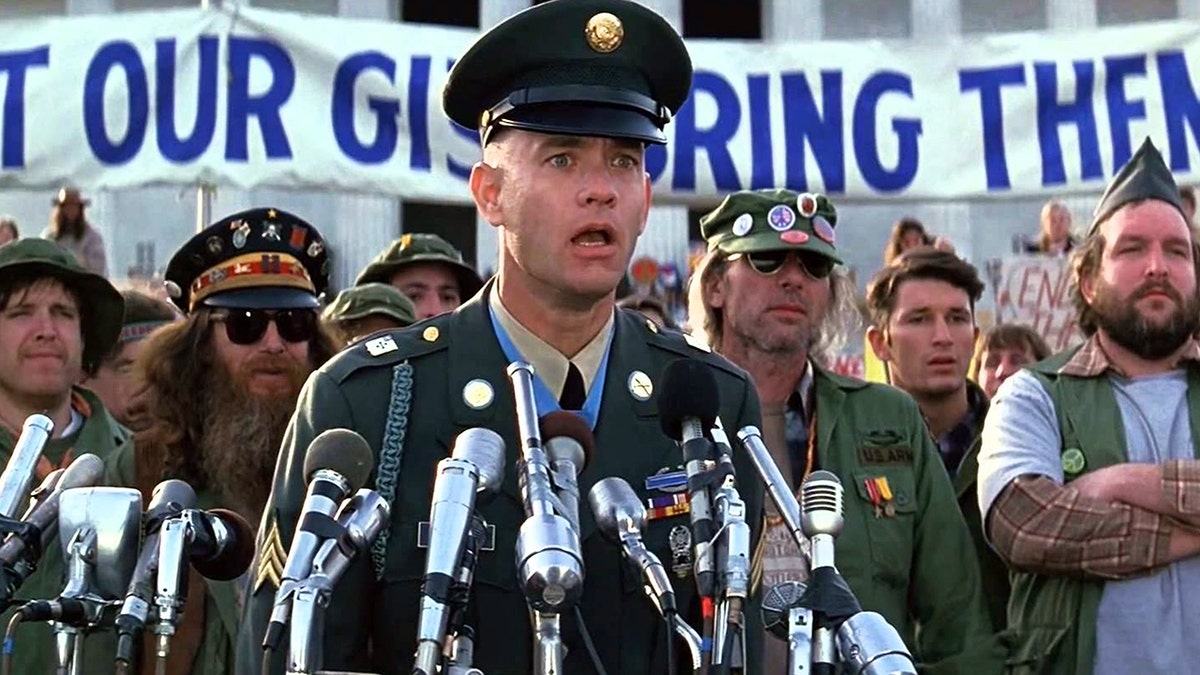
On This Day: July 6, 1994 — Forrest Gump Hits Theaters
On a Wednesday in the summer of 1994, a movie with no explosions, no franchise behind it, and a hero who describes himself as “not a smart man” walked into theaters and quietly became the highest-grossing drama of its generation. Forrest Gump opened July 6, 1994, and by the end of its run it had pulled in more money than every 1994 release except The Lion King. Thirty-plus years later, people who weren’t even born yet can still finish the sentence about the box of chocolates.
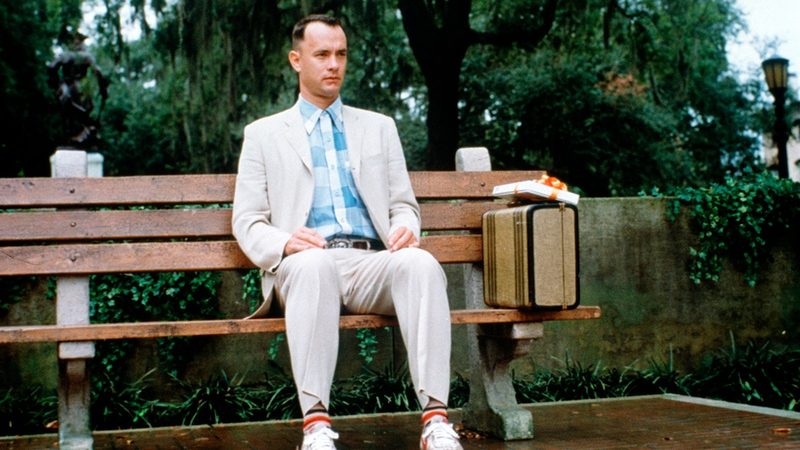
Forrest waits with his suitcase on the Chippewa Square bench in Savannah, Georgia.
The Retro Almanac
A monthly roundup of "on this day" highlights from that month, decades back — plus first dibs on new retro merch drops. No spam, just the good stuff.
What happened on July 6, 1994?
Paramount released Forrest Gump on July 6, 1994, a Wednesday — a deliberate move to build word of mouth before the crowded Independence Day holiday weekend fully cleared. The film opened on 1,332 screens and cleared more than $8 million in its first two days. When Friday hit and the count grew to 1,595 theaters, the weekend total landed at $24,450,602. That was strong but not a record. What made the number matter was what happened next: instead of dropping off, Gump held. It stayed in theaters for months, crossing $300 million domestically and becoming a rare summer film that behaved like a slow-burning classic rather than a firework.
The story follows Forrest, played by Tom Hanks, from a childhood in leg braces through college football, Vietnam, a shrimp boat, a cross-country run, and a lifelong love for his friend Jenny. Along the way he bumps into Elvis, three presidents, and the ping-pong diplomacy era — all stitched together with visual effects that were genuinely new at the time.
Who starred in Forrest Gump?
Tom Hanks anchored the film as Forrest, but the cast around him did heavy lifting. Robin Wright played Jenny, Forrest’s childhood friend and the great love he never stops chasing. Gary Sinise turned Lieutenant Dan Taylor — a bitter, wheelchair-bound platoon leader — into the film’s beating emotional core. Mykelti Williamson played Bubba, and Sally Field, who had played Hanks’s love interest just six years earlier in Punchline, took the role of his mother despite being only ten years older than him.
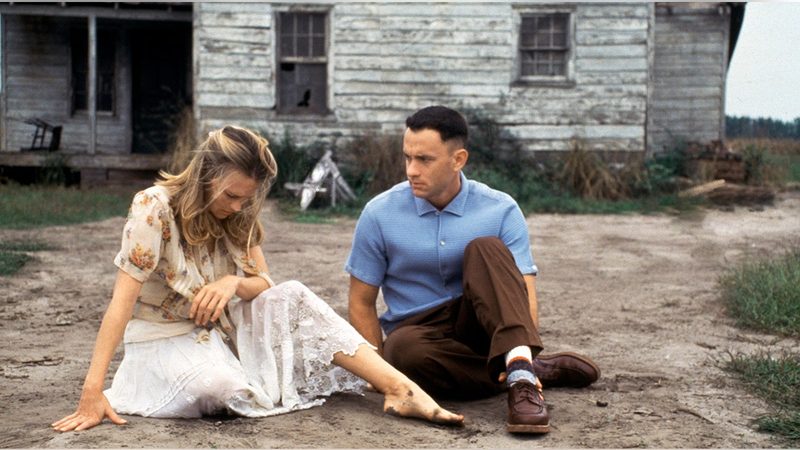
Forrest and Jenny outside her childhood farmhouse — the relationship the whole film orbits.
Hanks reportedly turned down a standard salary and instead negotiated for a percentage of the film’s gross. It was a gamble that paid off spectacularly — some estimates put his earnings north of $40 million once the worldwide total came in. Director Robert Zemeckis made a similar back-end deal, and both men walked away with paydays that dwarfed their upfront quotes.
How accurate was the “box of chocolates” line?
Here’s a small piece of trivia that trips people up: Forrest never actually says “Life is like a box of chocolates.” The line, delivered on that Savannah bench, is “Life was like a box of chocolates. You never know what you’re gonna get.” Screenwriter Eric Roth pulled the sentiment from Winston Groom’s 1986 novel, but reshaped it. In the book, the phrasing is blunter and less poetic. Roth’s rewrite is the version that got carved into pop culture, printed on posters, and quoted in every graduation speech since.
Roth’s adaptation changed a lot from the source material. Groom’s Forrest is coarser, goes to space, wrestles professionally, and lands on a cannibal island. The film sanded those edges into something warmer and more sentimental — a choice that split critics but connected with audiences on a massive scale.
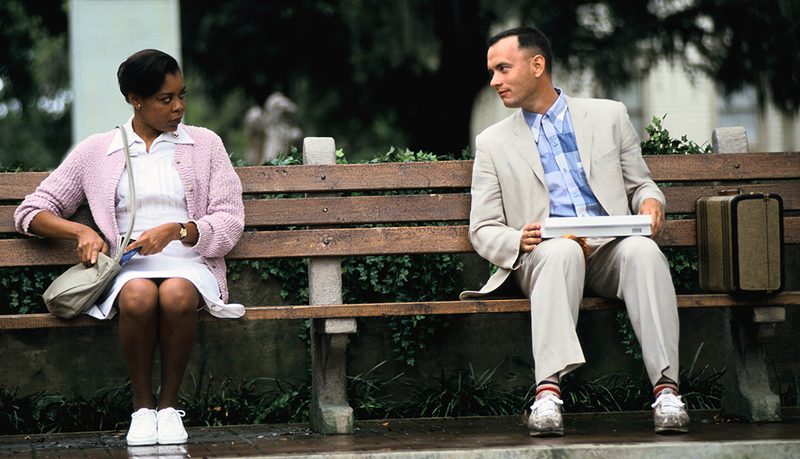
The framing device: Forrest telling his life story to strangers who share his bench.
How were the special effects made?
The visual effects team at Industrial Light & Magic did something in 1994 that still holds up. They inserted Hanks into real archival footage so that Forrest could shake hands with John F. Kennedy, meet Richard Nixon, and stand beside John Lennon on a talk show — all reanimated with new dialogue and altered mouth movements. It won the Academy Award for Best Visual Effects, and it was one of the earliest mainstream uses of digital compositing to rewrite history on screen.
The other trick was Lieutenant Dan’s missing legs. Gary Sinise has both of his, of course. For every shot after Dan’s amputation, Sinise wore blue fabric leggings that the effects team digitally erased, replacing them with the ground behind him. On set it looked absurd; on screen it was seamless enough that some viewers still refuse to believe Sinise wasn’t a real amputee.
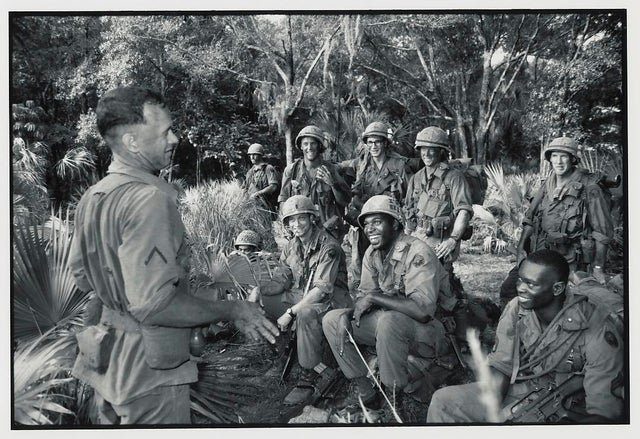
A behind-the-scenes shot of the Vietnam platoon, with Gary Sinise’s Lt. Dan at left.
How many Oscars did Forrest Gump win?
Forrest Gump collected 13 Academy Award nominations and won six: Best Picture, Best Director for Zemeckis, Best Actor for Hanks, Best Adapted Screenplay for Roth, Best Visual Effects, and Best Film Editing. Hanks’s win was history-making in a specific way — he had won Best Actor the previous year for Philadelphia, making him only the second man ever to take home back-to-back Best Actor Oscars. The first was Spencer Tracy, more than fifty years earlier.
The Best Picture win didn’t go unchallenged. 1994 was one of the deepest years in modern film, and Gump beat both Pulp Fiction and The Shawshank Redemption — two movies that have arguably aged into bigger cult status than the winner. That rivalry is still the go-to argument whenever film fans want to relitigate the Academy’s choices.
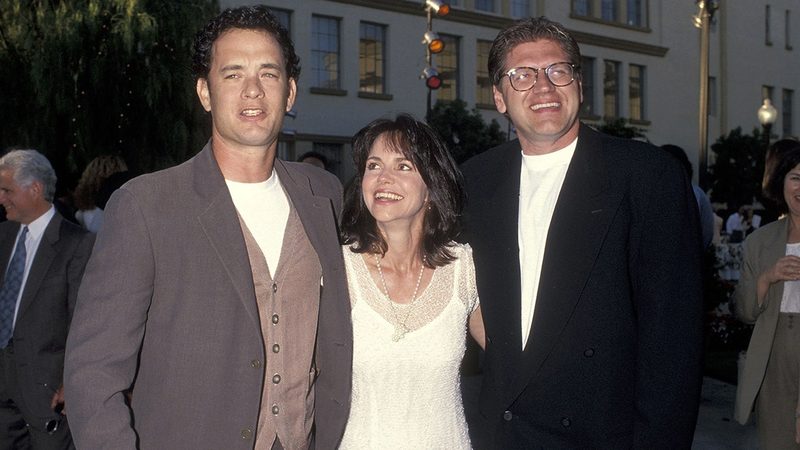
Tom Hanks, Sally Field, and director Robert Zemeckis at the film’s 1994 premiere.
The bench, the running, and the afterlife
The bench where Forrest tells his story sat in Chippewa Square in Savannah, Georgia — though it was a fiberglass prop, not a permanent fixture. After filming it moved to the Savannah History Museum, where it still draws tourists who want to sit where Hanks sat. The square itself has become a quiet pilgrimage spot for fans.
Then there’s the run. Forrest’s aimless cross-country jog, beard growing longer with each mile, gave the film its most meme-able image and one of its best lines: “I just felt like running.” Hanks filmed much of it, but the longer-haired, longer-bearded stretches were handled by his younger brother Jim Hanks, whose stride and build matched closely enough to fool the camera.
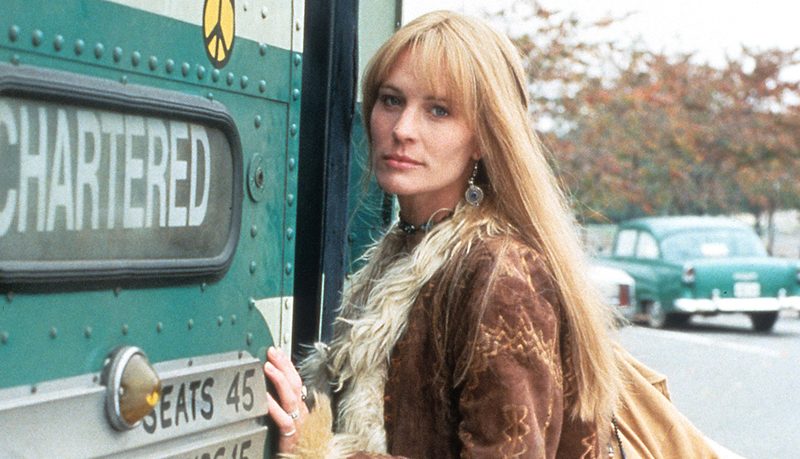
Robin Wright as Jenny — the counterweight to Forrest’s optimism throughout the film.
Zemeckis was no stranger to bending time and history for a crowd. Nine years earlier he’d sent a DeLorean back to 1955 in one of the decade’s defining hits. If you grew up on his work, our look back at Back to the Future’s 1985 premiere covers the film that made his name before Gump made him an Oscar winner.
Why does Forrest Gump still matter?
The honest take: Forrest Gump is a film people love to argue about. Some see it as a warm, generous story about decency winning out. Others read it as a tidy fable that rewards passivity and glosses over the darker corners of the eras it strolls through. Both readings have a point. What’s harder to argue with is the craftsmanship — the effects, the soundtrack stacked with era-perfect needle drops, and a lead performance that never winks at the audience or plays Forrest for a punchline.
1994 was a monster year for pop culture across the board, and not just at the multiplex — our piece on why 1994 rewrote rap forever shows just how much was happening that same summer. Gump was the mainstream, feel-good end of a year that also gave us grittier stories pulling in the opposite direction.
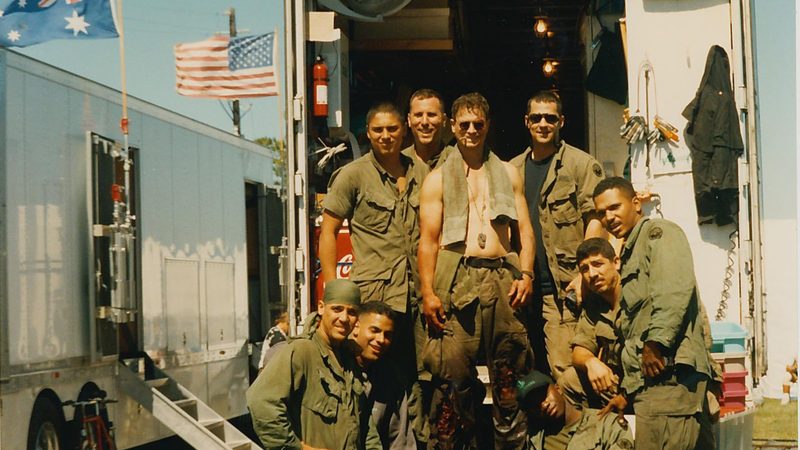
The cast in combat fatigues on location — the Vietnam sequences were shot in South Carolina.
The box of chocolates line gets all the attention, but the sentence that actually holds the movie together is quieter: “I’m not a smart man, but I know what love is.” That’s the whole film in ten words — and it’s why a slow summer drama from July 1994 still shows up on cable, in classrooms, and in the memory of anyone who was there when it opened.
Sources
- HISTORY — “Forrest Gump opens, winning Tom Hanks a second Oscar” — Oscar record and release details.
- Fox News — “On this day in history, July 6, 1994, Forrest Gump is released” — theater counts and opening weekend box office.
- Wikipedia — Forrest Gump — cast, production, visual effects, and awards.
- Box Office Mojo — Forrest Gump — weekend and total gross figures.
- AARP — Facts You May Not Have Known About Forrest Gump — behind-the-scenes trivia.
The Retro Almanac
A monthly roundup of "on this day" highlights from that month, decades back — plus first dibs on new retro merch drops. No spam, just the good stuff.