Illmatic, Ready to Die, and the Debut Albums That Defined the Golden Age
For roughly a decade, it felt like you could not walk into a record store without tripping over a masterpiece. Between 1990 and 1999, hip-hop stopped being the scrappy new kid and became the most exciting music on the planet, and the proof was pressed into shrink-wrapped CDs and cassettes that teenagers saved lunch money to buy. This is the stretch everyone means when they say the Golden Age of hip-hop — a run so stacked with landmark records that entire careers were launched by a single debut. The wild part is how many of those debuts arrived fully formed, as if the artists had been rehearsing their legend for years.
Older fans will tell you the seeds were planted in the late 80s, and they are right, but the 90s is when the harvest came in all at once. Suddenly there were too many classics to keep up with, too many new voices demanding your attention, and a sense that the ceiling kept rising every few months.
What made the era golden was not one sound or one city. It was competition — a coast-to-coast arms race where every producer, every rapper, and every label was convinced they could make the greatest album ever recorded, and a frightening number of them very nearly did. To understand the Golden Age, you follow the debuts.
The Retro Almanac
A monthly roundup of "on this day" highlights from that month, decades back — plus first dibs on new retro merch drops. No spam, just the good stuff.
The Chronic Rewires the West Coast
If you want a starting gun, use December 1992. Dr. Dre had already changed the game once with N.W.A, but The Chronic was something else entirely — a lush, menacing, weirdly sunny record built on live-feeling funk, thick basslines, and that high synth whine that became known as G-funk. Dre slowed everything down, cleared out the clutter, and let the groove breathe. Radio could not resist it, and neither could anyone with a car and a subwoofer.
The album also introduced a skinny 20-year-old from Long Beach with a drawl that sounded like he was half-asleep and completely in control. Snoop Doggy Dogg was on nearly every track, and by the time listeners flipped the cassette they already knew his solo record was going to be enormous. It was. Doggystyle arrived in November 1993 and debuted at number one, the first debut album ever to do so. The West Coast had its blueprint, and for a couple of years it felt unstoppable.
Enter the Wu, Enter the Chaos
Then New York punched back, and it did not punch clean. In late 1993 a nine-man collective from Staten Island released Enter the Wu-Tang (36 Chambers), a record that sounded like it was recorded in a basement during a blackout — dusty, cold, kung-fu-obsessed, and thrilling. Where Dre polished, RZA roughed everything up on purpose. The contrast between the two coasts could not have been sharper, and that tension is exactly what kept the era moving.
Fans of the era can still name the cascade that followed: Method Man, Ol Dirty Bastard, Raekwon, GZA, and Ghostface each delivered solo records that would have anchored any other group. No collective before or since has spun off so many essential albums from a single debut, and it happened in barely two years.
The Wu also rewrote the business rules, signing to a label as a group while keeping each member free to cut solo deals elsewhere. That single move flooded the next three years with classic solo albums and proved that the Golden Age was not just about talent. It was about ambition on a chessboard.
Illmatic and the Debut That Broke the Scale
April 1994 gave the genre its most quietly perfect album. Nas was barely 20 when Illmatic came out, a lean ten tracks with no filler and no wasted breath. He handed the beats to a murderers’ row of producers — DJ Premier, Pete Rock, Q-Tip, Large Professor, L.E.S. — and then out-wrote all of them, painting his Queensbridge housing project in language so vivid you could smell the stairwell.
The Source, the era’s magazine of record, gave it a perfect five-mic rating, the rap equivalent of a papal blessing. To this day arguments about the greatest hip-hop album ever tend to start and end with Illmatic. It is the record that taught a generation of MCs that debuts were not warm-ups. They were statements.
Ready to Die and the Rise of Bad Boy
Five months later, Brooklyn answered with a debut just as monumental and far more commercial. The Notorious B.I.G. released Ready to Die in September 1994, and Biggie’s gift was making tragedy sound like a party. He could switch from a shoot-out narrative to a radio love song without breaking his effortless flow, and Puff Daddy’s Bad Boy machine packaged it for the masses without sanding off the menace.
Beyond the sales figures, Ready to Die gave New York a hero who could go bar-for-bar with anyone while soundtracking block parties and slow dances alike. Its reach stretched far past the five boroughs, and it turned Biggie into the kind of star whose voice you recognized in two syllables.
This is the moment the Golden Age started printing serious money. Biggie proved you could be a lyrical heavyweight and a chart-topper at the same time, and the industry noticed. The stakes — and the egos — climbed accordingly.
The Label Wars
Behind every classic debut stood a label boss with something to prove. Suge Knight’s Death Row ran the West Coast like a fortress, stacking Dre, Snoop, and eventually Tupac under one roof. Puffy’s Bad Boy answered from New York with Biggie and a Rolodex of hitmakers. Russell Simmons and Rick Rubin’s Def Jam had already lit the fuse in the 80s and kept feeding the fire. These were not just record companies. They were rival kingdoms, and their competition set the tempo for the whole decade — each release a move in a much larger game of one-upmanship.
The Coasts Collide
Success at that scale came with a shadow. The mid-90s East Coast versus West Coast rivalry curdled from friendly competition into something genuinely dangerous, and it eventually cost the lives of both Tupac Shakur and Biggie within six months of each other in 1996 and 1997. It is impossible to tell the Golden Age story honestly without acknowledging that the same intensity that produced the music also consumed two of its brightest stars far too young.
The Underground Keeps the Balance
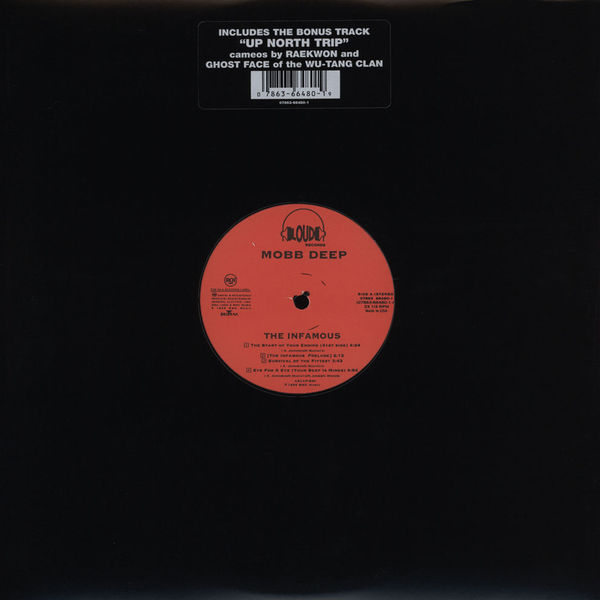
While the coasts traded haymakers on the charts, a deeper bench kept the era rich. A Tribe Called Quest, De La Soul, and the wider Native Tongues family brought jazz samples, humor, and warmth. Mobb Deep’s The Infamous made 1995 feel like a New York winter. Raekwon’s Only Built 4 Cuban Linx… turned street tales into cinema. And behind the boards, producers like DJ Premier, Pete Rock, and RZA were treated like auteurs, their drum programming studied the way film students study directors.
This is why the Golden Age still holds up. It was never a single lane. You could love the grimy boom-bap of Gang Starr and the bright bounce of Tribe and the widescreen menace of Death Row all at once, and the radio would happily play all three back to back. The variety was the point — there was no single correct way to make a great rap record, only a shared conviction that greatness was the only acceptable goal.
Why It Ended and Why It Still Matters
Nothing this hot burns forever. By the late 90s the shiny-suit era of glossy, sample-heavy hits took over, budgets ballooned, and the raw hunger that defined the early decade started to feel like nostalgia even to the people who had lived it. The deaths of Tupac and Biggie drained a lot of the joy out of the rivalry that had once fueled the music. The Golden Age did not so much end as evolve into something bigger, richer, and more corporate.
Ask ten fans exactly when it closed and you will get ten answers — some say the moment Biggie died, some say when Puffy’s suits started shining, some refuse to admit it ever ended at all. That argument is itself part of the charm. An era worth fighting over is an era worth remembering.
But listen to Illmatic or The Chronic today and the years fall away. These records still sound like young people convinced they were making history — because they were. The reason we keep returning to that decade is simple: it was the last time hip-hop was still small enough to feel like a secret and already good enough to change the world. If you grew up on it, you never really left.

Rebuild the Collection
Half the fun of the Golden Age was the physical ritual — the liner notes, the cassette hiss, the skip-proof CD binder in the passenger seat. If you want to hear these records the way they were meant to be heard, the classic albums are all still in print on vinyl and CD, and a decent turntable brings the crackle back better than any streaming app.
Browse Golden Age hip-hop albums on vinyl and CD →
Sources
- Golden age hip hop — Wikipedia
- Illmatic — Wikipedia
- Ready to Die — Wikipedia
- The Chronic — Wikipedia
- Rock & Roll Hall of Fame
Browse retro and vintage-inspired apparel at the RetroRadical shop →
Shop on Amazon
Vinyl Records on Amazon →
As an Amazon Associate we earn from qualifying purchases.
Shop on eBay
Vintage Vinyl Records on eBay →
We may earn a commission when you shop through our eBay links.
The Retro Almanac
A monthly roundup of "on this day" highlights from that month, decades back — plus first dibs on new retro merch drops. No spam, just the good stuff.