On This Day: July 12, 1984 — Geraldine Ferraro Makes History
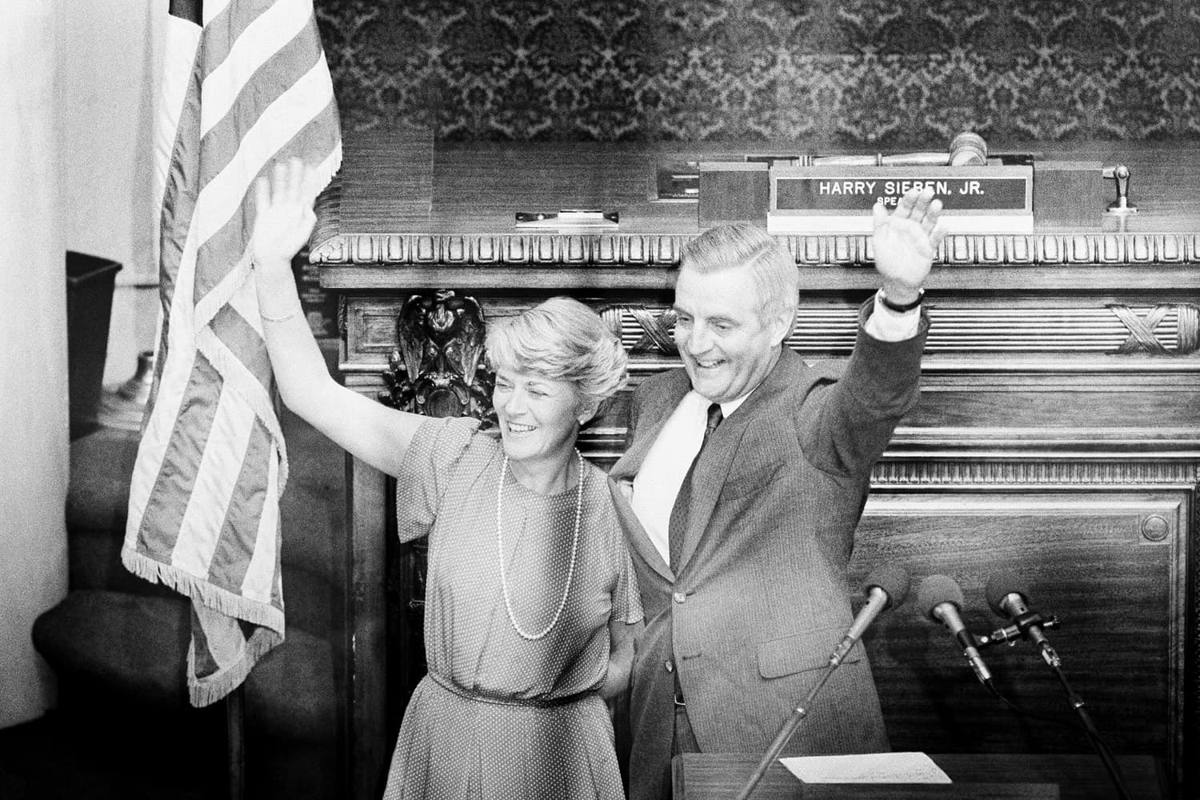
Geraldine Ferraro once said there was no way a presidential nominee would ever pick a woman as his running mate “unless he’s 15 points behind.” In the summer of 1984, Walter Mondale was down somewhere between 12 and 19 points to a sitting president riding a wave of “Morning in America” optimism. So on July 12, 1984, standing at a rostrum inside the Minnesota State Capitol in St. Paul, Mondale did exactly the thing Ferraro had bet no one would do.
Ferraro on the stump in 1984 — the first woman on a major-party national ticket.
The Retro Almanac
A monthly roundup of "on this day" highlights from that month, decades back — plus first dibs on new retro merch drops. No spam, just the good stuff.
How a Queens Congresswoman Ended Up on the Ticket
Ferraro was not an obvious pick by the usual math. She had served just three terms representing New York’s 9th district in Queens, a working-class stretch of a borough where she had grown up the daughter of Italian immigrants. Six years in the House is thin for a national ticket. What she had instead was a reputation as a scrapper — a former prosecutor who chaired the 1984 Democratic platform committee and knew how to work a room full of skeptics.
The push came from outside the boys’ club. A group of feminist organizers who half-jokingly called themselves “Team A” had been quietly lobbying since 1983 to get a woman onto the ticket. They pitched Ferraro over Chinese takeout that fall. She was skeptical at first — hence the 15-points-behind line — but the political logic held. Mondale needed a jolt. A historic first was a jolt.
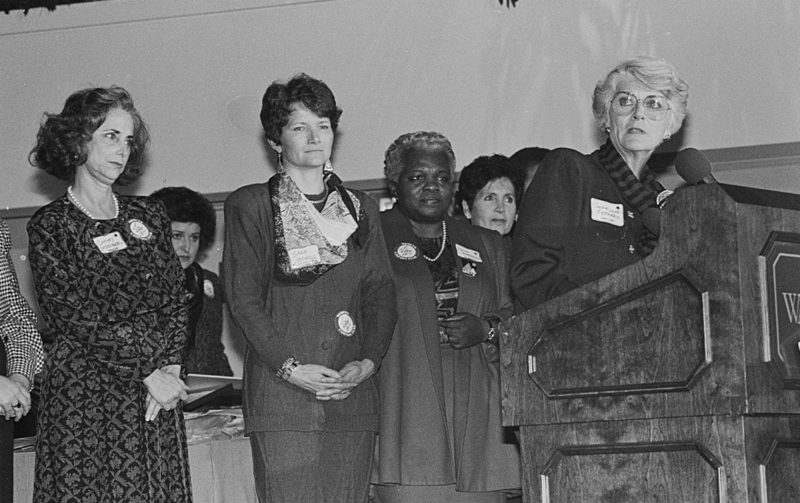
Ferraro chairing hearings at the 1984 Democratic platform sessions, months before the nomination.
She Wasn’t the First Woman to Run — But She Was the First Who Counted
Women had reached for the White House before. Victoria Woodhull ran for president back in 1872, before women could even legally vote nationwide, on the tiny Equal Rights Party ticket. Others followed on the margins over the next century — minor parties, protest candidacies, names that never made the ballot in most states. What made July 12, 1984 different was the word “major.” Ferraro wasn’t a symbolic protest vote or a footnote from a third party. She was on the Democratic ticket, one of two names Americans would actually see next to a presidential nominee in all 50 states. That distinction is the whole story. A major party had spent 195 years never once putting a woman in that slot, and then, in a single afternoon in Minnesota, that streak ended.
The reaction abroad tracked the reaction at home. European papers ran the announcement on their front pages. In Italy, where Ferraro’s parents had emigrated from, the daughter-of-immigrants angle turned her into a minor national hero overnight. This was not a quiet inside-baseball VP pick. It was a global story from the first hour.
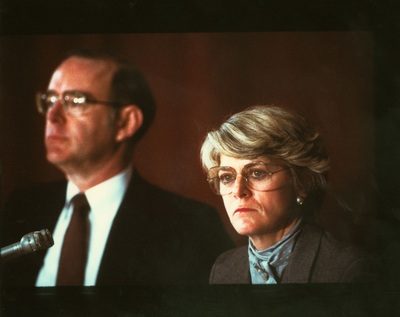
Ferraro campaigning in 1984 — six years in the House and suddenly a household name on two continents.
“How Does It Feel to Be a Part of History?”
Mondale called Ferraro in her San Francisco hotel suite on July 11 to offer her the spot. After she hung up, she turned to the people in the room and asked, “How does it feel to be a part of history?” The next day in St. Paul, Mondale put it plainly: “I looked for the best vice president, and I found her in Gerry.” Ferraro, never one to let a moment sit heavy, answered, “Vice president has such a nice ring to it.”
Four days later the Democratic National Convention opened in San Francisco. When Ferraro walked out in a suffragist-white suit and declared, “I proudly accept your nomination for Vice President of the United States,” the hall came apart. Her congressional office started receiving 2,000 to 3,000 letters a day. One woman wrote that she had started crying reading the news. It wasn’t hard to see why the moment landed — no major party had ever done this in 195 years of presidential tickets.
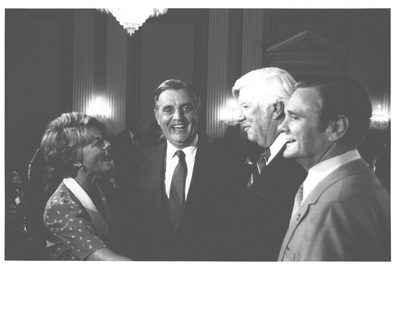
Ferraro with Mondale and House Speaker Tip O’Neill — the Democratic establishment closing ranks.
The Muffin Questions and the Double Standard
The novelty cut both ways. Reporters asked Ferraro things no male candidate had ever fielded. In Mississippi, someone wanted to know if she could bake blueberry muffins. A Meet the Press panelist asked whether she’d be tough enough to “push the button.” Decades later she admitted she couldn’t push back the way she wanted to: “In 1984, I couldn’t say, ‘Stop it,’ because I couldn’t look like I was whining or upset about it.” That’s the trap of being first — you carry the weight of every woman who might come after, and you can’t be seen sweating it.
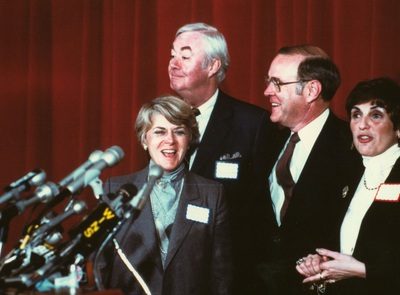
Then came the tax mess. Three weeks after the convention, scrutiny landed on the finances of her husband, real-estate developer John Zaccaro, and the couple’s separate tax filings. Ferraro answered it head-on in a marathon press conference, standing at the podium and fielding questions from more than 250 reporters until they ran out. The New York Daily News headline afterward: “Grilling can’t melt her.” Years later it came out that Reagan operatives had helped seed some of the damaging stories.
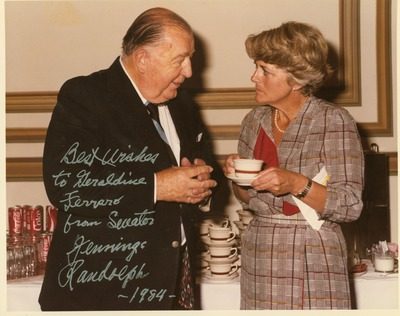
Ferraro with Senator Jennings Randolph in 1984 — a photo he inscribed to her that year.
“I Almost Resent Your Patronizing Attitude”
The sharpest moment of the whole campaign came in Philadelphia on October 11, when Ferraro debated Vice President George H.W. Bush. She had prepped hard, with an aide named Madeleine Albright — the future Secretary of State — running her through foreign policy. When Bush leaned into a lecture about Iran, Ferraro cut in: “Let me just say, first of all, that I almost resent, Vice President Bush, your patronizing attitude that you have to teach me about foreign policy.”
It was the kind of line that hung in the air. Even a conservative commentator, Morton Kondracke, conceded that Ferraro handled herself with “calm, breeding, and self-possession.” She had gone toe to toe with a sitting vice president and refused to be talked down to on national television.
Forty-Nine States and a Broken Ceiling
The election itself was a wipeout. On November 6, 1984, Reagan and Bush took 525 electoral votes to Mondale-Ferraro’s 13, carrying every state but Minnesota — Mondale’s home turf — plus the District of Columbia. It remains one of the most lopsided results in American history. The gender gap Team A had banked on never materialized into a majority; most women still voted Republican.
Ferraro’s concession looked past the scoreboard: “My candidacy has said the days of discrimination are numbered. American women will never be second-class citizens again.” She never won elected office again — two Senate bids, in 1992 and 1998, both fell short — and she died in 2011 at 75. But the honest read on 1984 is that the loss was almost beside the point. The ceiling she cracked stayed cracked.
What Ferraro Actually Changed
Several of the women from Team A went on to help found EMILY’s List, the fundraising machine that has bankrolled Democratic women candidates ever since. The template Ferraro set — the scrutiny, the debate stage, the impossible standard of having to be better to be judged equal — became the map every woman after her had to read. Sarah Palin followed as the Republican VP nominee in 2008. Kamala Harris became the second Democratic woman on a national ticket in 2020, and then vice president.
Ferraro herself framed the real test better than any historian could: “The real test of my candidacy will come when the next woman runs for national office. Only then will we know if she, too, is going to have to be better in order to be judged equal.” Same year, over at the 1984 Olympics boycott, Cold War politics were rewriting the sporting world; a year earlier, Sally Ride had become the first American woman in space. The mid-’80s kept knocking down “first woman” barriers one at a time. And for every candidate who takes a debate stage now without a muffin question in sight, part of the credit traces back to a Queens congresswoman and one long-shot gamble in St. Paul. Compare that to how far VP politics could still fall — see the Dan Quayle “potatoe” saga eight years later.
Sources
- HISTORY — Geraldine Ferraro named vice presidential candidate, July 12, 1984 — the announcement and election outcome
- Smithsonian Magazine — How Geraldine Ferraro’s 1984 Campaign Broke the Vice-Presidential Glass Ceiling — Team A, quotes, the debate and tax controversy
- The Nation — July 12, 1984: Walter Mondale Announces Geraldine Ferraro — contemporaneous account
- Commission on Presidential Debates — October 11, 1984 VP Debate Transcript — the Bush exchange in full
The Retro Almanac
A monthly roundup of "on this day" highlights from that month, decades back — plus first dibs on new retro merch drops. No spam, just the good stuff.