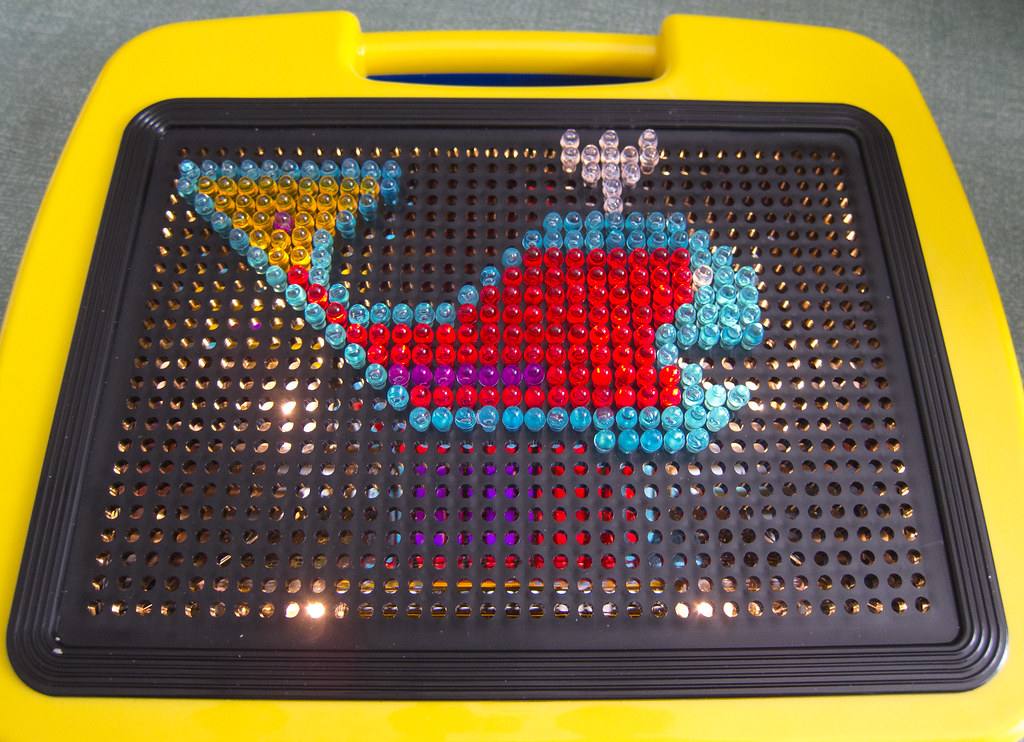
Lite-Brite: 9 Wild Facts About the Glowing Peg Toy
Somewhere in a landfill or a couch cushion in your parents’ house, there is almost certainly a stray Lite-Brite peg. That’s the toy’s real legacy — not just the glowing pictures, but the little translucent bullets that scattered across shag carpet and lurked in vacuum bags for decades. For a generation of kids who grew up before screens, the Lite-Brite was the first thing you ever made that actually glowed. Here are nine facts about how a wall of Christmas bulbs on Fifth Avenue turned into one of the most recognizable toys of the 20th century.
1. A wall of twinkling bulbs in New York started it all
In 1966, toy designer Burt Meyer was in New York City for a convention when he and his coworkers walked past a Fifth Avenue building draped in hundreds of colored bulbs. That glittering facade stuck with them. Back at Marvin Glass and Associates — the legendary Chicago design firm behind Operation, Mouse Trap, and Simon — the team chased that same twinkle in a box a kid could own. Meyer led the project, his colleague Dalia Verbickas floated the idea of using a translucent material to channel colored light, and Joseph Burck designed the toy itself. Marvin Glass didn’t manufacture anything; it licensed the concept to Hasbro, which put it on shelves.
The Retro Almanac
A monthly roundup of "on this day" highlights from that month, decades back — plus first dibs on new retro merch drops. No spam, just the good stuff.
2. The original Lite-Brite shipped in 1967 with 400 pegs
Hasbro brought Lite-Brite to market in 1967, and it landed as an instant hit that carried straight through the 1970s and 1980s. The first version came loaded with 400 plastic pegs in eight colors: red, blue, green, yellow, orange, pink, violet, and clear. That clear peg was the sneaky one — it read as bright white when lit, which is why every kid hoarded them for the highlights. The box itself was simple: a boxy plastic housing, a bulb, a slot for black paper, and a grid of holes waiting to be filled.
3. How Lite-Brite actually works
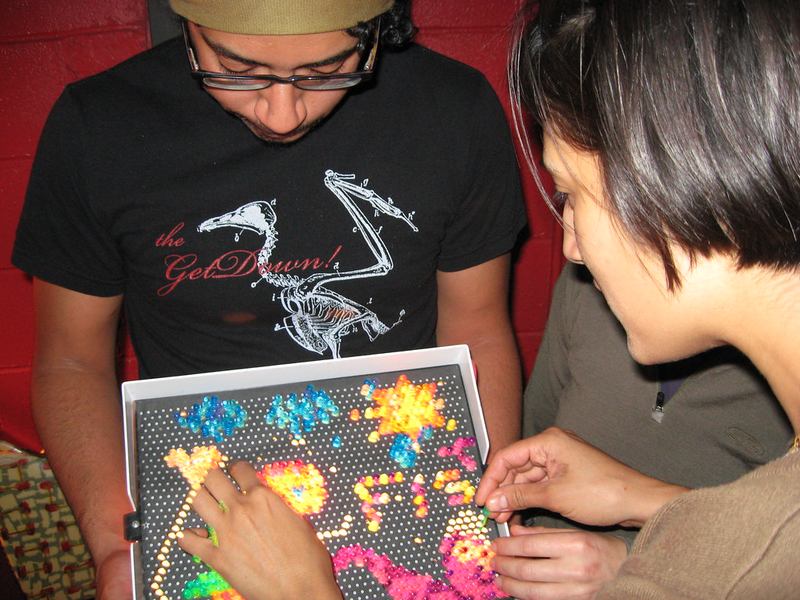
The magic is almost embarrassingly low-tech, and that’s the charm. A single light bulb sits inside the box. You slide a sheet of black construction paper over the front grid, and the paper blocks all the light. When you push a peg through the paper, it punctures a tiny hole and the peg’s translucent body catches the bulb’s glow and pipes it forward — so only the pegs shine, floating like dots of light against a black field. The pegs behave a lot like fiber optics or LEDs before either was a household word. No batteries in the classic version, no chip, no screen. Just a bulb, some plastic, and your patience.
4. The letter-coded templates were paint-by-numbers for light
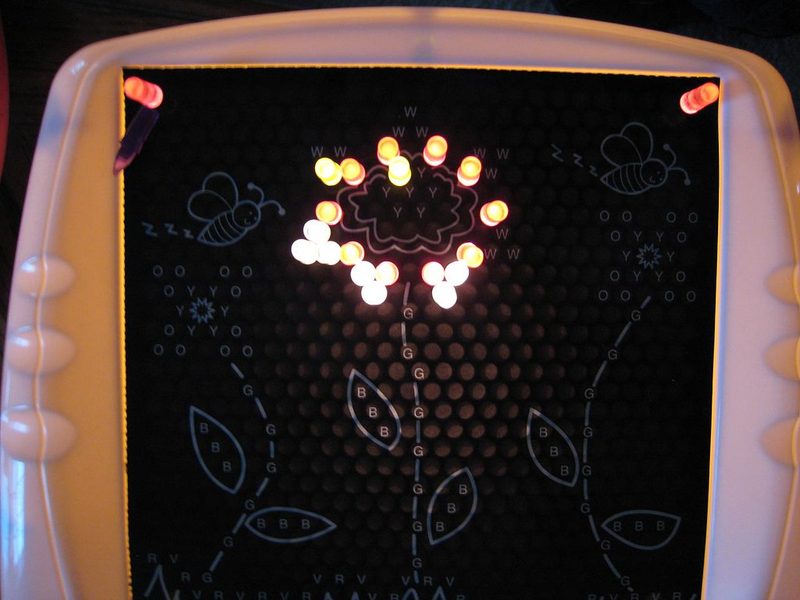
Freeform designs were always an option, but most kids started with the printed template sheets. Each design had faint letters printed across it — R for red, B for blue, G for green — telling you exactly which color peg to punch where. It was paint-by-numbers, except the finished painting glowed in a dark room. Over the years the licensed sheets read like a roll call of pop culture: Mickey Mouse, Scooby-Doo, My Little Pony, and Transformers all got the Lite-Brite treatment. The templates are also why the toy quietly taught pixel art a decade before anyone owned a computer that could make it.
5. “Lite-Brite, making things with light” was inescapable
If you were anywhere near a television in the 1970s, you can probably still hum it. The commercial jingle — “Lite-Brite, making things with light” — ran often enough to lodge itself permanently in Gen X brains. The ad showed kids punching in a steamboat, a chicken, a sailboat, whatever they wished, then the room went dark and the picture bloomed. It’s a masterclass in selling the payoff instead of the product. Nobody bought a Lite-Brite for the plastic box; they bought it for that moment the lights went out.
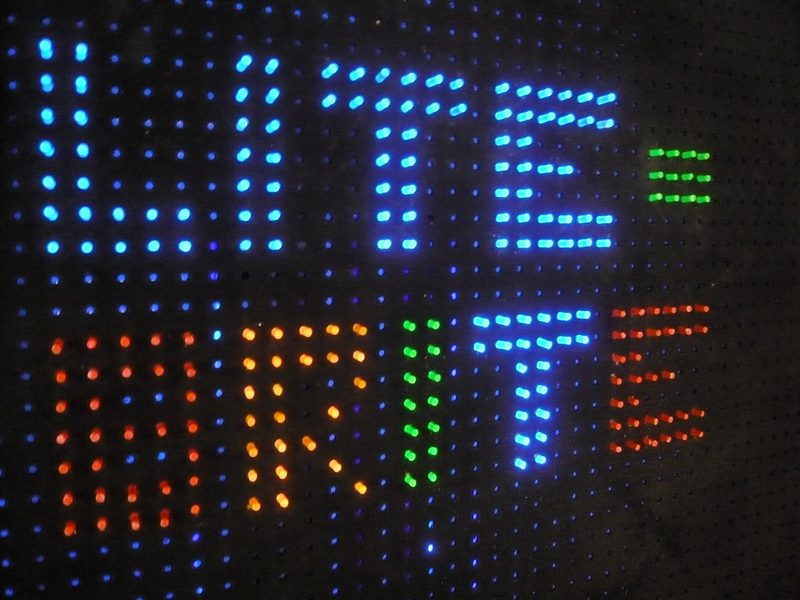
6. It made TIME’s list of the 100 greatest toys ever
In 2011, TIME magazine named Lite-Brite one of the 100 greatest toys of all time, putting a humble bulb-and-peg set in the same conversation as the yo-yo, the Slinky, and Lego. That’s a striking outcome for a toy with no moving parts and no instructions beyond “put the peg in the hole.” The honest truth is that Lite-Brite earned it by doing one thing perfectly instead of ten things adequately — a lesson plenty of modern gadgets never learned.
7. The National Toy Hall of Fame finally inducted it in 2022
It took a while, but in 2022 Lite-Brite was inducted into the National Toy Hall of Fame at The Strong museum in Rochester, New York. The Hall’s criteria are strict: a toy has to have icon status, longevity across generations, and genuine play value that sparks creativity. Lite-Brite checked every box. It beat out a crowded field of nominees that year, which says something about how deeply the glow burned itself into collective memory.
8. Losing the pegs was half the experience
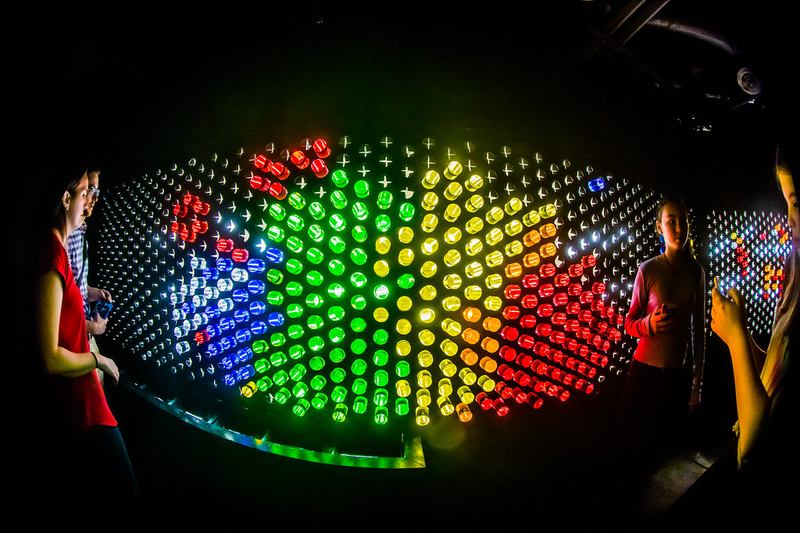
Ask anyone who owned one, and the memory isn’t the finished picture — it’s the hunt for pegs. They rolled under furniture, vanished into heating vents, and turned up in the vacuum cleaner months later. The black paper refills ran out fast too, which sent resourceful kids cutting their own sheets from construction paper or, in a pinch, punching pegs straight through a template until it disintegrated. That built-in scarcity is a big part of why intact vintage sets with a full peg count now command real money among collectors.
9. The Lite-Brite never actually died
Unlike a lot of its shelf-mates, Lite-Brite kept evolving instead of fading out. Hasbro replaced the single bulb with a battery-powered flat-screen LED version that you could carry around, then rolled out spin-offs like the four-sided Cube and a music-playing FX edition. Today the brand lives on under Basic Fun, still shifting units to parents who want their kids off a tablet for twenty minutes. The core idea never needed fixing — glowing dots on a dark grid is as satisfying now as it was in 1967.

What a vintage set is worth today
Nostalgia has a price tag, and the collector market has noticed. A boxed 1967 original in good shape — with the manual, the template sheets, and a usable count of pegs — regularly changes hands for far more than the toy ever cost new. The catch is that “complete” is the rarest condition of all, precisely because those pegs vanished into carpets for fifty years. Loose sets without their black paper or with a thinned-out peg supply sell for pocket change, while sealed or near-mint examples can climb into the low hundreds of dollars. If you’re hunting one down, check the bulb housing and the color mix before you pay a premium; a set missing its clear and white pegs loses the very highlights that made the pictures pop. The smarter play for most people isn’t the vintage box at all — it’s grabbing a cheap modern LED reissue to relive the ritual, and saving the original hunt for serious collectors.
Why Lite-Brite still hits so hard
There’s a reason museums build room-sized Lite-Brite walls and adults still stop to jam pegs into them. The toy tapped into something simpler than nostalgia — the pure satisfaction of making light appear where there was none. It sits alongside the other analog toys that shaped Gen X, from the Simon memory game to the View-Master 3D reel viewer, and it earned its place not through technology but through a single, perfect idea. If you handed a kid raised on the Game Boy a Lite-Brite today, odds are they’d still get quiet, dim the lights, and start punching in a design.
Lite-Brite FAQ
When did Lite-Brite come out? Hasbro first sold Lite-Brite in 1967, and it stayed popular through the 1970s and 1980s.
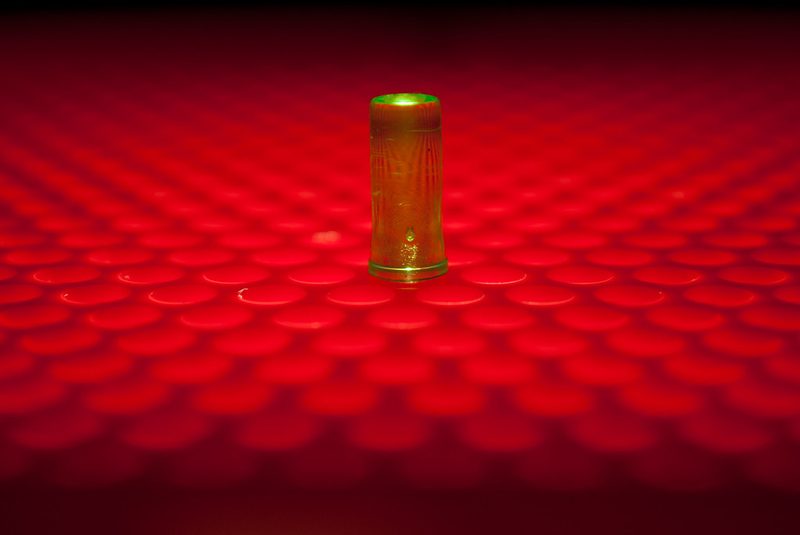
How does a Lite-Brite work? A single bulb inside the box shines through a sheet of black paper. Translucent colored pegs pushed through the paper channel the light forward, so only the pegs glow against the dark grid.
How many pegs did the original Lite-Brite have? The 1967 set shipped with 400 pegs in eight colors — red, blue, green, yellow, orange, pink, violet, and clear.
Is Lite-Brite still made? Yes. Modern versions use battery-powered LEDs instead of a bulb, and the brand is currently produced by Basic Fun.
Who invented Lite-Brite? It was created by Burt Meyer, Dalia Verbickas, and Joseph Burck at Marvin Glass and Associates, then licensed to Hasbro.
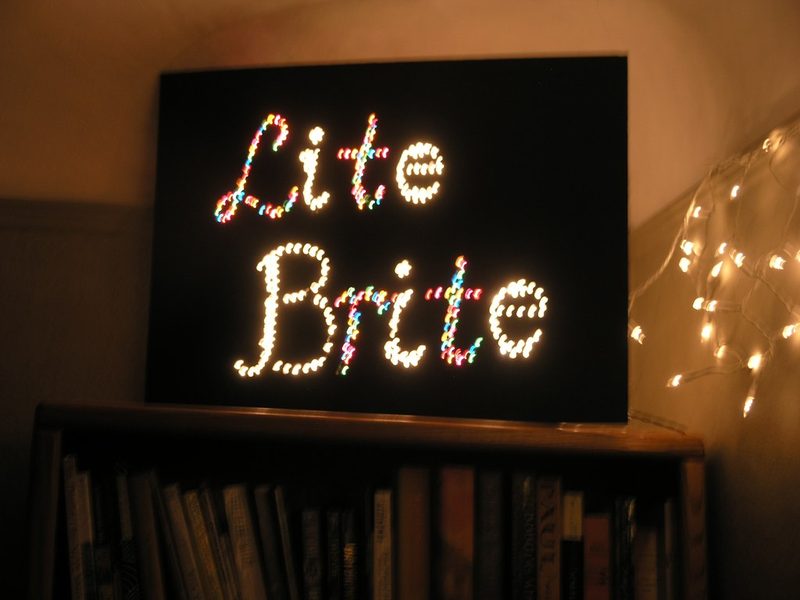
Dig out your old set, cut a fresh sheet of black paper, and kill the lights. Some toys don’t need a reboot — they just need the room to get dark. And if you’re chasing more of that analog glow, our roundup of the toys that started the digital age is the next rabbit hole.
Sources
- Lite-Brite — Wikipedia — invention history, peg colors, mechanics, and later versions.
- TIME: History’s Best Toys — Lite-Brite — TIME 100 greatest toys inclusion.
- The Strong National Museum of Play — National Toy Hall of Fame induction, 2022.
- Nostalgia Central: Lite-Brite — commercial jingle and cultural impact.
The Retro Almanac
A monthly roundup of "on this day" highlights from that month, decades back — plus first dibs on new retro merch drops. No spam, just the good stuff.