How Yo! MTV Raps Beamed the Golden Age Into Your Living Room
If you were a kid growing up far from any city with a real hip-hop scene, there was exactly one window into the culture, and it opened every weekday afternoon on MTV. You would drop your backpack, click the TV on, and there it was: a wall of graffiti, a couch full of rappers cracking jokes, and video after video of the music that would come to define an entire decade. Yo! MTV Raps was more than a show. For millions of Gen X kids, it was the front door to the Golden Age of hip-hop (1990-1999), and once you walked through it, there was no going back.
The Show That Turned Rap Into a Daily Habit
When Yo! MTV Raps premiered in August 1988, MTV was still mostly a pop and rock channel. Executives assumed rap was a novelty that would fade. Instead, the pilot pulled the highest ratings in the network’s history to that point, and MTV scrambled to make it a daily fixture. By the time the Golden Age hit full stride in the early 1990s, the show had become appointment viewing. It aired the videos that suburban record stores did not stock and radio stations would not touch, and it did it every single day.
That daily rhythm mattered more than anyone realized at the time. A kid in Ohio or Alberta or rural England could not walk into a club to hear the newest Wu-Tang single. But they could turn on the TV at 3 p.m. and watch it, learn the words, study the fashion, and memorize the slang. Hip-hop stopped being a distant big-city phenomenon and became a shared daily experience for a generation that had no other way in.
The Retro Almanac
A monthly roundup of "on this day" highlights from that month, decades back — plus first dibs on new retro merch drops. No spam, just the good stuff.
It is hard to overstate how radical that was in 1990. Rock still dominated MTV’s prime hours, and plenty of parents flinched at what was coming out of the family television set. But the show never talked down to its audience or apologized for the music. It presented rappers as artists and craftsmen, played the videos with respect, and treated the culture as something worth understanding rather than a trend to be exploited. That confidence rubbed off on the kids watching, who learned to take the music seriously too.
Fab 5 Freddy, Ed Lover, and Dr. Dre: The Hosts Who Made It Real
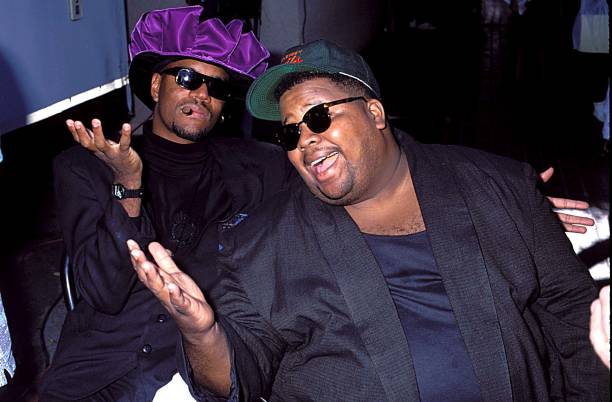
A show like this lived or died on its hosts, and Yo! MTV Raps had the perfect ones. The weekday edition was anchored by Ed Lover and Dr. Dre, not the West Coast producer, but the towering, joke-cracking New York personality who shared the name. Their chemistry was pure morning-show comedy filtered through the sensibilities of the block. Ed Lover’s exaggerated dance became so famous it got a name and a beat behind it, and kids across the country imitated it in living rooms and school hallways.
The weekend edition belonged to Fab 5 Freddy, an artist and downtown scene fixture who had one foot in the graffiti world and the other in fine art. Freddy did the interviews the way a documentarian would, riding through neighborhoods with artists, sitting on stoops, asking real questions. When he brought a camera into a rapper’s world, he was not there to gawk. He was there to translate, and Gen X viewers trusted him because of it.
Those interviews became legend in their own right. Freddy hung out with entire crews before they blew up, catching them loose and unguarded in a way that the polished press junkets of later years never could. You saw future icons goofing off, freestyling on the spot, talking about where they came from and where they wanted to go. For a viewer at home, it felt less like watching celebrities and more like being let in on a secret. That intimacy is exactly why so many people who grew up on the show still speak about it like a member of the family.
A Front-Row Seat to the Greatest Run in Hip-Hop History
The timing could not have been better. The Golden Age of hip-hop (1990-1999) was arguably the most creatively dense stretch the genre has ever produced, and Yo! MTV Raps was pointing its cameras directly at it. In a single week you might see a new Public Enemy video, a Native Tongues posse cut, a raw clip from a group nobody had heard of yesterday, and a slick West Coast production that sounded like nothing on the radio.
The East Coast Renaissance
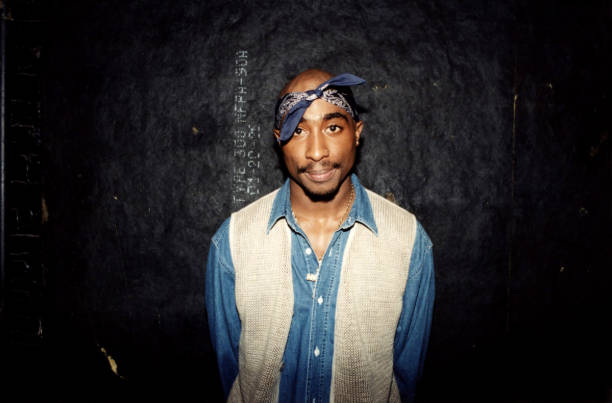
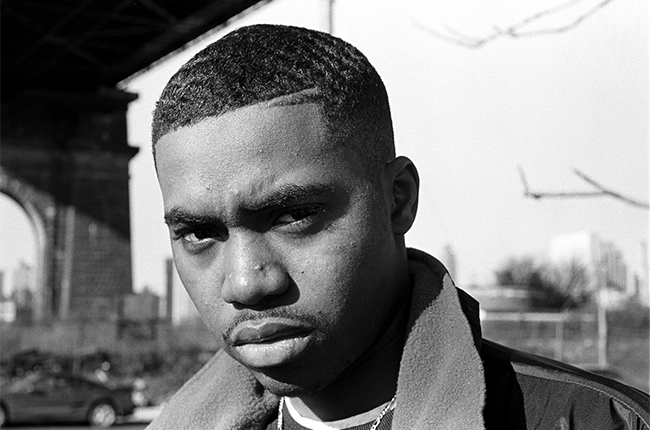
When Wu-Tang Clan dropped out of Staten Island in 1993, the show was there. When a teenage Nas turned a Queensbridge housing project into poetry on Illmatic, the videos ran on rotation. Yo! MTV Raps gave these dense, lyrical, sample-heavy records a visual home, and it did it without softening the edges. The grain, the grime, the cold New York light in those clips became part of how a generation pictured the music itself.
The West Coast Answer
At the same moment, the show was carrying the sun-baked, low-riding sound of the West Coast into the same living rooms. G-funk videos full of convertibles and backyard parties played back to back with hard New York street clips, and Gen X kids absorbed both without knowing they were watching a rivalry take shape. For a while, before the beefs turned tragic, Yo! MTV Raps was the neutral ground where every coast got equal airtime.
And it did not stop at the coasts. The show gave shine to the jazzy, playful sound of the Native Tongues collective, to the bass-heavy noise coming up out of the South, and to regional scenes that mainstream radio ignored for years. A viewer paying attention got a genuine education in how big and varied the culture really was. By the time you had watched for a couple of summers, you could tell a Marley Marl beat from a DJ Premier loop, and you knew which borough an artist repped just from the way the video looked.
More Than Music: The Fashion, the Slang, the Whole World
Ask anyone who grew up on the show and they will tell you it was never only about the songs. Yo! MTV Raps was a fashion broadcast, a slang dictionary, and a cultural map all at once. The Cross Colours and Karl Kani outfits, the Timberlands, the gold chains, the bucket hats, the way an artist carried himself in an interview, all of it got beamed straight into bedrooms where kids took careful notes.
Retailers noticed. Sales of hip-hop-inspired clothing exploded through the early 1990s, and much of that demand traced back to what kids were seeing every afternoon. If you wanted to dress like your favorite rapper, you did not need to live in New York or Los Angeles. You just needed to watch, then hit the mall on Saturday. You can still chase that look today with a quick search for 90s hip-hop fashion and a decent pair of boots.
Why the Show Faded and What It Left Behind
By the mid-1990s, hip-hop had won. It no longer needed a special afternoon slot to prove it belonged, because it was everywhere: on the pop charts, in commercials, all over MTV’s main rotation. Ironically, that success is what killed the show. Yo! MTV Raps aired its grand finale in 1995, a star-studded send-off packed with the very artists it had helped launch. The genre it championed had simply outgrown the container.
There was also a simple economic truth at work. As rap became the most profitable sound in music, its videos moved out of the specialty ghetto and into the most valuable slots on the schedule. A dedicated hip-hop block started to look like a limitation rather than a showcase. What began as a bold experiment had become the mainstream, and the mainstream does not need a sidebar.
But the fingerprints are everywhere. An entire generation of writers, producers, DJs, and fans got their education from that couch and those cameras. The show proved that rap videos were not filler between rock singles but the main event, and it proved that an audience far beyond the inner city was hungry for the culture. Every music-video show, every rap-focused platform, and every kid who ever mouthed along to a verse learned in front of a TV owes it a debt.
The Front Door Is Still Open
Put on an old episode now and the nostalgia hits like a wall. The graffiti backdrop, the boxy TV graphics, the hosts laughing on that couch, the videos in all their low-budget glory. For Gen X, it is a time machine back to the exact moment we fell in love with the Golden Age of hip-hop (1990-1999). We did not have to be there to be there. We just had to turn on the TV after school, and every afternoon, the front door opened again.
Sources
The Retro Almanac
A monthly roundup of "on this day" highlights from that month, decades back — plus first dibs on new retro merch drops. No spam, just the good stuff.