On This Day: July 16, 1993 — Free Willy Made Us All Cry
Thirty-three years ago today, a whale jumped over a seawall and a generation of kids lost it in their theater seats. Free Willy opened on July 16, 1993, and it did the thing every family movie dreams of doing: it turned a $20 million budget into $153.7 million and a talking point that outlived the film itself. Directed by Australian filmmaker Simon Wincer, it was pitched as a simple boy-and-his-dog story with the dog swapped for a six-ton killer whale. What nobody in the marketing meetings predicted was that the movie would end up rewriting how the public thought about marine parks — and would drag Warner Bros. into a multi-million-dollar rescue mission for the animal on the poster.
What happened on July 16, 1993
Warner Bros. dropped Free Willy into the middle of a stacked summer under its new Family Entertainment banner. The opening weekend pulled $7.9 million — respectable, not explosive — but the film had legs. Word of mouth carried it through August and turned a modest release into one of the year’s most profitable movies. Jason James Richter, an unknown 12-year-old, played Jesse in his film debut and became a lunchbox-level star overnight. Around him the studio stacked real actors: Lori Petty, Michael Madsen fresh off Reservoir Dogs, and Michael Ironside chewing scenery as the greedy park owner. The whole thing ran on a premise so clean you could explain it to a six-year-old.
The Retro Almanac
A monthly roundup of "on this day" highlights from that month, decades back — plus first dibs on new retro merch drops. No spam, just the good stuff.
Timing helped. The summer of 1993 belonged to Jurassic Park, and counter-programming a gentle animal drama against Spielberg’s dinosaurs turned out to be smart. Families who’d already done the T-Rex wanted something their younger kids could sit through without nightmares, and Free Willy was waiting. The picture went on to win an Environmental Media Award and a Genesis Award for its treatment of animals — hardware that most summer crowd-pleasers never sniff — and Richter walked off with a Youth in Film trophy for a debut performance he’d barely auditioned for.
The story that made a generation cry
Jesse is a 12-year-old foster kid, angry at the world and caught vandalizing an ailing amusement park. His punishment is to clean up the mess, which is how he meets Willy — an orca who won’t perform for anyone and thrashes against the walls of a tank far too small for him. The two damaged loners recognize something in each other. Jesse teaches himself to communicate with the whale; Willy, in turn, gives the kid the first thing that has ever chosen him back.
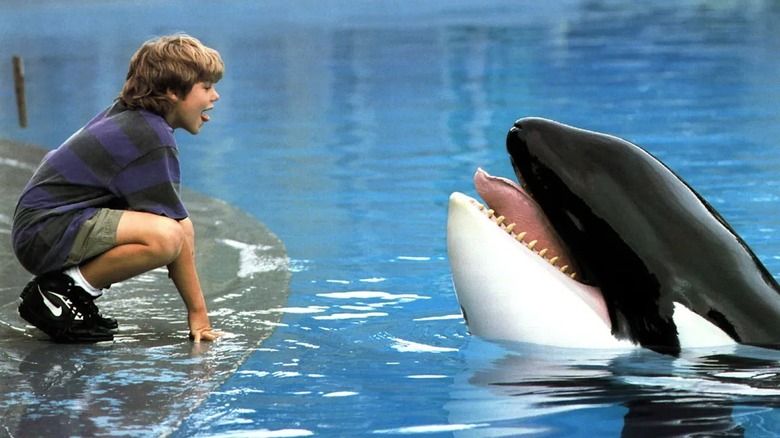
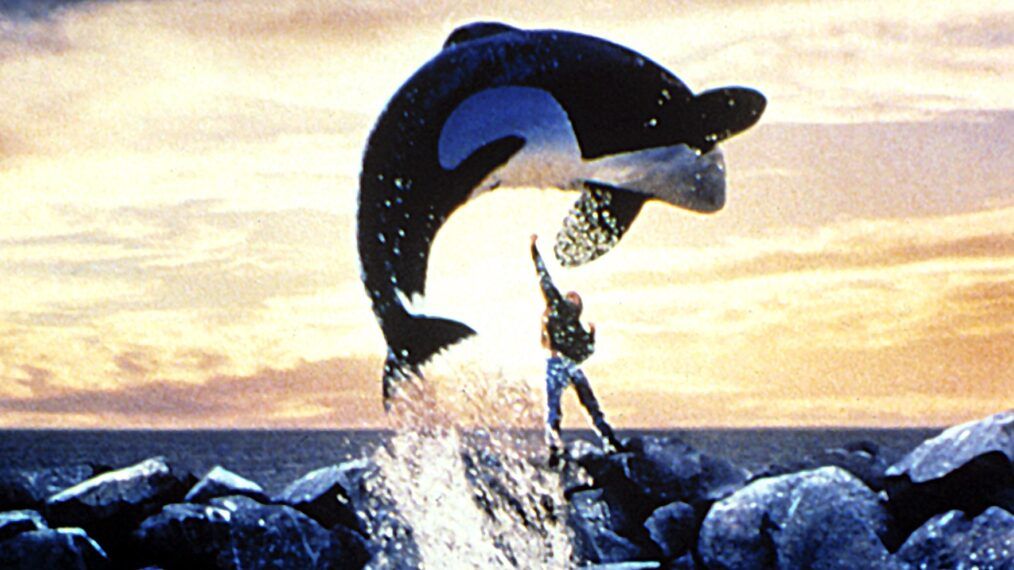
Then the plot turns dark in a way that surprised a lot of parents. The park is failing, and Willy is worth more dead than alive — the owner plans to drain the tank and collect the insurance money. Jesse’s only option is to break the whale out and get him back to the pod waiting offshore. Everything builds to the shot on the poster: Willy launching over the breakwater with Jesse’s hand reaching up, sunset behind them. It is pure movie manipulation and it worked on absolutely everyone.
A boy, a whale, and a harmonica
The emotional core of the film isn’t the escape — it’s the quiet stuff. Jesse plays a harmonica to Willy across the water, and the whale answers. Those scenes gave the movie its texture and gave Basil Poledouris’s score something to hang on. Kids who couldn’t have told you what a “foster system” was understood exactly what it meant to be a kid nobody kept.
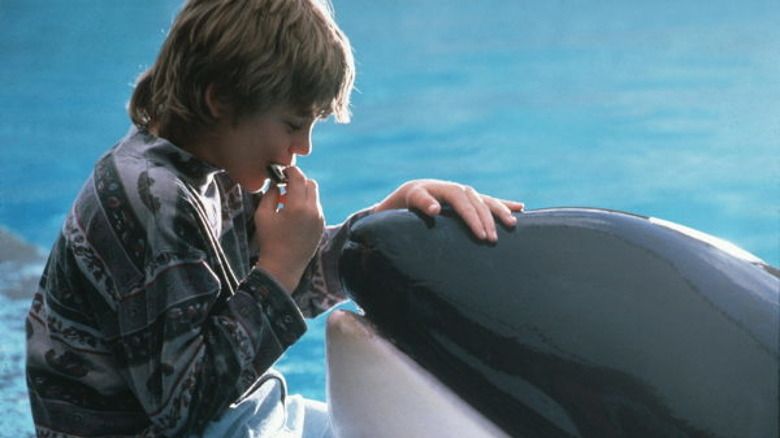
Wincer shot the tank sequences in Mexico City and the ocean finale off the Pacific Northwest, blending a real orca with an animatronic whale and — for the big jump — some of the earliest CGI in a family film. The trick held up better than most 1993 effects because the movie only needed you to believe for about four seconds. You did.
The Michael Jackson song that closed the credits
As the credits rolled, “Will You Be There” played — a gospel-tinged Michael Jackson track lifted from his 1991 album Dangerous. It was a genuinely inspired pairing. The song became a top-10 Billboard hit and won the 1994 MTV Movie Award for Best Song from a Movie, and for millions of people it is permanently welded to the image of a whale in mid-air. If you were a kid in 1993, the opening choir of that song still probably raises the hair on your arm.

Meet Keiko — the real orca behind Willy
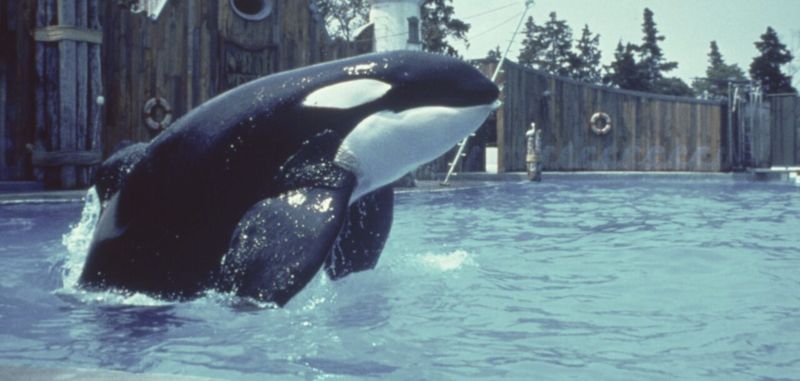
Here is where the story stops being a movie. Willy was played by a real orca named Keiko, captured near Iceland around 1979 and shuffled through marine parks until he landed at Reino Aventura in Mexico City. When the cameras found him, Keiko was sick. He was underweight, his skin was covered in warty lesions from a papillomavirus, and his tank was heated to a temperature no wild orca would ever tolerate. The whale playing a captive who dreams of freedom was, off-camera, exactly that captive.
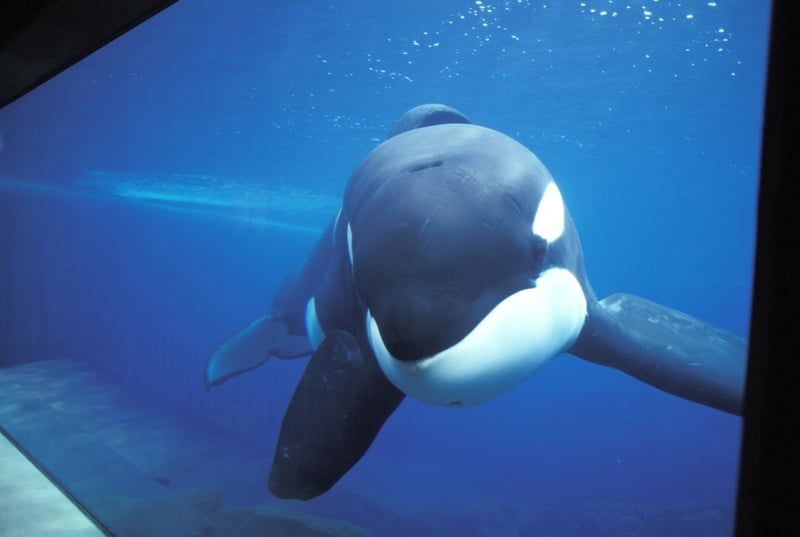
Audiences figured it out fast. The film ended with a toll-free number urging viewers to help save whales, and kids started asking the obvious question: if the movie is about freeing Willy, why is the real Willy still in a tiny pool? Warner Bros. suddenly had a public-relations problem shaped exactly like its own plot.
Life imitated art: the campaign to free the real Willy
The pressure worked. In 1995 the Free Willy-Keiko Foundation formed, backed by Warner Bros. and telecom billionaire Craig McCaw, and in January 1996 Keiko was flown to a purpose-built $7 million tank at the Oregon Coast Aquarium in Newport. He arrived weighing roughly 6,000 pounds and in rough shape. Over two years and eight months, his caretakers put nearly 1,900 pounds of healthy weight on him and cleared up his skin. Crowds lined up around the building just to see him.
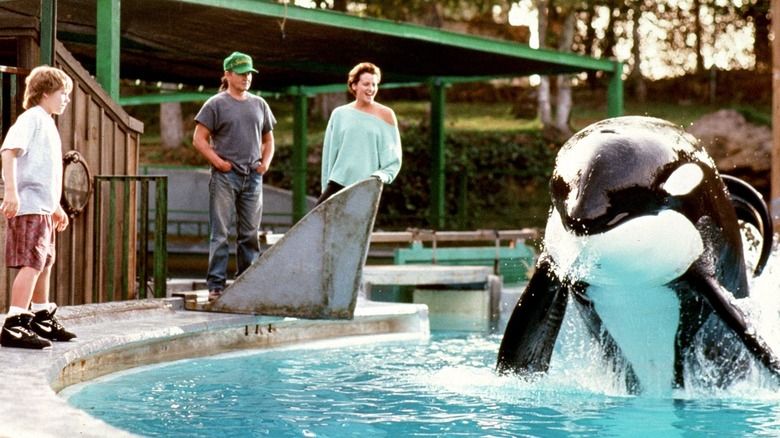
On September 9, 1998, Keiko was loaded onto a U.S. Air Force C-17 and flown to a sea pen in Klettsvik Bay off Heimaey, Iceland — the same waters he’d been taken from as a calf. In July 2002, after years of ocean acclimation, he was fully released. He became the first captive orca ever returned to the open sea, and he promptly swam roughly 1,000 miles across the North Atlantic to Norway.
How the story actually ended
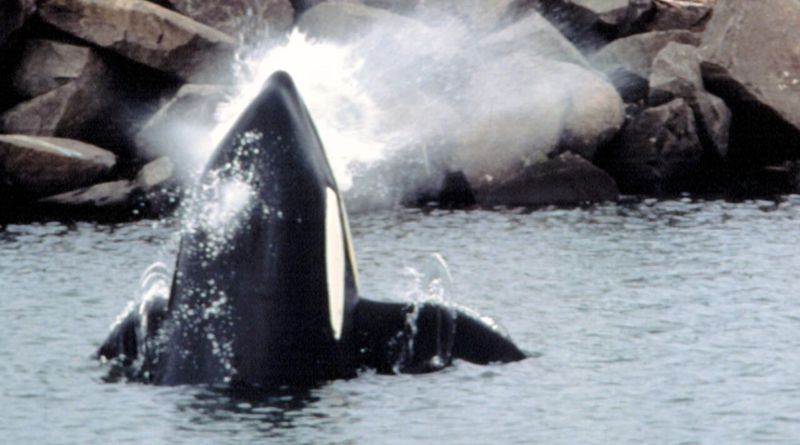
This is the part the sequels never showed. Keiko never rejoined a wild pod. Instead he sought out people, turning up in a Norwegian fjord at Halsa and letting children clamber onto his back. He was fed and monitored by his caretakers until December 12, 2003, when he died of pneumonia in a Norwegian bay at roughly 27 years old. Whether his release was a triumph or a well-funded tragedy is still argued by marine biologists — he survived in the wild longer than skeptics predicted, but he never really stopped being the whale who liked being near humans.
The captivity conversation Free Willy started
The truth is, a kids’ movie moved this debate further than a stack of scientific papers ever did. Free Willy planted a simple idea in millions of young heads — that a killer whale in a concrete tank is a sad thing — twenty years before Blackfish put the same idea in front of adults and cratered SeaWorld’s stock. You can draw a straight line from Jesse’s harmonica to the 2016 decision by SeaWorld to end its orca breeding program. Not bad for a film that Gene Siskel panned.
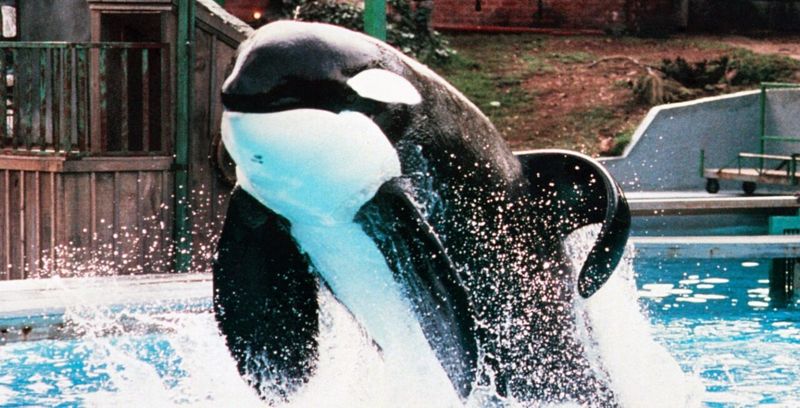
The franchise kept going without Keiko — two theatrical sequels, an animated series, and a 2010 direct-to-video reboot — but none of them caught lightning the way the first one did. That original hit a nerve because the whale on screen wasn’t pretending as hard as everyone assumed. If you love this era of tearjerker blockbusters, it sits right alongside Forrest Gump and the family-adventure magic of Back to the Future — and it proved a summer hit didn’t need the body count of a Die Hard to pack theaters.
Why it still holds up
Rewatch Free Willy now and the effects look their age, the villain is cartoonish, and the plot runs on rails. It doesn’t matter. The film understood something most family movies fumble: kids can handle a real feeling if you don’t lie to them about it. Jesse and Willy were both throwaways who found each other, and the movie let that be enough. Thirty-three years later, the whale who played Willy has been gone for two decades — but somewhere a kid is watching that jump for the first time, and the movie is still doing exactly what it was built to do.
Sources
- Free Willy — Wikipedia — release date, cast, box office, and production details.
- Keiko (orca) — Wikipedia — Keiko’s rehabilitation, Iceland release, and death.
- World Animal Protection — The Story of Keiko — the first captive orca returned to the wild.
- SlashFilm — Free Willy and the Truth About Keiko — the gap between the film and the real whale’s story.
The Retro Almanac
A monthly roundup of "on this day" highlights from that month, decades back — plus first dibs on new retro merch drops. No spam, just the good stuff.