The Breakfast Club: How John Hughes Defined a Generation in 97 Minutes
Universal Pictures handed John Hughes a $1 million budget and a closing high school in the Chicago suburbs. What he gave them back was the highest-grossing teen film of 1985 — made almost entirely inside a single room. The Breakfast Club didn’t rely on set pieces, explosions, or a villain. It relied on five actors in a library, and a director who understood what teenagers were actually afraid of.
One Library. Five Strangers. Zero Exits.
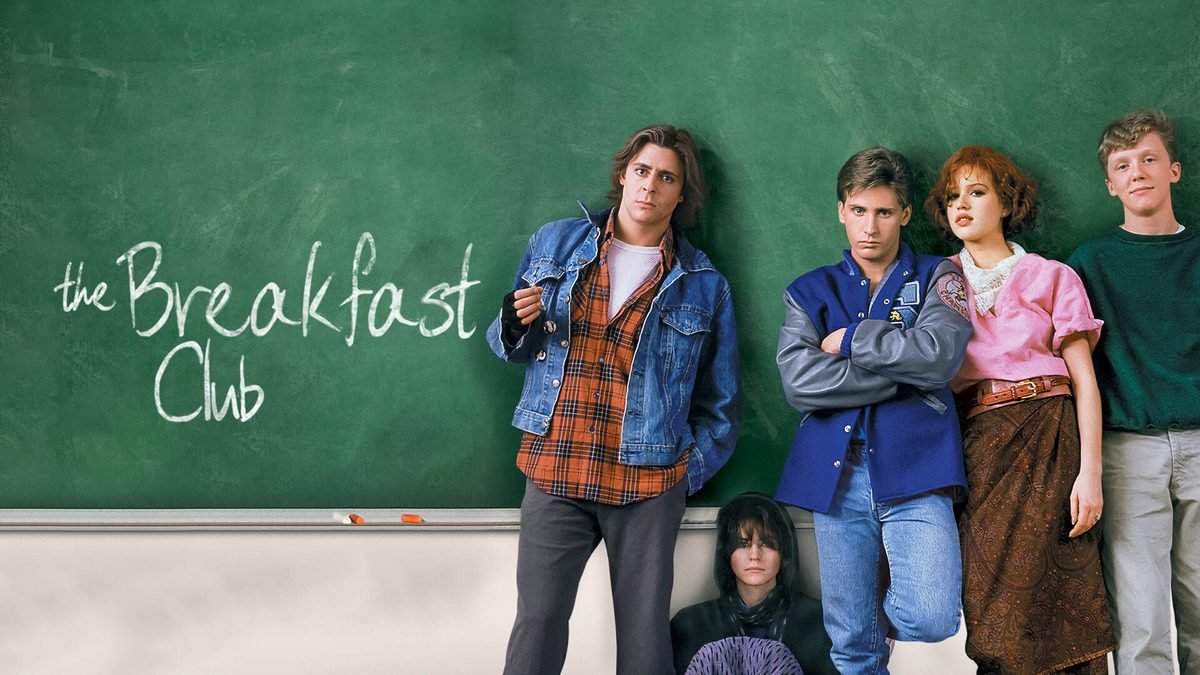
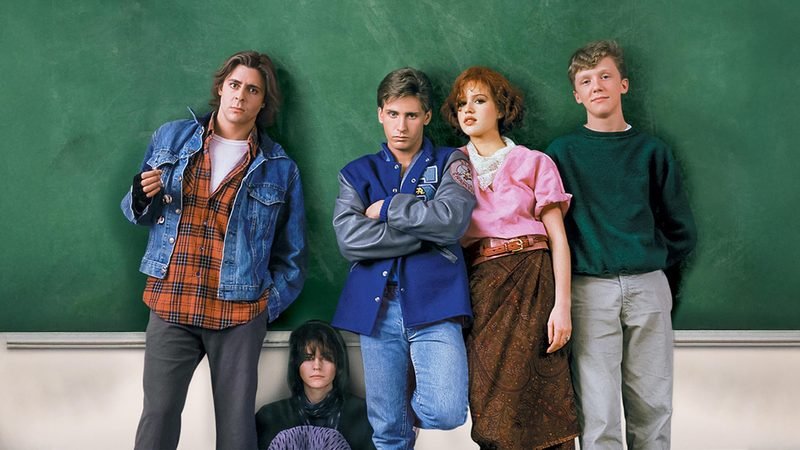
The setup is deliberately claustrophobic. Five students from completely different social worlds — the brain, the athlete, the basket case, the princess, and the criminal — are sentenced to Saturday detention in the Shermer High School library. They have to be there. They can’t leave. And they have absolutely nothing in common, or so they believe.
What makes the Breakfast Club movie hold up four decades later isn’t the dialogue, though some of it is remarkable. It’s the architecture of the thing. Hughes constructs each character as a closed system with a crack in it — the athlete who resents everything his parents built his identity around, the princess who’s desperately lonely at the center of her social galaxy, the outcast who wants to be known but has decided rejection is safer than trying. These aren’t types who evolve into real people. They already are real people; the film just strips away the performance.
The Retro Almanac
A monthly roundup of "on this day" highlights from that month, decades back — plus first dibs on new retro merch drops. No spam, just the good stuff.
John Hughes Wrote It in a Single Weekend
Hughes wrote the screenplay fast — reportedly over a single weekend in the early 1980s. The speed isn’t a party trick; it’s a clue about where the material came from. Hughes had grown up in the Chicago suburb of Northbrook and spent years watching the strict social architecture of American high schools operate in real time. He wasn’t inventing these characters. He already knew them.
He was also unusually young for a major Hollywood director at the time — in his early thirties when The Breakfast Club was made — and that proximity to the material showed. His characters have inner lives that contradict their outward roles, and he didn’t resolve that contradiction cleanly by the end. Brian’s shame, Allison’s compulsive lying, Andrew’s relationship with his father — none of these problems disappear because five kids shared a Saturday together. Hughes understood that, and he resisted the pressure to pretend otherwise.
The Real School Behind Shermer, Illinois
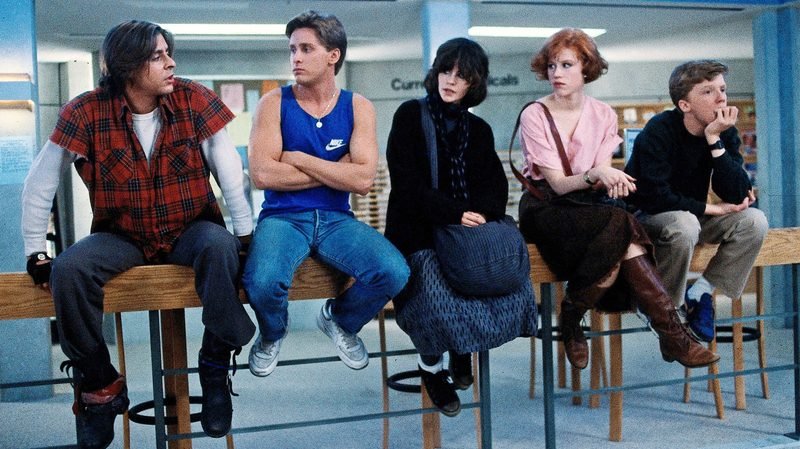
The fictional suburb of Shermer, Illinois — which appears across multiple Hughes films — was based on his real hometown of Northbrook. But the actual library set for The Breakfast Club was built inside Maine North High School in Des Plaines, a school that had recently been shuttered and was scheduled for eventual demolition. Hughes loved the location precisely because of its specificity: the particular look of fluorescent lights, institutional carpet, and a building that felt simultaneously abandoned and alive.
Maine North was eventually torn down, which means the actual library where these fictional characters spent their Saturday no longer exists anywhere except on film. There’s something fitting about that. The place survives only in the movie — and in the memory of anyone who watched it at the right age and felt, uncomfortably, that it was talking directly to them.
Judd Nelson Nearly Killed the Movie Before It Finished
Judd Nelson committed to playing John Bender with a method intensity that nearly cost him the role. During pre-production and early filming, Nelson reportedly stayed in character between takes, directing Bender’s aggression at Molly Ringwald in ways that crossed the line between acting and actual harassment. Ringwald complained to Hughes directly. Hughes threatened to replace Nelson — Nicolas Cage had been considered for the role earlier and was still a viable option.
The tension resolved, but the friction left a visible mark on the film. The hostility between Bender and Claire in the early library scenes doesn’t look acted because much of it wasn’t. Ringwald’s discomfort reading lines opposite Nelson in those scenes is real, and that uncomfortable specificity is exactly why they work. Hughes understood the difference between on-set tension that serves the film and on-set tension that destroys it. He kept what served.
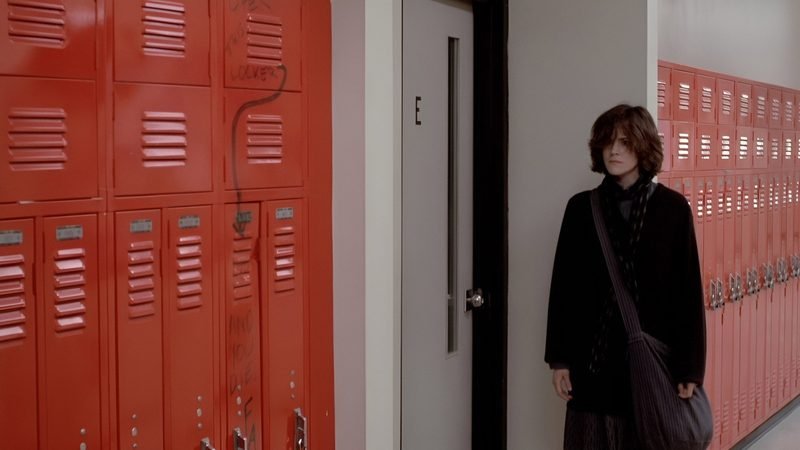
Ally Sheedy did something quieter and equally effective. Her character, Allison — the basket case — had the least conventional material in the script. Sheedy made her strange on purpose: compulsive, impulsive, odd in ways that felt earned rather than performed. The improvised moment where Allison empties her enormous bag onto the table and assembles a bizarre lunch from Pixie Stix and Cap’n Crunch? That wasn’t in Hughes’s script. Sheedy invented it.

The Song Nobody Wanted to Record
“Don’t You (Forget About Me)” is now so permanently attached to this film that it’s hard to imagine it almost wasn’t in it. Hughes had the song written for the movie but struggled to find an artist willing to record it. Billy Idol passed. Bryan Ferry passed. Several others passed. Simple Minds — the Scottish new wave group then riding the success of Sparkle in the Rain — recorded it largely because their management pressured them into it.
The band openly didn’t want to do it. Lead singer Jim Kerr has said in multiple interviews that the group considered it a throwaway piece of work that didn’t represent them. What happened instead: the song hit #1 on the Billboard Hot 100 in the spring of 1985 — the only US number one of Simple Minds’ entire career — and became their American breakthrough. The opening keyboard figure is now one of the most recognizable musical moments of the decade. The artists who passed presumably still think about their judgment from time to time.
Five Types That Mapped Every American High School
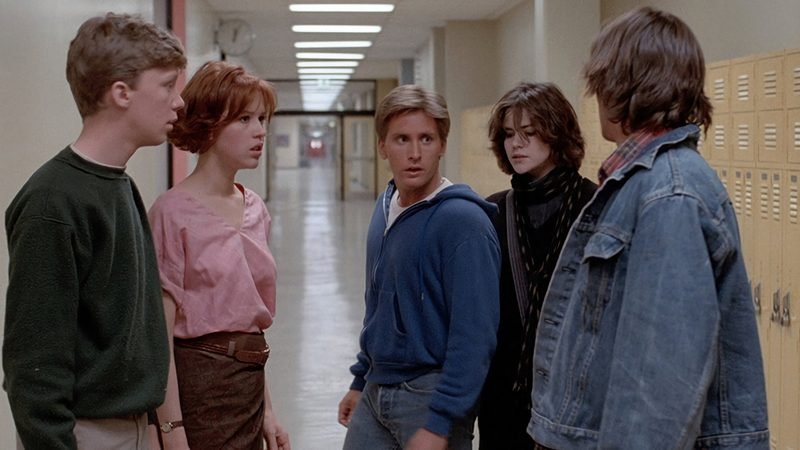
The film’s most durable achievement is how precisely it identified the five roles that organize adolescent social life. Every American high school in 1985 — and the evidence suggests, still today — ran on a version of these archetypes. The Brain (Brian Johnson, Anthony Michael Hall), carrying academic pressure he didn’t choose and would trade in an instant. The Athlete (Andrew Clark, Emilio Estevez), performing a version of strength that has nothing to do with who he actually is. The Basket Case (Allison Reynolds, Ally Sheedy), opting out of the system entirely as a protective strategy. The Princess (Claire Standish, Molly Ringwald), at the top of the hierarchy and privately furious about what it costs her. The Criminal (John Bender, Judd Nelson), who has decided that contempt is the only available form of self-respect.
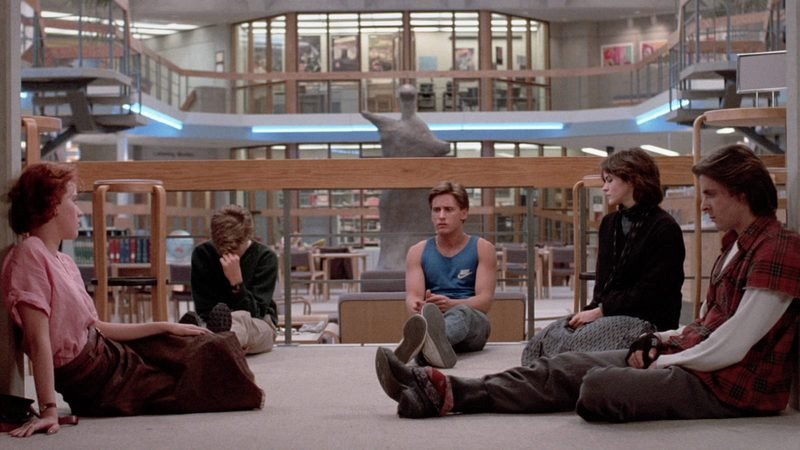
Hughes’s real argument — and it’s an argument, not just a character study — is that every one of these people is living inside a role they didn’t choose and can’t easily leave. The athlete’s father makes him wrestle. The princess’s parents use her social status to manage their own anxiety. The brain is being pointed toward a future nobody asked if he wanted. The criminal is one supportive parent away from being something completely different. None of them are free. That’s what makes the Saturday detention work: for one day, inside one room, the roles stop functioning, and five people are briefly visible to each other as people.

The Fist Pump That Ends the Film
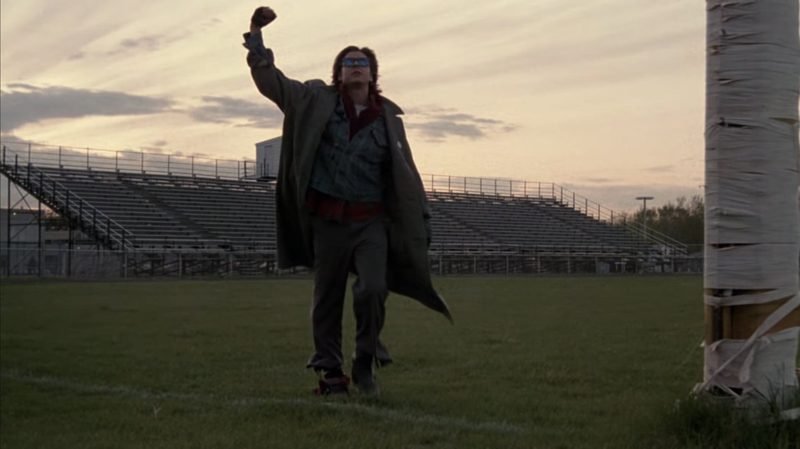
The final image — Bender walking alone across the football field, raising his fist while Simple Minds plays and the frame freezes — is one of the most replicated shots in American cinema. It works because it doesn’t resolve anything cleanly. He’s alone. He’s walking away from the school. The weekend’s moment of connection is already behind him. The fist is defiant, but it’s also valedictory — a gesture toward something he can’t be certain will survive Monday morning.
Hughes was asked many times whether the five characters remained friends after the detention. He never gave a clean answer, and that ambiguity is deliberate. The letter Brian reads at the end — “You see us as you want to see us” — is addressed to Principal Vernon, but it’s also addressed to the audience. The film is asking whether we’re willing to see these five people for what they actually are, or whether we’ll sort them back into the boxes the moment the credits roll. Most viewers, if they’re honest, know the answer to that question is complicated.

The Brat Pack and What Came After
In June 1985, New York magazine writer David Blum published a profile of Emilio Estevez that introduced the term “Brat Pack” — a deliberate echo of the Rat Pack — to describe the young actors dominating Hollywood’s teen films. The piece named Estevez, Nelson, Hall, Ringwald, Sheedy, Rob Lowe, and Andrew McCarthy as the core group. The cast hated the label almost universally. Estevez, who felt Blum had turned a casual dinner into a cultural verdict, was particularly vocal about it.
The label stuck anyway, and for several cast members it created a type they found hard to escape. Nelson spent years being offered variations on Bender. Hall found himself navigating between the nerdy-genius roles that had made him famous and the adult work he wanted. Ringwald became the most bankable teen actress in Hollywood, then walked away from the category at 18 — including turning down the lead in Pretty Woman — to avoid being permanently defined by the Hughes archetype.
The film itself proved harder to categorize than any of them. It’s been re-released, streamed, studied in classrooms, and referenced in films for four decades. Several cast members reconvened in 2015 for a 30th anniversary retrospective. It’s not purely nostalgia — it’s the film that explains why nostalgia for that decade exists in the first place. Hughes understood something about the 1980s that the decade itself hadn’t fully said out loud: that the era’s surface confidence was performing over a lot of genuine anxiety. Five kids in a library on a Saturday had already made the argument in 1985.
For more films that captured the era at its best, our roundup of the best 80s movies that still hold up covers the full decade. If the youth-culture edge of the period is the angle, The Lost Boys shows what the suburban 80s looked like at its darkest. And for another 1985 film that defined what the decade felt like from the inside, see Purple Rain.
Sources
- The Breakfast Club — Wikipedia — Production history, box office figures, and cast details
- Roger Ebert original 1985 review — Contemporary critical reception
- Mental Floss: 15 Facts About The Breakfast Club — Behind-the-scenes production details
- Vulture: An Oral History of The Breakfast Club — 30th anniversary retrospective with cast and crew
The Retro Almanac
A monthly roundup of "on this day" highlights from that month, decades back — plus first dibs on new retro merch drops. No spam, just the good stuff.