The Power Glove: How Nintendo’s Most Notorious Flop Became a Legend
The Power Glove arrived in October 1989 carrying a $75 price tag that could have bought you two NES games and a design that looked like it was stripped off a Terminator. It also barely worked. None of that stopped it from landing on every kid’s Christmas list that year, and none of it stopped it from becoming one of the most talked-about pieces of consumer electronics ever made. Thirty-five years later, you can still find it on collector shelves, in music studios, and on the hands of hardware hackers who see in it something the original engineers could never have predicted.
Nintendo Didn’t Make It
The Power Glove carries the Nintendo seal of quality on its box, but Nintendo had almost nothing to do with creating it. The glove was designed by Abrams/Gentile Entertainment — known in the industry as AGE — and manufactured and distributed by Mattel. Nintendo’s contribution was to license their brand and walk away from the engineering problem.
AGE had been developing the concept for years before settling on the technology they used. The lineage of the hardware traced back to academic research labs: VPL Research’s DataGlove, developed by Jaron Lanier’s company with early contributions from researcher Thomas Zimmermann, sold to virtual reality labs and researchers for around $9,000 a unit in the late 1980s. AGE adapted a dramatically simplified version of that concept and brought it to a retail price that, while still steep, ordinary consumers could theoretically consider.
The Retro Almanac
A monthly roundup of "on this day" highlights from that month, decades back — plus first dibs on new retro merch drops. No spam, just the good stuff.
Mattel distributed it the same way they handled other toy-tech crossovers. Nintendo collected a licensing fee and the right to call it an authorized accessory on the Nintendo Entertainment System, which had been dominating American living rooms since 1985. The company that made Mario got the marketing upside; AGE and Mattel got every engineering headache that followed.
The Technology That Could (Almost) Track Your Hand
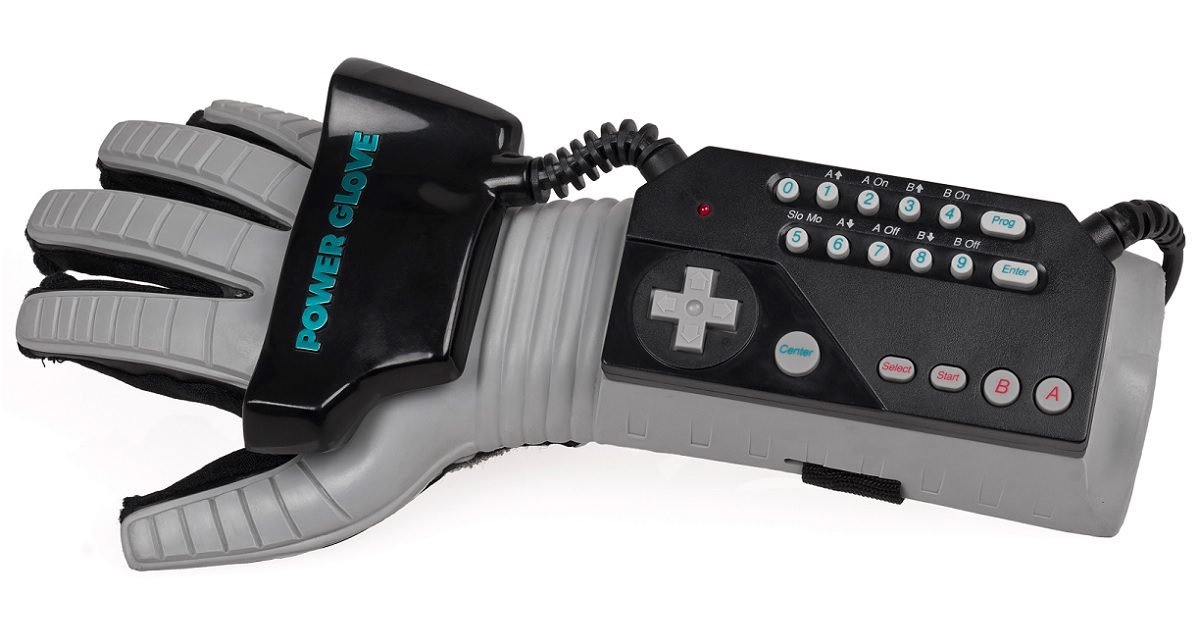
The Power Glove worked — in theory — through two parallel systems. Three ultrasonic transmitters along the back of the glove sent pulses toward three receiver microphones that clipped onto the top of your television set. By measuring how long those pulses took to travel, the hardware calculated your hand’s rough position in three-dimensional space relative to the screen.
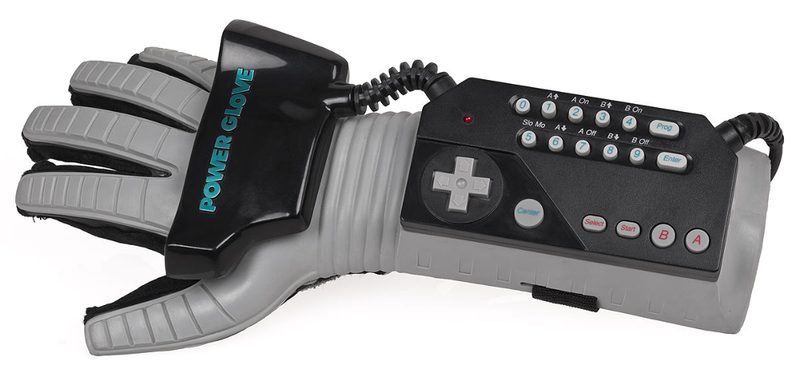
The word “rough” is carrying significant weight in that sentence. Ultrasound positioning had a lag of anywhere from half a second to well over a second in typical living-room conditions. For reference, a skilled NES player times inputs to within a fraction of a second. That lag made most action games unplayable — you’d input a jump and Mario would launch himself into a pit a full beat after you gestured. Signal drift from a passing sibling, an overhead light, or a dog crossing in front of the TV compounded the problem constantly.
The second system used four flex sensors along the fingers. To switch between control modes, you’d enter codes by bending your fingers in sequence — Mode 0-0-3-0 for standard NES controller emulation, Mode 0-0-5-0 for specific button mappings. Kids memorized these codes the same way they memorized Game Genie cheats: painstakingly, from photocopied instruction sheets, often wrong the first several tries. The Game Boy, released the same October, at least worked exactly as advertised.
The Wizard Made It Famous Before Anyone Could Review It
The Wizard opened on November 15, 1989 — roughly three weeks after the Power Glove started shipping to stores. Fred Savage starred as Corey, a kid helping his little brother Jimmy (Luke Edwards) travel cross-country to compete in a video game tournament. Jenny Lewis played their companion Haley. The plot was simple. The product placement was relentless. Universal Pictures made it; Nintendo helped fund it.
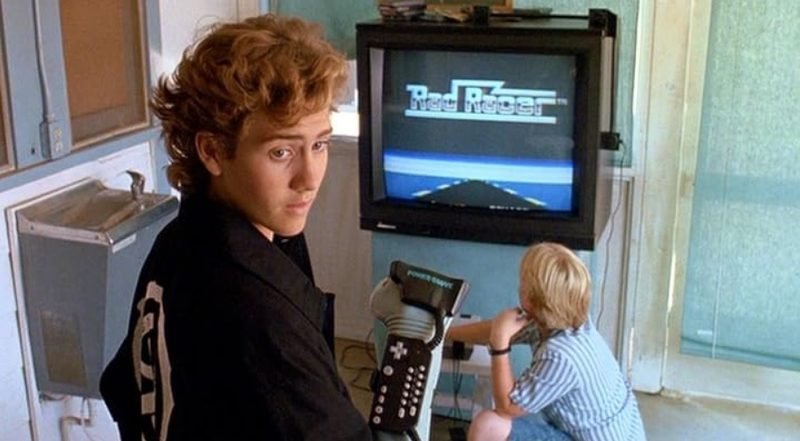
The film is best remembered today for giving American audiences their first look at Super Mario Bros. 3 before the game was available to buy. But the scene everyone quotes involves Lucas, the tournament’s reigning champion played by Jackey Vinson, pulling out a Power Glove and destroying Corey at Rad Racer. He raises the glove toward the crowd: “I love the Power Glove. It’s so bad.”
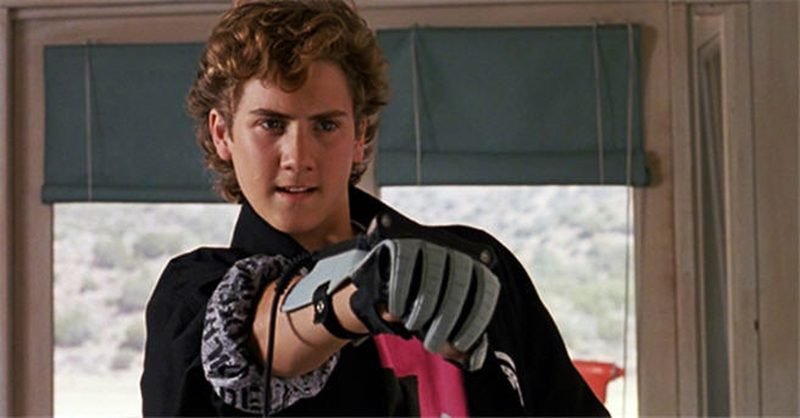
“Bad” in 1989 meant excellent. The glove looked exactly like something that belonged in a science-fiction film — flat black, angular, sporting a control panel along the underside of the wrist. The line landed perfectly. By the time The Wizard left theaters, the Power Glove’s status as something you had to own was already fixed in the cultural record. Reviewers were simultaneously rating it anywhere from “disappointing” to “nearly unusable.” Didn’t matter. Fifty million people saw the movie.
Two Games Actually Supported It
AGE built the Power Glove to emulate a standard NES controller in its default mode, which worked acceptably for slow-paced games that didn’t demand split-second timing. But only two games were ever specifically designed to take advantage of the glove’s motion sensing: Super Glove Ball and Bad Street Brawler, both released by Mattel in 1990.
Super Glove Ball was a 3D puzzle game where you deflected a ball through geometric rooms using the glove. The slower pace and forgiving geometry masked the ultrasound lag better than an action game would. It was functional — not particularly good, but functional. Bad Street Brawler was a side-scrolling beat-’em-up converted from an existing PC keyboard game. Punches and kicks mapped to gestures, which sounded right in concept. The lag made landing hits intentionally nearly impossible. It appears regularly on lists of the worst NES games ever made.
That completed the purpose-built library. Two titles, one year, then nothing. Every other game required the emulation modes, which reduced a $75 glove to an awkward substitute for a $15 NES controller that already worked fine.
Why Kids Wanted It Anyway
Reviews didn’t move much product in 1989. Kids weren’t checking Electronic Gaming Monthly before asking for things. What they had was The Wizard, playground rumors, and the undeniable fact that the Power Glove looked like something you’d use to control a robot.
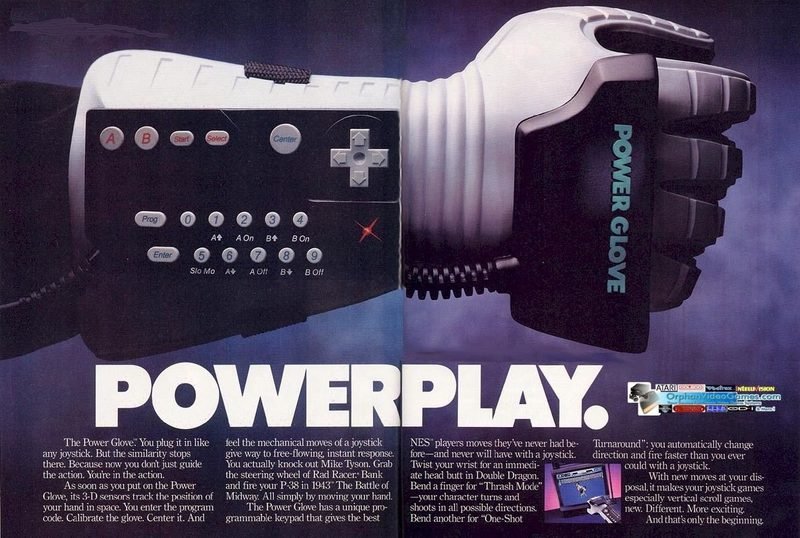
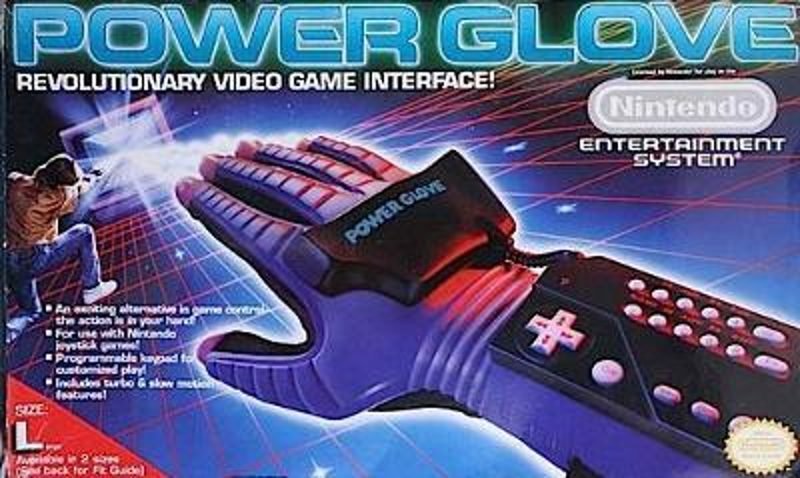
The design is still striking today. A flat black forearm brace, oversized and angular, with the glove attached in a shape that suggested armor rather than a gamepad. The control buttons along the underside of the wrist. The cord running back to the NES. Put it on and you looked like you were interfacing directly with the future. That 1989 print ad — “POWERPLAY.” in massive type above the glove, fist raised, surrounded by sci-fi darkness — captured exactly what it promised to be.
That aesthetic carried real weight in 1989, when virtual reality was being hyped across every technology magazine in print and science fiction was at a cultural peak. The Power Glove let a kid at least look like they were living inside that future, even when the game on screen wasn’t cooperating. Most kids wore it around the house long after abandoning it for actual gaming. It was too cool to put down even when it was useless.
The $75 ask translated to roughly $185 in today’s dollars. Steep. Most parents declined. The ones who gave in discovered their kid couldn’t put the glove down regardless of whether it worked — and that, more than any product review, is the measure of good design.
The Power Glove’s Second Life
The Power Glove never disappeared — it found a second life in the hands of people who had no interest in playing video games with it.
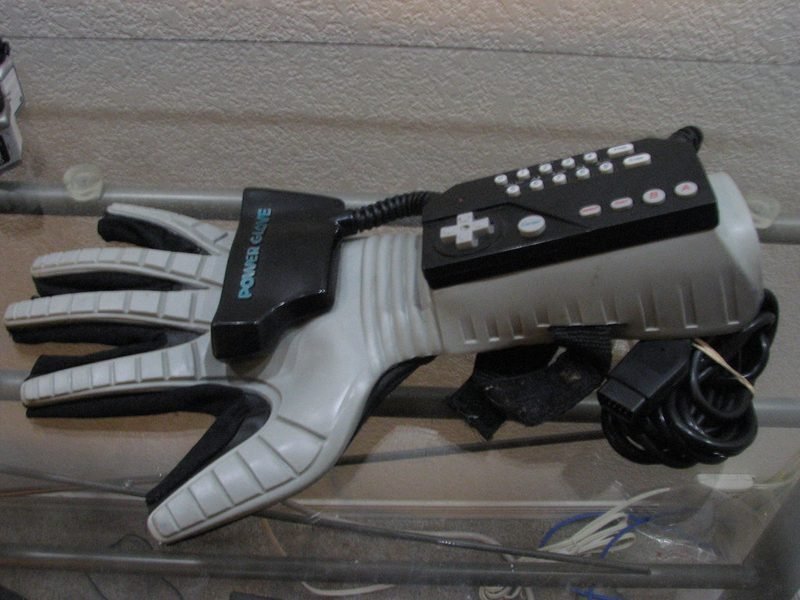
In the early 2000s, musicians and hardware modders realized the glove’s flex sensors and ultrasound components were functional, hackable, and cheap to find at thrift stores. Turntablist Q-Bert started using a modified Power Glove as a scratch controller. Others built MIDI interfaces from the components, turning the glove into a wearable instrument. A cottage industry of hobbyist modifications developed over the following decade, and YouTube’s “What’s Inside?” genre found it irresistible — cut one open and you get sensors, wires, and a routing system that made the hardware look more sophisticated than it ever actually performed.
The glove became a permanent fixture of retro gaming culture. It appears in Ready Player One. Gaming historians have dedicated long-form documentaries to it. Clean examples with original boxes regularly sell for $100 to $300 on the collector market — more than the inflation-adjusted original retail price — driven by buyers who want the object itself, not anything it was ever capable of doing.
The Power Glove was a $75 peripheral that barely worked, launched by a company that wasn’t Nintendo, made famous by a movie that was essentially a commercial, and kept alive by musicians and collectors who recognized something the original engineers didn’t fully plan for: some things become legendary not because they work, but because of what they represented when they arrived. It sits alongside the Simon game and a handful of other era-defining objects that meant something beyond their function.
Frequently Asked Questions
Did the Power Glove actually work?
In emulation mode, the Power Glove replaced a standard NES controller well enough for slow-paced games. The ultrasound position tracking had too much lag for most action or platforming titles. Of the two games designed specifically for the glove — Super Glove Ball and Bad Street Brawler — the former was functional, the latter nearly unplayable.
How much is a Power Glove worth today?
A complete Power Glove in working condition with the original box typically sells for $100 to $300 on eBay and collector markets. Price depends heavily on condition, completeness of accessories (receiver strip, wrist strap, instruction manual), and whether it powers on. Loose gloves without packaging run $40 to $80.
Who actually made the Power Glove — Nintendo or Mattel?
Neither designed it. The Power Glove was created by Abrams/Gentile Entertainment (AGE), a New York firm, and distributed by Mattel. Nintendo licensed their brand for the product and approved it as an authorized NES accessory but had no role in its design or manufacture.
What is the “I love the Power Glove. It’s so bad” quote from?
The line comes from The Wizard (1989), spoken by the character Lucas (played by Jackey Vinson) during a tournament Rad Racer match. The film was partially funded by Nintendo as a promotional vehicle for its game library. The quote became one of the most remembered lines from a movie that was itself almost entirely a commercial.
Sources
- Power Glove — Wikipedia — Hardware specifications, sales history, and cultural impact overview.
- The Wizard (1989) — Wikipedia — Film background, Nintendo partnership, and box office details.
- VPL Research and the DataGlove — Wikipedia — Origins of the DataGlove technology that influenced Power Glove hardware.
- Mental Floss: The Brief History of the Power Glove — Retail history, AGE company background, and legacy coverage.
- The Wizard (1989) — IMDb — Cast, crew, and release date confirmation.
The Retro Almanac
A monthly roundup of "on this day" highlights from that month, decades back — plus first dibs on new retro merch drops. No spam, just the good stuff.