On This Day: June 30, 1986 — Madonna Drops True Blue
Twenty-five million copies. That is the number that still ends most arguments about True Blue. When Madonna released her third album on June 30, 1986, she was already famous — “Like a Virgin” had seen to that two years earlier. What she was not yet was untouchable. True Blue fixed that in about eleven weeks of chart dominance, and it did it on songs she had a hand in writing every step of the way.

The Herb Ritts cover shot — black-and-white, head tilted back — became one of the most recognizable images of the decade.
The Retro Almanac
A monthly roundup of "on this day" highlights from that month, decades back — plus first dibs on new retro merch drops. No spam, just the good stuff.
What made Madonna True Blue different from her earlier records?
Madonna co-wrote and co-produced all nine tracks, a first in her career. On her debut and on Like a Virgin she had been the voice and the image; here she was in the room making decisions about arrangements, hooks, and how her own voice should sound. She worked mostly with two collaborators — Stephen Bray, an old bandmate from her New York days, and Patrick Leonard, who would shape her sound for years afterward.
The recording ran from December 1985 into April 1986 at Channel Studios in Los Angeles. Madonna dedicated the album to her then-husband Sean Penn, calling him “the coolest guy in the universe” in the liner notes. The title track was a deliberate throwback to early-’60s girl-group pop — the kind of sound she had grown up on — and the rest of the record swung between confession, controversy, and pure dance-floor candy.
The five singles that ran the charts for a year
Few albums of the decade stayed in rotation as long as this one. True Blue kept feeding radio and MTV new material from spring 1986 well into 1987, and four of its five singles topped the Billboard Hot 100.
“Live to Tell” came first in March 1986, a slow, somber ballad written for Penn’s film At Close Range. It surprised people who expected another “Material Girl,” and it went to number one. Then came the lightning rod.
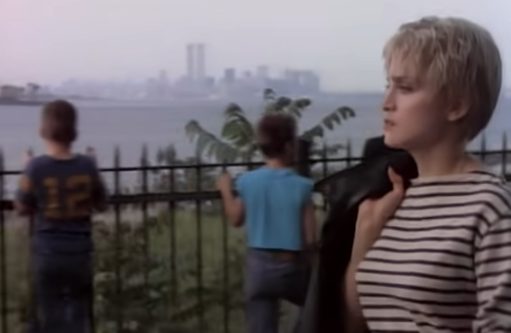
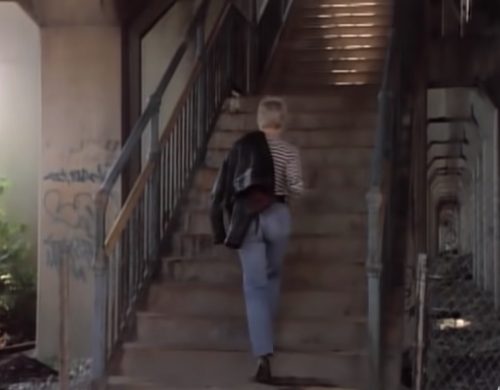
The “Papa Don’t Preach” video gave Madonna a cropped platinum cut and a tougher look — shot around Staten Island with the Manhattan skyline behind her.
Why was “Papa Don’t Preach” so controversial?
“Papa Don’t Preach” was released on June 11, 1986, and it detonated. The song is sung from the point of view of a pregnant teenager who has decided to keep her baby and marry her boyfriend, against her father’s wishes. In 1986 that was not a neutral subject. Planned Parenthood argued the song glamorized teen pregnancy; conservative groups, oddly, praised what they heard as an anti-abortion message. Madonna mostly let both sides argue.
What got lost in the noise was how good the record is. The strings were arranged to sound like something out of a Tchaikovsky piece, the chorus is enormous, and the video — Madonna in a leather jacket and a cropped Marilyn-blonde cut, with Danny Aiello playing the heartbroken father — gave her a grown-up, defiant new image. It became her fourth number one and one of the defining singles of the year.
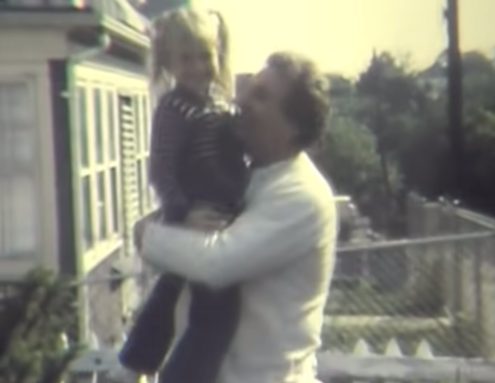
Danny Aiello played the father in the video — and later recorded an answer song, “Papa Wants the Best for You.”
From the title track to “La Isla Bonita”
The title single, “True Blue,” followed in September — bubblegum-bright, all hand-claps and doo-wop harmonies, with a video that leaned hard into a candy-colored ’50s fantasy. It peaked at number three in the States and went to number one across much of Europe.
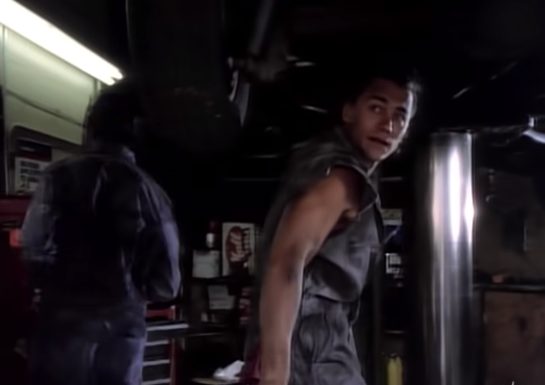
“Open Your Heart” arrived in November and gave her another number one, paired with the Jean-Baptiste Mondino video set in a peep-show booth — a setup that managed to be provocative and oddly sweet at the same time. Then, in early 1987, came the song a lot of people now name as the album’s best.
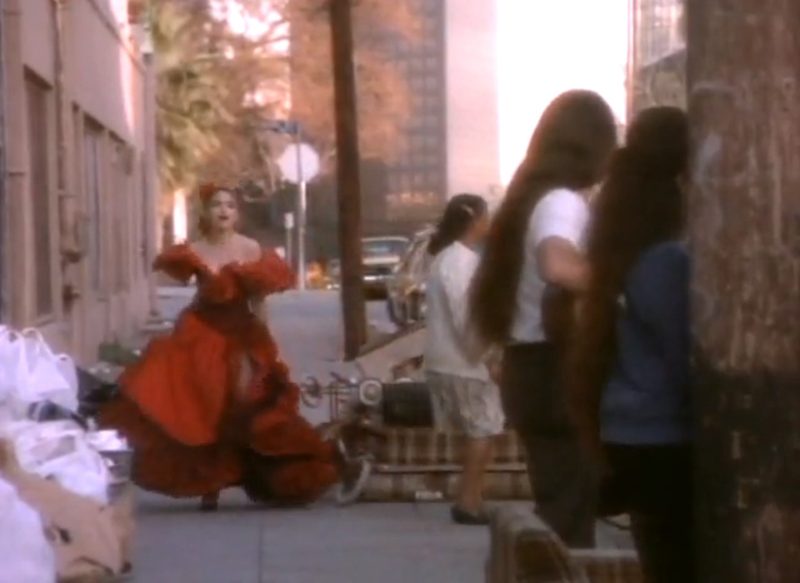
“La Isla Bonita” and its flamenco-dancer video became the album’s longest-running cultural calling card.
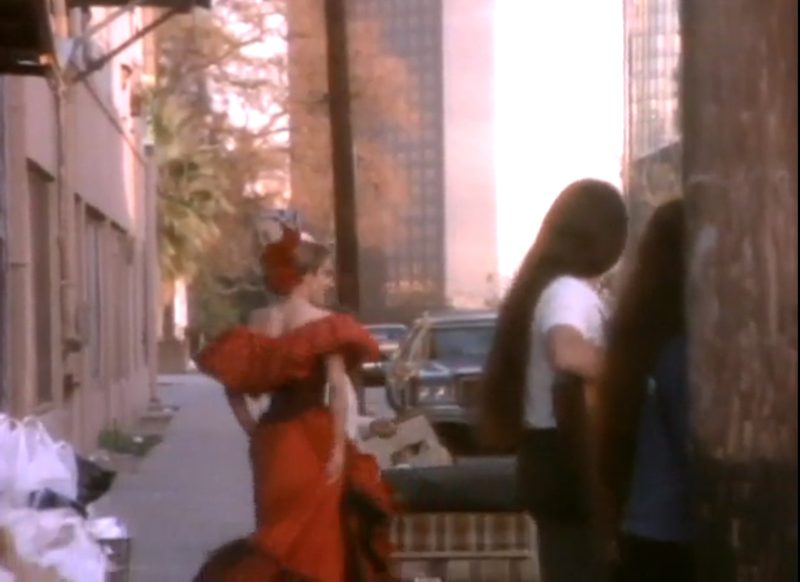
“La Isla Bonita” was the first major pop hit to fold Latin sounds — Spanish guitar, marimba, cumbia rhythm — into Madonna’s vocabulary, and it opened a door she would walk through again and again. The Mary Lambert video, with Madonna switching between a devout young woman and a fiery flamenco dancer in a red ruffled dress, became the most-requested clip on MTV for twenty straight weeks. Decades later it crossed a billion views on YouTube.
How big was True Blue commercially?
Enormous, and in a way no one had quite managed before. True Blue hit number one on the Billboard 200 and held it for five straight weeks. More striking was its global reach: it topped the charts in 28 countries at once, which set a Guinness record at the time. It finished as the best-selling album of 1986 worldwide and has since moved north of 25 million copies, making it one of the best-selling albums by any woman in history.
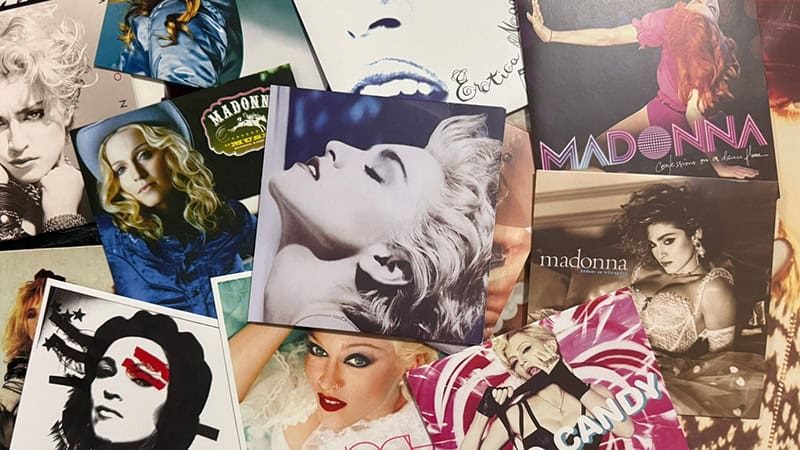
True Blue sits at the center of an ’80s pop run that few artists have matched.
The numbers matter, but the shift they represent matters more. Before True Blue, plenty of critics filed Madonna under disposable — a clever image with good singles. The argument got much harder to make about an artist who had just co-written and co-produced a record that outsold nearly everything else on earth. Reviewers started comparing her to Michael Jackson and Prince rather than to other dance-pop acts. If you want a sense of the company she was suddenly keeping, look at Prince’s own mid-’80s peak in our deep dive on the Purple Rain movie.
What did critics say at the time?
The reviews were warmer than Madonna’s earlier records had gotten, and the reason was usually the same: people could hear her growing up. Critics singled out her improved vocals and the fact that she was clearly steering the ship. Rolling Stone and the broadsheets that had once treated her as a passing fad started writing about craft — the doo-wop architecture of “True Blue,” the orchestral build of “Papa Don’t Preach,” the genuine vulnerability of “Live to Tell.” Not everyone was won over; a few reviewers found the record less fun than her dance-floor debut. But the dismissive tone of 1984 was mostly gone.
The album also rewired who Madonna worked with. Patrick Leonard, brought in almost by accident, ended up co-writing “Live to Tell,” “Open Your Heart,” and “La Isla Bonita” — the spine of the record — and stayed in her circle for the rest of the decade. Stephen Bray grounded the dance tracks. That small, stable team is part of why True Blue sounds more focused than the patchwork of producers behind a lot of mid-’80s pop. It plays like an album, not a singles dump with filler in between.
The Who’s That Girl tour and the look
To support the record, Madonna launched the Who’s That Girl World Tour in June 1987, opening at Osaka Stadium in Japan. It grossed around 25 million dollars and finished as the second highest-grossing tour by a female artist that year, behind only Tina Turner. For “True Blue” she came onstage in a blue taffeta dress over a corset, restaging her own videos as live theater — an idea she built with costume designer Marlene Stewart.
The styling of this era — the cropped platinum hair, the rosary beads, the mix of street-tough and old-Hollywood glamour — became one of the most copied looks of the decade. Teenage girls cut their hair like the “Papa Don’t Preach” video. It was a reminder that Madonna’s real talent was never just the songs; it was knowing exactly what image to wear and when to change it. That instinct for reinvention is the same engine that kept ’80s pop culture moving — the same restlessness you can hear in old-school hip-hop’s late-’80s rise and see in the fantasy-film boom that gave us Labyrinth just three days earlier in June 1986.
Why True Blue still matters
Almost forty years on, the album reads as the hinge in Madonna’s career. Everything before it was promise; everything after it — Like a Prayer, the reinventions, the decades of relevance — was built on the credibility True Blue bought her. It proved she could write, produce, provoke, and sell all at once, and that a pop star could control her own story instead of just performing someone else’s songs. The next time someone calls a chart-topping pop record “just pop,” it is worth remembering that this is the album that made that line sound lazy.
Sources
- True Blue (album) — Wikipedia — release date, singles, chart and sales data.
- OUTinPerth: Madonna’s True Blue, the album that reinvented a pop icon — context on the album’s legacy.
- Who’s That Girl World Tour — Wikipedia — tour dates, gross, and staging details.
- Papa Don’t Preach — Wikipedia — single release, controversy, and video production.
The Retro Almanac
A monthly roundup of "on this day" highlights from that month, decades back — plus first dibs on new retro merch drops. No spam, just the good stuff.