On This Day: September 13, 1996 — The Day Hip-Hop Lost Tupac
Tupac hadn’t even been out of prison for a full year. He’d walked out of Clinton Correctional Facility in October 1995 on $1.4 million bail posted by Death Row Records, signed to the label on the spot, and proceeded to record more than 150 tracks in the months that followed. All Eyez on Me — released February 13, 1996, the first double solo album in hip-hop history — went platinum four times in its first week. “California Love” hit number one. By summer he was the most talked-about rapper alive. By September 13, he was gone.
The Night It All Started: September 7, 1996
The timeline of Tupac’s final hours begins not with a gunshot but with a boxing match. Mike Tyson knocked out Bruce Seldon in 109 seconds at the MGM Grand Garden Arena in Las Vegas — one of the most one-sided heavyweight title fights in years. Tupac was there with Suge Knight, Death Row’s CEO, along with an entourage that included several members of the Mob Piru Bloods street gang.
The Retro Almanac
A monthly roundup of "on this day" highlights from that month, decades back — plus first dibs on new retro merch drops. No spam, just the good stuff.
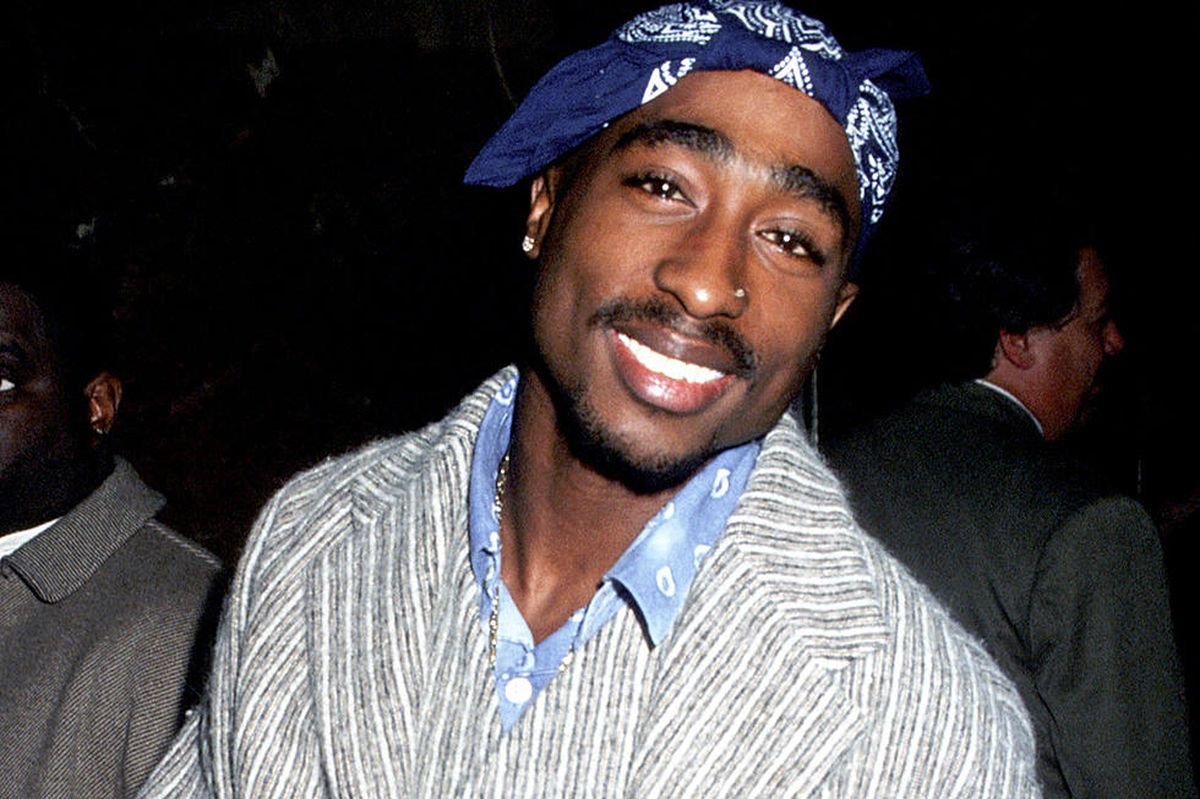
Tupac Shakur at the height of his fame in 1996, months before his death on September 13.
After the fight ended, cameras in the MGM Grand lobby captured what investigators would later describe as a critical piece of evidence: members of Tupac’s group beating Orlando Anderson, a member of the South Side Compton Crips. Anderson was the nephew of Duane “Keffe D” Davis, the man who would eventually be convicted of orchestrating what came next.
The assault lasted roughly 30 seconds. No one was arrested. Tupac and Suge left the hotel and drove toward Club 662 — Knight’s own venue, named after the letters M-O-B on a phone keypad. They never got there.
Flamingo Road: The Drive-By That Changed Hip-Hop

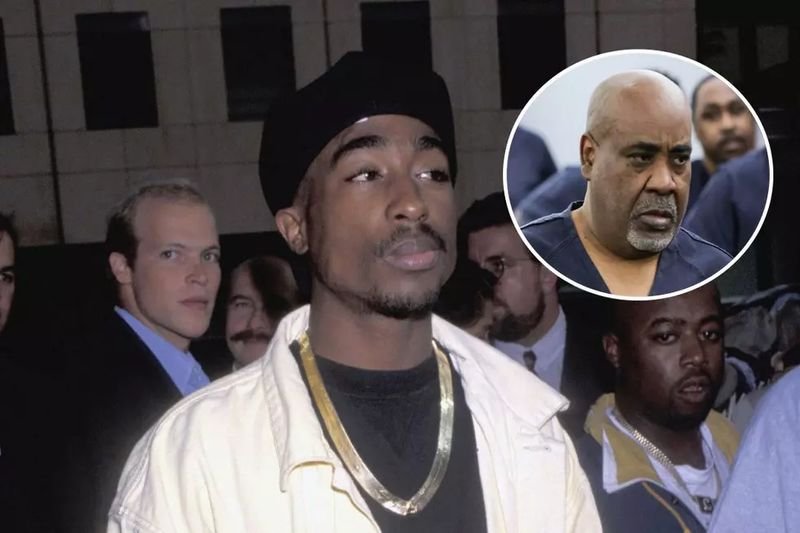
Key figures in the Tupac murder case — the retaliatory attack that prosecutors say Davis ordered hours after the MGM lobby fight.
Just after 11 PM, a white BMW 750iL — a model virtually identical to the one Suge was driving — pulled up to a red light on Flamingo Road near Koval Lane. A white Cadillac crept up alongside and opened fire. Witnesses heard at least twelve shots. Four bullets hit Tupac: twice in the chest, once through his right hand, and once in his right thigh. One bullet fragment caught Suge Knight in the back of the head — he kept driving. He pulled over about a quarter mile away, and Las Vegas Metro Police were on scene within minutes.
Tupac was conscious when paramedics arrived, still alert enough to argue. By the time he reached UMCSN, he was going into cardiac arrest. Surgeons removed his right lung to control the bleeding. The operation lasted hours.
Six Days That the World Held Its Breath
The next morning, every radio station in the country was talking about nothing else. Fans gathered outside UMCSN with candles and flowers. The hospital issued terse updates: stable, critical, stable again. Tupac came off the ventilator briefly on the third day, which the press reported as a sign he might pull through.

Tupac’s legacy endured far beyond his death — streets, schools, and public spaces across the country have been named in his honor.
He didn’t pull through. On the afternoon of September 13, 1996 — a Friday — Tupac Amaru Shakur went into respiratory failure. He was pronounced dead at 4:03 PM Pacific time. He was 25 years old. His mother, Afeni Shakur, was at his bedside.
The news broke across pagers, early internet chat rooms, and evening TV simultaneously. For a significant portion of the generation that had grown up with Me Against the World and All Eyez on Me, it felt like the floor dropped out. He’d been an angry, urgent, brilliant voice — and he’d been shot for what was, at bottom, a fistfight in a hotel lobby.
Who Was Tupac Shakur at 25?
The biographical facts are well-worn by now but still striking. Tupac Amaru Shakur was born June 16, 1971, in East Harlem. His mother Afeni was a Black Panther who was pregnant with him while on trial — acquitted one month before his birth. He grew up in poverty in New York and Baltimore before moving to Marin City, California as a teenager. He studied acting and dance at the Baltimore School for the Arts, which shaped his stagecraft and his instincts as a performer.
His musical career launched through Digital Underground in 1991, then exploded with his debut solo album 2Pacalypse Now later that year. Films came in parallel: Juice in 1992, Poetic Justice in 1993 alongside Janet Jackson. By 1994 he was one of the most famous people in America — and also one of the most legally embattled. Sexual assault conviction. Shooting an off-duty police officer (charges dropped). Prison.
The Death Row era — from his release in 1995 to his death — was his most prolific. He recorded constantly, collaborated with Dr. Dre and Snoop Dogg, and feuded loudly and publicly with Biggie Smalls and Bad Boy Records after claiming he was set up to be robbed and shot at Quad Recording Studios in New York in 1994. The feud sold records on both sides and generated media coverage that reframed a personal grievance as a coast-versus-coast war. That framing would outlive both of them.

The East/West Narrative and Its Costs
The “East Coast vs. West Coast” story was compelling, simple, and partially wrong. The actual dispute between Tupac and Biggie was rooted in specific events — the Quad Studios shooting, a perceived betrayal over bail money — not geography. But the media covered it as a regional cold war, and rap magazines, radio stations, and record labels leaned into it because the tension sold. VIBE magazine ran a September 1996 cover story on the subject that hit newsstands almost exactly as Tupac was being shot.
If you want to understand how badly the East/West framing distorted things, consider what happened next: on March 9, 1997, six months after Tupac’s death, Biggie Smalls was shot and killed in Los Angeles after the Soul Train Music Awards. Both murders unsolved. Both blamed, in the public imagination, on the other coast. The reality, as would eventually emerge, was messier and more specific: gang affiliations, personal grievances, and the lethal proximity of the music industry to street-level violence.
For a generation of hip-hop fans, both deaths landed as evidence that the genre’s stars were living under a different set of rules — more exposed, less protected — than any other form of celebrity. It also produced the most sustained run of posthumous mythology in music history. Tupac’s estate released more albums after his death than he released while alive. The conspiracy theories about him faking his death — sparked in part by the Makaveli album cover depicting him crucified and the album’s rushed November 1996 release — have never fully stopped.

The murder trial verdict in 2026 finally gave Tupac’s family — and the hip-hop world — the legal answer they had waited three decades for.
The Fresh Prince of Bel-Air had premiered on the same network — NBC — just six years earlier, in 1990. Will Smith had made hip-hop look safe, sanitized, and accessible to prime-time audiences. By the mid-90s, that image felt like a relic from a different decade. Tupac and Biggie’s deaths didn’t kill hip-hop, but they did something almost as consequential: they gave everyone with an agenda a reason to say they had been right about it all along. For more on how a creative genre fought cultural gatekeepers during this era, see our look at how Mortal Kombat triggered the U.S. Senate hearings that created the ESRB — a different medium, the same cultural war.
Thirty Years to Get an Answer
The murder investigation went cold almost immediately. Las Vegas Metro Police interviewed Orlando Anderson — the man Tupac’s crew had beaten in the MGM Grand lobby — and cleared him in 1996. He was killed in an unrelated gang shooting in 1998. The case sat dormant for more than two decades.

The connection between Duane “Keffe D” Davis and the events of September 7, 1996 sat in plain sight for years before authorities moved to arrest him.
What broke it open — improbably — was a book. In 2019, Davis published a memoir called Compton Street Legend in which he described being in the car on the night of the shooting and knowing exactly what happened. He gave interviews. He spoke at events. He essentially dared investigators to charge him, possibly assuming the statute of limitations had expired on something. It hadn’t — murder has no statute of limitations in Nevada.
In July 2023, Las Vegas police searched a home connected to Davis’ wife. On September 29, 2023 — just over 27 years after the shooting — they arrested Duane Keith Davis on charges of first-degree murder with use of a deadly weapon. He was held without bail.
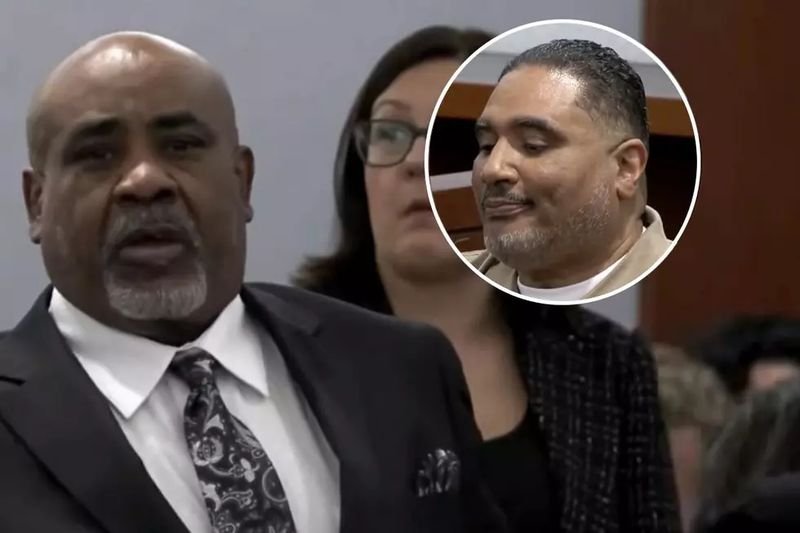
Duane “Keffe D” Davis in a Las Vegas courtroom during the 2026 murder trial — the only person ever charged with Tupac Shakur’s killing.
The trial itself began in 2026 after multiple delays. Prosecutors argued that Davis provided the weapon and orchestrated the retaliatory drive-by after his nephew Anderson was beaten in the MGM Grand lobby. Davis was not accused of pulling the trigger himself — that remains unknown — but Nevada law allows a conviction for murder if the defendant organized the attack. On a day in late August 2026, the jury went out. They came back in less than three hours with a guilty verdict.
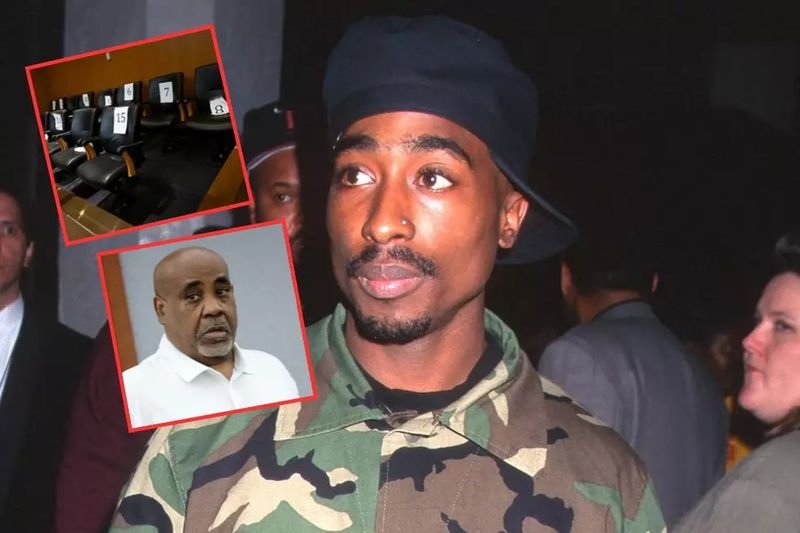
Jury selection for the 2026 murder trial drew national attention — and the final verdict came swiftly.
Sentencing is scheduled for October 13, 2026. Davis faces life without parole.
The Full Story of Tupac’s Last Night — Watch
For a detailed reconstruction of the events of September 7–13, 1996 — the fight, the shooting, the investigation — this documentary covers the night in full.
The verdict closed the legal chapter on Tupac’s death. It didn’t close much else. The actual shooter was never identified and never charged. The full conspiracy — who knew, who helped, who funded — was never laid out at trial. What the conviction did do was confirm, on the record, that Tupac Shakur was murdered. Not some random drive-by. Not an unsolvable mystery. He was killed by people who organized a hit in the hours after a lobby fight at a boxing match.
He was 25 years old, with a double platinum album, an acting career, and an estimated 150 unreleased recordings in the vault. If you were alive and paying attention on September 13, 1996, you remember exactly where you were when you found out. That’s not sentiment — that’s just the way certain dates get burned into a generation. This was one of them.
Sources
- Tupac Shakur Dies — History.com — Timeline of the September 7–13, 1996 shooting and death.
- Inside Tupac Shakur’s Final Days Before His 1996 Murder — Biography.com — Detailed account of the MGM Grand night and the aftermath.
- Tupac Shakur Murder Trial: Guilty Verdict — ABC News — Coverage of the Duane Davis conviction in 2026.
- Tupac Shakur: 1971–1996 — Rolling Stone — Original Rolling Stone obituary from September 1996.
The Retro Almanac
A monthly roundup of "on this day" highlights from that month, decades back — plus first dibs on new retro merch drops. No spam, just the good stuff.