How Kool Herc Invented Hip-Hop in 1973
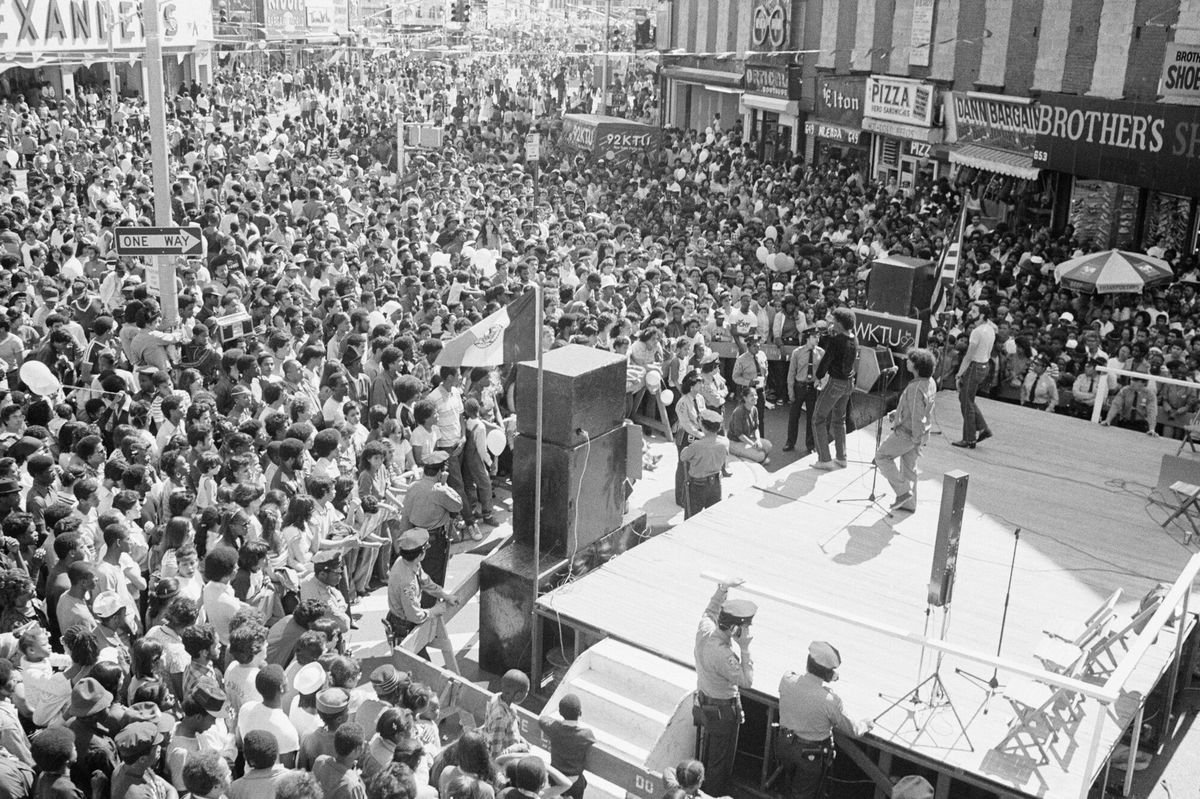
The address was 1520 Sedgwick Avenue, Apartment 1D, in the Morris Heights section of the South Bronx. Admission was 25 cents for girls, 50 cents for boys. Clive’s younger sister Cindy had organized the party to raise school-clothes money before the new term. Nobody was thinking about inventing anything. But DJ Kool Herc was about to do something that no DJ had done before, and the crowd that night would never be the same.
The South Bronx in 1973 — Why the Setting Matters
To understand what Kool Herc built, you have to understand what he was building it in. By the early 1970s, the South Bronx was one of the most economically devastated urban areas in the United States. The Cross Bronx Expressway, pushed through the neighborhood by Robert Moses in the 1950s, had displaced thousands of families and shattered the community’s social fabric. Landlords, stuck with undervalued properties, were committing arson for insurance money at a rate that gave the South Bronx an international reputation as a war zone. Unemployment in some blocks hit 40 percent.
The kids who showed up at 1520 Sedgwick that August had nowhere to go and nothing to do. Youth gangs — the Savage Skulls, the Black Spades, the Seven Immortals — were the primary social structure for teenagers with no summer jobs and no summer programs. Hip-hop didn’t emerge in spite of that environment. It emerged because of it.
The Retro Almanac
A monthly roundup of "on this day" highlights from that month, decades back — plus first dibs on new retro merch drops. No spam, just the good stuff.
The Night Kool Herc Broke Music
Clive Campbell had grown up in Kingston, Jamaica — a city where sound system parties were as essential as air — before his family moved to the Bronx in 1967. He was 12 years old. He got the nickname “Hercules” in high school for his athletic build, “Kool” came later, and by 1973 he was 18 and operating a pair of turntables in apartment recreation rooms across the borough.
What he figured out at his sister’s party was simple in theory and impossible to execute without two copies of the same record and serious practice. Every dance record from James Brown to the Incredible Bongo Band contained a section where the band dropped out and just the drums played — the break. Dancers went wild during these sections. The problem was they lasted eight seconds, maybe twelve. Then the verse came back in and the energy dropped.
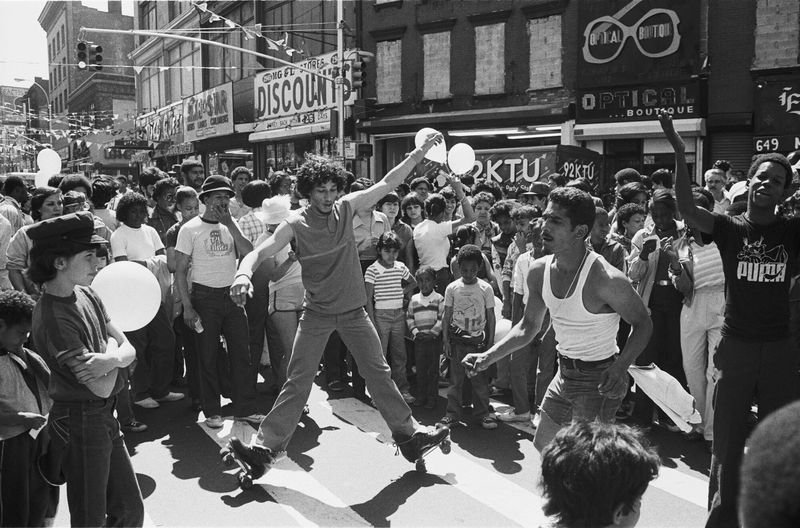
Herc’s solution: two turntables, two copies of the record. When the break on the first copy ended, he switched to the second and let it play from the beginning of the break. Then switched back. He called it the Merry-Go-Round. The break never ended. The dancers — who Herc called b-boys, short for “break boys” — kept going as long as he kept spinning. That was the night breakdancing was born too.
The Records That Built the Foundation
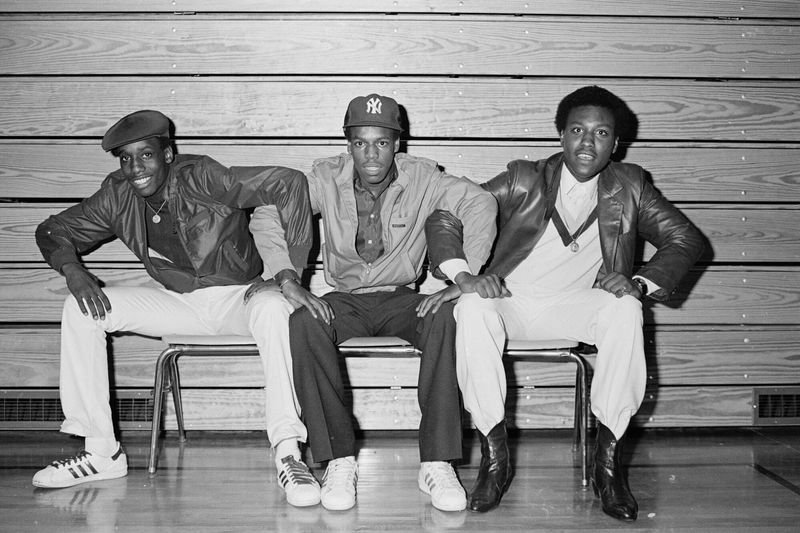
The breaks Herc reached for weren’t chosen at random. “Give It Up or Turnit a Loose” by James Brown, “Apache (Jump On It)” by the Incredible Bongo Band, “Amen, Brother” by the Winstons, “Get Up, Get Into It, Get Involved” — these were percussion-heavy, dense with drum energy, and long enough in the break section to work with. If you’ve ever wondered why James Brown is called the Godfather of Soul, part of the answer is that his drummers built the technical foundation of an entirely different genre without knowing it.
Herc also brought something from Jamaica: the MC. At Kingston sound system parties, a “toaster” would talk over the music, hyping the crowd and calling out names. Herc introduced that format to the Bronx, using a microphone to address the dancers while he spun. His original partners on the mic were Coke La Rock and Clark Kent DC. They were the first hip-hop MCs — talking directly to the crowd, calling people by name, building the energy in the room. What they were doing had no name yet.
Afrika Bambaataa and the Four Elements
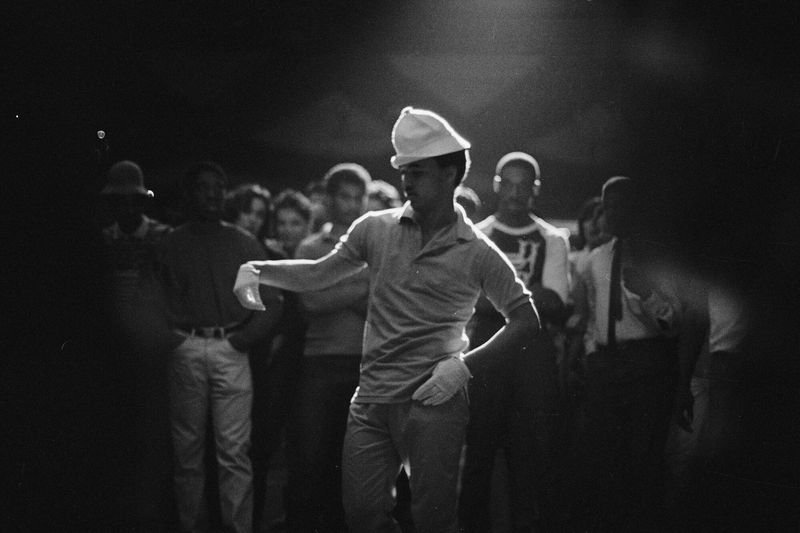
Kevin Donovan — who became Afrika Bambaataa — was a warlord in the Black Spades gang before he saw what Herc was building and understood it differently. Bambaataa had encountered documentation of the Zulu Nation in South Africa and returned with a different framework for thinking about the Bronx. Over the following two years, energized by what he saw at Herc’s parties, Bambaataa founded the Universal Zulu Nation, a cultural organization that offered gang members something the gangs themselves never could: a direction.
Bambaataa was the person who codified hip-hop as a culture rather than just a party. He articulated the four elements: DJing, MCing, b-boying (breakdancing), and graffiti writing. These weren’t arbitrary — they were the four creative outlets that already existed in the South Bronx, each with its own practitioners, its own rivalries, its own vocabulary. By naming them and connecting them, Bambaataa gave the culture a structure that could survive, spread, and eventually be taught in universities.

Grandmaster Flash and the Technical Evolution
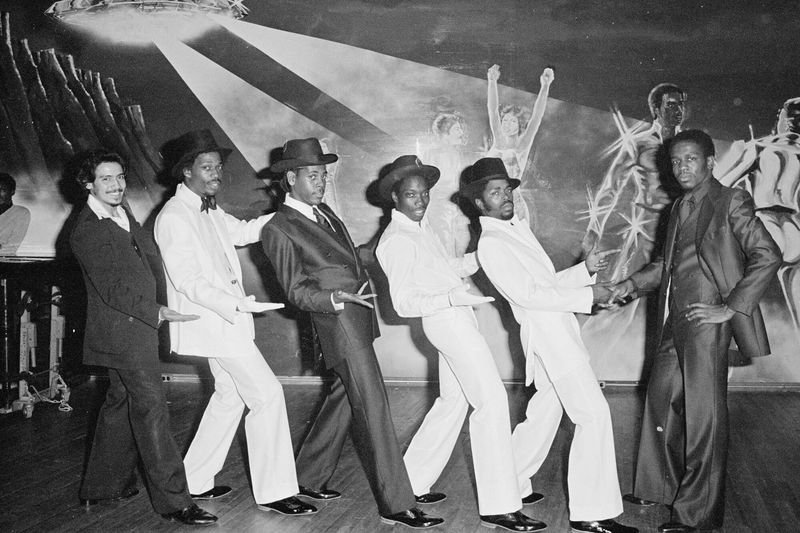
If Herc was the inventor, Grandmaster Flash — born Joseph Saddler — was the engineer. Flash spent years studying Herc’s parties, then retreated to his apartment to figure out how to refine the technique. He developed precise cueing using headphones to pre-position a record before switching, then backcueing, and eventually the cutting and scratching that became hallmarks of hip-hop DJing. Flash could do in a second what took Herc thirty, and he could do it on a mixer small enough to take anywhere.
In 1982, Flash and the Furious Five released “The Message” — seven minutes of social documentary set to a beat, describing life in the South Bronx with a specificity that no other genre was attempting. “Broken glass everywhere / People pissing on the stairs / You know they just don’t care.” It was the first undeniable proof that what Kool Herc had started in that rec room could carry something far beyond a party.
Six Years of Silence Before the First Record
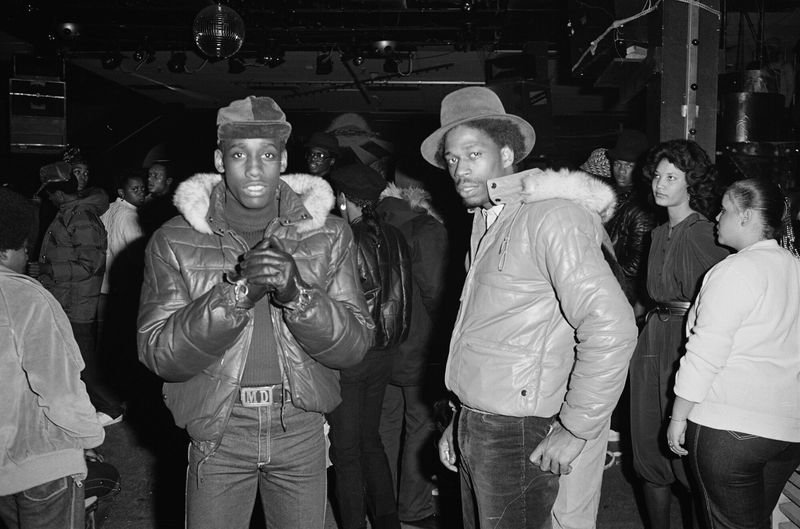
The Sugarhill Gang released “Rapper’s Delight” in September 1979 — the first rap record to reach mainstream radio. It came out six years after Kool Herc’s block party. That gap confuses people, but the reason is straightforward: hip-hop was a live culture. The whole point was the party, the crowd, the interaction between the DJ and the dancers. Nobody was thinking about recording it. The idea that this music belonged in a studio would have seemed absurd to anyone standing in that rec room in 1973.
Sylvia Robinson at Sugar Hill Records convinced the Sugarhill Gang to go into a studio and rap over a live band replaying the Chic groove from “Good Times.” It was technically not even proper hip-hop by Bronx standards — no turntables, no breaks, no b-boys. But it reached number four on the R&B charts and introduced hip-hop to the rest of the world. The culture Kool Herc had built now had a recording, even if that recording was a simplified imitation. From that point forward, nothing was going to stop it.
The Culture Goes National — and Dangerous
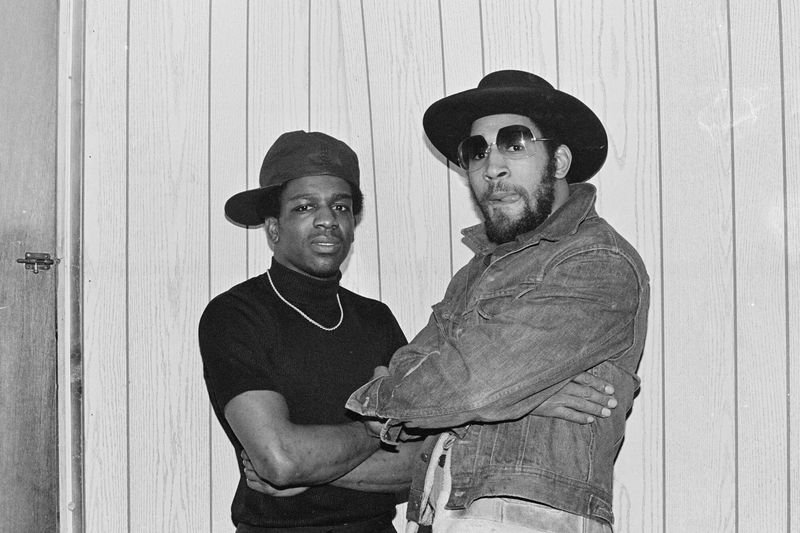
Through the 1980s, the movement Herc started in the South Bronx grew into a national phenomenon. Run-DMC made it mainstream rock-adjacent. LL Cool J made it pop. Then came the acts that made America nervous: NWA’s Straight Outta Compton (1988) and Public Enemy’s It Takes a Nation of Millions to Hold Us Back arrived within months of each other, and the FBI sent letters to the record labels. In 1990, the Congressional pressure that Tipper Gore had built over five years finally produced the Parental Advisory sticker that is now the most recognized label in music history.
None of that would have happened if two turntables hadn’t kept a breakbeat going past midnight in 1973. The decade between Herc’s party and hip-hop going on wax was a decade of refinement — technically, lyrically, culturally — that produced a genre sophisticated enough to document the street and infuriate senators simultaneously.
1520 Sedgwick Avenue Today
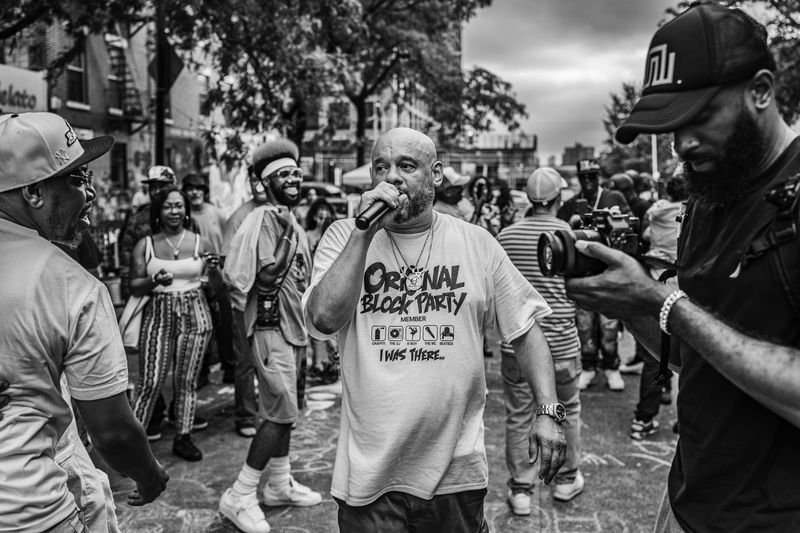
The building at 1520 Sedgwick Avenue is still standing. In 2007, the New York City Landmarks Preservation Commission designated it a cultural landmark — the only residential building in New York to receive that designation for a cultural event rather than an architectural one. The block was later declared “Hip-Hop Boulevard” by the Bronx Tourism Council. On August 11, 2023 — the 50th anniversary of Cindy Campbell’s back-to-school party — the United Nations officially recognized that date as World Hip Hop Day.
Kool Herc himself had a rough few decades after his peak. He was stabbed at a Valentine’s Day party in 1977 and partially withdrew from the scene. By the 2000s he was living without health insurance, and when he needed surgery, the hip-hop community organized a benefit concert to cover his bills. The man who invented the genre wasn’t getting royalties from it — he never recorded, never signed to a label, never owned the intellectual property he created. His contribution lives in the culture, not in any catalog.

Why the Bronx and Not Somewhere Else
Some cities produce genres when the conditions are right and the right people show up at the same time. New Orleans and jazz. Detroit and Motown. The South Bronx and hip-hop is different because the conditions were uniquely terrible: a borough that had been systematically defunded, redlined, and burned out, filled with teenagers who had no recreational infrastructure, no jobs, and the kind of creative energy that has nowhere to go except inward or outward. Hip-hop was the outward option. It took what was available — two turntables, a microphone, a set of records, an empty recreation room — and built something that has outlasted every other genre that emerged in its century.
The culture Kool Herc started at his sister’s block party is now a $26 billion global industry. Every streaming chart, every award show, every brand trying to sound relevant — all of it is downstream of August 11, 1973. That’s not origin mythology. That’s just what happened in a rec room in the Bronx, for 25 cents admission.
Sources
- Smithsonian Magazine — “Where Hip-Hop Was Born” — The landmark designation of 1520 Sedgwick Avenue and historical context of the 1973 block party.
- NPR — “The Block Party Where Hip-Hop Was Born” — 40th anniversary retrospective with Kool Herc’s Merry-Go-Round technique explained.
- Rolling Stone — Hip-Hop 50 Kool Herc coverage — Biographical detail on Kool Herc’s origins and influence on the genre.
- TIME — “Hip-Hop Turns 50” — The UN World Hip Hop Day designation and legacy of the founding generation.
The Retro Almanac
A monthly roundup of "on this day" highlights from that month, decades back — plus first dibs on new retro merch drops. No spam, just the good stuff.