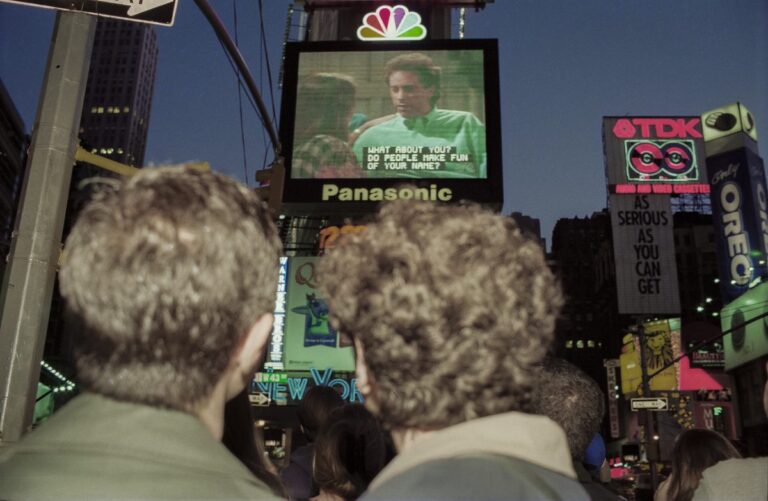
On This Day: September 20, 1984 — The Cosby Show Premieres and Saves NBC
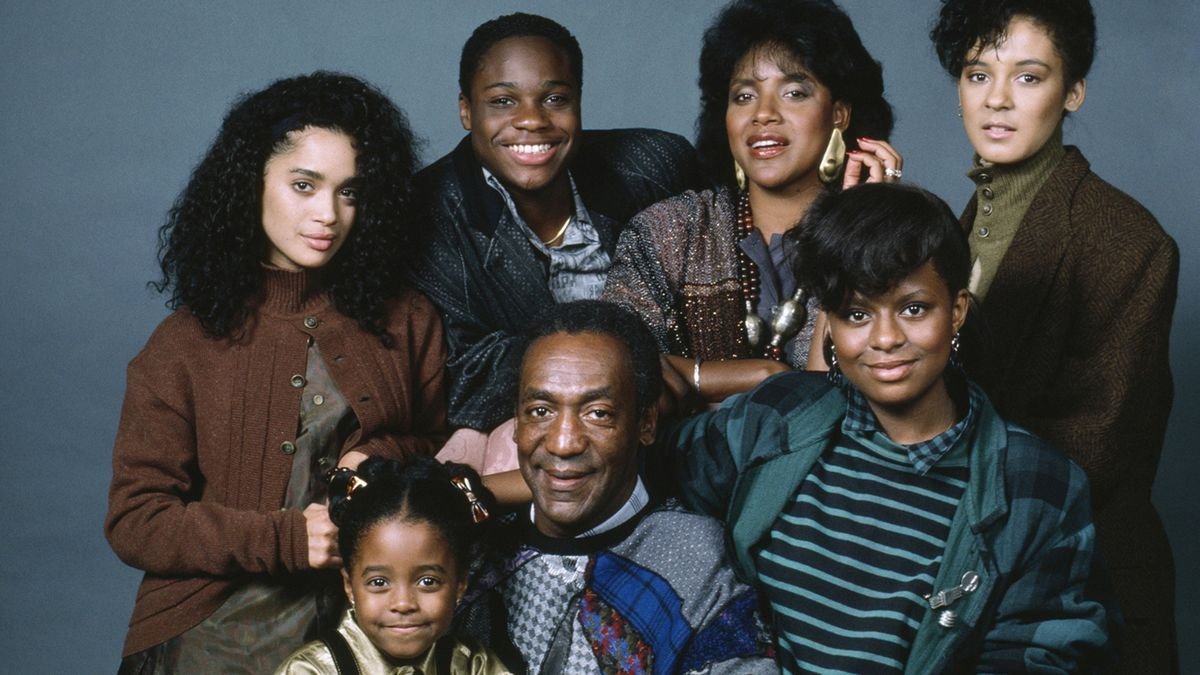
ABC had already turned the idea down. Bill Cosby wanted to build a show around an upper-middle-class Black family where the father was a doctor and the mother was a lawyer, with none of the poverty or broken-home framing that had defined nearly every Black family sitcom before it. Network executives at the time didn’t believe an all-Black cast could pull a mainstream, majority-white Thursday-night audience without leaning on exactly those tropes. NBC, sitting in third place behind CBS and ABC with nothing to lose, took the bet. Eight seasons and 201 episodes later, that bet had rewritten what a sitcom family was allowed to look like.
The Show ABC Didn’t Want
Marcy Carsey and Tom Werner had just left ABC to start their own production company when Cosby brought them the idea in 1983. He’d already tested pieces of it on The Tonight Show, telling stand-up bits about fatherhood that NBC entertainment chief Brandon Tartikoff had been watching closely for years. Carsey and Werner pitched the concept to their old employer first, out of loyalty more than strategy. ABC’s Lewis Erlicht passed. So did the assumption, baked into network television at the time, that a Black family could only be funny if it was also struggling.
The Retro Almanac
A monthly roundup of "on this day" highlights from that month, decades back — plus first dibs on new retro merch drops. No spam, just the good stuff.
Tartikoff didn’t share that assumption, or didn’t care enough to act on it, because NBC in 1984 had nothing left to protect. The network had finished the previous season in third place among the big three, its Thursday schedule was a wasteland, and a low-cost bet on a comedian with no sitcom track record looked less risky than it would have anywhere else. Cosby got creative control most stars never receive on a first series — final say on scripts, casting, and the kind of jokes the show would and wouldn’t tell. That control is the reason the show never once made its family’s success feel like an exception to explain.
Thursday Night, 8 PM
The pilot that aired that night opened on Theo Huxtable getting a bad report card and deciding school wasn’t for him — he’d rather work with his hands and be, in his words, a “regular person.” Cliff Huxtable’s response became one of the most quoted scenes in sitcom history: he tears into Theo, calling the “regular person” logic “the dumbest thing I’ve ever heard,” and ends the speech by saying he and Clair didn’t work this hard so their son could settle for average. No laugh track cue-card sentimentality, no moral voiceover — just a father losing his patience with a kid he loved too much to let coast. It set the tone for everything that followed: warm, but never soft.
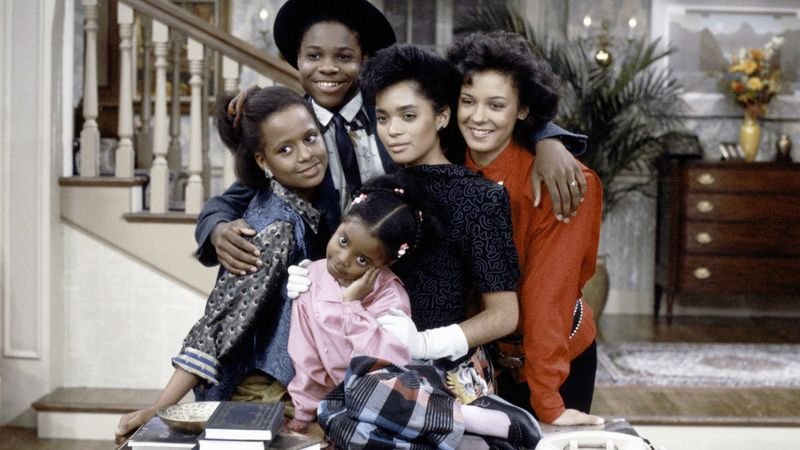
Nobody at NBC was predicting a phenomenon that first Thursday. The show opened its debut season ranked third for the year behind Dallas and Dynasty, respectable but not the kind of number that saves a network. What changed things was word of mouth over that first summer rerun cycle — the show kept gaining audience instead of losing it, which almost never happens between a freshman season and a sophomore one.
From Third Place to Untouchable
Season two is where the numbers stop looking like a hit show and start looking like a monopoly. The Cosby Show jumped to #1 with a 33.7 household rating, then held that spot for four more consecutive seasons, peaking at 34.9 in season three. For five straight years, more than a third of all televisions in use during that hour were tuned to one show about one family. It didn’t just win Thursday night — Thursday night stopped being a competition. NBC built Family Ties, Cheers, and later Night Court around it, and the block became so dominant the network eventually branded it “Must See TV,” a strategy so effective it was still carrying the network nearly a decade later when Frasier inherited the same Thursday real estate.
The ratings only cracked when a scrappier, working-class sitcom called Roseanne knocked it out of the top spot in season six. By the final two seasons, ratings had slid into the teens and low twenties as the Huxtable kids aged out of the show’s central premise. But by then the damage — or rather, the repair — to the sitcom format was already done. TV Guide would later credit the show with reviving the genre almost single-handedly, at a moment when critics were writing the sitcom’s obituary.
The Huxtable Effect
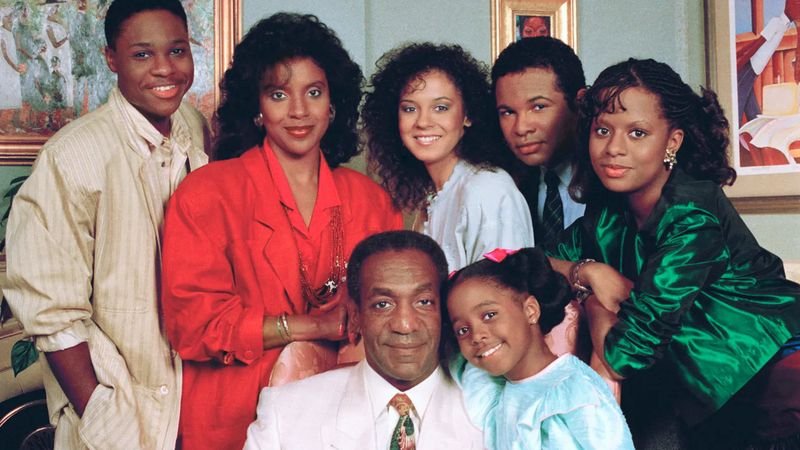
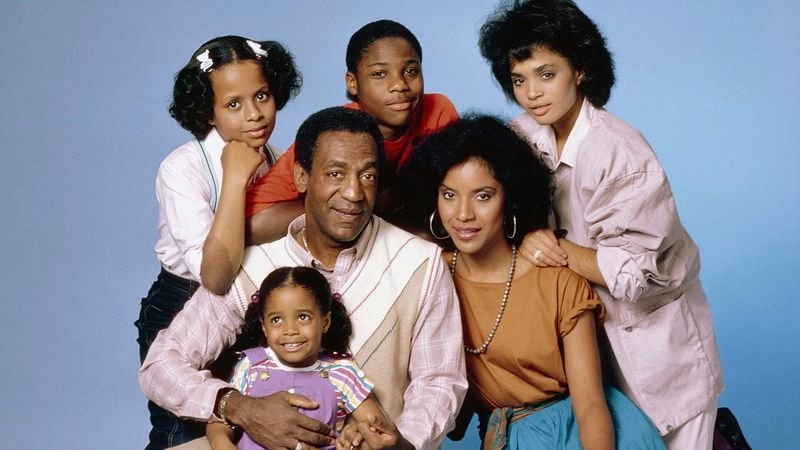
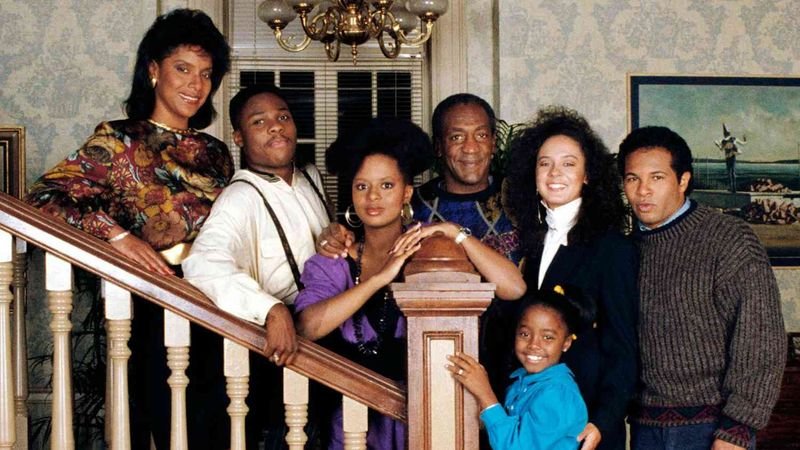
Clair Huxtable practiced law, argued with her husband as an equal, and never once apologized for having a career and five kids at the same time. That combination hadn’t really existed on a hit sitcom before, and Phylicia Rashad’s performance is widely credited with helping normalize the working-mother archetype on network television through the rest of the decade. The show’s spinoff, A Different World, sent Denise Huxtable to a fictional HBCU and spent six seasons treating a Black college campus as a setting worth taking seriously — not as an afterthought, but as the whole show. It landed in the ratings top five for four of its own six seasons.
The wider industry took notice fast. Entertainment Weekly later pointed to The Cosby Show as the reason networks greenlit a wave of Black-led sitcoms through the late 80s and 90s, from In Living Color to The Fresh Prince of Bel-Air. None of those shows looked or sounded like the Huxtables — that wasn’t really the point. The point was that a network executive in 1990 no longer had to argue that a Black family could carry a hit, because the highest-rated show on television for five straight years had already made the case.
Jazz Records and HBCU Sweatshirts
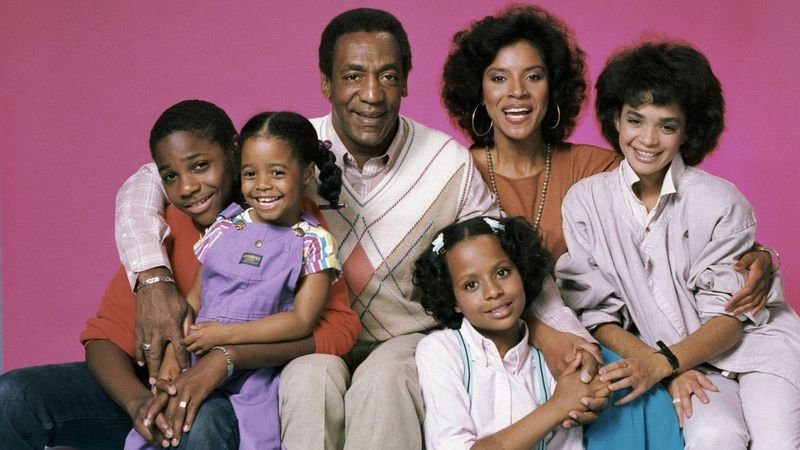
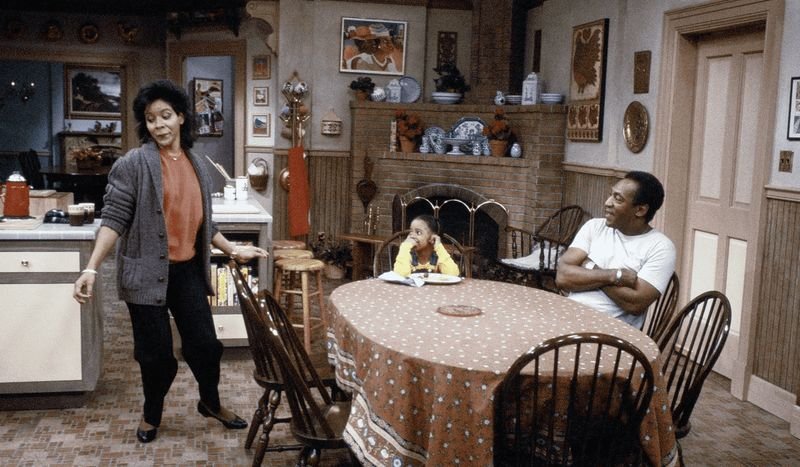
Set decoration on The Cosby Show did work that scripts usually get credit for. The Huxtable brownstone was hung with real paintings by Black artists — Varnette Honeywood and Annie Lee among them — instead of generic set-dressing prints, and the choice was deliberate enough that art dealers reported a jump in interest in both painters after episodes aired. Cliff’s jazz records got name-checked on screen constantly, turning a sitcom into an unlikely education in Miles Davis and Charlie Parker for viewers who’d never have sought it out otherwise. Kids on the show wore Howard, Hampton, and Morehouse sweatshirts in the background of ordinary scenes, years before that kind of casual HBCU visibility showed up anywhere else on network TV.
The theme song did its own quiet work. “Kiss Me,” co-written by Cosby and Stu Gardner, went through seven different arrangements over eight seasons — including a season-four version sung by Bobby McFerrin — which meant the show was constantly signaling, through nothing but its opening titles, that it took music as seriously as it took its jokes.
The Legacy Nobody Can Cleanly Talk About
It’s not possible to write about this show in 2026 without addressing what came after it. Beginning in 2014, dozens of women came forward with sexual assault allegations against Bill Cosby spanning decades, and he was convicted in 2018 on related charges — a conviction later overturned on a procedural technicality in 2021, not an exoneration on the facts. TV Land, Aspire, and Bounce TV all pulled reruns in the years that followed. Malcolm-Jamal Warner, who played Theo, said plainly in later interviews that the show’s legacy is now tarnished, and he wasn’t wrong to say it.
Here’s the position worth taking, though: none of that erases what happened in American living rooms on the Thursday nights between 1984 and 1992. The show’s cultural weight didn’t come from Cosby the man — it came from Rashad’s Clair, from Warner’s Theo getting that report-card speech, from a production and writing team that treated a Black family’s ordinary life as worth an hour of prime time without apology. Separating the artist’s crimes from the work’s impact isn’t letting anyone off the hook. It’s just admitting that both things happened, and pretending otherwise doesn’t make television history any more honest.
That tension is exactly why so few outlets revisit the show’s launch anymore, even as they keep circling back to other NBC sitcom anniversaries from the same decade. It’s easier to write about The Golden Girls breaking ground for women over 50, or a spinoff nobody expected to work, than to sit with a hit this large that’s now this complicated. But the discomfort doesn’t change the record. On September 20, 1984, a show nobody outside NBC believed in beat the odds on its own terms, then kept beating them for the better part of a decade.
Love the retro era? Browse our shop for vintage finds, retro clothing, and 80s/90s nostalgia gear.
The Huxtables are 42 years old now as a television concept, and the sitcoms that copied their formula outnumber the ones that understood why it worked. Go back and watch the pilot — not the clip everyone’s seen a hundred times, the whole 24 minutes — and it still doesn’t feel like a history lesson. It feels like a family arguing at dinner. That’s the part nobody’s managed to fake since.
Sources
- The Cosby Show — Wikipedia — premiere date, Nielsen ratings by season, cast, and production history.
- The Cosby Show — Television Academy — Emmy Award nominations and wins.
- The Cosby Show — Encyclopaedia Britannica — cultural impact and genre revival context.
The Retro Almanac
A monthly roundup of "on this day" highlights from that month, decades back — plus first dibs on new retro merch drops. No spam, just the good stuff.