Stretch Armstrong: How the 80s Stretchy Toy Turned Millions of Kids Into Saboteurs
The Kenner toy catalog had a lot of strange ideas in the 1970s. But when Jesse D. Horowitz, the industrial designer for Kenner’s R&D group, sketched out a muscular blond man made of stretchy rubber and filled with thickened corn syrup, he gave an entire generation of children something they had never had before: a toy that actively rewarded destruction. The more you abused it, the more satisfying it became. That was not the intended selling point. It turned out to be the whole thing.
The All-American Body That Almost Became a Sumo Wrestler
The stretch concept came out of Kenner’s R&D lab in the mid-1970s. Horowitz was tasked with designing the figure itself, working alongside Jeep (James) Kuhn, a chemical engineer who ran the R&D group and would eventually solve the hardest problem: what to put inside.
Two body types were on the table. One was a sumo wrestler — wide, heavy, unmistakably foreign. The other was what the internal notes called an “All-American blond hunk.” The sumo was rejected almost immediately for being too bulky to mold effectively. Horowitz sculpted the chosen design himself rather than farming it out to a freelancer, then took the model to a latex doll manufacturer in New Jersey where the first bodies were hand-dipped in rubber.
The Retro Almanac
A monthly roundup of "on this day" highlights from that month, decades back — plus first dibs on new retro merch drops. No spam, just the good stuff.
Stretch Armstrong wears black trunks and looks like every action figure from that era except softer, more exaggerated, and suspiciously thick through the torso. That thickness was the point. The original idea was to put springs inside to create the stretching action. Kuhn killed that fast — springs were too rigid, too hard to install, and would eventually pierce through the latex skin. The filling problem needed a different answer.
Kuhn’s answer was Karo corn syrup. He and Horowitz bought enormous quantities from an A&P supermarket, then boiled it down until it reached the right viscosity — thick enough to hold shape after stretching, loose enough to flow when pulled. They flew to Kenner’s Cincinnati headquarters to pitch it to Bernie Loomis, the company president. Loomis loved it. The toy launched in 1976 and sold out.
What’s Actually Inside Stretch Armstrong
The question haunted every kid who owned one. The box said nothing. The commercial showed kids stretching the figure to ridiculous lengths but never explained how it came back. Kenner’s marketing treated the interior as a closely guarded secret, which was a brilliant move, because the actual answer — corn syrup — would have been hilarious and slightly disappointing.
The exterior is latex rubber, the same basic material used in surgical gloves. The fill is a proprietary gelled corn syrup formula, stiff enough to hold the figure’s shape at rest but fluid enough to redistribute when stretched. That redistribution is what lets Stretch Armstrong reach four to five feet from his starting height of about 15 inches without tearing. The goo flows into the extended limb, keeps things taut, then slowly migrates back to center once released.
The instruction booklet noted that small tears could be patched with an adhesive bandage. Kenner thought of everything — except that kids were going to find this instruction maddening. It implied the toy could be damaged. It confirmed the toy had something inside worth protecting. Every child who read that little booklet became a suspect.

Stretch X-Ray: When Kenner Put the Inside on Display
A year after the original figure launched, Kenner released Stretch X-Ray, a variant that made the internal mystery its entire selling point. The body was transparent. You could see the organs — lungs, intestines, what appeared to be a heart, and an oversized exposed brain. The face was alien-looking, stretched into something between a grin and a grimace.
Stretch X-Ray answered the question every kid was already asking, but in the most unsettling possible way. Instead of a hidden fill, the visible interior was rendered in molded plastic organs suspended inside the gel. It was a toy and a biology lesson and a minor horror film, all at once. Kenner reissued it later, which suggests it sold well enough to justify a second run, though it never became the cultural touchstone the original did.
The X-Ray variant is rarer than the standard figure today and typically commands more money when it surfaces in original condition. If you find one at a garage sale, check the interior carefully before buying — the transparent latex degrades faster than the standard skin, and most surviving examples have yellowed significantly.
Meet Stretch Monster, the Green Nightmare Nobody Ordered
Kenner launched Stretch Monster in 1978, two years after the original figure, as the villain counterpart. He’s reptilian and green, fanged and wide-eyed, and roughly the same size as Armstrong. The intent was to give kids an enemy to stretch against — a tug-of-war opponent, essentially, one in each hand, pulling in opposite directions.
Stretch Monster had the same gelled corn syrup interior. He also had the same vulnerability to the curious child with scissors. In practice, two-figure ownership mostly meant that both toys got destroyed at roughly the same pace, since the same kid who cut open Armstrong was going to cut open Monster within a week.
The villain figure is significantly rarer than Stretch Armstrong in intact condition, partly because production runs were smaller and partly because Monster had a habit of leaking. A genuine Kenner Stretch Monster in decent shape commands considerably more at auction than its blond counterpart — collectors who specialize in the line treat it as the harder half of the set to complete.
Why Every Kid Eventually Destroyed Their Stretch Armstrong
The official explanation is curiosity. The real explanation is that the toy practically invited it.
Stretch Armstrong was indestructible — that was the claim, that was the commercial, that was the entire pitch. Kids heard “indestructible” as a challenge. They stretched it past four feet. They tied it in knots. They tried to pull the head off. They played tug-of-war with the dog. Eventually, inevitably, they picked up scissors and went looking for answers.
The moment of discovery was always the same: a small nick in the latex, then a slow beige seep of thickened syrup, then the full collapse of the figure as the goo ran out onto whatever surface was underneath. The mystery was solved. The toy was ruined. The corn syrup stained the carpet. The kid had to explain to a parent what happened to the thing that cost twenty dollars.
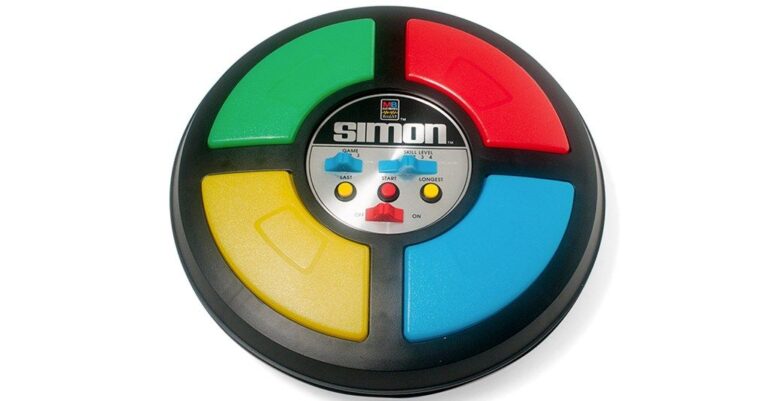
Kenner received so many calls asking what was inside that the company eventually started just telling people: corn syrup. The secret lasted about as long as you’d expect when your customer base is ten-year-olds with ready access to kitchen knives. This same compulsion drove kids to open Slinky springs and shake Simon until the batteries fell out — something about 80s toys turned every child into a small-scale engineer.

The Strange International Life of the Stretch Concept
Kenner licensed the design globally, and the results were varied. Denys Fisher manufactured and distributed Stretch Armstrong across Europe. An Italian company called Harbert released a version called Mister Muscolo. Japan got a version called Stretch Mr. X from Tsukuda. Mexico had El Hombre Elastico. By the time the original Kenner run ended, an estimated 67 different international versions of the stretch concept had been released across Japan, Germany, Italy, France, Australia, and elsewhere.
The Mego Corporation produced a run of elastic characters in the late 1970s that included Elastic Batman, Elastic Mickey Mouse, Elastic Donald Duck, and an Elastic Incredible Hulk. Denys Fisher also produced a Stretch Incredible Hulk using Kenner’s own molds — without permission. Kenner sued. Denys Fisher’s Hulk was discontinued in 1980. The litigious stretch era had a natural end point.
The scale of the global licensing operation is part of what makes collecting the full range so difficult today. A complete Stretch Armstrong collection — including all international variants — requires sourcing from Italian toy fairs, Japanese auction sites, and Mexican collector networks. Most enthusiasts focus on the core Kenner run and consider anything beyond that a bonus.
Hollywood Spent 25 Years Trying to Make a Movie
Walt Disney Studios acquired the film rights to Stretch Armstrong in 1994, with Caravan Pictures attached to produce. An early script cast Tim Allen as a research scientist who accidentally gives himself stretching powers while juggling work and family. Allen was interested. The film never got made.
Disney tried multiple scripts, multiple directors, multiple concepts. A later version moved the setting to San Francisco and shifted the tone toward something darker. Danny DeVito was considered for the lead at one point but refused if the writing made jokes about his height. Several screenwriters took passes at the material over the following years. A director named Peter Care was eventually attached, but the rights lapsed before anything reached production.
Hasbro acquired the rights and took their own runs at a live-action film through the 2000s and 2010s, none of which materialized either. The animated series “Stretch Armstrong & the Flex Fighters” arrived on Netflix in 2017 — a superhero team concept that used the stretch premise as a jumping-off point rather than a faithful adaptation. The original toy’s lore about corn syrup and scissor-wielding children did not make the cut.
What Vintage Stretch Armstrong Toys Are Worth Today
Finding an original Kenner Stretch Armstrong in good condition is harder than it sounds. Most were destroyed — by their owners, on purpose or accidentally, or by the slow degradation of the latex exterior over decades. The goo dries out if the figure loses its seal. The latex cracks and hardens. Temperature fluctuations wreck them. Kenner’s own documentation noted the figure keeps best at room temperature, which most attic collections cannot guarantee across 45 years.
Intact examples with original packaging regularly pull several hundred dollars on the collector market, with mint-condition boxed figures reaching four figures at auction. Stretch Monster commands higher prices because far fewer survived in usable condition. Stretch X-Ray is rarer still. If you happen to have one that somehow made it through childhood, three house moves, and time itself without springing a leak, the collector market is actively looking — see the full breakdown of 80s toys worth real money today for where Stretch lands in that hierarchy.
For everyone else, Character Options began releasing officially licensed Hasbro versions starting in 2016, with Basic Fun! taking over manufacturing in 2025. The formula is the same. The corn syrup is still inside. And if history is any guide, the kid who gets one this Christmas is going to cut it open within the month. Some things about childhood do not change. The Rubik’s Cube taught problem-solving; Stretch Armstrong taught that all mysteries eventually leak.
The original 1978 Stretch Armstrong TV commercial
Sources
- Stretch Armstrong — Wikipedia — Toy history, inventor credits, international versions, and film adaptations
- Chemistry in the Toy Store — chymist.com (David Katz) — Technical breakdown of the gelled corn syrup filling
- Disney Flick Pick Quite a “Stretch” — Variety, April 1994 — Original announcement of Disney’s Caravan Pictures development deal
- Hasbro and Character Options Expand Stretch Armstrong to U.S. — The Toy Book, 2023 — Licensing expansion details
- Basic Fun Acquires Stretch Armstrong License — The Toy Book, 2025 — Current manufacturing arrangement
The Retro Almanac
A monthly roundup of "on this day" highlights from that month, decades back — plus first dibs on new retro merch drops. No spam, just the good stuff.