Teenage Mutant Ninja Turtles History: From a $1,300 Comic to a Billion-Dollar Empire
The real teenage mutant ninja turtles history doesn’t start with a Saturday morning cartoon or a toy aisle stuffed with plastic shells. It starts in a cold Massachusetts apartment in 1983, with two broke artists, a tax refund, and a joke that got wildly out of hand. Kevin Eastman and Peter Laird had no publisher, no plan, and no idea that four mutant reptiles doodled on a sketchpad would eventually become a $1.1 billion toy line, a hit movie franchise, and one of the most valuable comic books ever printed.
How Two Broke Artists Bet Everything on a Photocopied Comic
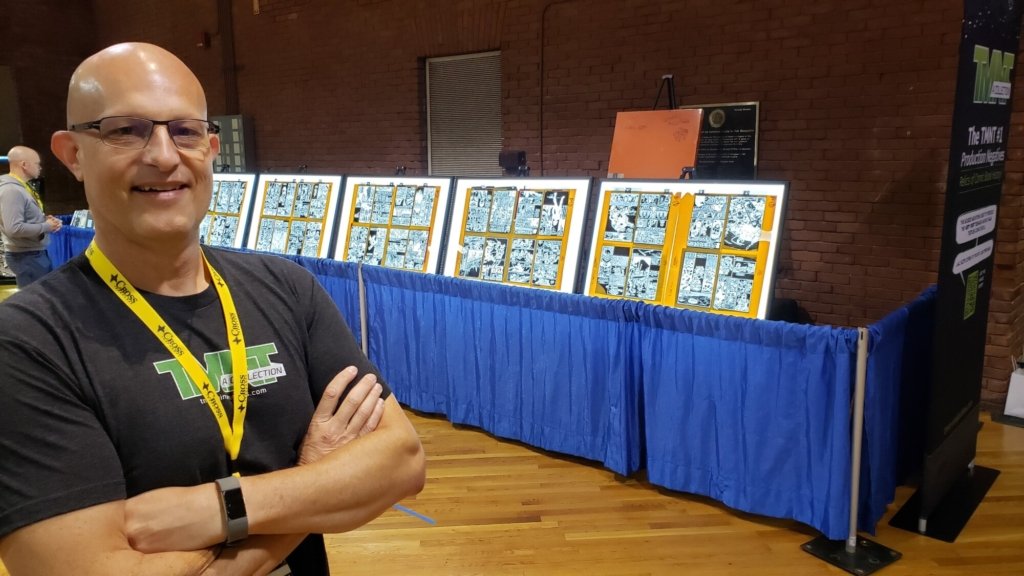
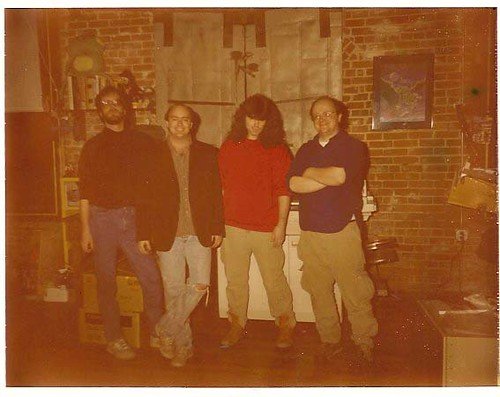
In 1984, Eastman and Laird pooled every dollar they could find to self-publish Teenage Mutant Ninja Turtles #1 under their own imprint, Mirage Studios. Eastman kicked in his $500 tax refund, Laird added roughly $200 from savings, and Eastman’s uncle Quentin lent them the rest — accounts differ, with figures ranging from around $1,000 to $1,300 cited across interviews — to cover the printing bill. It was enough for an oversized, black-and-white print run of somewhere between 3,000 and 3,275 copies.
The Retro Almanac
A monthly roundup of "on this day" highlights from that month, decades back — plus first dibs on new retro merch drops. No spam, just the good stuff.
They paid Quentin back within weeks. The first issue sold out, then sold out again on a second printing, and the two artists — who had met at a New Hampshire art class and bonded over a shared love of Jack Kirby — suddenly had a cult hit on their hands.
The Comic Book Parody Nobody Expected to Take Off
TMNT #1 wasn’t meant to be taken entirely seriously. Eastman and Laird built it as a loving parody of the grim, self-serious comics dominating the early 80s: Frank Miller’s Daredevil supplied the radioactive-canister origin and the “Hand” ninja clan (twisted into “the Foot” for the turtles), Miller’s Ronin lent its wraparound cover format, Dave Sim’s Cerebus offered the template for an anthropomorphic animal book with real stakes, and Marvel’s New Mutants shaped the coming-of-age angle. The black-and-white art even used flecks of red ink for blood — a direct nod to the gritty independent comics scene the whole thing was riffing on.
Splinter’s Original Mission Was Murder, Not Mentorship
Anyone who only knows the Turtles from cartoons and toy aisles would be shocked by how dark the original comic actually was. In Mirage’s black-and-white version, Splinter doesn’t raise Leonardo, Donatello, Raphael, and Michelangelo to protect the city — he trains them for one purpose: to kill the Shredder. They succeed by the end of the very first issue. There’s no pizza, no jokes, and no “Cowabunga.” Just a revenge story about four mutated animals settling a blood debt.
From $1,300 Gamble to a $250,000 Collectible
That scrappy first printing has since become one of the most sought-after books in comic collecting. In near-mint CGC 9.8 condition, copies of TMNT #1 have sold at auction for $245,000 in 2021 and then $250,000 in early 2022 — and even lower-grade copies routinely clear five figures. A garage-funded comic that couldn’t get a real publisher now outsells first issues of far more famous superhero titles. It’s a collecting story with real parallels to other 80s crazes that turned out to hold their value — the same speculative fever that made a Rubik’s Cube a permanent fixture of the decade also fueled comic-collecting mania once word got out that TMNT #1 was worth chasing.
The Cartoon That Gave the Turtles Their Colors (and Their Pizza Habit)
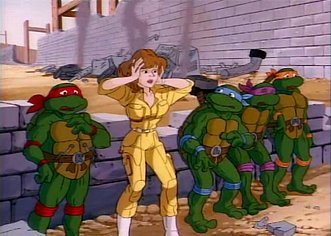
None of that early darkness survived the jump to television. When Fred Wolf’s team at Murakami-Wolf-Swenson launched the animated series — a five-part syndicated miniseries in December 1987, followed by the full run in October 1988 — they rebuilt the Turtles from the shell up for kids. The black-and-white comic had no way to visually tell the four brothers apart, so the cartoon invented the color-coded bandanas that are now inseparable from the franchise. It also gave each turtle a distinct personality, added the now-iconic pizza obsession, and coined catchphrases like “Cowabunga” and “Heroes in a Half-Shell” — none of which existed in Eastman and Laird’s original comic.
Playmates Turned Four Mutant Reptiles Into a $1.1 Billion Toy Empire
Playmates Toys debuted its Ninja Turtles action figure line at the 1988 Toy Fair to a shrug from retail buyers who didn’t get the joke. By the end of that year, the line had done $23 million in sales anyway. By 1990, Playmates became the first toy company in history to clear $100 million in net income in a single year, and the Turtles went on to move an estimated $1.1 billion in toys over four years — making it the third-best-selling action figure line of its era, trailing only G.I. Joe and Star Wars.
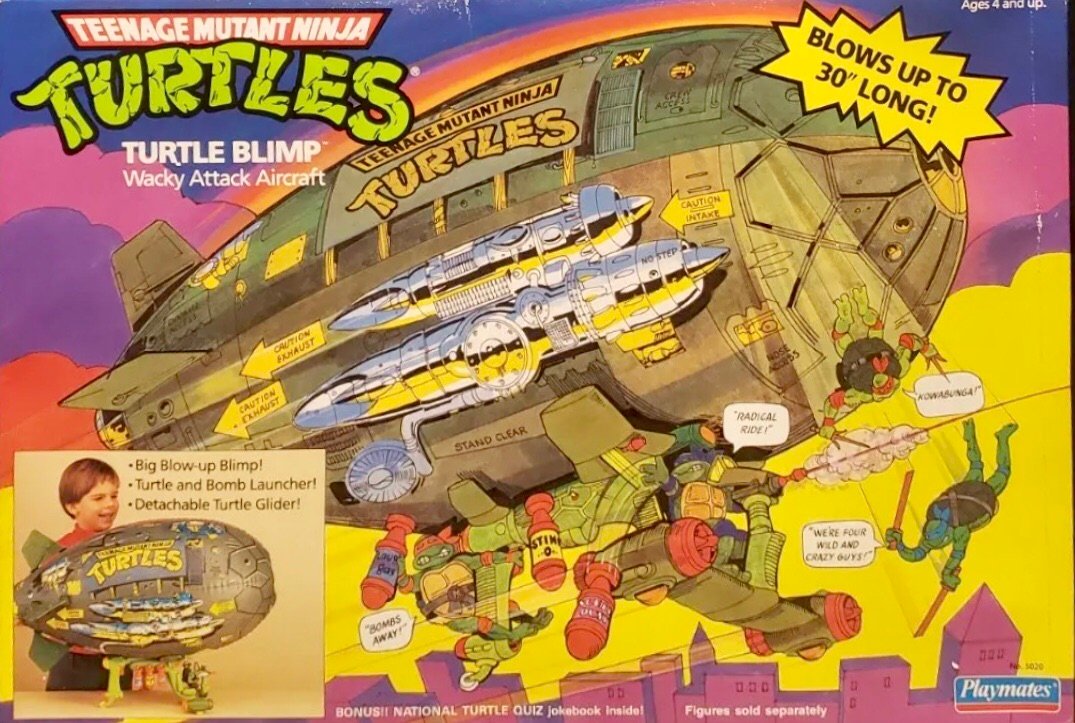
Every kid who owned a Turtle Blimp or a Foot Soldier figure was living through the same toy-box economy that made Cabbage Patch Kids and trading-card gimmicks like Garbage Pail Kids such a huge part of growing up in the decade — if a toy company could turn it into a licensed line, 80s kids were buying it.
Jim Henson’s Last Gamble: Building the Suits for the 1990 Movie
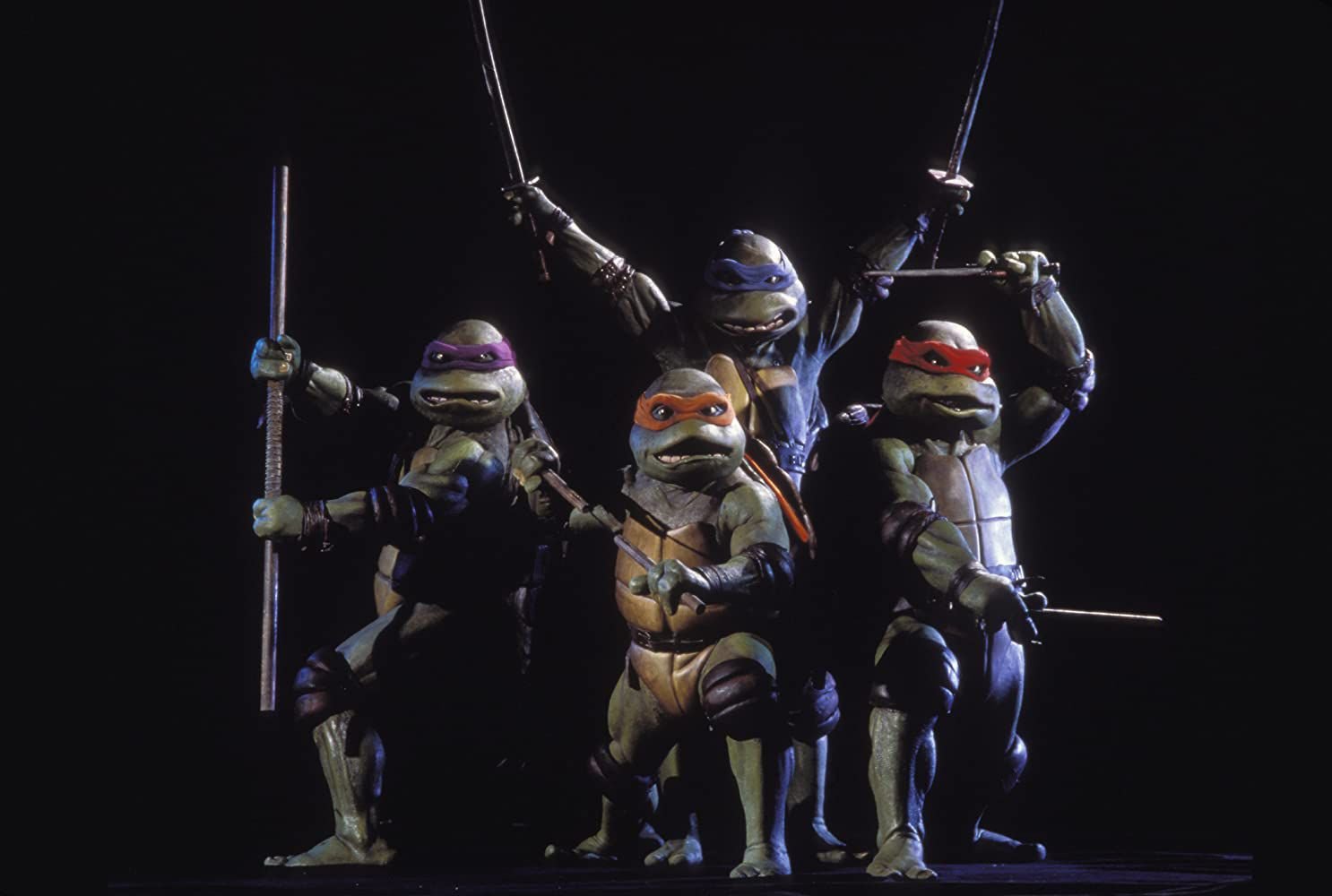
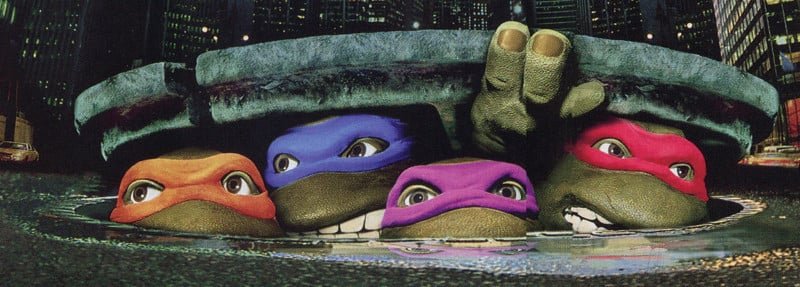
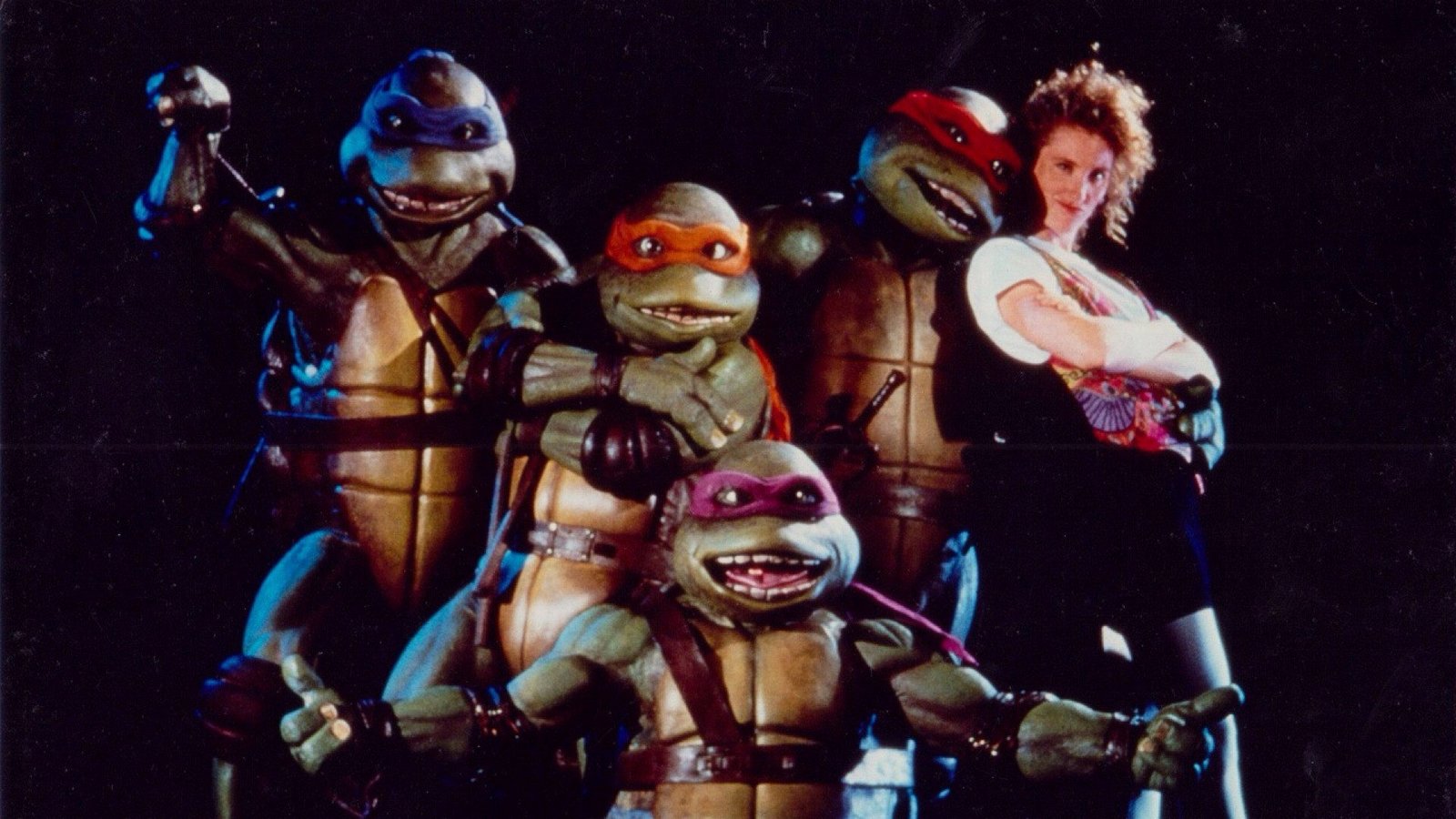
The live-action movie was a genuine risk. Made on a budget of roughly $13.5 million, it needed suits convincing enough to carry an entire film — so the producers brought in Jim Henson’s Creature Shop, paid a reported $5.2 million just to build the four turtle costumes and Splinter, in one of Henson’s final projects before his death shortly after the film premiered. The gamble paid off enormously: the movie grossed around $202 million worldwide, roughly fifteen times its budget, and became the highest-grossing independent film released up to that point.
Why Britain Made the Turtles Give Up Being Ninjas
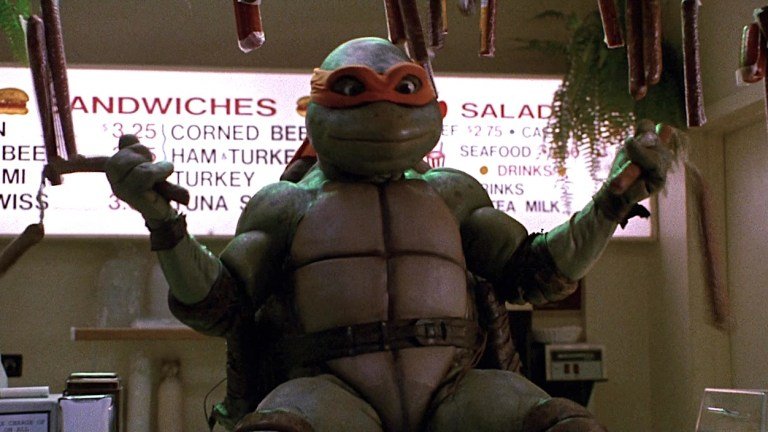
American kids never had to think about it, but British broadcast standards and a Home Office crackdown on “ninja” weapon sales forced UK distributors to rename the franchise Teenage Mutant Hero Turtles. The theme song and opening titles were re-edited to strip out the word “ninja” entirely, and censors cut Michelangelo’s nunchaku scenes from the cartoon and the sequel film Secret of the Ooze — including a moment where he swings a string of sausages instead, which censors flagged anyway for looking too much like nunchucks.
Why Leonardo, Donatello, Raphael, and Michelangelo?
The turtles’ names weren’t part of some grand art-history statement — Laird has said they originally wanted Japanese-sounding names, couldn’t land on anything that felt right, and pivoted to Italian Renaissance artists because it “felt just quirky enough” to work. Sculptor Bernini was briefly considered instead of Donatello, but got dropped in favor of a name that matched the “-o” pattern of the other three.
The Empire Changes Hands: Laird, Eastman, and the $60 Million Sale
The two co-creators didn’t stay partners in the franchise forever. Laird bought out Eastman’s stake in stages between 2000 and 2008, becoming sole owner of Mirage Studios and the TMNT property. In October 2009, Laird sold what remained of the franchise to Nickelodeon’s parent company, Viacom, for a reported $60 million — closing the loop on a story that began 25 years earlier with a borrowed tax refund and a photocopier.
Quick Answers About the Real Teenage Mutant Ninja Turtles History
Who created the Teenage Mutant Ninja Turtles? Artists Kevin Eastman and Peter Laird created the characters and self-published the first comic under their own Mirage Studios imprint in 1984.
Were the Turtles always meant for kids? No. The original black-and-white comic was a violent parody of gritty 80s comics like Daredevil and Ronin — the kid-friendly tone came later, with the 1987 cartoon.
How much is an original 1984 TMNT #1 comic worth today? Top-graded copies (CGC 9.8) have sold for as much as $250,000, though condition matters enormously — lower-grade copies still often sell in the thousands.
Why is the franchise called “Hero Turtles” in the UK? British broadcast rules and concerns tied to a Home Office crackdown on marketing “ninja” weapons led distributors to rename it Teenage Mutant Hero Turtles and edit out nunchaku scenes.
Why This Teenage Mutant Ninja Turtles History Still Matters
What makes the teenage mutant ninja turtles history worth retelling isn’t just the nostalgia — it’s the sheer improbability of it. Two unemployed artists with no connections turned a violent, self-published parody comic into a franchise that reshaped toy aisles, Saturday mornings, and movie theaters for an entire generation. Every Foot Soldier figure, every “Cowabunga,” and every rubbery green movie suit traces back to a $1,300 bet that could have just as easily gone nowhere.
The Retro Almanac
A monthly roundup of "on this day" highlights from that month, decades back — plus first dibs on new retro merch drops. No spam, just the good stuff.