On This Day: September 22, 1994 — Friends Premieres on NBC
NBC’s research department watched a test screening of the Friends pilot in the summer of 1994 and came back with a warning: audiences found the six leads “smug,” “wooden,” and hard to warm up to. The network’s own focus groups rated it below average for a new comedy. NBC ordered it to series anyway, slotted it into a graveyard Thursday half-hour behind Mad About You, and gave it almost no promotional push. Thirty-one seasons of syndication later, that test-screening memo reads like the worst prediction in television history.
From Insomnia Cafe to Six of One to Friends
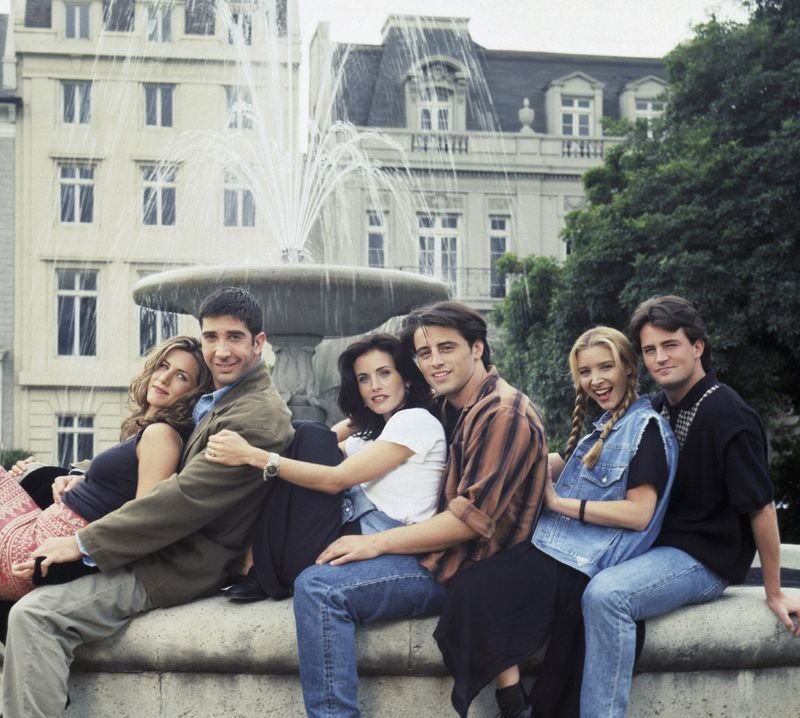
Writers David Crane and Marta Kauffman started sketching the show in November 1993 under the working title Insomnia Cafe, built around the idea of six New Yorkers in their twenties who treat a coffee shop like a living room. NBC bought the pitch and renamed it Friends Like Us. By the time cameras rolled on the pilot in the spring of 1994, the title had changed again to Six of One — a nod to the ensemble cast getting equal billing, a rarity for network comedy at the time.
The Retro Almanac
A monthly roundup of "on this day" highlights from that month, decades back — plus first dibs on new retro merch drops. No spam, just the good stuff.
NBC president Warren Littlefield reportedly pitched Across the Hall as yet another option before the network settled on the one-word title that stuck. The show also debuted with someone else’s theme song: the pilot’s opening uses R.E.M.’s “Shiny Happy People” over the credits, because “I’ll Be There for You” by The Rembrandts hadn’t been written yet. Crane, Kauffman, and Michael Skloff wrote it days before the second episode aired, and it became the sound of the entire decade’s sitcom era.
Six Unknowns and One Very Close Call
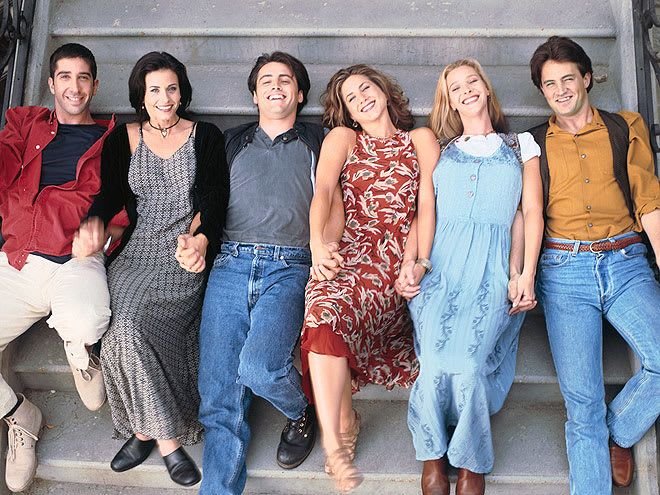
None of the six leads were famous when the pilot shot. Casting director Ellie Kanner’s team reviewed more than 1,000 headshots per role before narrowing the field to roughly 75 callbacks. Courteney Cox, the only cast member NBC actually recognized on sight, was originally offered the role of Rachel and asked to switch to Monica instead — she thought Monica was the funnier part.
Jennifer Aniston almost wasn’t available at all. She was under contract to Muddling Through, a CBS sitcom that hadn’t been canceled yet when Friends started shooting. NBC didn’t know for certain it could use her until Muddling Through was pulled from CBS’s schedule in August 1994, weeks before the Friends premiere date. Had that show survived one more ratings cycle, Rachel Green would have been played by someone else entirely.
Where the Six Actors Came From
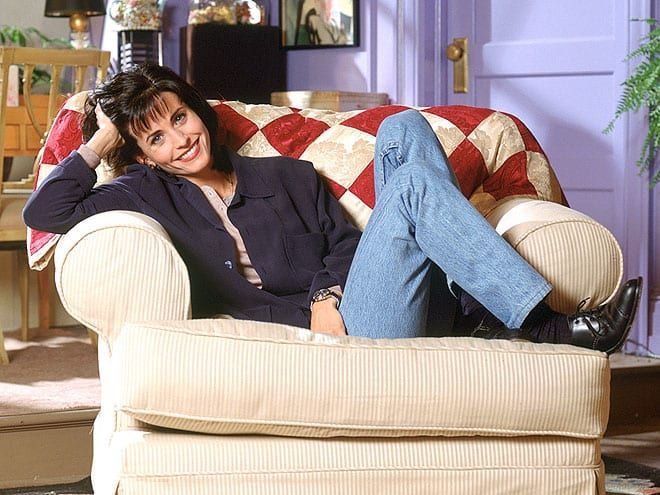
Every member of the cast arrived with a near-miss already on their resume. Courteney Cox was the closest thing to a known quantity, having danced onstage with Bruce Springsteen in the 1984 “Dancing in the Dark” video and picked up small roles on Family Ties and Seinfeld. Lisa Kudrow had just been cast, then recast, out of the Frasier pilot — she originally played radio producer Roz Doyle before the part went to Peri Gilpin — and was already playing Ursula Buffay on Mad About You, a role Friends later folded into its own storyline by making Ursula Phoebe’s twin sister.
Matt LeBlanc had headlined Top of the Heap and its spinoff Vinnie & Bobby, both canceled within a season. Matthew Perry had already burned through several failed pilots. Jennifer Aniston had played Jeannie Bueller in the short-lived TV continuation of Ferris Bueller’s Day Off, a show that lasted 13 episodes. David Schwimmer was the outlier — a Chicago theater actor with almost no television track record, cast largely on the strength of a single audition. None of them had reason to believe this pilot would be different from the ones that had already failed them.
What Actually Happens in “The Pilot”
The episode that aired on September 22 is officially titled “The One Where Monica Gets a Roommate,” though fans usually just call it The Pilot. Rachel Green runs out on her own wedding to a man named Barry, shows up at Central Perk in a wet wedding dress, and moves in with her old high school friend Monica. Ross, freshly divorced from his wife Carol — who has just told him she’s gay — spends the episode moping about being “fine,” which becomes the show’s longest-running joke about denial.
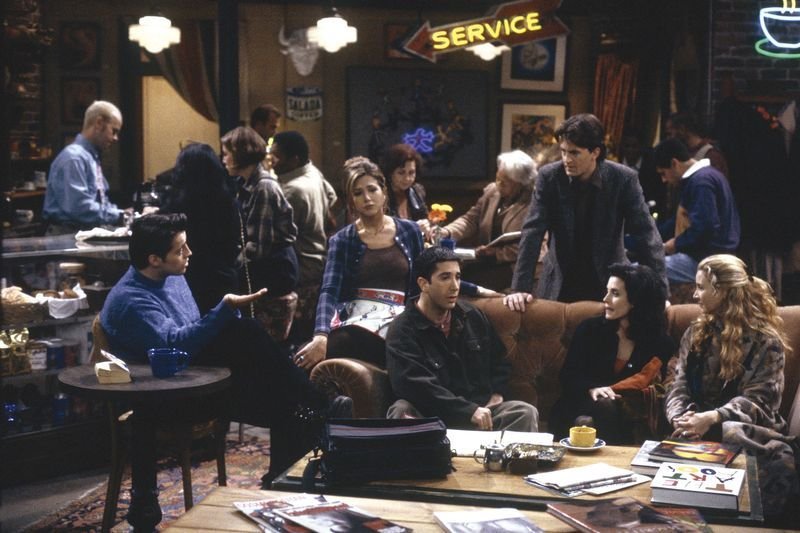
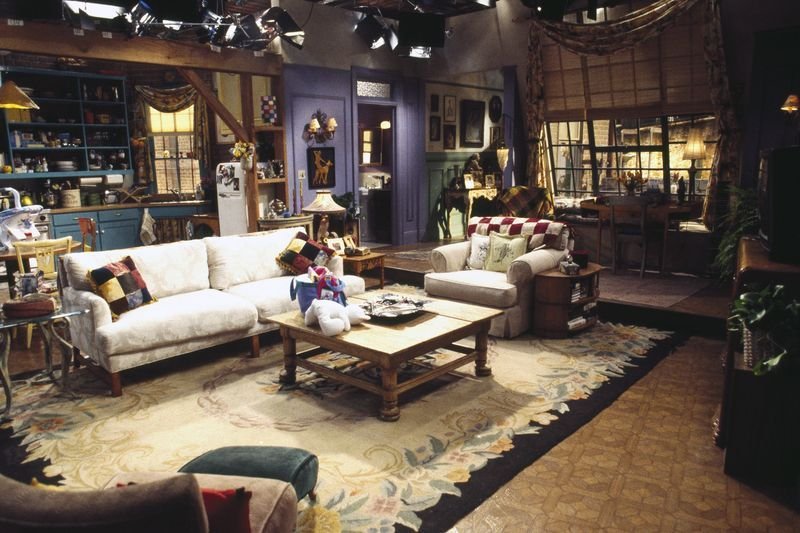
Director James Burrows, a sitcom veteran already responsible for Cheers and Taxi, shot the episode in front of a live studio audience, a format the show kept for all ten seasons. The now-famous orange couch and the Central Perk counter appeared in that very first episode, filmed on a set that barely changed for the show’s entire run.
Love the retro era? Browse our shop for vintage finds, retro clothing, and 80s/90s nostalgia gear.
The Ratings Nobody Saw Coming
Friends pulled a 14.7 rating and a 23 share the night it premiered, translating to just under 22 million viewers. That placed it 15th for the week — solid, not spectacular, and nowhere near a guarantee of a long run. What convinced NBC to commit was the second week’s numbers: instead of the usual post-premiere drop, Friends held its audience, then grew it. The network ordered a full 12 additional episodes before the first month was out.
Within a year, NBC had built its entire Thursday schedule around the show, pairing it with Seinfeld and, later, ER to create the Must-See TV block that dominated the 8-to-11 p.m. slot for most of the 1990s. Advertisers paid a premium to run spots during that lineup, and Friends anchored the 8:30 half-hour for its full decade on air. NBC ran the same playbook across the rest of the decade, using established hits to prop up new ones — the same strategy that helped Frasier find its footing a year earlier in 1993.
The block worked because there was no alternative to appointment viewing yet. No streaming, no DVR, no next-day clips online — if you wanted to know what happened at Central Perk this week, you watched Thursday at 8:30 or you waited for the rerun. That scarcity is a big part of why a show about six people drinking coffee could pull 20-plus million viewers on a normal week without a single major plot twist. Missing an episode meant genuinely missing it, and workplaces built entire Friday-morning conversations around whatever had happened the night before.
How Six Unknowns Became the Most Bankable Cast on TV
By the end of season one, the six leads were already renegotiating their contracts as a bloc — an unusual move for a network sitcom full of newcomers. That unity paid off. By the show’s final two seasons, each of the six was earning $1 million per episode, a number that had never been paid to a sitcom ensemble before and set the template every subsequent hit comedy tried to match.
Jennifer Aniston’s haircut alone became a cultural event. Stylists reported dozens of daily requests for “The Rachel” within months of the premiere, and the layered, face-framing cut is still cited as one of the most-copied hairstyles in television history — a strange kind of proof that a show built around a coffee shop had become inescapable. It’s the same phenomenon that turned 90s sitcoms into the decade’s real fashion and culture engine, ahead of movies or music.
Why the Premiere Still Matters
Friends ran for ten seasons and 236 episodes, ending in 2004 as one of the most-watched series finales ever aired. It never stopped earning after that. Warner Bros. sold streaming rights to Netflix for a reported $100 million a year starting in 2015, then to HBO Max for roughly $425 million over five years once the show became a bidding-war centerpiece in the early streaming era — a fight over syndication money that traces directly back to a Thursday night in September 1994 when NBC wasn’t sure the show would survive its first season.
What’s easy to forget, thirty years on, is how unremarkable that first broadcast actually looked on paper: a middling test score, a half-hour slot nobody wanted, and six actors nobody could name. The show that came out of it rewired what network comedy paid its stars, what a “hangout show” could look like, and how long a rerun could keep making money. None of that was visible on September 22, 1994. It just aired, and people kept watching.
Sources
- History.com — “Friends” debuts — Premiere date and network context.
- Wikipedia — The Pilot (Friends) — Episode plot, ratings, and casting details.
- Scandinavia Standard — Friends’ rocky path to air — Title changes and NBC test-audience reaction.
- Classic FM — The Friends theme song story — Details on the R.E.M. pilot music and The Rembrandts’ theme.
The Retro Almanac
A monthly roundup of "on this day" highlights from that month, decades back — plus first dibs on new retro merch drops. No spam, just the good stuff.