On This Day: October 26, 1985 — Whitney Houston Hits #1
Houston wasn’t a stranger to the music business when that song hit number one, even if most of the country had never heard of her before 1985. Her mother, Cissy Houston, had spent two decades singing backup for Elvis Presley, Aretha Franklin, and Dionne Warwick as part of the Sweet Inspirations before training her daughter’s voice herself. Her cousin was already a pop star. Clive Davis had been grooming her at Arista Records since 1983. What she didn’t have yet, after twenty-two years and one modest hit single, was a signature song. “Saving All My Love for You” gave her one, and it didn’t even start out as hers.

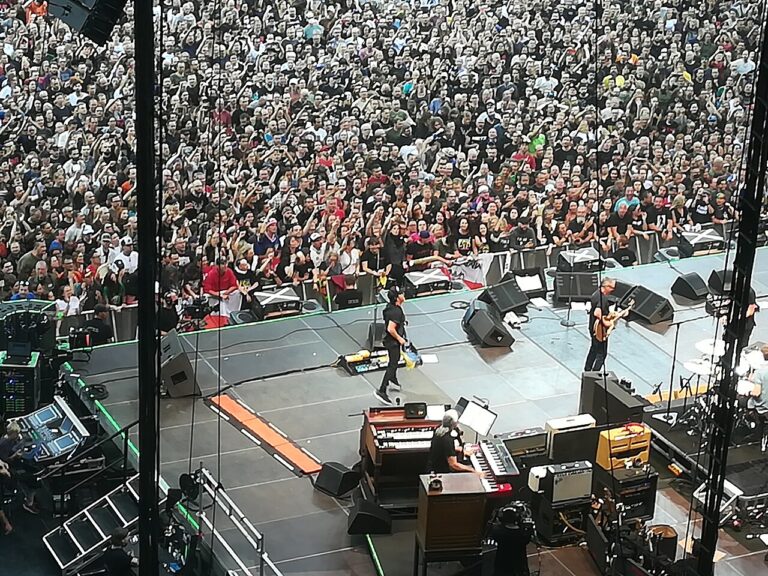
Forty-plus artists packed a Los Angeles studio in January 1985 to record “We Are the World.” Dionne Warwick, Houston’s cousin, was among them — the same year Houston’s own career was about to take off.
The Retro Almanac
A monthly roundup of "on this day" highlights from that month, decades back — plus first dibs on new retro merch drops. No spam, just the good stuff.
A Song Nobody Noticed the First Time Around
Songwriters Michael Masser and Gerry Goffin wrote “Saving All My Love for You” in 1977, and its first home was an album by Marilyn McCoo and Billy Davis Jr., the husband-and-wife duo who’d scored hits with the 5th Dimension before going solo together. Their version sat on the 1978 album Marilyn & Billy, was never even released as a single, and the record went nowhere commercially. The song could easily have stayed a footnote in two careers that had plenty of other highlights to point to.
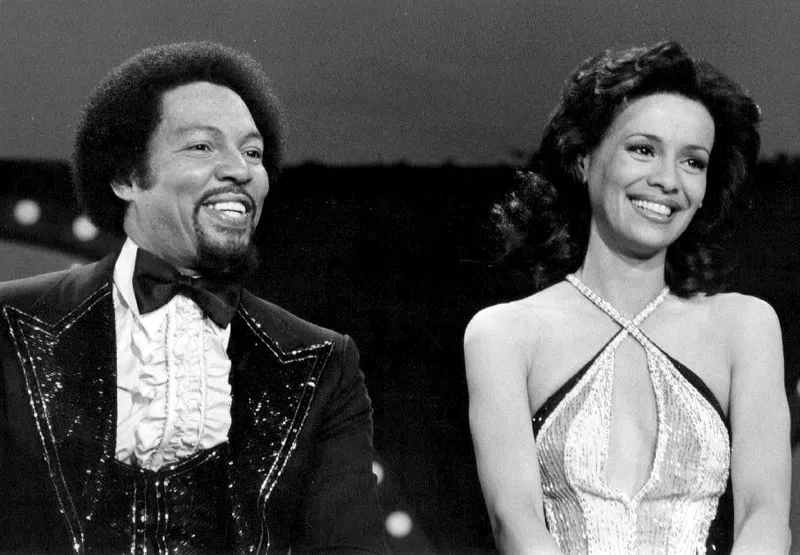
Marilyn McCoo and Billy Davis Jr. in 1977, the year they first put “Saving All My Love for You” on record — eight years before it became Whitney Houston’s breakthrough.
McCoo and Davis Jr. weren’t unknowns when that 1978 album disappeared. Both had spent most of the late 60s and early 70s fronting the 5th Dimension, the vocal group behind “Aquarius/Let the Sunshine In” and a string of pop hits before the pair split off to record as a duo. That pedigree is part of what makes the original version’s failure so strange in hindsight — two proven hitmakers with a Michael Masser song, and it still went nowhere.
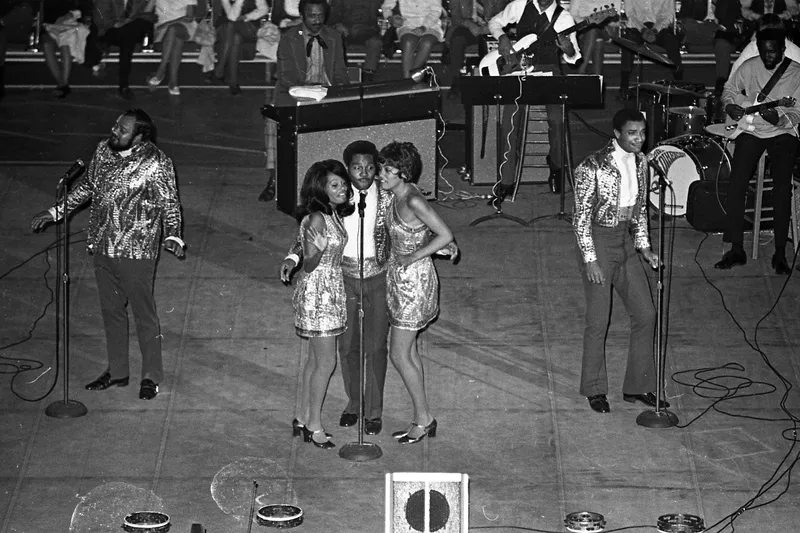
The 5th Dimension on stage in 1970, with McCoo and Davis Jr. at center — the group that made them stars before their solo version of “Saving All My Love for You” went nowhere.
1977 turned out to be a strange, quietly important year for Michael Masser. The same year “Saving All My Love for You” flopped with McCoo and Davis, Masser also co-wrote “The Greatest Love of All” with Linda Creed for The Greatest, a Muhammad Ali biopic. George Benson’s version of that song made it to number two on the Hot Soul Singles chart, a solid result but nothing close to a signature hit either. Masser had written two songs in the same twelve months that went on to do absolutely nothing close to their eventual potential — and then handed both of them to the same twenty-something singer eight years later. Houston cut “Saving All My Love for You” as the second single off Whitney Houston, released August 13, 1985, five months after lead single “You Give Good Love” had stalled at number three. Arista needed a bigger moment, and a song that had already failed once turned out to be exactly what she needed to make it.
How a Ballad Dethroned a-ha
The timing is one of the more memorable coincidences in 80s chart history. A-ha’s “Take On Me” had hit number one exactly one week earlier, on October 19, riding the momentum of its rotoscoped music video. Seven days later, Houston’s torch ballad pushed the Norwegian synth-pop hit out of the top spot — about as stylistically different a changing of the guard as the Hot 100 produces, a jittery synth-pop earworm giving way to a slow-building R&B showcase inside a single week. “Saving All My Love for You” went on to spend seven weeks in the top ten and twenty-two weeks on the chart overall, numbers that told Arista this wasn’t a fluke.
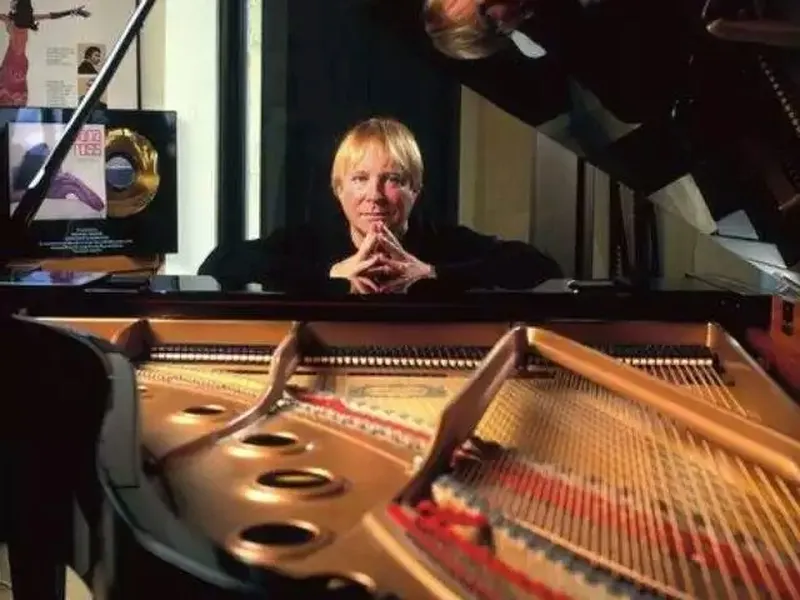
Michael Masser, who co-wrote the song in 1977 and produced Houston’s version eight years later, betting correctly that the right voice could resurrect it.
What made the song connect wasn’t production tricks. It was restraint. Masser kept the arrangement spare early on — just piano and Houston’s voice — before building to the kind of vocal climax that would define her sound for the next decade. Radio programmers who’d filed her under “promising newcomer” after “You Give Good Love” had to reclassify her entirely. This wasn’t a singer with a nice voice on a good song. This was a singer who made every other version of the song, including the original, sound like a rough draft of something nobody had finished building yet.
The Video That Made Programmers Nervous
Director Stuart Orme shot the accompanying video in London during Houston’s promotional tour, and it leaned into the song’s subject matter harder than Arista probably expected. The narrative cast Houston as a singer involved with her married producer, played by actor Ricco Ross — an affair storyline that raised eyebrows at a few outlets in 1985 but didn’t stop the clip from getting heavy rotation on MTV, VH1, and BET. If anything, the controversy made the song’s conflict feel real instead of generic, which matched how Houston delivered the vocal in the first place. Most ballad videos of the era were content to park the singer in front of a soft-focus backdrop and call it a day; this one actually tried to tell the story the lyrics were describing, and it caught enough flak to prove the gamble had worked.
A Grammy, a Cousin, and a Launchpad
Five months after the song hit number one, Houston carried it to the Shrine Auditorium in Los Angeles for the 28th Annual Grammy Awards on February 25, 1986, where she won Best Female Pop Vocal Performance. The presenters were Julian Lennon and Dionne Warwick — Houston’s real-life cousin, which turned the handoff into a genuine family moment rather than a staged one. Houston’s live performance of the song at the ceremony was strong enough to also earn her a Primetime Emmy for Outstanding Individual Performance, a rare double for a single live TV appearance.
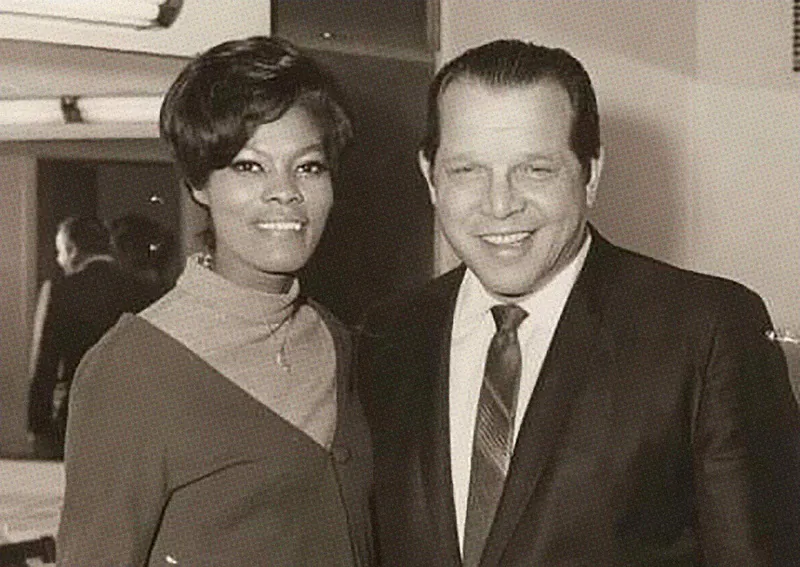
Dionne Warwick, pictured here in the 1960s, had already built a decades-long career by the time she walked out to hand her younger cousin a Grammy in February 1986.
Warwick wasn’t just a famous relative standing in for a cousin — she was the family’s proof of concept. Cissy Houston had sung backup on Warwick’s own early singles years before Whitney was even born, and by 1986 Warwick had been a chart fixture for over two decades. Handing Whitney that trophy wasn’t a passing of the torch between strangers; it was a family that had been in the music business since the Sweet Inspirations days watching its newest member finally arrive.
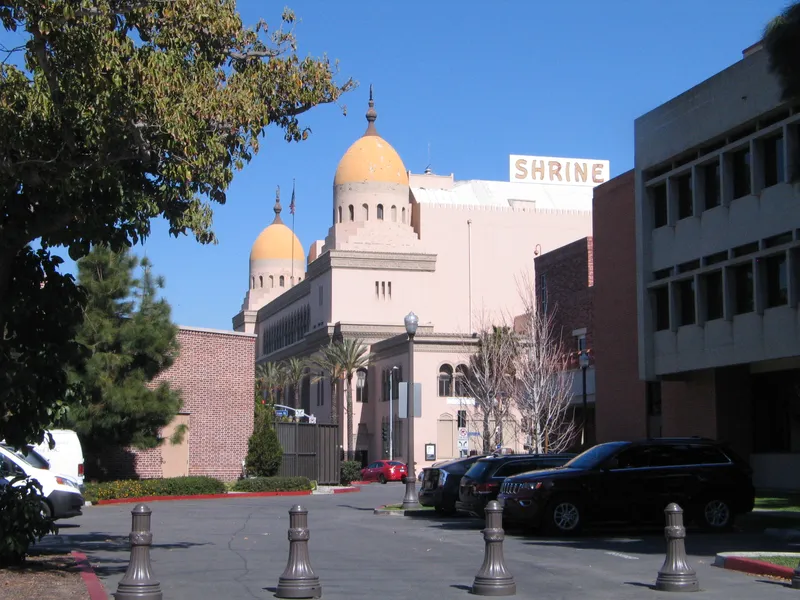
The Shrine Auditorium in Los Angeles, where Houston picked up her first Grammy five months after “Saving All My Love for You” hit number one.
The song wasn’t a one-off. Houston’s next two singles, “How Will I Know” and a Masser-and-Creed deep cut called “Greatest Love of All” — the same song George Benson had taken to number two nine years earlier — both topped the pop charts in early 1986, meaning three straight singles off one debut album reached number one within about a year of each other. That’s the kind of run labels build entire marketing plans around, and Clive Davis had been patient enough — nearly two years between signing Houston and releasing her debut — to let it happen on its own schedule instead of rushing a less-finished record out the door.
Watch the Video
What the Song Left Behind
“Saving All My Love for You” sold around five million copies worldwide, went double platinum in the US, and still shows up on best-of-Houston lists four decades later — Rolling Stone readers once ranked it fifth among her finest recordings, and Entertainment Weekly placed it on its list of her 25 best songs. More than the sales figures, it did the thing a breakthrough single is supposed to do: it told the industry Whitney Houston wasn’t a one-hit act with a good team behind her, she was the rare vocalist who could take a song nobody else had made work and turn it into a signature. Every pop diva who came up in her wake — Mariah Carey, Celine Dion, Christina Aguilera — was chasing a version of that same moment, the one where a ballad stops being background music and becomes a vocal event people build their whole evening around.
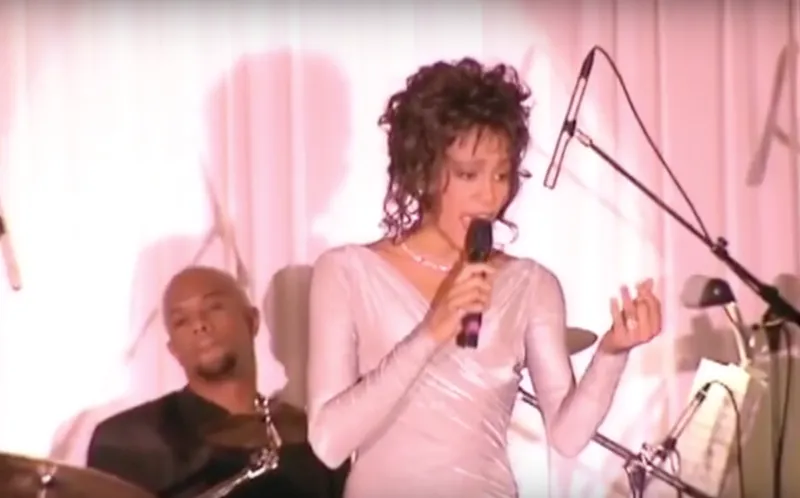
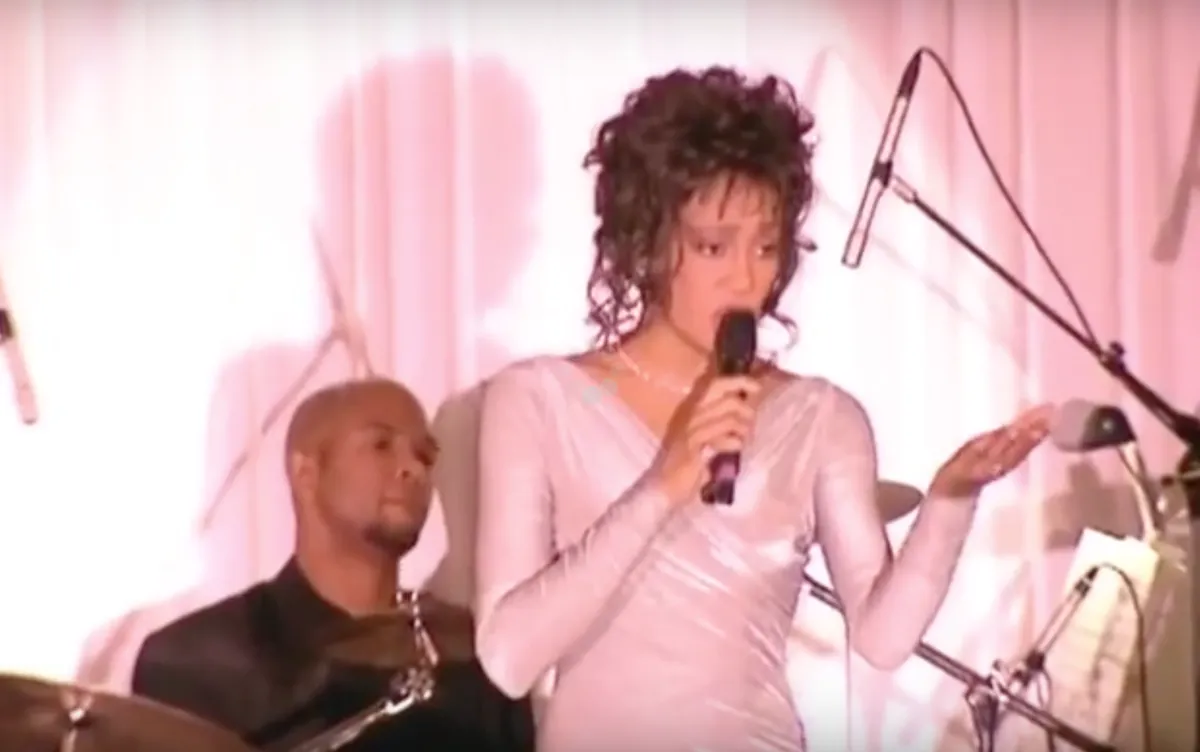
Houston performing in 1994 — the same instrument that turned a failed 1977 single into her first number one almost a decade earlier.
Love the retro era? Browse our shop for vintage finds, retro clothing, and 80s/90s nostalgia gear.
Eight years after a husband-and-wife duo’s version disappeared without a trace, and in the same twelve-month stretch that saw a second Masser co-write quietly underperform with George Benson, the right singer proved neither song was ever the problem. That’s a harder trick to pull off than writing a hit from scratch, and it’s the reason “Saving All My Love for You” still gets credit as the single that turned a promising newcomer into the voice that would define pop music for the rest of the decade.
Sources
- Saving All My Love for You — Wikipedia — songwriting history, chart performance, and certifications.
- Whitney Houston earns her first No. 1 hit — History.com — date confirmation and career context.
- Whitney Houston Wins First GRAMMY Award In 1986 — Whitney Houston Official Site — Grammy ceremony details.
- The Greatest Love of All — Wikipedia — Michael Masser’s 1977 George Benson original.
- Whitney Houston (album) — Wikipedia — debut album background and Clive Davis signing.
The Retro Almanac
A monthly roundup of "on this day" highlights from that month, decades back — plus first dibs on new retro merch drops. No spam, just the good stuff.