Dead Presidents 1995: Tupac Almost Wrecked It
Larenz Tate was 19 when the Hughes Brothers cast him as Anthony Curtis, and he’s said flatly that making this movie is when he stopped feeling like a kid actor and started feeling like a man. That’s not promotional language — watch the film and you can see it happen onscreen, in three distinct acts that barely look like they were shot by the same crew. Dead Presidents made $24.1 million on a $10 million budget, got a mixed 49% on Rotten Tomatoes, and then spent three decades quietly outlasting most of the movies that outgrossed it that year.

The Real Dead Presidents 1995 Heist Behind the Movie
The Hughes Brothers didn’t invent the armored-car robbery at the center of this story. They built it out of Wallace Terry’s oral history Bloods: An Oral History of the Vietnam War by Black Veterans, specifically the account of Haywood T. Kirkland, a Black Marine who came home from Vietnam to a country that wouldn’t hire him and helped pull off a 1969 mail-truck robbery in Washington D.C. that netted over $380,000 in worn, untraceable bills. Kirkland later changed his name to Ari S. Merretazon and became an anti-war speaker. The film doesn’t copy his story beat for beat — it builds a composite character in Anthony Curtis — but the bones are real, and so is the rage underneath it.
The Retro Almanac
A monthly roundup of "on this day" highlights from that month, decades back — plus first dibs on new retro merch drops. No spam, just the good stuff.
That rage is the actual subject of the movie, more than the heist is. Black and Latino veterans came home from Vietnam into a VA system, a job market, and a federal benefits structure that treated them like an afterthought. Anthony Curtis doesn’t rob an armored car because he’s a career criminal. He robs it because every legal door in the Bronx closed on him the same week he got home.

Why Tupac Almost Kept This Movie From Getting Cast
Jada Pinkett Smith was offered the female lead, Delilah Benson, and turned it down — not because of the script, but because of who was directing it. She and Tupac Shakur were close, practically family, and Tupac had a real, physical feud with Albert and Allen Hughes that started on the set of their first film, Menace II Society, and ended with Tupac assaulting one of the brothers. Larenz Tate confirmed the story himself in a 2020 interview: Pinkett Smith knew taking the role meant working closely with men her best friend had come to blows with, and she wasn’t willing to put that friendship at risk for a part. N’Bushe Wright ended up playing Delilah instead.
It’s a strange footnote for a movie about loyalty and broken systems — the casting process had its own loyalty test running in the background, and it had nothing to do with the script.
The Kabuki Face Paint That Became the Movie’s Whole Marketing Campaign
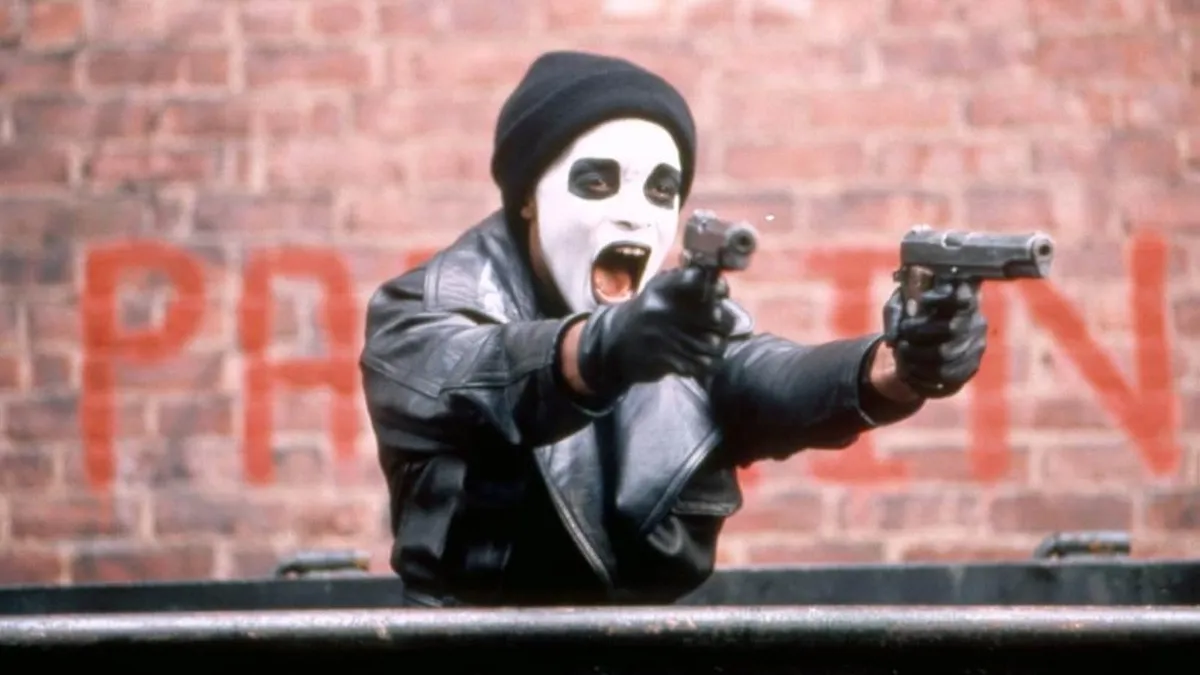
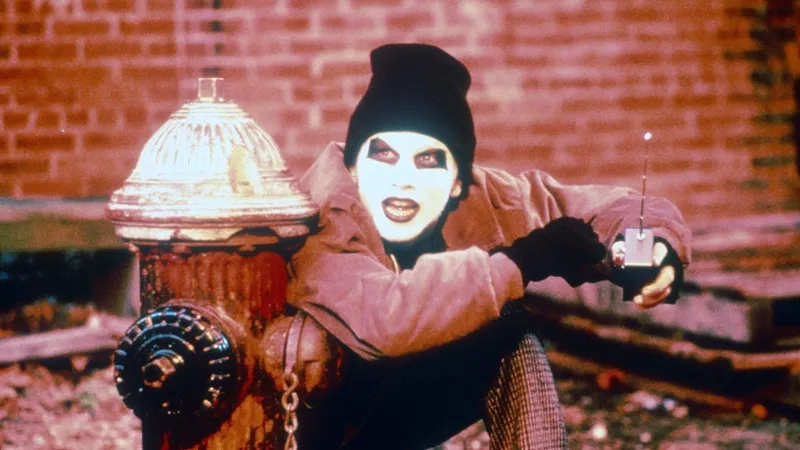
If you remember one image from Dead Presidents, it’s probably the robbery crew in white-and-black face paint, guns drawn, screaming behind ski caps. That look wasn’t a costume department afterthought — director Allen Hughes has said directly that it came from photographs of 1971 protests where Black Vietnam veterans wore similar white-and-black face paint while demonstrating against the war. The Hughes Brothers borrowed the protest imagery and weaponized it for the heist scene, turning a political statement into a crime-movie money shot.
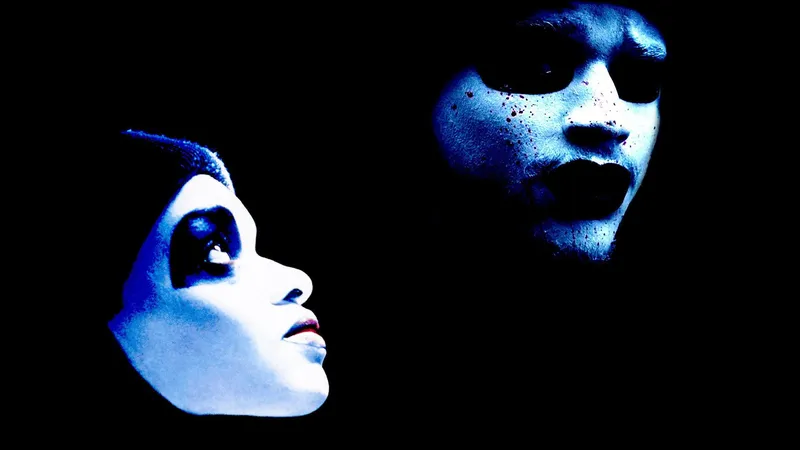
It worked. The studio built the entire poster campaign around the face paint, timed the release for right around Halloween 1995, and the imagery became the single most recognizable thing about the movie — more recognizable, honestly, than most of the actors’ faces without the paint on. Three decades later it’s still the image people search for when they half-remember this film and can’t recall the title.
Three Movies in One Camera
Cinematographer Lisa Rinzler didn’t shoot this as one continuous visual style, and that choice is a big part of why the film still holds up. The Bronx scenes before Vietnam are warm, saturated, almost nostalgic. Vietnam itself is shot hot, frantic, and disorienting, with the camera rarely settling. Once Anthony comes home, the palette goes cold and drained, drab in a way that makes 1970s New York look like it’s actively punishing him for coming back.
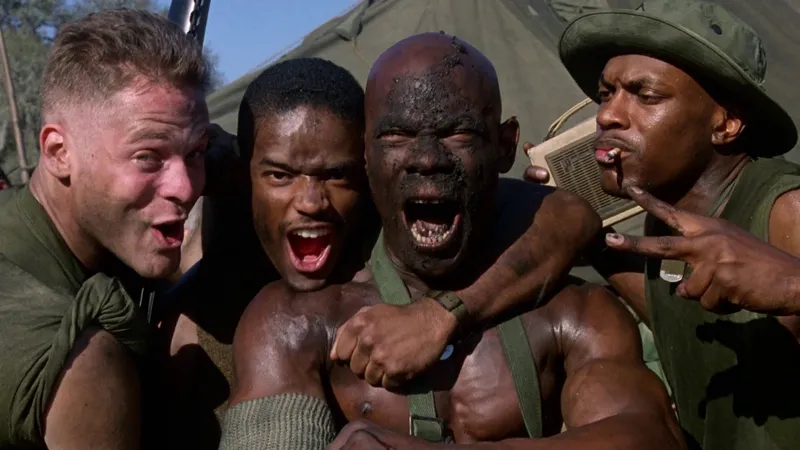
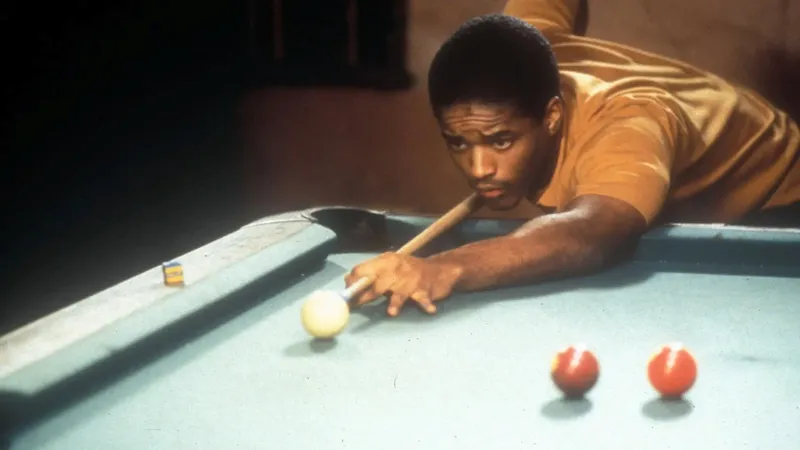
Production designer David Brisbin built lived-in sets rather than polished ones — Rinzler has specifically called the pool hall set a “tour de force” of that approach — and the film’s church scene was shot entirely in silhouette to push the moral weight of the moment without a single visible face. None of this is subtle once you notice it, and once you notice it you can’t unsee how deliberate it is.
Chris Tucker, Before He Was Chris Tucker
Chris Tucker plays Skip, the crew member whose trigger finger sets off the robbery’s worst moment, and it’s a genuinely dramatic performance from an actor most people only knew as the loudest guy in the room by that point. This came out the same year as Friday, and two years before Money Talks turned him into a specific kind of comedic star. Watching him play Skip now is a reminder that the Hughes Brothers were pulling real range out of actors before the industry decided what box each of them belonged in.
A $10 Million Budget That Grew Up Fast in New York
The film was greenlit at roughly $12 million and climbed toward $20 million by the time it wrapped, mostly because shooting in New York ran long and expensive. Allen Hughes was blunt about it afterward, saying the city doesn’t give productions deals and you pay full price for every overrun. Studio executives reportedly pushed back on how dark the dailies looked — a direct result of Rinzler’s deliberate lighting choices — but the brothers held their ground on the visual plan rather than brightening it up to please a studio note.
That stubbornness paid off commercially overseas even when domestic numbers were modest. The $24.1 million domestic haul undersold how the film performed internationally, and the overall return was strong enough that the Hughes Brothers walked away from it with final-cut privileges on their next studio deal — a rare concession for directors still in their mid-twenties.
The Soundtrack Did Half the Emotional Work
Rather than lean on a 1995 hip-hop soundtrack the way a lot of hood films did, the Hughes Brothers built the Dead Presidents soundtrack almost entirely out of late-60s and early-70s soul and protest music — James Brown, Aretha Franklin, Curtis Mayfield, Isaac Hayes. It’s a deliberate anachronism. The music isn’t commenting on 1995; it’s reinforcing 1968 to 1973, the exact window the film lives in, and it carries the same frustration and pride the characters can’t always say out loud.
Martin Sheen Shows Up and Nobody Billed Him
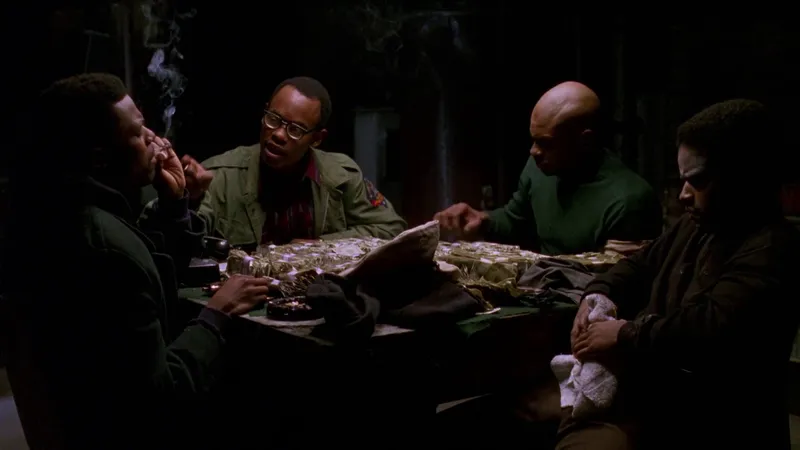
Martin Sheen plays the judge who sentences Anthony Curtis at the film’s end, and he’s not credited for it. It’s a small, strange detail in a movie full of them — a recognizable A-list face delivering the final, crushing word on Anthony’s fate, with the production choosing not to draw attention to who’s actually under the robe. The effect lands better because of the anonymity; the judge isn’t a star cameo, he’s just the system, finally speaking.
Why Critics Were Cooler on It Than Audiences Have Been Since
Roger Ebert gave the film two and a half stars on release and said it “feels incomplete,” and he wasn’t alone — the 49% Rotten Tomatoes score reflects a genuinely split critical reaction at the time. Part of that split is structural: the film asks you to sit through a slow-burn coming-of-age story and a war film before it ever gets to the robbery the trailers sold you on, and some 1995 reviewers wanted the heist movie they were promised, not the three-act character study they got.
That same structure is exactly why the film has aged well. It’s not a heist movie with a backstory attached — it’s a story about what Vietnam actually did to Black veterans, with a heist as the final consequence rather than the point. Compare that to Clockers, released the same year, which wrestled with a different side of the same era’s violence, or go back to the film that put Larenz Tate and the Hughes Brothers on the map in the first place, Menace II Society, to see how far they’d grown as filmmakers in just two years.
Frequently Asked Questions
Is Dead Presidents based on a true story?
It’s inspired by real events — specifically a 1969 Washington D.C. mail-truck robbery carried out by Vietnam veteran Haywood T. Kirkland, documented in Wallace Terry’s book Bloods. The film’s protagonist, Anthony Curtis, is a fictional composite rather than a direct biography.
Who directed Dead Presidents?
Twin brothers Albert and Allen Hughes, who co-wrote, produced, and directed the film as their second feature after 1993’s Menace II Society.
Why did Jada Pinkett Smith turn down a role in Dead Presidents?
She was offered the role of Delilah but declined because of her close friendship with Tupac Shakur, who had a personal feud with the Hughes Brothers dating back to the set of Menace II Society. N’Bushe Wright played the role instead.
What does the face paint in Dead Presidents mean?
The white-and-black kabuki-style face paint worn by the heist crew was inspired by real photographs of 1971 Black Vietnam veterans wearing similar paint at anti-war protests, reworked by director Allen Hughes into the film’s signature robbery imagery.
Sources
- Dead Presidents — Wikipedia — plot, production, and cast overview
- How the Hughes Brothers Crafted Dead Presidents — REVOLT — behind-the-scenes production details and cinematography
- Dead Presidents movie review — RogerEbert.com — original 1995 critical reception
- Larenz Tate on Jada Pinkett Smith’s Dead Presidents casting — Cheat Sheet — Tupac feud and casting details
Larenz Tate went on to Menace II Society before this and a long character-actor career after it, but ask anyone who actually sat through all 119 minutes of Dead Presidents which performance they remember first, and most of them will say Anthony Curtis in that kitchen, staring at a pile of worthless, unmarked federal money, having just lost everything to get it.
The Retro Almanac
A monthly roundup of "on this day" highlights from that month, decades back — plus first dibs on new retro merch drops. No spam, just the good stuff.