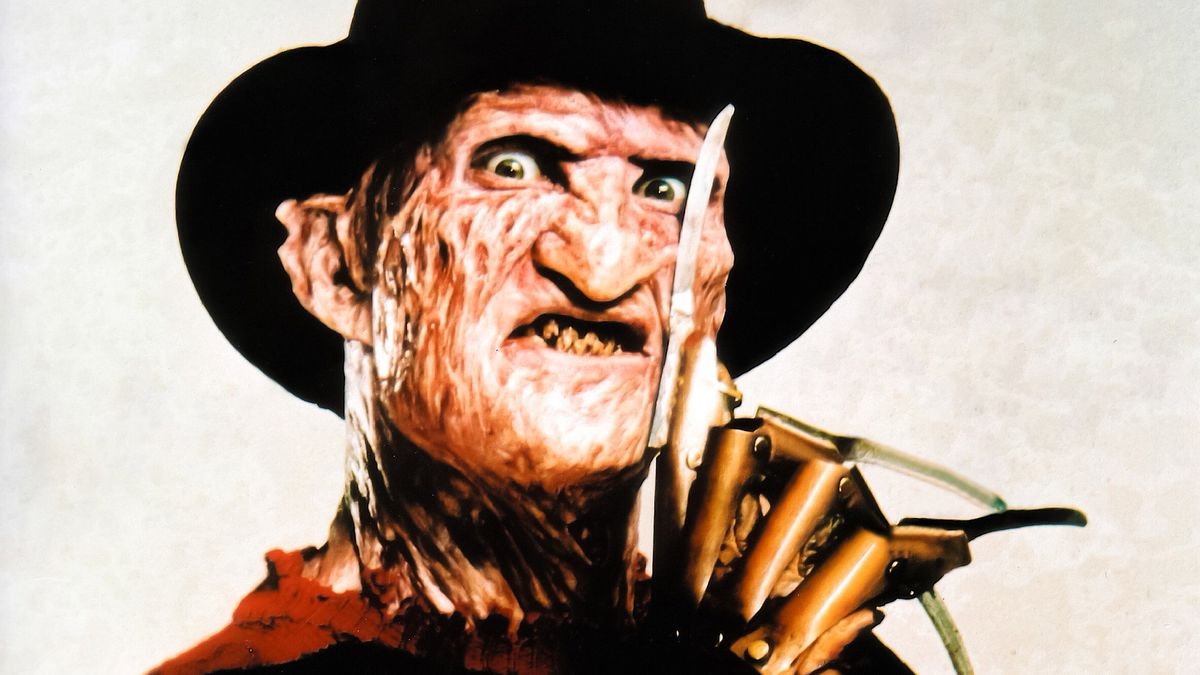
On This Day: November 1, 1985 — A Nightmare on Elm Street 2: Freddy’s Revenge Opens
New Line Cinema needed a sequel fast. A Nightmare on Elm Street had made $25 million on a $1.8 million budget in 1984, and the studio — nicknamed “the house that Freddy built” for the rest of its existence — wanted a follow-up in theaters within a year. Writer David Chaskin banged out a script in six weeks. Director Jack Sholder shot it in under a month. Nobody involved expected Freddy’s Revenge to become one of the most argued-about movies in horror history, but forty-one years later, it’s taught in film classes for exactly that reason.
A Teenage Boy Takes the “Final Girl” Role
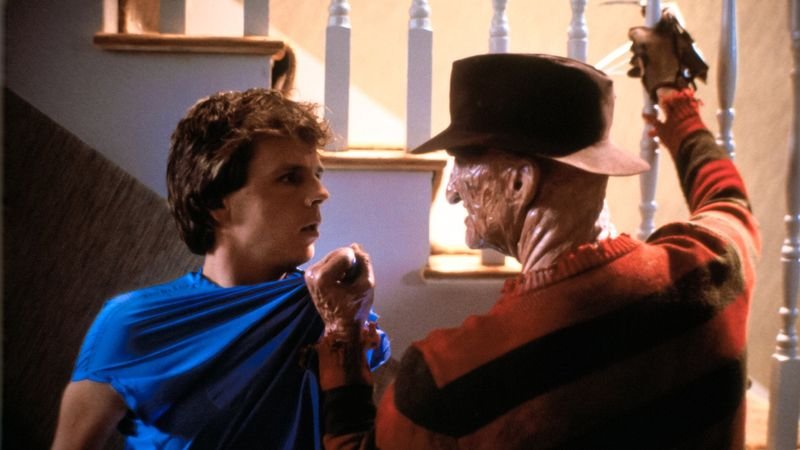
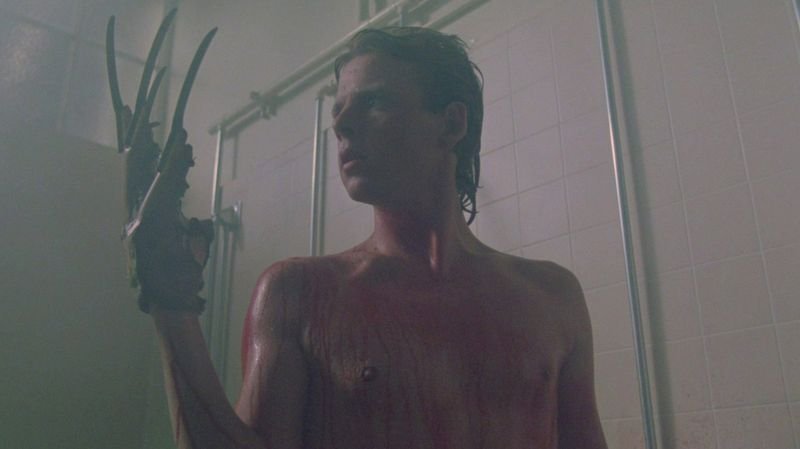
Slasher movies run on a formula: a killer stalks a group of teenagers, and the lone survivor who outsmarts him is almost always a young woman. Freddy’s Revenge broke that rule on purpose. The Walsh family moves into the same house on Elm Street from the first film, and this time it’s teenage son Jesse — not a daughter — who starts having nightmares about a burned man in a striped sweater. Freddy doesn’t just haunt Jesse’s dreams. He wants to possess his body and use it to kill in the real world, which meant Mark Patton spent most of the shoot screaming, sweating, and running through his house in his underwear, a performance style horror writers would later nickname “the first male scream queen.”
Robert Englund came back as Freddy, by then locked into the role for good, joined by Kim Myers as Jesse’s girlfriend Lisa and Robert Rusler as his gym-class rival Ron Grady — Freddy’s first real victim in the film, cut down with garden shears in a scene that still gets singled out as one of the series’ nastiest kills. Jesse spends the movie trying to convince Lisa, and himself, that the nightmares are separate from whatever is happening to his body when he blacks out, a structure that plays a lot closer to a body-horror movie than a typical teen slasher. Lisa, not Jesse, ends up delivering the film’s climactic act of resistance against Freddy, which gives the sequel an odd hybrid ending: a male lead who needs saving, and a female lead who does the saving, both roles reversed from what 1985 audiences expected walking in.
The Retro Almanac
A monthly roundup of "on this day" highlights from that month, decades back — plus first dibs on new retro merch drops. No spam, just the good stuff.
The Shower Scene Everyone Still Talks About
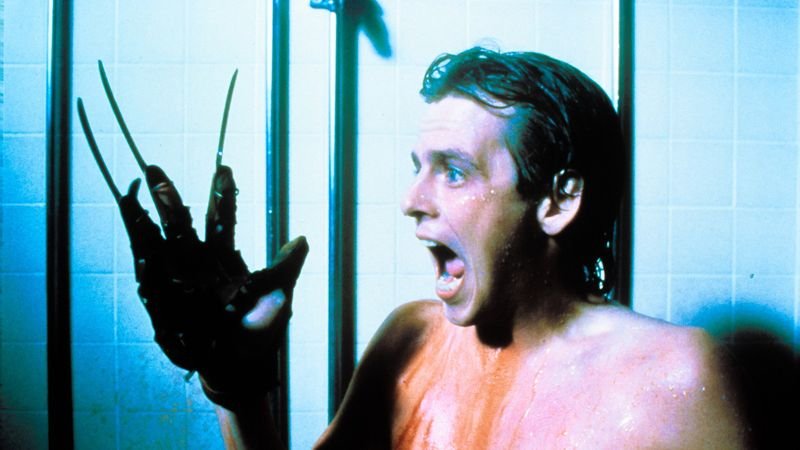
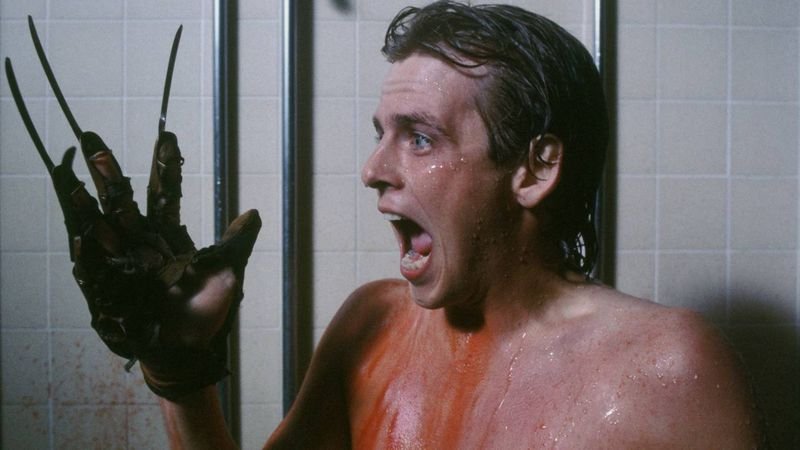
The film’s most-discussed sequence has nothing to do with Freddy’s glove. Jesse’s gym coach, Schneider, drags him out of a gay leather bar at night — a bar Jesse insists he just wandered into by accident — and marches him back to school for punishment. Back at the gym, Coach Schneider ends up tied up and whipped with towels in the shower room by an unseen attacker before Freddy’s claws finish him off naked under the spray. None of that was subtle in 1985, and it wasn’t subtle to audiences then either. Fans started calling Freddy’s Revenge “the gayest horror movie ever made” within a few years of release, long before that became a compliment the film would eventually embrace.
Screenwriter David Chaskin denied for a quarter-century that any of it was intentional. In interviews through the 1990s and 2000s, he put the blame squarely on Mark Patton’s performance, suggesting Patton — who was a closeted gay actor at the time — had read something into the role that wasn’t on the page. Patton, meanwhile, watched his career stall out. Horror fans and industry insiders treated the film’s subtext as something shameful, and Patton has said directly that the backlash pushed him out of acting entirely by the late 1980s, years before he came out publicly.
A Pool Party, a Body Count, and Practical Effects That Still Hold Up
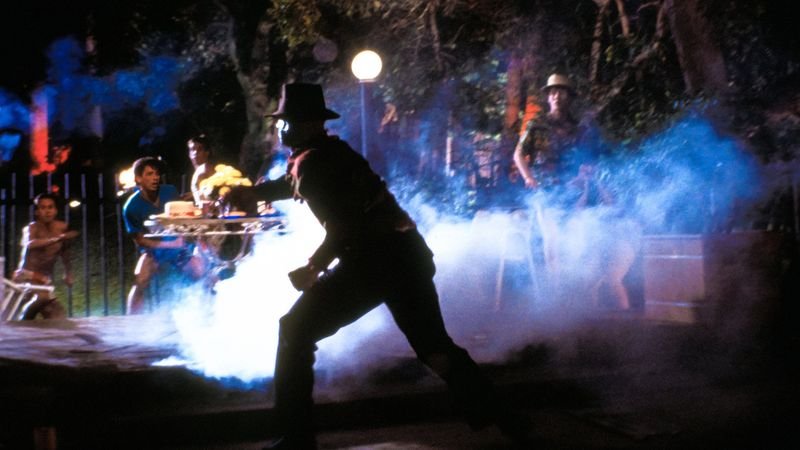
For all the subtext debate, Freddy’s Revenge is still a slasher sequel with a body count, and its best gore sequences were built almost entirely with in-camera effects. The film’s centerpiece is a pool party that turns into a massacre once Freddy fully takes over Jesse’s body in front of his friends — practical makeup, forced perspective, and a lot of fake blood, no CGI anywhere in sight. Special effects artists on the project built a full transformation sequence where Jesse’s skin splits open to reveal Freddy underneath, a shot that horror effects historians still reference when they talk about peak practical-effects-era slasher filmmaking.
Opening Weekend Numbers and a Critical Beating
Freddy’s Revenge opened wide on November 1, 1985, and went on to gross roughly $30 million domestically against a budget of about $3 million — a solid return for New Line, even if it fell short of matching the original. Critics weren’t kind. Reviewers in 1985 dismissed the film as a rushed cash-in that abandoned what made the first Elm Street work, and franchise fans at the time ranked it near the bottom of the series. Wes Craven, who created Freddy and wrote the original, had no involvement in the sequel and reportedly wasn’t thrilled with the direction the character took.
That reputation held for decades. Series retrospectives into the 2000s routinely called Freddy’s Revenge the black sheep of the franchise — the one nobody defended, the one that got the formula “wrong.” The film’s real afterlife didn’t start until the people who made it were ready to talk about why it turned out the way it did.
Part of what made the backlash land so hard is timing. 1985 was the middle of the AIDS crisis, and mainstream American media was treating gay men as a public health threat months before it treated them as people. A horror sequel that put a closeted-panic storyline inside a teen slasher wasn’t just an unusual creative choice in that climate — it was something studios and actors alike wanted to distance themselves from fast. That’s the context Mark Patton has pointed to again and again when explaining why nobody wanted to talk about the film’s subtext honestly for 25 years: it wasn’t really about the movie, it was about what admitting the subtext existed would have meant for everyone’s career at that specific moment in American culture.
Chaskin Finally Admits It Was on Purpose
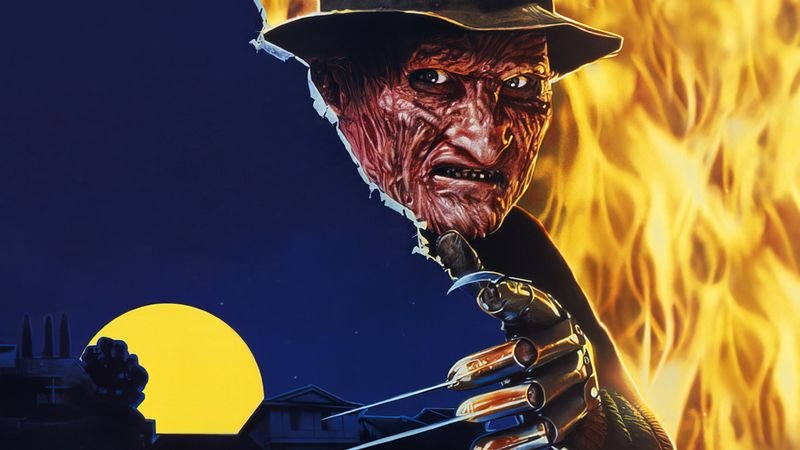
In the 2010s, more than two decades after Freddy’s Revenge came out, David Chaskin changed his story. In interviews promoting horror documentaries and retrospectives, he admitted the gay subtext wasn’t an accident of Patton’s performance — he’d written it into the screenplay deliberately, dropping in double entendres and a closeted-panic storyline he knew audiences would pick up on. He apologized to Patton publicly for letting him take the blame for so long. By then Patton had spent nearly 30 years believing an entire industry held him responsible for a film he didn’t write.
The full story came out in Scream, Queen! My Nightmare on Elm Street, a 2019 documentary directed by Roman Chimienti and Tyler Jensen that follows Patton touring horror conventions, confronting his own history with AIDS-era Hollywood homophobia, and finally getting Chaskin to admit what he’d done on camera. Virgil Films released it in March 2020, and it reframed Freddy’s Revenge for an entire generation of horror fans who’d grown up treating it as a punchline.
Love the retro era? Browse our shop for vintage finds, retro clothing, and 80s/90s nostalgia gear.
From Black Sheep to Queer Horror Classic
The reversal has been almost total. Horror festivals now program Freddy’s Revenge as a queer classic rather than hide it. Academic film writing treats it as one of the first mainstream studio horror movies to put a closeted male panic narrative at the center of a slasher plot, years before anyone in Hollywood would do that on purpose and put their name on it. Mark Patton has spent the last decade as a guest of honor on the horror convention circuit, where fans who once would have mocked the film now line up for his autograph specifically because of it.
Robert Englund has said in multiple interviews that he always understood the subtext while filming and thought it was one of the more interesting choices the franchise ever made, even while the rest of the production treated it as something to downplay. That gap — between what the cast and crew knew in 1985 and what the marketing and press around the film were willing to say out loud — is most of why the story took 25 years to surface.
Why It Still Matters Forty Years Later
Every other Elm Street sequel plays it safe. Freddy’s Revenge is the one that took a real risk, even if nobody at New Line meant to greenlight that risk on purpose, and it’s the one people are still writing essays about in 2026. That’s a strange kind of legacy for a movie that grossed less than its predecessor and got savaged by critics on release — but it’s also proof that the movies horror fans dismiss too fast are usually worth a second look. If you’ve only seen Freddy’s Revenge as “the weird one” in the franchise, it’s worth revisiting with the full story in mind.

For more 80s horror history, check out our pieces on Hocus Pocus 1993: The Flop That Won Halloween and The Nightmare Before Christmas’s 1993 debut, or revisit how Ghostbusters changed Hollywood the year before Freddy showed up.
Sources
- Inverse — 40 Years Later, A Misunderstood Horror Sequel Became An Accidental Queer Masterpiece — retrospective on the film’s production and reputation shift.
- The Advocate — Elm Street’s Mark Patton: Hollywood Is Still a Homophobic Nightmare — Mark Patton interview on the film’s fallout.
- Wikipedia — Scream, Queen! My Nightmare on Elm Street — background on the 2019 documentary and Chaskin’s admission.
- Dread Central — A Nightmare on Elm Street 2 Retrospective: From Black Sheep to Queer Classic — critical and cultural reassessment of the film.
- Wikipedia — A Nightmare on Elm Street 2: Freddy’s Revenge — production details, cast, and box office figures.
The Retro Almanac
A monthly roundup of "on this day" highlights from that month, decades back — plus first dibs on new retro merch drops. No spam, just the good stuff.