Gene Simmons vs Paul Stanley: 50 Years of War
Fifty years of rock and roll. Over 100 million records sold. More than 3,000 licensed merchandise items. The most recognizable band logo in music history. Behind all of it, two men from New York have spent five decades in one of the most complex, contentious, and creatively charged partnerships in rock history. Gene Simmons and Paul Stanley co-founded KISS, co-wrote its anthems, and have argued — often publicly — about almost everything in between. So who really runs the band? Who wrote the songs? And could KISS have existed without either one?
The answer, as with most things in the KISS universe, is complicated, contradictory, and absolutely fascinating.
Origins: Two Kids from New York Who Wanted to Build the Ultimate Rock Band
Gene Simmons was born Chaim Witz on August 25, 1949, in Haifa, Israel, to Jewish refugees from Hungary. He immigrated to the United States as a child and grew up in New York. Paul Stanley was born Stanley Bert Eisen in New York City in 1952, also Jewish, raised in Queens. The two met through the New York music scene in the early 1970s and quickly recognized in each other what they lacked individually: Simmons had relentless drive and business instinct, Stanley had the melodic gift and frontman charisma that could fill arenas.
The Retro Almanac
A monthly roundup of "on this day" highlights from that month, decades back — plus first dibs on new retro merch drops. No spam, just the good stuff.
They first joined forces in a group called Wicked Lester, a band that actually scored a record deal with Epic Records. But both men were dissatisfied. The music was too soft. The image was too conventional. The band recorded an album that was shelved — and instead of accepting defeat, Simmons and Stanley walked away from the deal entirely. They quit Wicked Lester, left the record behind, and announced they were going to form the “ultimate rock band.”
In January 1973, after auditioning Peter Criss on drums and Ace Frehley on lead guitar, KISS was born. Paul Stanley came up with the band name. The makeup personas followed — each member creating a character that represented something bigger than themselves. Simmons became the Demon. Stanley became the Starchild. Frehley became the Space Ace. Criss became the Catman.
From day one, the Simmons-Stanley dynamic was the engine that drove everything. The other members would come and go. These two never would.

Complementary Roles: The Businessman and the Showman
Ask any longtime KISS observer to describe the division of labor between Gene Simmons and Paul Stanley, and you’ll hear the same general answer: Gene handles the business, Paul handles the music. But the truth is more nuanced than that — and both men would push back on any oversimplification.
Paul Stanley is, by virtually every measure, the primary musical architect of KISS. He wrote or co-wrote most of the band’s greatest anthems — “Rock and Roll All Nite” (co-written with Simmons), “I Was Made for Lovin’ You,” “Shout It Out Loud,” “Detroit Rock City.” He is the melodic voice of KISS, both literally and figuratively. On stage, Stanley is electric — a natural front man who could command 80,000 people with a gesture and a scream.
Gene Simmons, meanwhile, became the public face of KISS as a brand. His business acumen is legendary — KISS has slapped its logo on everything from caskets to condoms, generating a licensing empire that most rock bands could only dream of. Simmons built a persona around the idea that rock and roll is commerce, that the Demon character is a product, and that product sells.
But here’s where it gets interesting: in his 2014 memoir Face the Music: A Life Exposed, Paul Stanley challenged the narrative that Simmons was the marketing genius behind KISS’s merchandising empire. According to Stanley, the credit really belonged to their original manager, Bill Aucoin, who identified the revenue opportunity early and pushed product relentlessly. “He was no marketing genius,” Stanley wrote of Simmons. “He just took credit for things. It was unwarranted, selfish, and hurtful, and there was no way to excuse it.”

The Creative Tension: Who’s Really in Charge?
Here’s the central paradox of KISS: both men co-own the band’s name and trademark equally. Neither can outvote the other. There is no majority shareholder. In theory, KISS is a perfect partnership of equals — in practice, it has always been a creative battleground.
Simmons once put it bluntly: “Paul and I are like black and white; there’s almost nothing we share an opinion on.” And yet, they’ve stayed together longer than most marriages. In interviews, Gene has described the relationship as “a brother-I-never-had kind of thing,” acknowledging that Stanley possesses musical talent he himself can never match. “I have an abiding admiration and respect for the talent that he has that I will never have,” Simmons said.
Stanley, for his part, has been equally candid — and significantly more cutting. He told CNN: “Gene lives about five minutes from me — I can see his ego from my house!” He added that “Gene enjoys being out there saying ‘me, me, me’ when it’s actually ‘we, we, we.'”
Their personalities are genuinely, fundamentally different. Where Simmons projects dominance, control, and entrepreneurial aggression, Stanley projects vulnerability transformed into artistry. Where Simmons talks about money as the ultimate metric of success, Stanley talks about music and performance as the deepest expression of self. These differences made KISS greater than either man could have been alone — and made their partnership perpetually combustible.
Paul Stanley’s 2014 Book: The Most Revealing Critique
If there’s a single document that most clearly captures the fault lines between Gene Simmons and Paul Stanley, it’s Stanley’s 2014 memoir Face the Music: A Life Exposed. The book was praised for its candor — and its sections about Simmons were particularly pointed.
Stanley’s central charge was this: Gene Simmons, during the 1980s, all but abandoned KISS while still expecting equal credit. While Stanley was doing the heavy lifting — writing songs, managing the band’s creative direction, keeping things together — Simmons was chasing film roles and other outside projects. “He was leaving me to do the heavy work, but continued to get paid,” Stanley wrote. He described feeling “very resentful and hurt,” and said Simmons was “abandoning ship and you’re still my partner.”
Stanley also turned in subpar songs, Stanley alleged — work that didn’t meet the standard KISS needed. For the 1984 album Animalize, Stanley essentially carried the creative weight alone, writing the majority of the material while Simmons was focused elsewhere.
But Stanley’s revelations weren’t only critical. He also described moments of genuine admiration, noting that Simmons’ ability to admit when he’s wrong — something Stanley says is his favorite quality in his partner — has been essential to their longevity. “When people do things and it bothers you,” Stanley later reflected, “you need to figure out why it bothers you, not expect them to change.” In other words, Stanley made peace with Simmons by accepting him for what he is, not what he wished him to be.
Gene’s Solo Pursuits: The Distractions That Nearly Broke KISS
Gene Simmons’ side ventures are the stuff of rock and roll legend — not always in a flattering way. In the early 1980s, as KISS removed their makeup and tried to reinvent themselves, Simmons pursued an acting career with genuine seriousness. He appeared in Runaway (1984), showed up in a Season 2 premiere of Miami Vice (1985), and later appeared in Wanted: Dead or Alive (1987) alongside Rutger Hauer. ABC even offered him his own TV series — he declined it when his business manager calculated that touring with KISS paid more.
Later came Rock School (2005), the reality TV series in which Simmons taught rock music to British prep school students at Christ’s Hospital School. It was entertaining. It was also, in Paul Stanley’s view, emblematic of a recurring pattern: Gene finding ways to be the center of attention outside of KISS, even as the band needed him most.
In 2014, Simmons published his own manifesto: Me, Inc.: Build an Army of One, Unleash Your Inner Rock God, Win in Life and Business. The book distilled his philosophy into thirteen principles, with the core message being brutally simple: pursue money as your #1 goal. “Ruthlessly pursue Big Money,” the book essentially advises. “Make it the absolutely #1 goal of your life.” The book was controversial — Simmons’ advice to immigrants to “learn to speak goddamn English” drew particular criticism — but it was undeniably authentic to who he is.
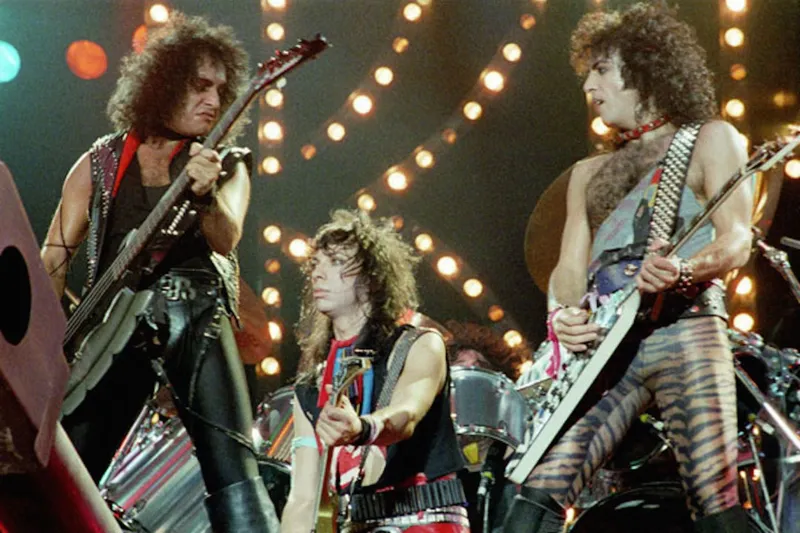
The contrast with Stanley couldn’t be sharper. While Simmons wrote a business book, Stanley wrote a memoir. While Simmons promoted himself as a brand, Stanley promoted KISS as a calling. The gap between their self-conceptions is the gap between entrepreneur and artist — and it has defined their partnership from the beginning.
Ace Frehley and Peter Criss: Whose Call Was It?
No chapter in KISS history is more contentious than the dismissals of original members Ace Frehley and Peter Criss — and the question of who bears responsibility remains a source of genuine dispute to this day.
Peter Criss departed the band in 1980. According to accounts from Ace Frehley’s 2011 memoir, Criss was voted out during a band meeting in which all three remaining members — Frehley, Simmons, and Stanley — along with manager Bill Aucoin, voted him out. But the narrative in the press, largely shaped by Gene and Paul, often framed it differently: as a necessary business decision necessitated by Criss’s unreliability.
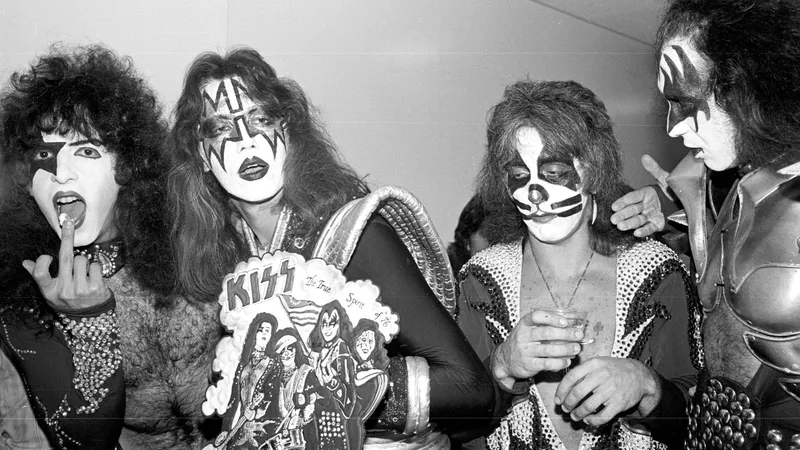
Ace Frehley’s situation was similarly contested. Frehley has consistently maintained that he was never fired — that he chose to leave. “I was never fired from Kiss. I hate when I hear that,” Frehley said. He noted that the success of his 1978 solo album had already shown him he was more creative on his own than within the KISS dynamic. Paul Stanley even showed up at Frehley’s doorstep and took him to lunch, trying to change his mind — but Frehley had already decided.
Yet Gene and Paul, in various interviews over the years, have continued to characterize both departures as dismissals — as decisions made by the co-founders to protect the integrity of the band. Ace Frehley has pointed out that this revisionism was largely their creation, noting that “a lot of the misconceptions were created by Paul and Gene.”
What’s clear is this: after both original members were gone, Simmons and Stanley — who already operated as the band’s co-equal owners — tightened their grip entirely. As Frehley himself noted, after Peter left, he “realized I had lost all my power in the band because Paul and Gene are workaholics and like to do things their way.”
The 1996 Reunion and the Business of Nostalgia
One of the most telling moments in KISS history came in 1996. The original lineup reunited at the Grammy Awards and launched what became one of the most lucrative reunion tours in rock history. The tour earned $143.7 million. It was not driven primarily by sentiment — it was driven by math. Both Simmons and Stanley recognized that nostalgia for the original makeup era had become its own revenue stream.
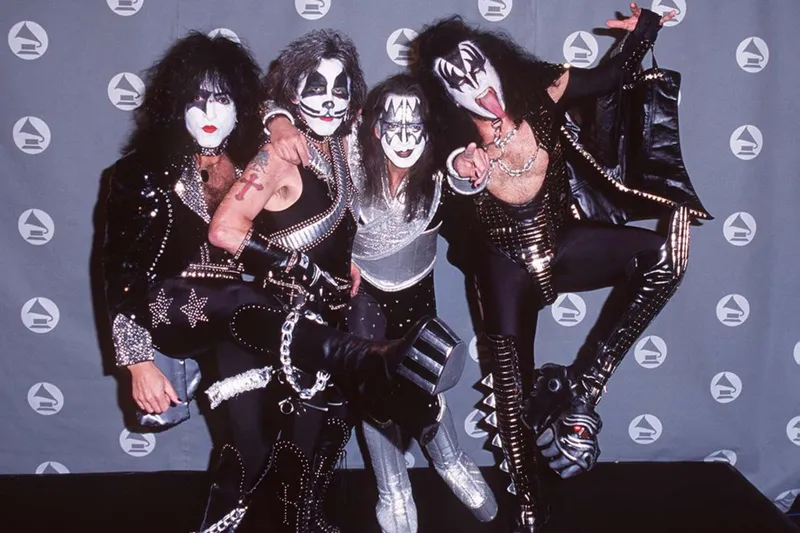
But the reunion was also a microcosm of the Simmons-Stanley dynamic. Gene pushed the business angle hard — merchandise, licensing, the brand. Paul pushed the musical angle — set lists, performance quality, the show itself. Together, the reunion worked. Apart, it’s hard to imagine either man pulling it off with the same impact.
The Farewell Tour: End of the Road, End of an Era
KISS launched the “End of the Road” farewell tour in 2019 and spent four years saying goodbye. The tour concluded with two final shows at Madison Square Garden in New York City on December 1 and 2, 2023 — completing a circle that had begun in the same city 50 years earlier.
The lineup for the farewell tour was notably not the original — it featured Simmons and Stanley alongside drummer Eric Singer and guitarist Tommy Thayer, not Criss and Frehley. That decision itself spoke volumes about the Simmons-Stanley dynamic: when it came to the final chapter of KISS, they chose reliability and performance quality over nostalgia. Their call. Their band.
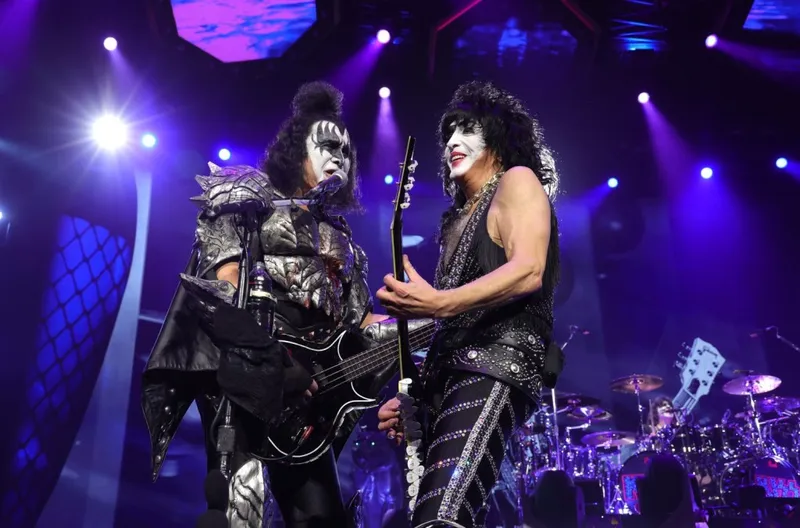
At the final show, in a moment that surprised even longtime fans, the band announced a “new era” for KISS: the band would continue as digital avatars in a fully virtual stage show, with a Las Vegas residency planned for 2028 featuring new, never-before-heard KISS songs. Paul Stanley revealed that a new song, written by Stanley himself, had already been recorded — a sign that even in the digital avatar era, it is Stanley’s songwriting that remains the creative spine of KISS.
In his statements about the farewell, Stanley was notably non-dramatic: “It has nothing to do with personalities in the band or tensions or a difference of opinion or musicality. It’s purely practical. You can play beat the clock, but ultimately the clock wins.”
Legacy: Could KISS Have Existed Without Either One?
The short answer is no. The slightly longer answer is: no, and trying to imagine it reveals exactly why their partnership was so extraordinary.
Without Paul Stanley, KISS would have lacked its melodic heart. The songs that have outlasted every trend, every costume change, every lineup revision — “Rock and Roll All Nite,” “I Was Made for Lovin’ You,” “Detroit Rock City,” “Shout It Out Loud” — came primarily from Stanley’s pen. He is the reason people still sing along 50 years later. His ability to write a chorus that lodges in your brain like a spike is simply irreplaceable. And his stage presence — his communication with an audience — gave KISS its soul, even underneath layers of greasepaint.
Without Gene Simmons, KISS would have had music but no empire. The Demon character, the fire-breathing, the blood-spitting, the axe bass, the platform boots, the merchandise machine — all of it came from Simmons’s relentless drive to make KISS not just a band but a phenomenon. He understood before almost anyone in rock music that a band is a brand, and that a brand, properly managed, can outlive the music itself.

Together, they created something neither could have alone: a band with anthems AND spectacle, with melody AND mythology, with art AND commerce. The friction between them wasn’t a bug — it was a feature. Every argument about who gets credit for what, every public barb, every moment of competitive resentment, produced a creative pressure that kept KISS sharper than comfort ever could have.
Gene Simmons and Paul Stanley are not friends in the conventional sense. They’re not enemies in any useful sense either. They are, as Simmons has described it, brothers — with all the love, rivalry, resentment, and loyalty that implies. KISS wasn’t the only band of that era built on a partnership that doubled as a power struggle — the Van Halen/David Lee Roth split and the Jagger-Richards tension that defined the Rolling Stones’ 1980s both ran on the same fuel. If you want to see how Simmons and Stanley actually handled the decade their partnership was tested hardest, KISS’s 80s albums, ranked from worst to best, tell that story record by record. What they built together is far more interesting than either of them would ever admit.
Frequently Asked Questions About Gene Simmons and Paul Stanley
Who is the leader of KISS — Gene Simmons or Paul Stanley?
Neither and both. Gene Simmons and Paul Stanley co-own the KISS name and trademark equally, meaning neither can outvote the other. In practice, Stanley has been the band’s primary creative and musical leader, while Simmons has been its primary business-facing persona. The band functions — and has always functioned — as a co-equal partnership, which is both its greatest strength and the source of its most publicized tensions.
Who wrote KISS’s biggest hits?
Paul Stanley wrote or co-wrote the majority of KISS’s most enduring anthems. “Rock and Roll All Nite” was co-written by Stanley and Simmons, with Stanley writing the chorus and Simmons writing the verses. “I Was Made for Lovin’ You,” “Detroit Rock City,” and “Shout It Out Loud” are primarily Stanley compositions. Gene Simmons contributed significant songwriting across the catalog as well, particularly in the heavier, darker material — but by most accounts, Stanley’s songs are the ones that defined KISS’s commercial legacy.
What did Paul Stanley reveal about Gene Simmons in “Face the Music”?
In his 2014 memoir, Stanley revealed that he felt deeply betrayed by Simmons during the 1980s, when Gene pursued acting and outside projects while leaving Stanley to carry the creative weight of KISS essentially alone. He disputed the claim that Simmons was the marketing genius behind KISS’s merchandise empire, attributing that credit instead to their original manager Bill Aucoin. He also noted that Simmons turned in subpar songs during this period and all but abandoned the band while still expecting equal credit and compensation.
Were Ace Frehley and Peter Criss fired or did they leave KISS?
Both sides tell different stories. Gene Simmons and Paul Stanley have generally characterized both departures as decisions made to protect the band’s integrity — effectively, firings. Ace Frehley has firmly maintained that he was never fired and chose to leave both times. Peter Criss was reportedly voted out during a band meeting that included Simmons, Stanley, Frehley, and manager Bill Aucoin. The revisionism around both departures has been a source of ongoing tension between the co-founders and the original members.
How did KISS’s farewell tour end?
KISS concluded the “End of the Road” farewell tour with two final shows at Madison Square Garden in New York City on December 1 and 2, 2023. The second show was streamed via pay-per-view. At the conclusion of the final concert, the band announced a new chapter: KISS would continue as digital avatars in a fully virtual stage show, with a Las Vegas residency planned and new original music on the way. Paul Stanley confirmed in 2026 that a new song, written by him, had already been recorded for the avatar era.
Did Gene Simmons and Paul Stanley ever seriously consider splitting up KISS?
There were moments — particularly during the 1980s, when Simmons’ outside pursuits left Stanley feeling abandoned — when the partnership was under serious strain. But both men have acknowledged that the co-equal ownership structure of KISS made a split functionally impractical: neither could dissolve the band unilaterally, and neither wanted to walk away from what they had built together. Their shared stakes in the KISS name and brand ultimately kept them bound to each other even through their worst conflicts.
Sources
- Kiss (band) — Wikipedia — background on formation, lineup history, and reunion/farewell touring timeline.
- Kiss’ Paul Stanley on Gene Simmons: ‘I Can See His Ego from My House’ — Ultimate Classic Rock — source for Stanley’s CNN interview quotes.
- Kiss Co-Founder Paul Stanley Talks New Autobiography, ‘Face the Music: A Life Exposed’ — Guitar World — source for memoir quotes and context.
- Ace Frehley Sets the Record Straight on His Multiple Departures From Kiss — Guitar World — source for Frehley’s account of his exits.
- 30 Years Ago: Kiss Makes a Surprise Comeback at the Grammys — Ultimate Classic Rock — source for the 1996 reunion announcement.
- Kiss Mark Anniversary of Final-Ever Show With New Video Recap — Billboard — source for the 2023 Madison Square Garden farewell shows.
The Retro Almanac
A monthly roundup of "on this day" highlights from that month, decades back — plus first dibs on new retro merch drops. No spam, just the good stuff.