Deep Cover 1992: How Dre Found Snoop Dogg
New Line Cinema put Deep Cover in 901 theaters on April 15, 1992, on an $8 million budget, and it quietly cleared $16.6 million domestic — a real profit, not a cult-film footnote dressed up after the fact. Roger Ebert gave it three and a half stars and singled out Fishburne’s voice-over narration as “poetic and colorful,” the thing that lifted the film “from the mundane to the mythic.” Thirty-plus years later it sits at 87% on Rotten Tomatoes, a better score than most of the hood films people actually remember. Almost nobody talks about it, because the song attached to it ate the movie alive.
The Plot Is Simpler Than the Movie Feels
Fishburne plays Russell Stevens Jr., a Cincinnati cop with a dead junkie for a father, recruited by the DEA specifically because his background makes him believable undercover. He’s sent to Los Angeles as “John Hull,” works his way into a cocaine operation run by a sleazy lawyer named David Jason — Jeff Goldblum, playing against type as a coked-up, morally bankrupt middleman — and climbs toward the cartel supplying him. The deeper Stevens goes, the less daylight there is between the cop and the dealer he’s pretending to be.
That’s a standard undercover setup. What makes Deep Cover different is that screenwriters Michael Tolkin and Henry Bean don’t let Stevens win clean. He breaks DEA protocol, he starts enjoying the money and the power, and the film never lets you forget that “undercover” is a polite word for becoming the thing you were sent to destroy. Director Bill Duke — an actor himself, with roles in Predator and Commando before he ever sat in the director’s chair — shoots LA like a city with no clean edges, all wet asphalt and fluorescent light.
The Retro Almanac
A monthly roundup of "on this day" highlights from that month, decades back — plus first dibs on new retro merch drops. No spam, just the good stuff.
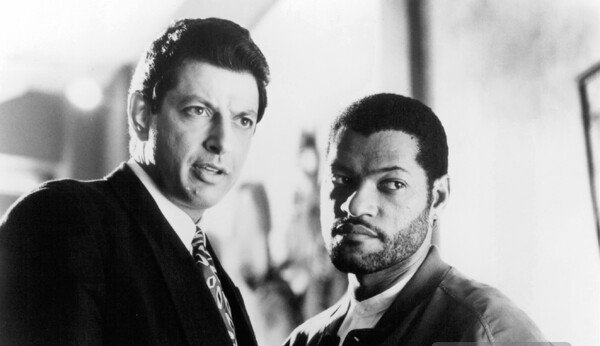
Fishburne and Goldblum — the DEA agent and the dealer he’s becoming. Publicity still, New Line Cinema.
Dr. Dre Didn’t Want to Make the Song That Made His Career
Here’s the part most people actually search for. After N.W.A collapsed in 1991 over money and Eazy-E’s deal with manager Jerry Heller, Dr. Dre needed a first solo move. New Line approached him to produce a title track for Deep Cover, and the result — “Deep Cover,” recorded with Colin Wolfe at GF Studios in Hollywood — became Dre’s debut solo single, released April 9, 1992 on SOLAR/Epic.
According to Snoop Dogg, telling the story years later to Michael Rapaport, Dre actually hated the record and didn’t want to perform on it. That’s a strange thing to hear about a song now treated as a turning point for West Coast rap, but it fits the era — Dre was mid-reinvention, shaking off N.W.A’s sound, and “Deep Cover” was built on a darker, funkier register, sampling Sly & the Family Stone’s drum break along with Undisputed Truth and Tavares. It’s the blueprint for the G-funk sound he’d perfect a few months later on The Chronic.
The original vinyl label read “Dr. Dre Introducing Snoop Doggy Dogg” — the first time Snoop’s voice appeared on a commercial release, and his first music video. The single never cracked the top 40 of the Hot R&B/Hip-Hop chart (it peaked at #46, and #4 on Hot Rap Songs), so by the numbers it wasn’t even a hit. It didn’t need to be. Dre heard something in Snoop’s laid-back, almost conversational delivery — a contrast to the shouted aggression most gangsta rap ran on at the time — and signed him to Death Row Records off the strength of it.

An Undercover Arrest That Doesn’t Go the Way You Expect
One of the film’s sharpest scenes has nothing to do with the cartel bosses. Stevens, deep into his John Hull persona, makes a street-level arrest that tips over into violence — the kind of moment where the badge and the cover story stop being separate things. It’s shot at night, handheld, with uniformed backup closing in from every side of the frame, and it plays less like a procedural beat and more like a warning about what Stevens is turning into.
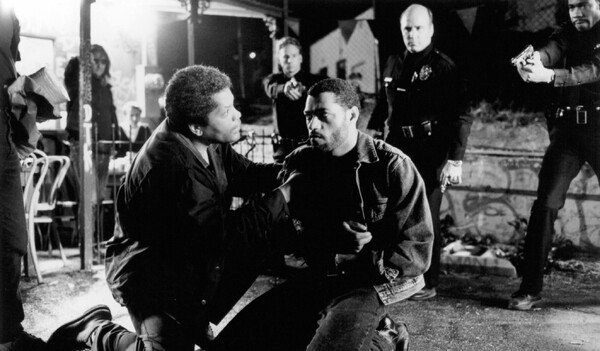
Stevens’ cover and his badge collide on an LA street. Publicity still, New Line Cinema.
Jeff Goldblum, Cast Against Every Instinct
Casting Goldblum as a cocaine-addicted criminal lawyer in 1992 was a genuine swerve. He’d spent the back half of the 80s as the charming, slightly odd leading man — The Fly, Jurassic Park was a year away — and David Jason asked him to play someone venal, paranoid, and self-destructive instead. He’s good at it, in a way that makes the character’s scenes with Fishburne crackle, because neither actor is playing the role you’d expect from their resume. Duke reportedly wanted actors who could make the moral rot feel personal rather than cartoonish, and that casting choice is a big reason the film holds up better than its reputation.
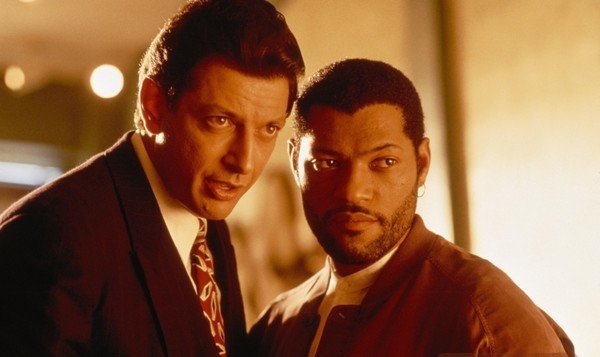
David Jason and “John Hull” — Goldblum and Fishburne in one of their business meetings. Publicity still, New Line Cinema.
Stevens’ Double Life Outside the Deals
The film doesn’t stay locked in boardrooms and back alleys. Stevens has a relationship with Betty McCutcheon (Victoria Dillard), and those scenes — the quiet, almost formal shots of the two of them in public together — are where the film lets Stevens exhale, briefly, before the plot drags him back under. It’s a smaller thread than the cartel storyline, but it’s the only place in the movie where Stevens looks like a person instead of a cover identity.
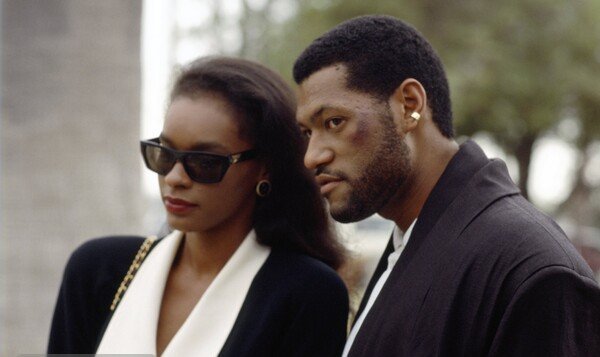
Fishburne in character as “John Hull,” one of the rare calm moments in the film. Publicity still, New Line Cinema.
A Night Scene That Shows the Whole Movie in One Shot
Deep Cover is full of smoky interiors — bars, clubs, back rooms — and the cinematography leans into them hard, all amber light and shadow. One late-film sequence puts Goldblum’s Jason at a cramped club table, visibly unraveling, while Stevens works to keep him calm and keep the deal from collapsing. It’s a small, contained scene, but it’s doing the same job as the rest of the film: showing exactly how much control Stevens has actually lost.
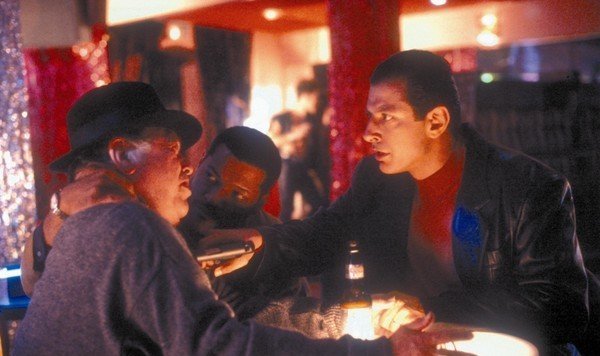
David Jason losing his composure in a club back room. Publicity still, New Line Cinema.
Why the Film Got Buried by Its Own Soundtrack
Deep Cover made its money back nearly twice over and got a genuinely strong critical reception, and it still barely shows up in conversations about essential 90s crime films — overshadowed first by New Jack City a year earlier, then by Boyz n the Hood, then permanently eclipsed by the fact that its theme song is more famous than it is. That’s not really a knock on the movie. It’s what happens when the song attached to your undercover thriller turns out to launch one of the two or three most important rap careers of the decade.
The truth is, most “hidden gem” claims about 90s crime movies don’t hold up once you actually watch the thing — but Deep Cover does. Fishburne’s narration carries real weight, Goldblum is doing something genuinely different from his usual register, and Bill Duke directs it like someone who understands exactly how thin the line is between undercover work and just becoming a criminal with better paperwork.
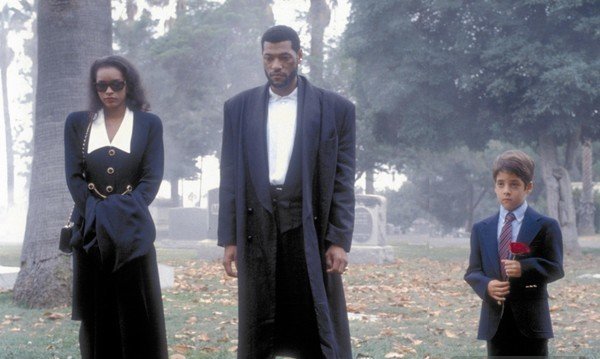
A funeral scene — one of the film’s few moments of stillness. Publicity still, New Line Cinema.
The Legacy: A Song That Outgrew Its Movie
“Deep Cover” the song went on to have a second life entirely separate from the film. Big Pun and Fat Joe rebuilt it in 1998 as “Twinz (Deep Cover ’98),” and the “187” hook — cop code for homicide — became one of the most quoted lines in Dre’s catalog, years before The Chronic turned G-funk into the dominant sound of West Coast rap. Snoop, for his part, has never stopped crediting this one unloved single as the reason Death Row Records signed him at all.
The movie, meanwhile, sits in the gap between “well-reviewed” and “remembered.” It’s on Criterion. Ebert liked it more than he liked most studio crime pictures that year. And it’s still the answer to a trivia question most people don’t know to ask: what movie gave Dr. Dre his first solo hit and introduced the world to Snoop Dogg, in the same four minutes of music?
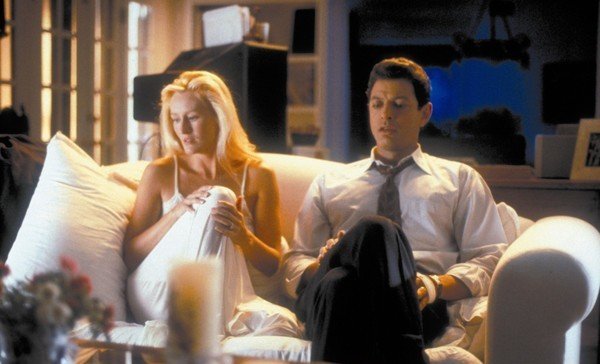
David Jason unraveling at home as the operation closes in. Publicity still, New Line Cinema.

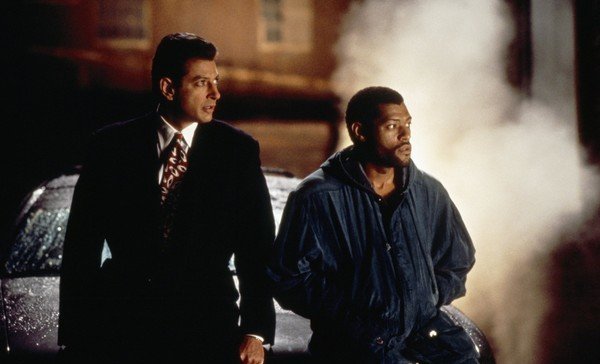
Hull and Jason on an LA street as the deal starts to fall apart. Publicity still, New Line Cinema.
If New Jack City is the movie that opened the door for the 90s crime-thriller boom, Deep Cover is the one that slipped through right behind it and never got its due — overshadowed by its own soundtrack. Check out our breakdown of New Jack City for the film that set the template, or go back further to N.W.A’s Straight Outta Compton debut to see exactly what Dr. Dre was walking away from when he made this song. And if Tupac’s breakout era is more your speed, Juice came out the same year and tells a very different kind of hood story.
Sources
- Deep Cover (1992 film) — Wikipedia — plot, cast, box office, and critical reception details.
- Deep Cover (song) — Wikipedia — recording history, chart performance, and Snoop Dogg’s debut.
- Deep Cover — Songfacts — Dr. Dre’s reluctance to perform the song, as recounted by Snoop Dogg.
- Roger Ebert’s review of Deep Cover — original 1992 critical reaction.
- Deep Cover — Rotten Tomatoes — current critic and audience scores.
The Retro Almanac
A monthly roundup of "on this day" highlights from that month, decades back — plus first dibs on new retro merch drops. No spam, just the good stuff.