
American Gladiators: Nitro, Laser, and the Most 90s Show Ever Made
If you grew up in the late ’80s or early ’90s, there’s a decent chance you spent your Saturday afternoons glued to the television watching oiled-up titans in spandex demolish everyday Americans on national TV. That show was American Gladiators, and it was absolutely everything.
Not a sitcom. Not a drama. Not really a game show, either. American Gladiators was something entirely new — a televised athletic spectacle where regular contestants went head-to-head against a roster of larger-than-life gladiators with names like Nitro, Laser, Turbo, and Blaze. It was the Colosseum meets cable access meets a protein powder commercial, and we couldn’t get enough of it.

How American Gladiators Took Over 90s Television
The show premiered in September 1989 and ran for seven glorious seasons, wrapping up in 1996. It was created by Johnny Ferraro and Dan Carr, two guys who basically looked at professional wrestling, track and field, and that rope climb you hated in gym class, threw them all in a blender, and poured out a 90s TV phenomenon.
Originally syndicated — meaning it wasn’t tied to a single network — American Gladiators popped up on different local channels across the country. That scrappy, independent distribution is part of what made it feel so raw and unpolished compared to the slick network fare of the era. You’d stumble across it while channel surfing, and suddenly two hours were gone.
The format was deceptively simple. Two male and two female contestants competed against each other across a series of physical events, racking up points. Then at the end of each episode, they’d face the Eliminator — a brutal obstacle course that served as the show’s final boss. Whoever came out on top advanced in the tournament bracket. But the real stars weren’t the contestants. The real stars were the gladiators themselves.

The American Gladiators Cast: Nitro, Laser, and the Legends
Every great show needs great characters, and the American Gladiators cast delivered in a way no one expected. These weren’t actors reading scripts. They were genuine athletes — bodybuilders, track stars, martial artists, and fitness competitors — given ridiculous names and let loose on an arena floor.
Nitro (Dan Clark) was arguably the most famous gladiator of them all. Standing 6’3″ and tipping the scales around 230 pounds of solid muscle, Nitro became the show’s breakout star. He had the look, the charisma, and that signature blond hair that made him a walking poster for ’90s athletic culture. Nitro was the guy every male contestant wanted to beat and every viewer wanted to be. His dominance in events like Powerball and Joust made him a household name, and he leveraged that fame into acting roles and personal appearances throughout the decade. Dan Clark later became an author and speaker, opening up about the pressures of fame and the steroid culture that permeated the show behind the scenes.
Laser (Jim Starr) was the original gladiator — quite literally one of the first cast members when the show debuted in 1989. If Nitro was the flashy star, Laser was the seasoned enforcer. He was especially devastating in Joust, where contestants had to battle gladiators with oversized Q-tips on elevated platforms. Laser would knock people off those platforms like he was swatting flies. He embodied the blue-collar toughness that made the show feel more like a real fight than a produced TV event.

But the roster went deep. Turbo (Galen Tomlinson) was one of the fastest gladiators in the show’s history, an absolute nightmare in Powerball. Gemini (Michael Horton) brought a rare intensity that made him terrifying in any contact event. Hawk (Lee Reherman) joined in later seasons and became a fan favorite with his imposing 6’6″ frame. On the women’s side, Zap (Raye Hollitt) was a bodybuilding champion who brought genuine athletic credentials to every event. Ice (Lori Fetrick) and Diamond (Erika Andersch) rounded out a female gladiator squad that was just as fierce — and often more entertaining — than their male counterparts.
The genius of the casting was that each gladiator had a distinct personality. Some were villains you loved to hate. Some were heroes you rooted for. All of them were absolutely jacked. It was professional wrestling’s character work applied to legitimate athletic competition, and it worked brilliantly.
The Events That Made American Gladiators Legendary
The events were where American Gladiators really separated itself from anything else on television. These weren’t carnival games. They were genuine physical challenges that demanded speed, strength, agility, and a healthy tolerance for getting smashed in the face with a padded weapon.
The Joust
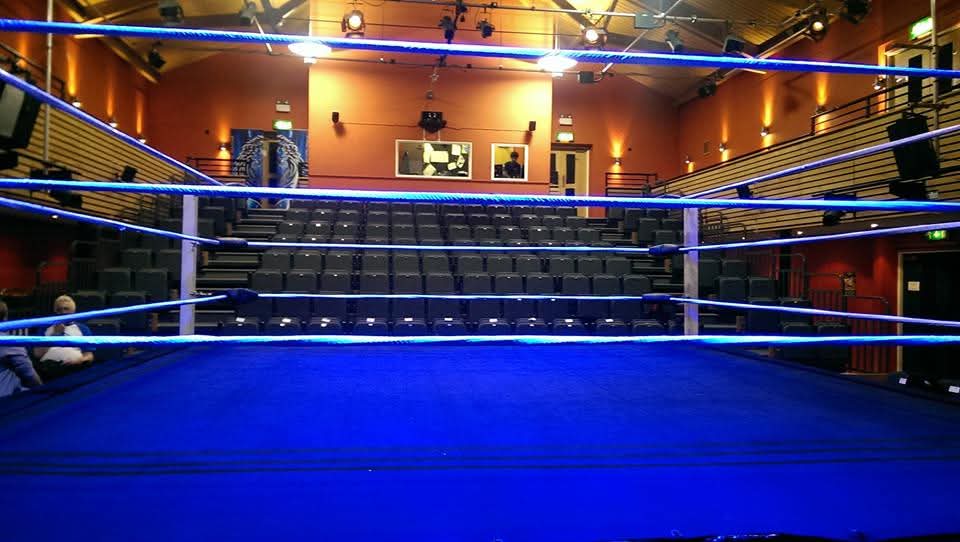
Two elevated platforms. Two combatants. Two enormous padded pugil sticks. One rule: knock the other person off. The Joust was probably the show’s most iconic event because it was the most visceral. There was nowhere to hide up on that platform. You either swung hard enough to send a gladiator tumbling, or you got absolutely walloped and fell yourself. The sound of those pugil sticks connecting was deeply satisfying television. Laser was the undisputed king of the Joust, and watching contestants try to take him down was like watching someone challenge a grizzly bear to a pillow fight.
The Assault
This one was straight out of an action movie. The contestant had to run through a series of stations — crossbow, cannon, rocket launcher — firing at a target while a gladiator tracked them with a tennis ball cannon. Yes, a tennis ball cannon. Getting hit by one of those things at close range was no joke, and the gladiators had terrifyingly good aim. The Assault combined marksmanship, speed, and the raw fear of getting pelted, making it one of the most dramatic events on the show. When a contestant actually hit the target and that buzzer sounded? Pure adrenaline.
Powerball
Imagine a cross between rugby, basketball, and a bar fight. Contestants had to grab balls from a central bin and deposit them in scoring pods while gladiators — plural, because apparently one wasn’t enough — tried to absolutely destroy them. Powerball was controlled chaos. Bodies flew. People got clotheslined. The scoring pods were just close enough to give you hope, and the gladiators were just fast enough to crush that hope every single time. It was beautiful.
Hang Tough
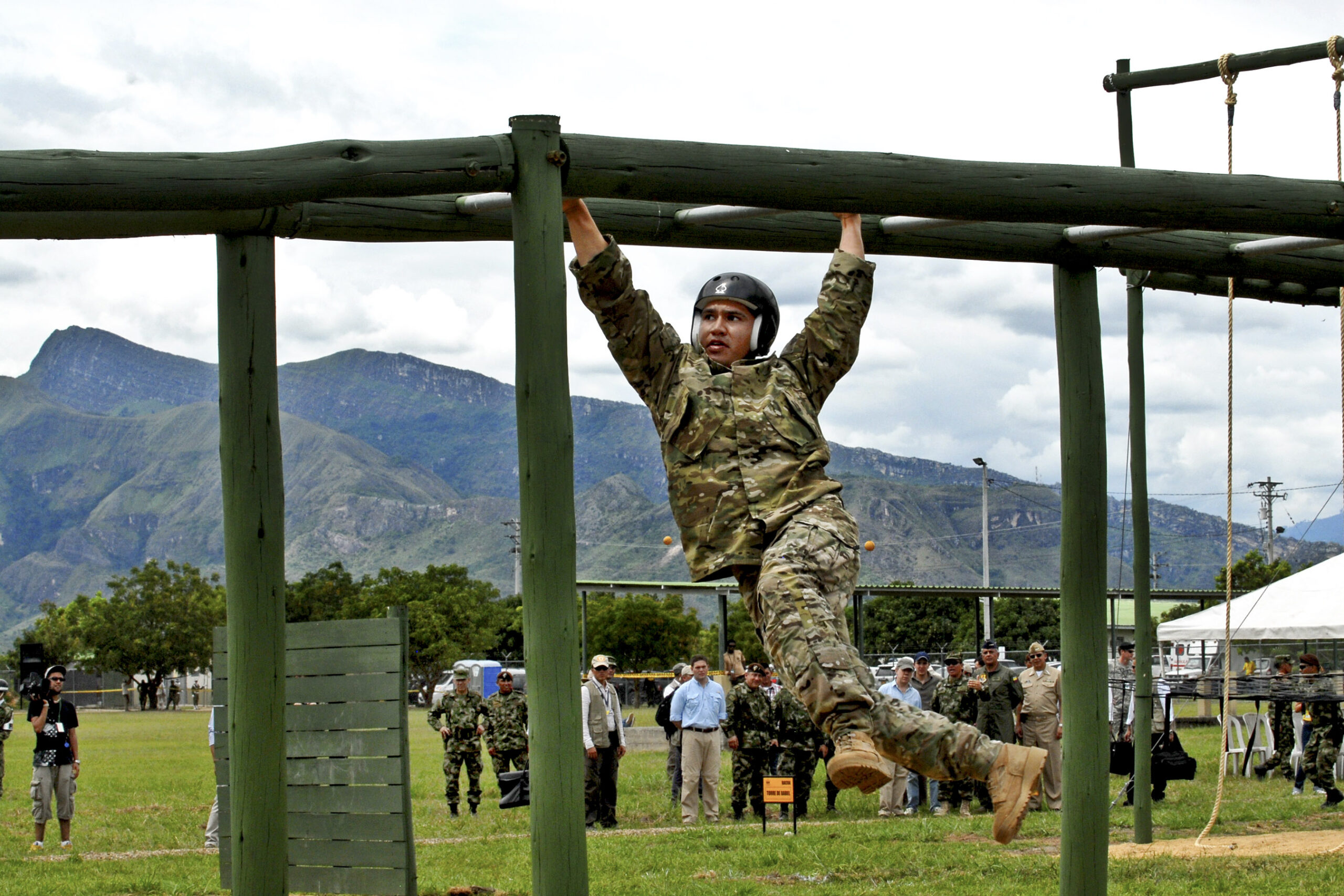
Contestants and gladiators swung from a set of overhead rings like gymnastic apes trying to tag or avoid each other. The contestant’s goal was to reach the far end without getting pulled down by the gladiator. The athleticism required for Hang Tough was off the charts — we’re talking pure upper body strength and monkey-like agility. Nitro was particularly devastating here, swinging through the rings like Tarzan’s angry cousin.
The Wall
A massive climbing wall where contestants got a head start before gladiators began their pursuit. First to the top won. Simple concept, incredible drama. Watching a gladiator close the gap on a scrambling contestant was genuinely tense television, like a nature documentary where the gazelle didn’t always escape the lion.
The Eliminator: American Gladiators’ Ultimate Final Boss
Every episode built to one thing: the Eliminator. This was the final obstacle course that determined which contestant advanced, and it was absolutely savage. The Eliminator evolved over the show’s run, but the core elements remained consistent — a hand-bike traverse, a cargo net climb, the dreaded reverse treadmill, a zip line, and various other obstacles designed to test every ounce of energy a contestant had left after battling gladiators for an entire episode.
The head-start system was genius. Whatever points advantage a contestant had going into the Eliminator translated into seconds of head start. So even if you’d been beaten up all episode, a big enough lead meant you just had to survive the course. But the Eliminator had a way of erasing leads in a hurry. That reverse treadmill alone was responsible for more crushed dreams than the student loan system.
The Eliminator was also the great equalizer. It didn’t matter how big or strong you were — the course demanded cardiovascular endurance, coordination, and mental toughness. Some of the most muscular contestants gassed out halfway through, while leaner, more agile competitors flew through it like they were born on an obstacle course.
Peak 90s Spectacle: Why American Gladiators Hit Different
You have to understand the cultural moment. The early ’90s were absolutely drunk on spectacle. Fitness culture from the ’80s had gone mainstream. Professional wrestling was massive. Action movies starred guys who looked like they’d been carved from granite. American Gladiators sat right at the intersection of all these things.

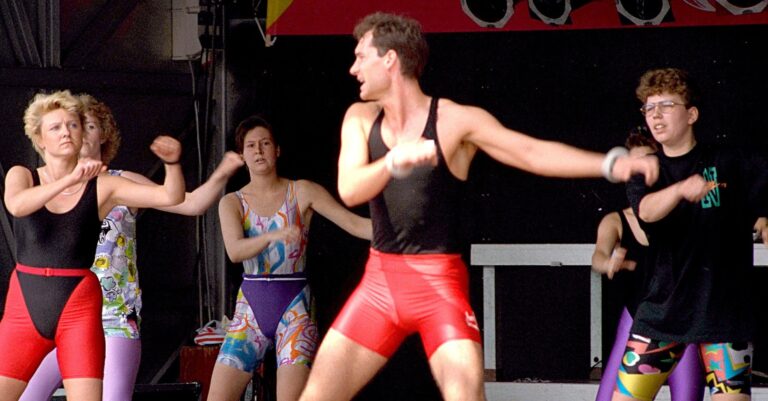
The spandex alone deserves its own paragraph. These gladiators wore outfits that left absolutely nothing to the imagination. Red, white, and blue unitards. Metallic bodysuits. Enough spandex to stretch from coast to coast. It was simultaneously patriotic and absurd, which is a very specific aesthetic that only the ’90s could pull off. The costumes were designed to make the gladiators look superhuman, and honestly? They worked. When Nitro came charging at you in that red-white-and-blue getup, he looked like Captain America’s angrier, buffer cousin.
The hosts added another layer of entertainment. Mike Adamle and Larry Csonka (yes, the NFL Hall of Famer) called the action during the original run, and their commentary walked a perfect line between serious sports broadcasting and tongue-in-cheek entertainment. Adamle’s enthusiastic play-by-play gave the events a legitimacy they frankly didn’t need but absolutely benefited from, while Csonka’s football background lent credibility to the athletic performances. Later, Joe Theismann stepped in, maintaining that sports-meets-entertainment energy.
The show also tapped into something deeply American: the underdog story. Every episode, you watched regular people — teachers, firefighters, students, mechanics — go up against these genetic marvels. When a contestant actually beat a gladiator, the crowd lost its mind. Those moments felt earned because the physical mismatch was so obvious. It was Rocky Balboa four times a week, and we ate it up.
The Legacy of American Gladiators
The original run ended in 1996, but the show refused to stay down. NBC revived it in 2008 with Hulk Hogan and Laila Ali hosting, bringing in a new generation of gladiators. The revival had slicker production values and bigger budgets, but many fans felt it lacked the raw, slightly-janky charm of the original. The original show’s low-fi quality was part of its appeal — it felt like you were watching a real competition in a real arena, not a polished TV product.

The show’s DNA lives on everywhere, though. American Ninja Warrior? That’s the Eliminator’s spiritual successor, dialed up to eleven. CrossFit competitions? The functional fitness ethos of American Gladiators is all over that. Even modern WWE owes something to the character-driven athletic entertainment that American Gladiators refined. The concept of giving athletes larger-than-life personas and having them compete in theatrical physical events didn’t start with the show, but American Gladiators perfected the formula for television.
And the cultural footprint extends beyond athletics. The show was spoofed on everything from Nickelodeon’s game shows to Saturday Night Live. GUTS on Nickelodeon, with its famous Aggro Crag, was essentially American Gladiators for kids. The concept of physical competition as entertainment programming became a genre unto itself, and that genre traces directly back to a bunch of bodybuilders in spandex throwing tennis balls at accountants.
For those who lived through it, American Gladiators wasn’t just a show — it was an appointment. You cleared your Saturday schedule, planted yourself on the couch, and watched regular humans get ragdolled by people named after natural phenomena. It was dumb, it was loud, it was gloriously excessive, and it was absolutely, unmistakably, perfectly 90s.
The Assault. The Joust. The Eliminator. Nitro’s hair. Laser’s scowl. If you know, you know. And if you don’t? Well, do yourself a favor and track down some episodes. The spandex holds up better than you’d think.
Photo credits: Images sourced from Wikimedia Commons. American Gladiators images are U.S. Navy public domain photographs. Arena and obstacle course images used under Creative Commons license.