Poetic Justice Movie: How Tupac and Janet Jackson Made the 90s’ Greatest Love Story
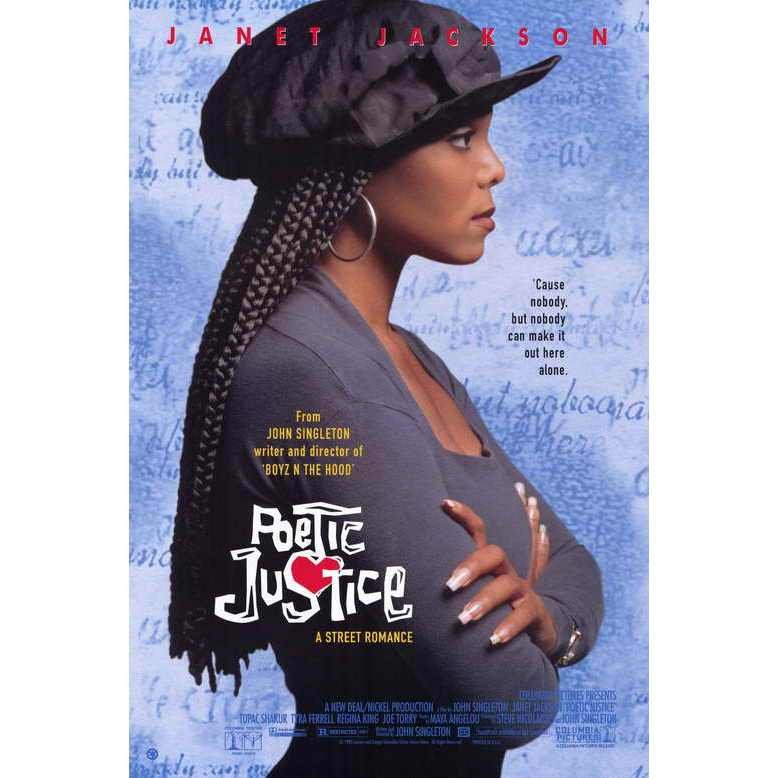
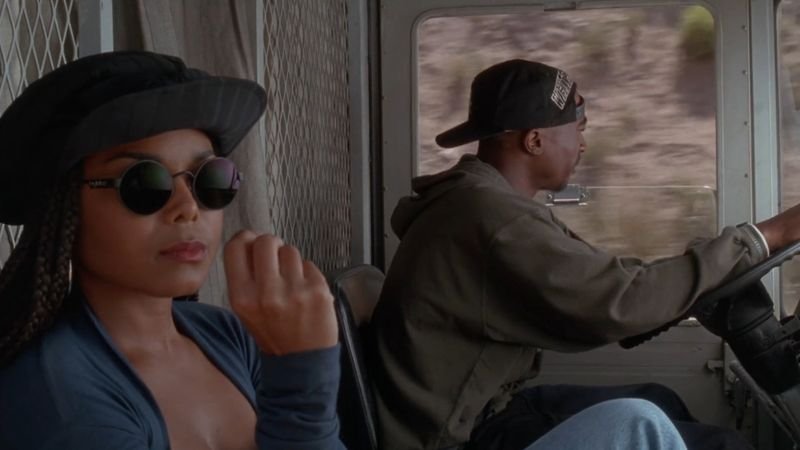
Tupac Shakur had already proven himself worth watching in Juice the year before, but Poetic Justice (1993) asked something different of him — play a man who couldn’t fight his way to what he wanted. Lucky wins Justice through patience, not bravado, and the film’s emotional weight rests entirely on whether you believe that transformation is real. Thirty-three years later, most people do. The film’s Criterion Collection release in April 2026 confirmed what audiences had always suspected: the critics got this one wrong.
Ice Cube Said No — and That Changed Everything
The role of Lucky wasn’t written for Tupac. Director John Singleton offered it first to Ice Cube, who had just come off Boyz n the Hood two years earlier. Cube passed. His reasoning was direct: a romantic lead felt like a detour from where he wanted to go as an actor and filmmaker, and he wasn’t wrong about his own instincts.
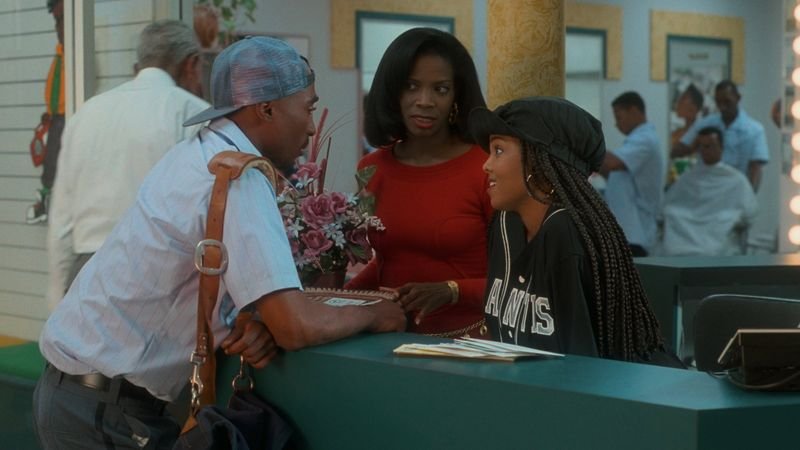
Singleton moved to Tupac — who had just demonstrated in Juice that he could carry dramatic weight without relying on his music persona. The swap changed the film entirely. Ice Cube brings confrontational heat wherever he appears. Tupac brought something harder to manufacture: a kind of hunger that reads on camera as genuine tenderness. Lucky needed to feel like a man who wanted something he couldn’t take, and Tupac found that register precisely.
The Retro Almanac
A monthly roundup of "on this day" highlights from that month, decades back — plus first dibs on new retro merch drops. No spam, just the good stuff.
Janet Jackson Was the Only Choice — Everyone Else Just Auditioned
Singleton had a specific face in mind from the first draft. Jada Pinkett auditioned. Lisa Bonet auditioned. Monica Calhoun auditioned. None of them got the role, because Singleton had already decided — before any of them walked in — that Justice was Janet Jackson.
The decision looked risky on paper. Jackson had never carried a dramatic film. She was the biggest female pop star on the planet, which cuts both ways: massive built-in audience, but also a ceiling on how seriously critics would take her in a grief-heavy role. What Singleton saw was someone who had spent a career controlling her own image with surgical precision — and that same precision, pointed at a character instead of a brand, could do something remarkable.
The screen test he arranged was the first time Jackson and Shakur met in person. They had immediate rapport. Within a few scenes of that first meeting, it was clear the casting worked on both sides.
The Box Braids That Defined a Generation
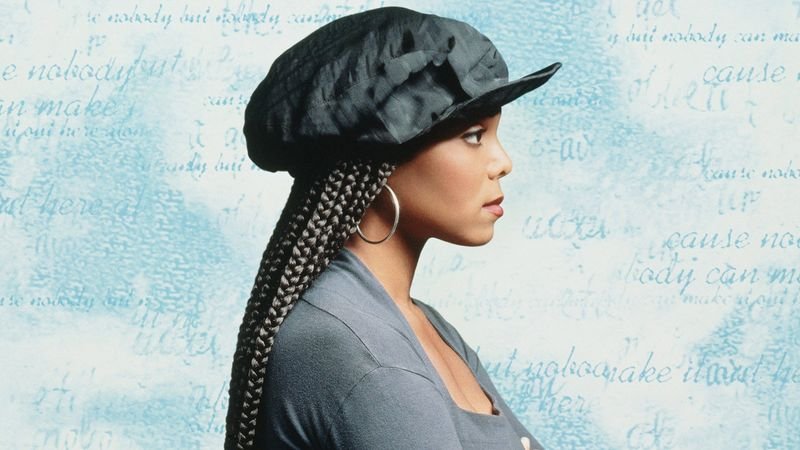
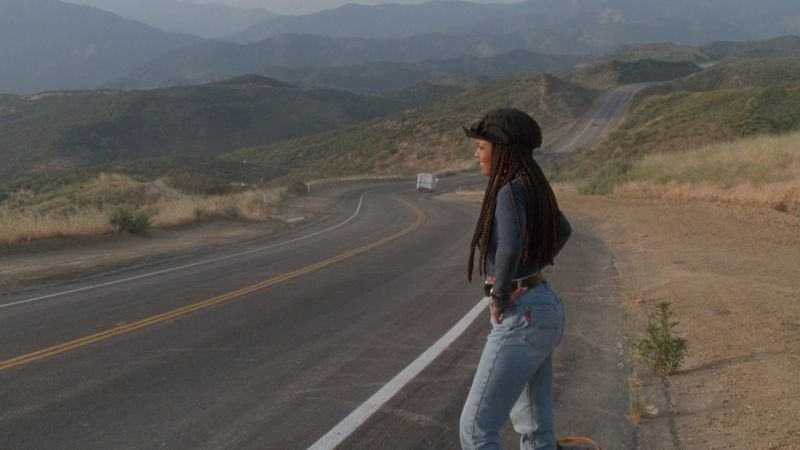
The box braids Justice wears through every scene weren’t an afterthought. Singleton worked with choreographer Fatima Robinson and a dancer named Jossie Harris to develop the look — taking a style rooted in Harlem and adapting it for a West Coast setting. Harris wore her hair in those braids, and Singleton decided they were exactly right for Justice: a woman from South LA who had her own aesthetic identity, who wasn’t trying to look like anyone else.
The result was one of those accidental cultural touchstones. Women across the country went to salons asking for “the Poetic Justice braids.” The look outlasted the film by decades, showed up in hip-hop imagery through the rest of the 90s, and got a second life each time the film circulated on streaming platforms. Janet Jackson’s braids in this film are as recognizable as any costume choice from any blockbuster of that era.
Maya Angelou Wrote Every Poem — Then Appeared On Screen
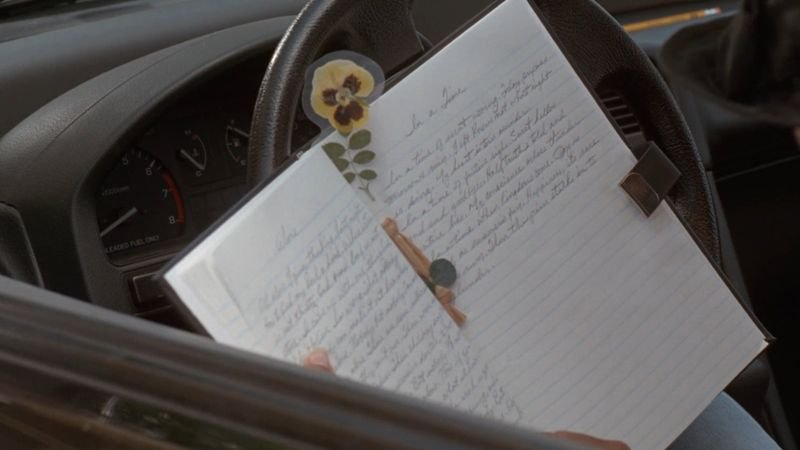
When Singleton needed a poet’s voice for Justice’s journal, he didn’t create fictional verse and call it a day. He went to Maya Angelou. The poems Justice recites throughout the film — the ones she writes in her notebook during the road trip, the ones she whispers to herself at dawn — were written by Angelou specifically for the production.
Angelou also appears on screen. She plays one of three elderly sisters the road-trip group meets at a family reunion. She carries her scenes with the same composed authority she brought to everything else in her career. There’s something quietly extraordinary about the setup — Tupac Shakur and Janet Jackson meeting Maya Angelou at a roadside barbecue — and the film earns it without making a production of the moment. The reunion sequence is one of the most alive stretches in any American film from that era.
The Film Crew Shot During the LA Riots
Production on Poetic Justice ran from April 14 to July 4, 1992. The LA riots erupted on April 29, 1992 — less than two weeks after cameras started rolling. The crew was filming in South Los Angeles as the city was still processing what had just happened.
That context is present in the film even when it never announces itself. The opening scene — Justice’s boyfriend shot at a drive-in theater — carries a weight that’s difficult to read as pure genre convention when you know what was happening around the production. Singleton had made Boyz n the Hood the year before specifically because he understood that South LA wasn’t a backdrop. It was the subject.
It Opened at #1 — But Not Without Violence at Theaters
Poetic Justice opened on July 23, 1993. It debuted at number one with $11.7 million opening weekend — a strong performance for a $14 million romantic drama. It went on to gross $27.5 million domestically, placing it 20th among all 1993 releases and 21st among R-rated films that year.
The opening weekend wasn’t without incident. Five violent episodes occurred at theaters nationwide, including a fatal shooting in Las Vegas. The same pattern had followed New Jack City two years earlier. Critics debated whether the films were responsible or whether law enforcement was simply unprepared for the scale of attendance at urban theaters. Singleton’s response was straightforward: he had made a love story, and the audience that showed up for the love story deserved better than to have the film blamed for what happened outside.
The Song “Again” Nearly Won an Oscar
The soundtrack became its own cultural moment. Janet Jackson’s “Again,” written for the film, reached #1 on the Billboard Hot 100 and earned both an Academy Award nomination and a Golden Globe nomination for Best Original Song. It lost the Oscar to “Streets of Philadelphia” by Bruce Springsteen — from Philadelphia, another acclaimed 1993 film with a title-track problem — but the nomination confirmed Jackson’s performance as a complete artistic package, not just a pop star trying film.
The soundtrack also contains Usher’s professional debut, appearing on a track at fourteen years old. It reached #23 on the Billboard 200 and went Gold, which made Poetic Justice an unusual entry in the ledger of recordings that launched careers.
The Chemistry Critics Mostly Missed in 1993
The initial critical reception was rough. Rotten Tomatoes currently shows 34%, with the consensus landing on “commendably ambitious but undermined by a lack of discipline.” Roger Ebert was kinder, praising the film’s deliberate pacing and the specificity of its South LA setting. Richard Schickel at Time called it “simply awful.”
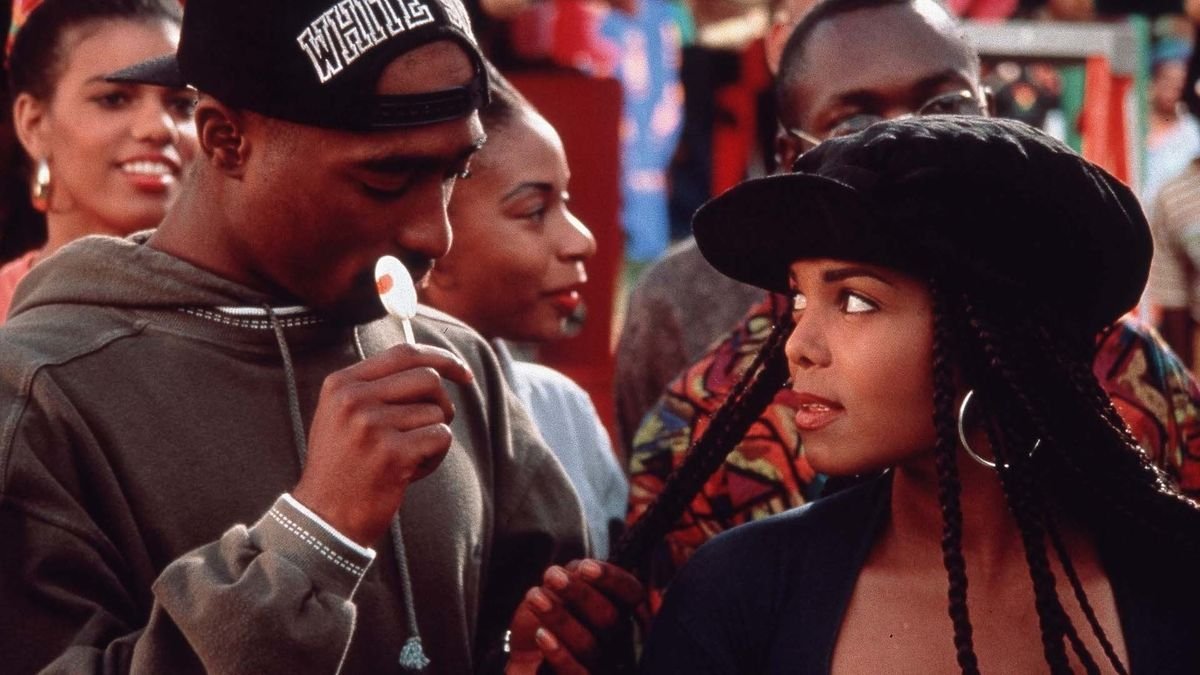
What those reviews mostly missed was the thing the film gets right. Tupac plays Lucky as someone who knows he is pushing too hard but cannot stop himself. Jackson plays Justice as someone who knows she is being pursued but is not ready to admit the pursuit is working. The gap between those two states — between knowing something and being ready to act on it — is where the film lives. That’s not a directorial failure. That’s the whole point.
Criterion’s decision to include the film in John Singleton’s Hood Trilogy alongside other essential 90s urban cinema in April 2026 was the clearest signal yet that the film’s initial reception and its actual place in cinema history are two different things.
Why Poetic Justice Still Holds Up in 2026
There’s a specific thing Poetic Justice does that’s genuinely rare: it lets the romantic lead be wrong for a sustained stretch of the film. Lucky pursues Justice in ways she correctly identifies as too much, too soon, and the film doesn’t immediately vindicate him. He has to earn the shift — and earning it requires him to sit with someone else’s grief instead of trying to fix it or replace it.
That’s an adult take on attraction. Most Hollywood romances of that era operated on the assumption that persistence equals devotion. Singleton complicated that equation. Justice’s walls exist for reasons the film takes seriously, and its patience in letting her maintain those walls for as long as she needs is exactly what makes the eventual opening land without feeling manufactured.
For a first-time viewer in 2026, the film offers something harder to find than nostalgia: two lead performances that work on their own terms, a setting rendered with genuine specificity, and a road trip structure that earns its ending one mile at a time. That’s more than most films from any era can offer.
Sources
- Poetic Justice (film) — Wikipedia — Production history, box office, cast details
- Poetic Justice Review — RogerEbert.com — Roger Ebert’s original 1993 review
- Poetic Justice — The Criterion Collection — 2026 Blu-ray release as part of John Singleton’s Hood Trilogy
- Poetic Justice — Britannica — Overview and cultural legacy
- Poetic Justice Soundtrack — Wikipedia — “Again” Oscar nomination, Usher debut, chart performance
Image credit: blackartdepot.com
The Retro Almanac
A monthly roundup of "on this day" highlights from that month, decades back — plus first dibs on new retro merch drops. No spam, just the good stuff.