The Bicoastal War That Nearly Broke Hip-Hop in Two
In the summer of 1995, hip-hop stood at the peak of its creative power and at the edge of something darker than anyone had bargained for. The genre had spent the early 1990s building one of the most extraordinary artistic movements in American music history — rooted in New York City’s five boroughs, fired by the boom bap of DJ Premier and Pete Rock, and spreading until it had colonized record stores, bedroom walls, and suburban radio across the country. Then two men, two labels, and two coasts collided. What had been a thriving cultural moment became something grimmer: a war between empires that would claim the lives of two of the most gifted voices the music had ever produced.
Two Empires Rise
By 1993, the geography of American hip-hop had begun to harden into something almost territorial. The East Coast — New York City above all — had built the genre from the ground up, and its producers and MCs still set the standard for what authentic hip-hop sounded like. But California had arrived. Death Row Records, founded by Marion "Suge" Knight and Dr. Dre following their departure from N.W.A’s Ruthless Records, had redrawn the map of hip-hop with a single album. The Chronic, released in December 1992, was slow, stoned, and cinematic — built on George Clinton samples and trunk-rattling bass that hit different from anything coming out of New York. It didn’t just sell. It shifted the center of gravity of the entire genre westward.
Death Row was more than a record label. Under Suge Knight’s hard-nosed management, the operation ran by its own rules. Its roster would grow to include Dr. Dre, Snoop Dogg, and a young rapper from Marin City, California, named Tupac Shakur. But before Tupac arrived, Death Row had already declared itself the dominant force in West Coast rap — and Knight had made clear he had no interest in sharing that position with anyone, least of all a label from New York.
The Retro Almanac
A monthly roundup of "on this day" highlights from that month, decades back — plus first dibs on new retro merch drops. No spam, just the good stuff.
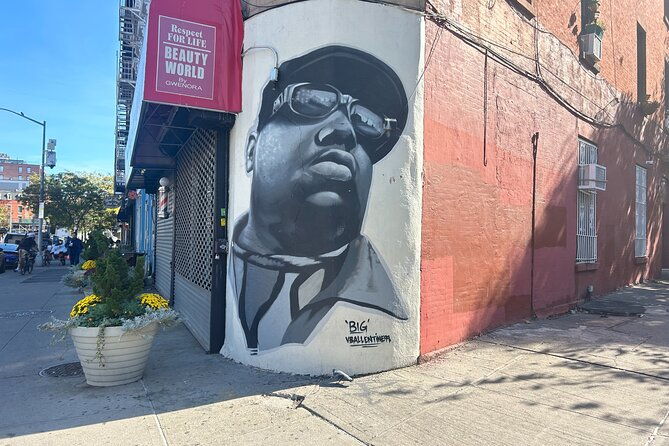
On the East Coast, Sean "Puff Daddy" Combs was building his own empire with different materials. Bad Boy Entertainment, launched in 1993 after Puffy’s departure from Uptown Records, was polished where Death Row was raw and radio-ready where Death Row was street-level. Puffy had an instinct for hit-making that bordered on alchemical. His centerpiece artist was a 22-year-old from Bedford-Stuyvesant, Brooklyn, named Christopher Wallace — the Notorious B.I.G., Biggie Smalls. When Ready to Die arrived in September 1994, it was immediately recognized as a landmark: Biggie’s storytelling was cinematic, his wit was razor-sharp, and his voice was unlike anything that had come before. By every measure, he was the best rapper alive.
The Night the War Went Public
The rivalry between Death Row and Bad Boy had been building through coded disses and industry whispers before a single event lit it on fire. On November 30, 1994 — the night before Tupac Shakur was scheduled to take a plea deal in a sexual assault case — he was shot five times in the lobby of Quad Recording Studios in Times Square while visiting a session where Biggie and Puffy were working upstairs. He survived, but his deep suspicion, never conclusively proven, that people in Biggie’s circle had known the ambush was coming transformed a personal grievance into something incendiary.
The hostility went fully public at the 1995 Source Hip-Hop Music Awards in New York. When Suge Knight stepped to the microphone and invited artists who didn’t want their executive producer "dancing in the videos" to come to Death Row, the Madison Square Garden crowd booed loudly. The shot at Puffy Combs was theatrical and calculated — and it landed. The rivalry now had a public stage, a public audience, and a line drawn in the sand on national television.
Tupac Signs — and the War Turns Personal
In October 1995, Tupac Shakur was released from Clinton Correctional Facility after Death Row paid his $1.4 million bail, with Shakur signing to the label in exchange. What followed was a creative outburst that seemed almost superhuman. Tupac worked at a pace observers described as urgent to the point of compulsive — recording hundreds of tracks in the months after his release, pushing his output to its absolute limits as if he sensed time was short. Beneath the productivity ran a current of fury that was getting harder to contain.
The resulting music crossed lines nobody had quite expected. "Hit ‘Em Up," released as a B-side single in June 1996, was one of the most aggressive diss tracks in the history of the genre — Tupac claimed to have slept with Faith Evans, Biggie’s wife, called out Mobb Deep, Jr. M.A.F.I.A., and Bad Boy’s entire roster by name, and dared anyone on the East Coast to respond. It was scorched earth set to music. It was also three minutes of some of the most electrically alive rap recorded that decade, which made the whole thing that much harder to process.
A Culture Forced to Choose
For the Gen X teenagers who lived through this period, the East-West split was both thrilling and unsettling. Hip-hop had never felt this tribal, this loaded, this literal. The early 1990s had carried a genuine optimism: the Native Tongues collective, A Tribe Called Quest, De La Soul, and The Pharcyde had built a world where rap could be joyful, socially conscious, and deeply weird all at once. Now the genre was dividing along lines nobody had voted for, and the music coming out of that division carried real stakes.
Radio DJs in New York and Los Angeles chose sides. The Source and Vibe — the two dominant hip-hop magazines of the era — became contested spaces where editors argued about authenticity, region, and what the music was really for. The debate reached high school hallways, record store counters, and dorm rooms from coast to coast. Millions of fans who had never been anywhere near Compton or Brooklyn found themselves fiercely invested in a conflict they had no part in creating. It was tribal and passionate and sometimes genuinely frightening to watch from the outside.

September 1996. March 1997.
Tupac Shakur was shot in Las Vegas on September 7, 1996, after attending the Mike Tyson–Bruce Seldon fight at the MGM Grand. He and Suge Knight were traveling in a BMW sedan when a white Cadillac pulled alongside them and opened fire. Tupac died six days later, on September 13, 1996. He was 25 years old.
Hip-hop went quiet in the way it rarely does. Tributes poured in from across the industry. Death Row rushed to release The Don Killuminati: The 7 Day Theory under the name Makaveli — recorded in the weeks before his death — and it sold over 660,000 copies in its first week. Whatever anyone had thought about the beef, nobody had imagined it ending like this. The argument suddenly felt very small.
Six months later, Christopher Wallace — the Notorious B.I.G. — was leaving the Soul Train Music Awards in Los Angeles on the night of March 9, 1997, when a dark Chevrolet Impala pulled alongside his SUV at a red light and opened fire. He was pronounced dead at Cedars-Sinai Medical Center in the early morning hours. He was 24 years old. Neither murder has ever been officially solved.
Life After Death, Biggie’s double album, was released just 16 days later. Puffy’s tribute single "I’ll Be Missing You" — built on a sample of The Police’s "Every Breath You Take" — became one of the best-selling singles in American chart history. The industry mourned publicly and loudly. Privately, many in the hip-hop world felt the years of escalation had ended in exactly the catastrophe they had feared and nobody had been able to stop.
The Legacy the War Left Behind
To let the tragedy define the decade would be to miss what made it genuinely great. The East-West rivalry was one current — a dark one — running through an era that also produced Illmatic, Ready to Die, Reasonable Doubt, Me Against the World, All Eyez on Me, Only Built 4 Cuban Linx, and The Score. Records that stand among the most significant in the history of popular music. The conflict itself generated some of the most charged, emotionally raw hip-hop of the decade, even as it consumed its two most visible and gifted protagonists.
What the war proved — loudly and irreversibly — was how much hip-hop had grown by the mid-1990s. This was no longer a genre operating at the margins of American culture. Death Row and Bad Boy were moving millions of records. The stakes were real, the money was real, and tragically, the danger turned out to be real too. Hip-hop had become large enough to carry the weight of everything, including its own worst impulses.
For the generation that came of age watching all of this unfold on BET, reading about it in dog-eared copies of The Source, and arguing about it in parking lots and lunchrooms across America, the East-West war is inseparable from the memory of hip-hop’s greatest decade. It was the shadow across the sunlit peak. The proof that the music had become something enormous and unstoppable — and that sometimes the things we love most carry the highest price of all.
Sources
The Retro Almanac
A monthly roundup of "on this day" highlights from that month, decades back — plus first dibs on new retro merch drops. No spam, just the good stuff.