On This Day: October 19, 1985 — a-ha’s “Take On Me” Hits #1
Warner Bros. had already written a-ha off once. The band’s single had been pressed twice, promoted twice, and ignored twice — in the UK, the first version sold roughly 300 copies. The label was one commercial failure away from dropping a trio of Norwegian synth-pop musicians nobody in America had heard of. Then an executive named Jeff Ayeroff looked past the chart numbers and saw a singer who looked like he belonged on MTV, and gambled a fourth attempt on an idea nobody had fully pulled off before: a music video drawn almost entirely by hand.
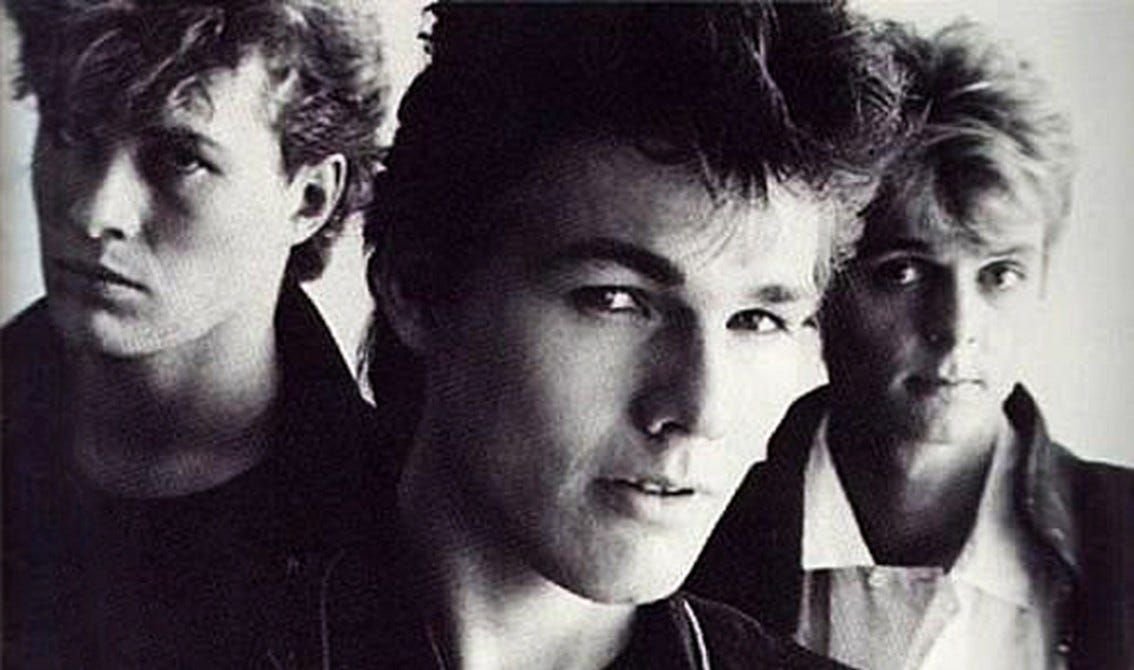
Morten Harket, Pal Waaktaar, and Magne Furuholmen — the Norwegian trio Warner Bros. almost dropped before “Take On Me” broke in the U.S.
The Retro Almanac
A monthly roundup of "on this day" highlights from that month, decades back — plus first dibs on new retro merch drops. No spam, just the good stuff.
Why “Take On Me” Failed Twice Before It Worked
The song a-ha wrote wasn’t the problem — the song America eventually fell for barely existed yet. The 1984 original, produced by Tony Mansfield, was thinner and brighter than the version that later topped the charts, and it stiffed in the UK almost completely. A second attempt, remixed by producer Alan Tarney into the punchier, more soaring arrangement fans know today, fared no better; Warner’s London office gave it minimal push, and it flopped a second time. By mid-1985, a-ha had one song, two failures, and a label losing patience.
What changed wasn’t the chorus. It was the decision to stop treating the video as an afterthought and build one expensive enough to be the actual pitch.
The Four-Month Cartoon That Saved the Song
Director Steve Barron, who’d already shot Michael Jackson’s “Billie Jean” and The Human League’s “Don’t You Want Me,” pitched something unusual: rotoscoping, a technique where animators trace by hand over live-action footage frame by frame. Barron later said the idea clicked when he pictured “an image kind of jumped out of this drawn hand, reaching out of a comic book into the real world. I got goose bumps from that moment.” Warner Bros. gave him roughly $400,000 in today’s dollars to make it happen — an enormous budget for a music video in 1985, the same era when a video like Michael Jackson’s “Thriller” was proving labels could treat a video as a short film rather than a three-minute commercial.
Barron wasn’t guessing blind. Rotoscoping had been used before in short films, but never at this scale for a pop single, and never with this much money riding on whether MTV viewers would sit through something that looked more like a hand-drawn comic strip than a band performance. Warner’s gamble wasn’t really on a-ha. It was a bet that an audience raised on music videos was ready for one that looked like nothing they’d seen on the channel before.
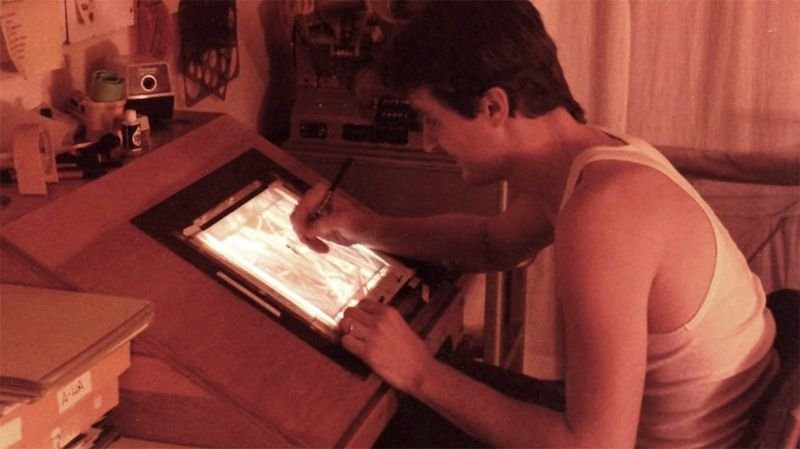
Animators Michael Patterson and Candace Reckinger traced the footage by hand, frame by frame, on a lightbox like this one.
Patterson and Reckinger spent sixteen weeks producing somewhere between 2,000 and 3,000 individual pencil drawings, tracing over footage the band had shot in just two days. Every flicker of motion in the finished video — every line on Harket’s sketched jacket, every crumpled sheet of comic-book paper — was drawn and redrawn by hand, one frame at a time, long before anyone could fake that look with software.

One of the actual production frames, still marked up with the animators’ notes.
Two Days, One Cafe, and a Wrench Fight
The live-action half of the shoot took place over two days, mostly inside Kim’s Cafe in Wandsworth, southwest London, with actress Bunty Bailey playing the female lead. The story is simple on paper: a woman sits reading a comic book about a motorcycle racer, the racer on the page winks at her, and a pencil-sketch hand reaches out and pulls her into his black-and-white world. Once inside, a gang of sketched bikers corners the couple with a pipe wrench, smashes a mirror, and chases them through a maze of crumpled paper before Harket drags her back out into color and flesh.

Morten Harket’s sketched racer reaching through the comic-book panel — the moment that made MTV take notice.
It’s a strange plot to describe and an unforgettable one to watch, which is exactly the gap that made it work. Most 1985 videos were bands lip-syncing in front of lighting rigs. This one had a love story, a chase scene, and a transformation sequence, built with the patience of an animated short rather than a three-minute promo clip.

Inside the sketch world — the look that took four months and thousands of individual drawings to pull off.
How It Finally Hit #1 on October 19, 1985
MTV put the finished video into rotation in the summer of 1985, and it did something neither version of the song alone had managed: it made people curious enough to stop and watch a three-minute clip twice. Warner re-released the single to ride the video’s momentum, and this time the climb didn’t stall. “Take On Me” entered the Billboard Hot 100, spent fifteen weeks working its way up, and reached number one in the chart dated October 19, 1985. It stayed on the chart for twenty-seven weeks total — a long run for a song that had already failed twice before most Americans ever heard it.
It fell one spot short of the top in a-ha’s own corner of Europe: the single peaked at number two on the UK charts, held off by Jennifer Rush’s “The Power of Love.” America was the one territory where the gamble on the video paid off completely, and “Take On Me” remains the only song a-ha ever took to number one in the United States.
The timing mattered as much as the chart position. By October 1985, MTV had been on the air for four years and had already reshaped how labels marketed singles, but most acts still treated the video as a cheap afterthought shot in an afternoon. a-ha’s single became proof that the opposite approach — spending real money and real time on something that looked unlike anything else on the channel — could resurrect a song two previous releases had already killed.
The Night a-ha Swept the MTV Awards
By the following September, MTV had turned the video into the centerpiece of its own award show. At the 1986 MTV Video Music Awards, a-ha won eight of the eleven categories it was nominated in, six of them for “Take On Me” alone — Best New Artist in a Video, Best Concept Video, Most Experimental Video, Best Direction, Best Special Effects, and Viewer’s Choice. No act that night came close to matching it. For a band that had nearly been dropped a year earlier, it was as complete a vindication as pop music offers.
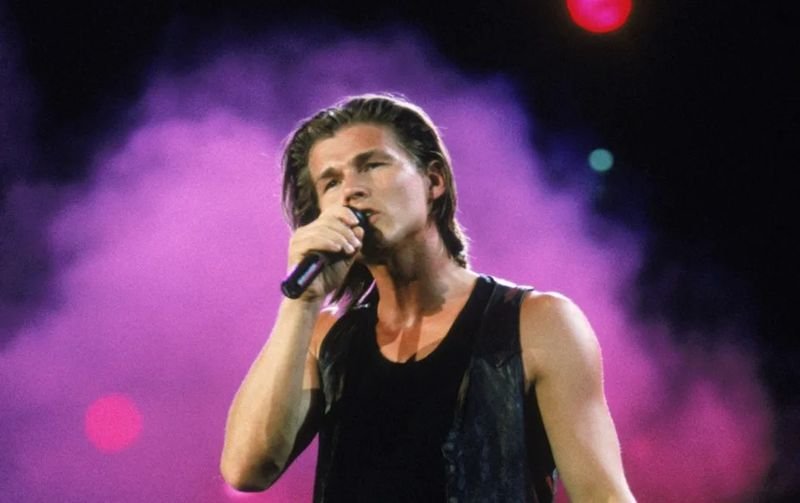
Morten Harket performing live during a-ha’s run of success following “Take On Me.”
a-ha built a real career off the back of it — the parent album, “Hunting High and Low,” went on to sell millions worldwide, and the band toured for decades after. But nothing they released later matched the cultural reach of that one video, and they knew it.

The “Hunting High and Low” album sleeve, the record “Take On Me” belonged to.
Why the Video Still Works Four Decades Later
Here’s the part that’s easy to miss: “Take On Me” isn’t just an 80s relic that gets dusted off for nostalgia playlists. The video crossed one billion YouTube views on February 17, 2020, and two billion on September 20, 2024 — becoming the first video from the entire 1980s to hit that second milestone. Songs from that decade with far bigger chart runs never got close. The reason isn’t the hook, catchy as it is. It’s that a rotoscoped cartoon from 1985 still looks like nothing else on the platform, because nobody else was willing to spend four months hand-drawing a music video even at the time.
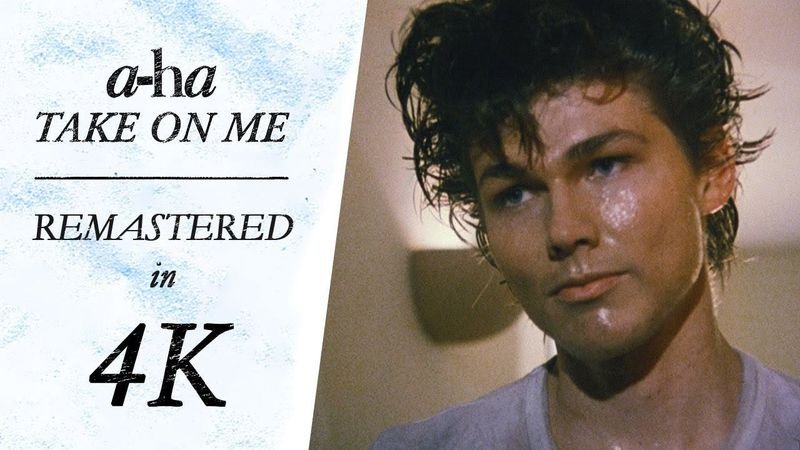
a-ha’s own channel remastered the video in 4K decades later — proof the original artwork still holds up at any resolution.
That’s a lesson MTV itself understood almost immediately — the network had launched just four years earlier promising to put the visual on equal footing with the song, and “Take On Me” was the clearest proof yet that the bet could work. A decade later, record labels would spend fortunes chasing the same formula a-ha stumbled into on a shoestring comic-book plot and a borrowed lightbox.
Love the retro era? Browse our shop for vintage finds, retro clothing, and 80s/90s nostalgia gear.
Watch it back now and the seams show — you can spot where the live-action footage ends and the pencil lines begin, the exact joins animators still worry about today. None of that matters. The video wasn’t selling perfection; it was selling an idea nobody had committed to that hard before, the same stubborn bet that saved Def Leppard’s career a few years later with a different kind of gamble. Warner Bros. almost didn’t make it. a-ha almost didn’t get a fourth chance. On October 19, 1985, the gamble became the only number one they’d ever need.
Sources
- Take On Me — Wikipedia — chart dates, YouTube view milestones, and MTV VMA award count.
- Penciling in the History of A-ha’s ‘Take on Me’ — Mental Floss — production details, budget, and Steve Barron’s account of pitching the rotoscope concept.
- A-ha’s rotoscoped 1985 music video for ‘Take On Me’ — Before & Afters — behind-the-scenes production photography and animator workflow.
The Retro Almanac
A monthly roundup of "on this day" highlights from that month, decades back — plus first dibs on new retro merch drops. No spam, just the good stuff.