
Heroin Chic Returned in 2022 and We Forgot Why It Left
The New York Post ran a cover on November 2, 2022 with the headline “Bye-Bye Booty: Heroin Chic Is Back.” Anyone who survived the 1990s with their wardrobe intact read it twice. Heroin chic was supposed to be the cultural sin we buried — the look that made parents call therapists, made President Clinton hold a press conference about it, and made the fashion industry apologize for the rest of the decade. Yet there it was on a 2022 tabloid cover, getting credited to Bella Hadid and to Kim Kardashian’s suddenly missing curves. The pendulum had not just swung back. It had swung back wearing the same Calvin Klein slip dress, the same combat boots, and the same vacant photographer-on-the-couch stare that Corinne Day captured in 1990.
The Original Sin Was Captured on Bayswater Road
The look did not start with Kate Moss. It started with photographer Corinne Day shooting a teenage Moss in her London bedroom for The Face magazine in July 1990. The shoot was called “The 3rd Summer of Love” and it changed fashion photography in eight pages. Moss had no makeup. The room was a council flat. The clothes were thrift-store finds and a string of fairy lights. Compared to the supermodel maximalism of Linda Evangelista and Christy Turlington, it looked like an accident.
It was not an accident. Day, along with photographers Davide Sorrenti and Mario Sorrenti, was reacting to the cocaine excess of the 1980s by photographing reality the way grunge musicians were recording it — raw, cheap, and aggressively uninterested in your approval. Calvin Klein noticed. By 1992 he had Moss in white briefs on a giant Times Square billboard, and the term “heroin chic” was about to get coined by Vogue’s Amy Spindler and then immediately escape into the wild.
The Retro Almanac
A monthly roundup of "on this day" highlights from that month, decades back — plus first dibs on new retro merch drops. No spam, just the good stuff.
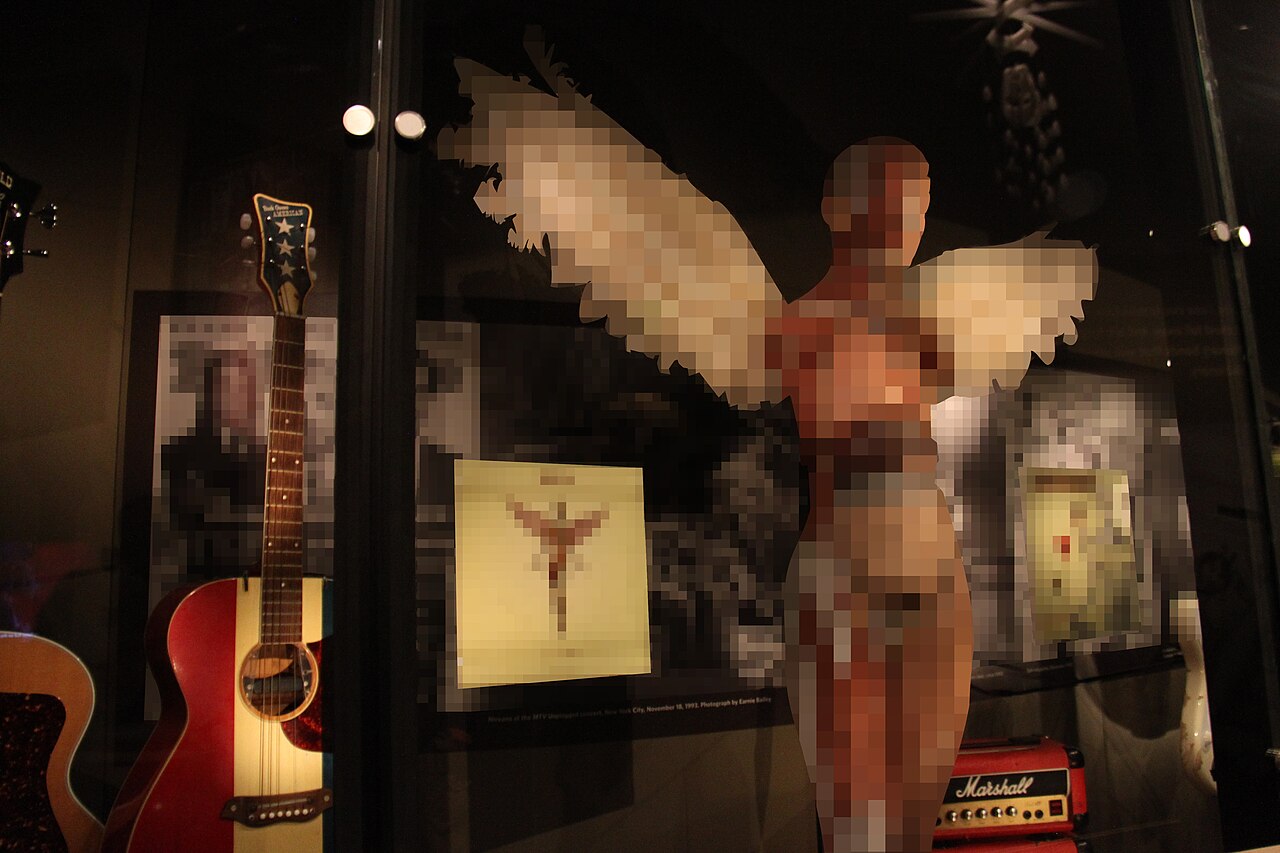
It Was Always Grunge Wearing Different Shoes
The fashion editors who built heroin chic were doing visually what Nirvana and Mudhoney were doing sonically. The grunge bands rejected hair metal’s spectacle by wearing whatever was on the floor — flannel, faded jeans, Chuck Taylors. The photographers rejected fashion’s spectacle by shooting in real apartments with real bad lighting. The clothes overlapped because the worldview overlapped.
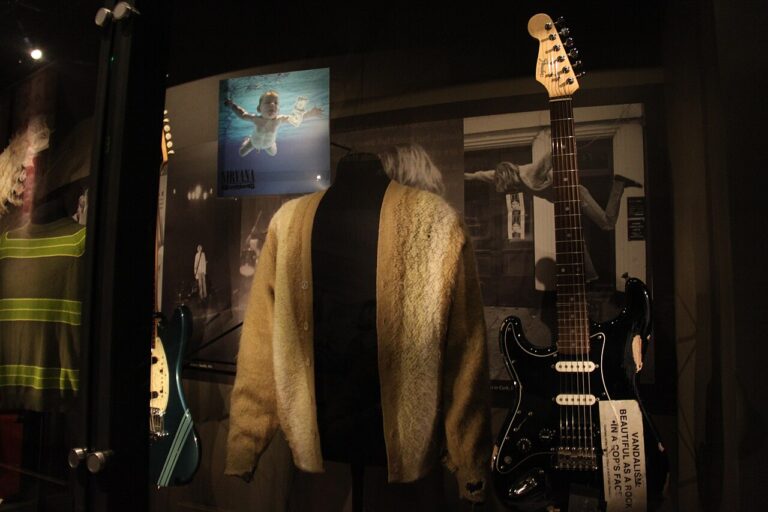
Courtney Love walked the visual line between both worlds. The babydoll dresses, smeared lipstick, tiara-and-combat-boots combination she wore through 1994 became its own grammar. Kurt Cobain’s oatmeal cardigan from MTV Unplugged, the one that eventually sold at auction for $334,000 in 2019, was a yard-sale find. The grunge resurgence in 2020s fashion is really just a return to that grammar — the choice to look like you slept in your clothes on purpose.

How We Killed Heroin Chic the First Time
The clothes outlasted the moment. Heroin chic as a phrase died in 1997 for specific reasons. Davide Sorrenti, the 20-year-old photographer who had become one of its leading voices, overdosed in February of that year. His mother Francesca went public. President Clinton held a press conference in May 1997 and said the look had “made heroin addiction seem glamorous and sexy and cool” and that “American fashion has been an enormous source of creativity and beauty and vitality… It is not creative to use images that promote addiction.”
That was the end of the brand name. Magazines apologized. Calvin Klein moved on. The clothes — slip dresses, low-rise jeans, baby tees, combat boots — got pushed into the Y2K bubblegum aesthetic that took over by 1999. By the time American Eagle was selling pre-distressed denim in 2001, the look had been laundered into something parents could approve of.
The 2022 Trigger Was a Reality Show Body
Heroin chic did not return because anyone was nostalgic for 1994. It returned because the cultural body changed shape almost overnight. Kim Kardashian, who had spent a decade making the hourglass figure the dominant aesthetic, showed up to the Met Gala in May 2022 in a Marilyn Monroe dress that required her to lose 16 pounds in three weeks. By the fall, the BBL aesthetic was visibly receding across Instagram. Ozempic became a verb. Bella Hadid, who had been styled as the heir to the Kate Moss lineage since 2018, was suddenly everywhere again — in low-rise Diesel, in slip skirts, in bandanas tied around tube tops.
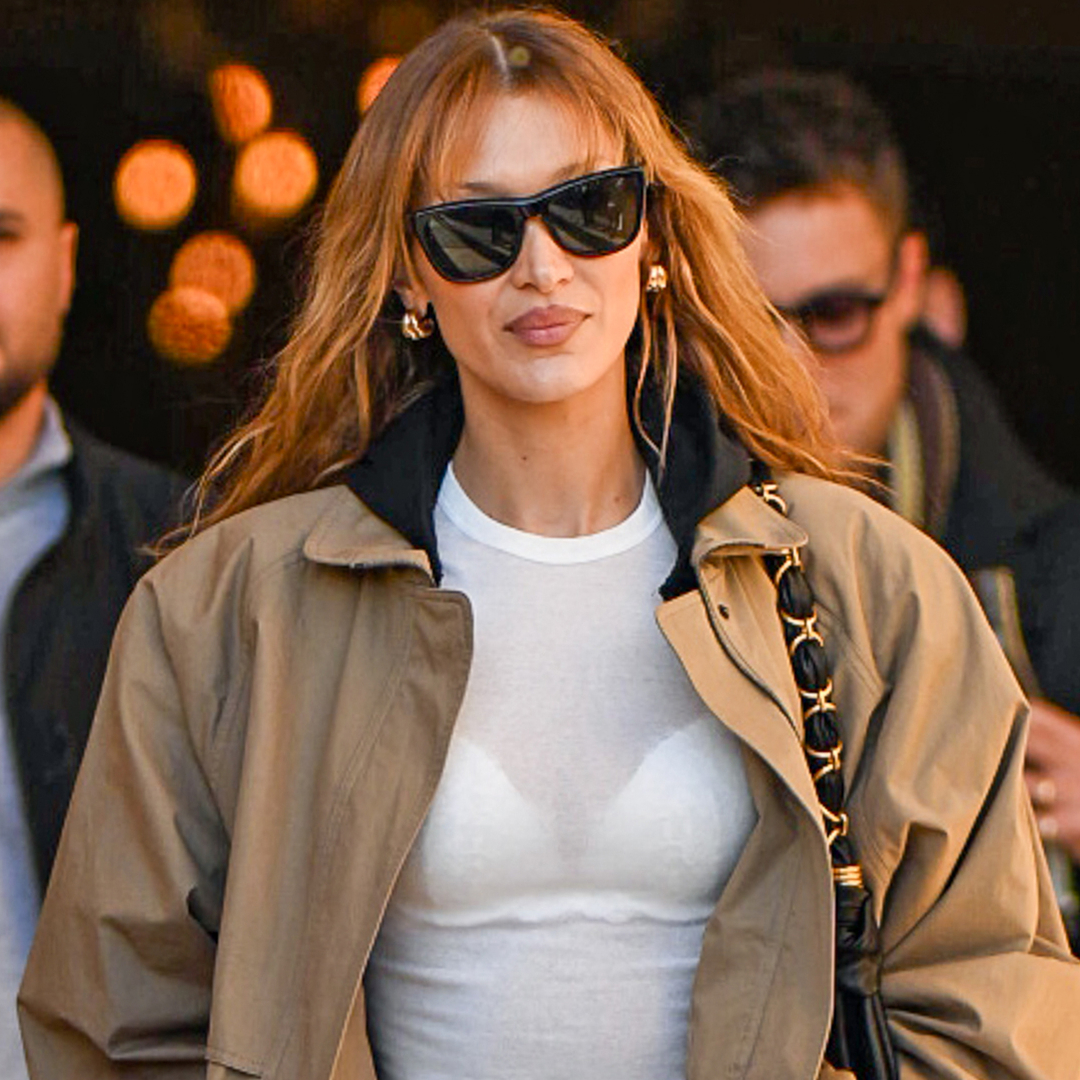
The Y2K resurgence had been simmering on TikTok since 2020, but it had been styled as nostalgic fun — Juicy tracksuits, butterfly clips, glittery eyeshadow. By late 2022, that nostalgia had a sharper edge. Designers like Glenn Martens at Diesel and Matthieu Blazy at Bottega were sending models down runways in clothes that looked like Calvin Klein 1993 with the brightness turned down. The Vogue Runway archive started getting raided for the same six collections — Marc Jacobs SS93 Perry Ellis, Helmut Lang 1996, Calvin Klein 1995, Prada 1996, Anna Sui 1993, Helmut Lang 1998.
The Clothes Came Back in a Specific Order
The slip dress was first, arriving on the resale market around 2020 and then on TikTok hauls by 2021. Combat boots followed — Doc Martens posted a record year in 2022. Low-rise jeans were the controversy item, hitting mass retail in late 2022 and triggering essays about how they would never come back. They came back anyway.
The smaller signifiers showed up by 2023. Baby tees with band logos on them, sourced from Depop and resold for prices Cobain would have laughed at. Skinny scarves. Tiny sunglasses. The thumb-hole cardigan. The exposed bra strap. A bandana folded as a headband instead of a hair tie. None of these items are inventions. All of them came out of the same five-year window between 1992 and 1997.
The Ozempic Asterisk No One Wants to Address
The conversation that ran underneath the 2022 fashion shift was about bodies, not clothes. Semaglutide had been approved for weight loss as Wegovy in June 2021. By the fall of 2022, prescriptions had quietly become the open secret of celebrity weight loss. Tabloids that had spent a decade celebrating curves pivoted, almost overnight, to celebrating their absence.
This is where the comparison to 1990s heroin chic gets uncomfortable, and where Gen X recognizes the pattern that Gen Z is just walking into. The grunge resurgence in 2020s fashion did not arrive as a clean clothes movement. It arrived bundled with a body trend that the medical establishment is not prepared to talk about and that the fashion press is not prepared to call by its name. The slip dress fits a specific body. The low-rise jean fits a specific body. The market for both quietly assumes you will get there however you need to.
TikTok Rebranded Grunge as Indie Sleaze
The platform that drove the resurgence did not call it grunge. A wave of TikTok creators dropped the phrase “indie sleaze” in late 2021, dating it to roughly 2006-2012 and pointing at Cobrasnake party photos, American Apparel, the Strokes, MGMT, and disposable-camera flash on a cigarette in a Lower East Side bar. The aesthetic that came back under that hashtag was, on inspection, mostly 1993 with a flip phone.
Indie sleaze gave the grunge revival a fresh marketing label that did not come with Clinton-era baggage. It also gave Gen Z a category that was not their parents’ youth. The slip dress could be “indie sleaze” and feel new, even if the same dress lived in a closet in Olympia, Washington in 1994. The rebrand worked. By 2024, indie sleaze was a category on Vogue, Depop, and Pinterest, and the underlying clothes were exactly what your older sister wore to a Hole show.
What Kate Moss Wants You to Know
Moss has been the inkblot test of the entire conversation since 1990. She did not invent heroin chic, did not name it, did not endorse it, and spent twenty years answering for it. In a 2009 interview with WWD she gave the line — “nothing tastes as good as skinny feels” — that defined her in a way no Corinne Day photograph ever did. She walked it back in 2018. Asked about the resurgence, she has consistently pointed reporters away from her body and toward the work, and she has not been shy about telling younger women that 1993 is not an instruction manual.
The point lands because it is the only honest position available. The clothes are coming back regardless. The aesthetic will keep cycling. What the original heroin chic generation can offer the 2024 version is the warning label — the knowledge of what got photographed, who got hurt making it, and which parts the fashion industry will quietly drop when the moment passes.

Where the Mirror Phase Leaves Us
Every fashion cycle gets the version of its source material it deserves. The 2020s grunge resurgence is more polished than 1993, better lit, ring-light-friendly, and processed through fifteen filters before it hits Instagram. The slip dresses are mass-produced now. The combat boots are sponsored. The flannel shirts come from H&M with the distressing already done.
The Gen X audience watching it happen tends to land somewhere between recognition and concern. The clothes themselves are fine. They were fine in 1993. The babydoll dress is a great dress. The combat boots are great boots. The slip skirt is what every cool aunt in your family wore to brunch for a decade. What is harder to watch is the part underneath — the body conversation, the wellness influencer dropping the same “nothing tastes as good” energy under a softer filter, the magazines that already burned this in 1997 acting like they discovered something new.
If you owned the original version of any of these pieces, you have a moral obligation right now. The flannel needs to come out of the closet. The Doc Martens need to come down from the top shelf. The slip dress, if you can still fit into it, deserves another decade in rotation. The grunge resurgence in 2020s fashion is real, it is not going anywhere soon, and Gen X is the only generation that has seen this movie before. The least we can do is enjoy the rerun, with the warnings the first run never got.
Sources
- Wikipedia — Heroin chic
- Wikipedia — Kate Moss
- Wikipedia — Corinne Day
- Wikipedia — Davide Sorrenti
- Wikipedia — Grunge
- Wikipedia — Bella Hadid
- Vogue
Browse retro and vintage-inspired apparel at the RetroRadical shop →
The Retro Almanac
A monthly roundup of "on this day" highlights from that month, decades back — plus first dibs on new retro merch drops. No spam, just the good stuff.