JNCO Jeans: The 90s Icon That’s Back in 2026
In 1998, a pair of JNCO Crime Scenes jeans could swallow a skateboard whole — the leg opening measured a full 50 inches around, wider than most dinner tables are deep. That year, the Los Angeles label sold $186.9 million worth of denim to American teenagers who had decided their pants should look less like clothing and more like a dare. JNCO stood for “Judge None, Choose One,” though nobody who wore them could agree on what the initials actually meant. What they agreed on was the fit: parachute-sized legs, a crown logo stitched on the back pocket, and just enough room inside each pant leg to hide a full six-pack of soda cans for a concert.
Who Actually Invented JNCO Jeans?
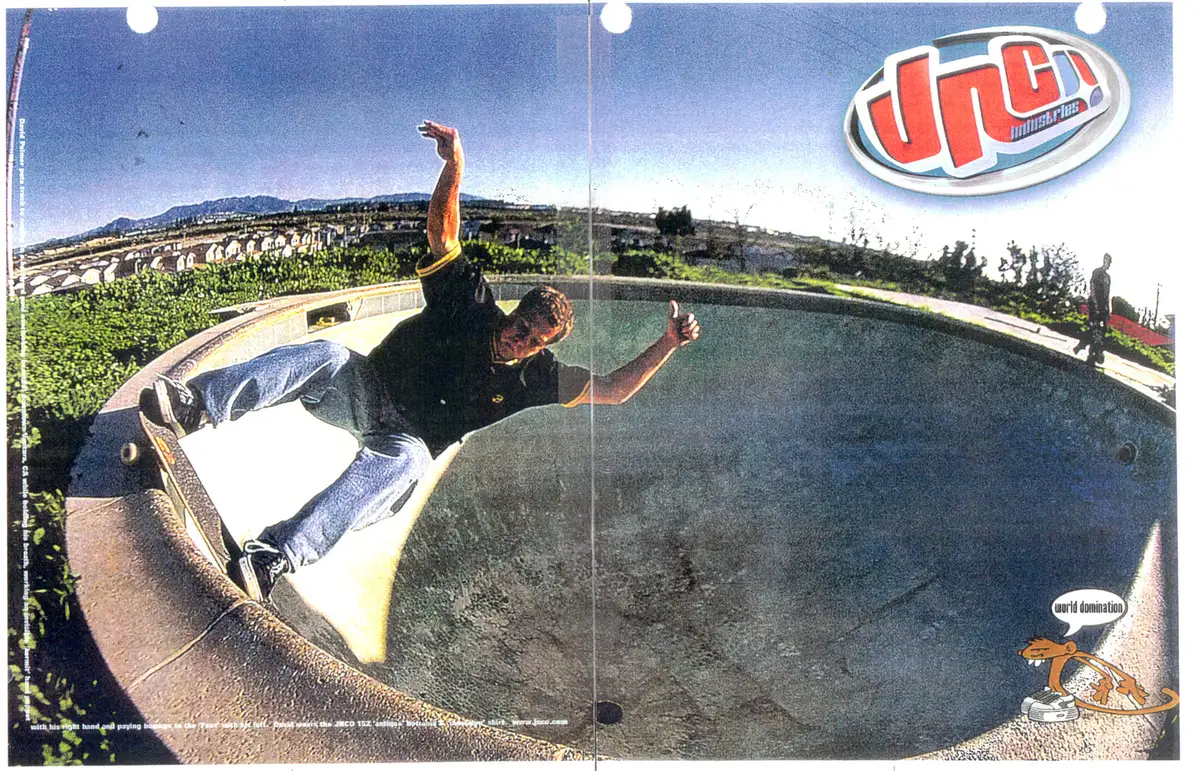
JNCO wasn’t a garage startup — it was already an eight-year-old company before anyone had heard the name. Brothers Milo and Jacques Revah, French-Moroccan immigrants who’d settled in Los Angeles, founded a company called Revatex in 1985 making standard denim under contract. The wide-leg line they introduced in 1993 almost didn’t happen; retailers thought the cut was too strange to sell. It took a marketing consultant named Steven Sternberg to reposition the brand away from its original urban customer base and toward skaters and surfers, pairing the jeans with ads in Thrasher and Electric Ink instead of hip-hop magazines. That pivot is the entire reason JNCO ended up on skate ramps instead of staying a forgettable denim label.
The Retro Almanac
A monthly roundup of "on this day" highlights from that month, decades back — plus first dibs on new retro merch drops. No spam, just the good stuff.
The name itself never had one settled answer. Revatex’s own marketing floated “Judge None, Choose One” as the official line, but kids on the ground also heard “Journey of the Chosen Ones,” and more than a few just assumed it stood for “Jeans Co.” and moved on. Nobody checked. That vagueness turned out to be good branding — a logo people argued about is a logo people remembered.
How Wide Did JNCO Jeans Actually Get?
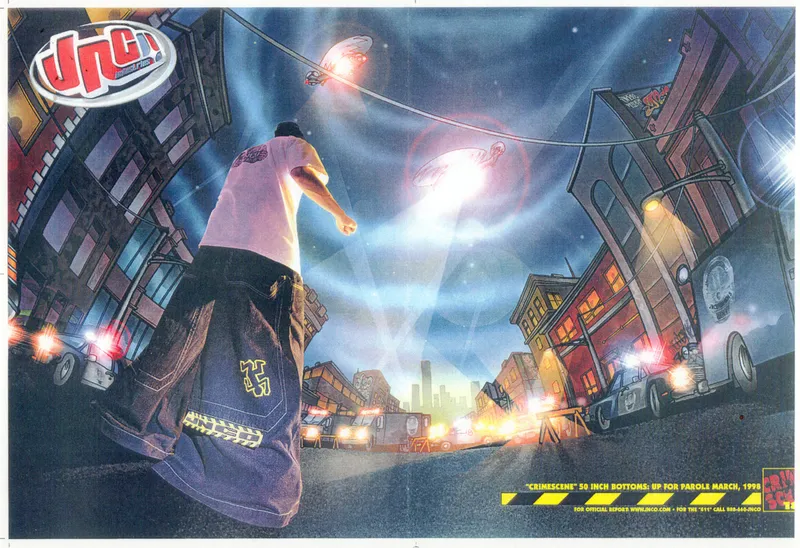
The standard JNCO cut ran anywhere from 17 to 23 inches at the leg opening, which was already enormous next to anything on a Levi’s rack. The brand’s showpiece style, Crime Scenes, pushed that to 50 inches — a number JNCO printed directly on the ad copy, daring customers to try it. A 2015 “Heritage” reissue scaled things back to a more wearable 20–23 inches, but the 2019 relaunch brought the 50-inch Crime Scenes cut back by popular demand, at a price between $130 and $250. The absurdity was the entire sales pitch. Nobody bought JNCOs because they fit well; they bought them because nothing else in the mall looked like that.
Every JNCO style had its own name and its own personality, which is part of why collectors still argue over which cut was the best. Twin Cannons came with double cargo pockets stacked on the thigh. Mammoths were the brand’s bestselling everyday wide-leg, wearable enough for school. FlameHead and Mad Scientists leaned into the graffiti-and-horror graphics the brand built its whole visual identity around, while Tribals and Rhinos chased the late-90s fascination with tattoo-style tribal art. Every pair shared the same construction details: oversized back pockets big enough to double as storage, heavy contrast topstitching, and an embroidered crown logo that became as recognizable as the Nike swoosh to anyone who grew up in a 90s mall. It’s the same instinct that drove Zubaz pants a decade earlier — take one absurd design choice and build an entire identity around refusing to tone it down.
Why Did Skaters and Ravers Adopt JNCO First?
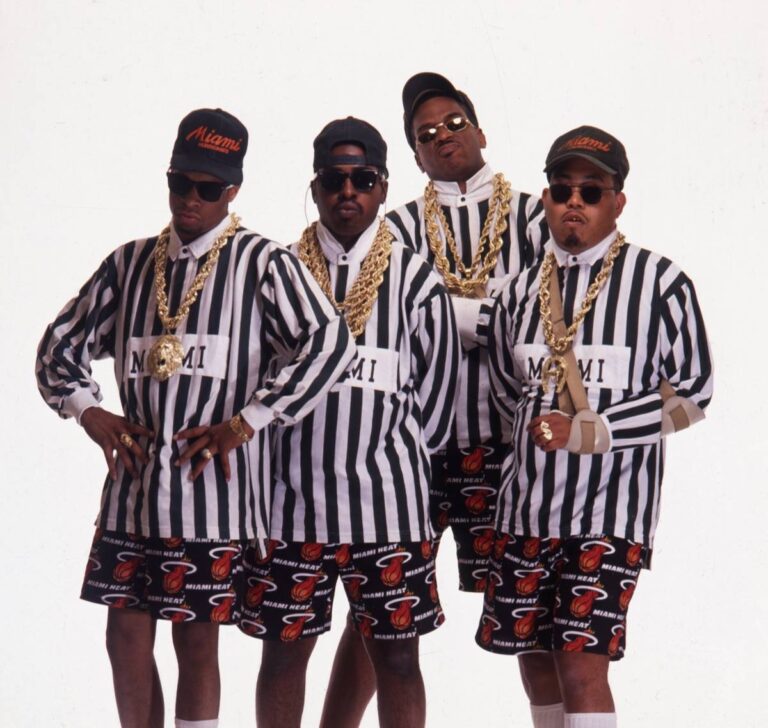
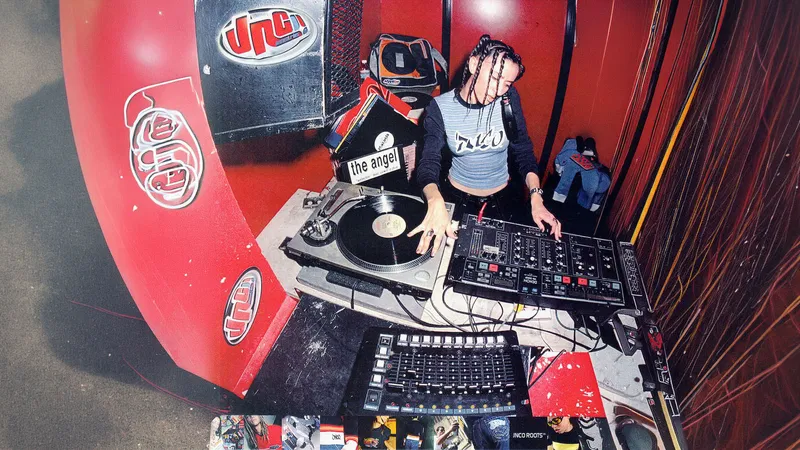
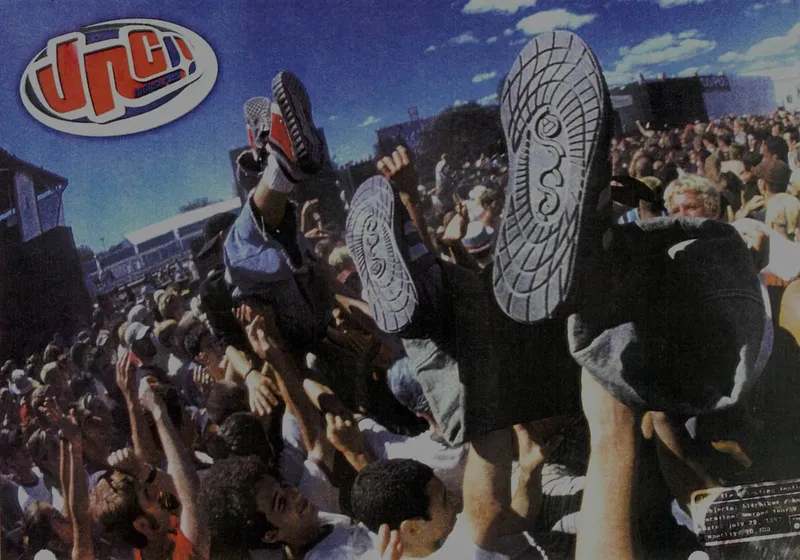
The baggy-pants lineage actually runs back further than JNCO itself. MC Hammer’s parachute pants kicked off the oversized trend in 1990, and hip-hop acts like Tupac and Snoop Dogg kept it going — the same 90s hip-hop style revolution that normalized baggy fits in the first place. By the time JNCO’s marketing team went looking for a new audience in the mid-90s, wide legs already read as cool to anyone under twenty. Skaters needed room to move and didn’t mind looking a little ridiculous; ravers wanted something that moved with them on a dance floor for six hours straight. JNCO leaned into both scenes hard, sponsoring extreme-sports events the same way brands chased the rollerblading boom a few years earlier, and recruiting DJs, breakdancers, and rap-rock acts like Limp Bizkit to wear the brand on stage. Korn’s Jonathan Davis later said flatly that he never actually wore them — “I did not partake in it” — which tells you how fast JNCO became a punchline even inside the subculture that made it famous.
How Big Did JNCO Jeans Get, By the Numbers?
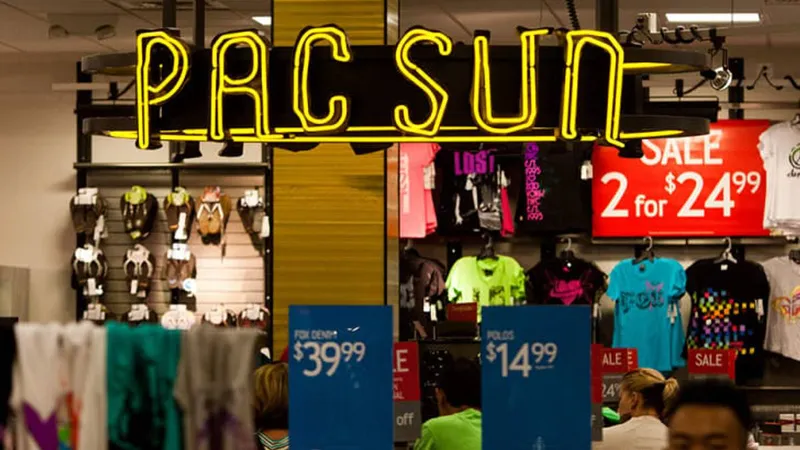
The sales curve tells the whole boom-and-bust story on its own. JNCO pulled in roughly $36 million in 1995, then rocketed to $186.9 million by 1998 — a jump of more than 400% in three years. Pacific Sunwear carried the brand so heavily that JNCO made up about 10% of PacSun’s entire business in 1997, and J.C. Penney named it the top-selling brand among young men in 1998. A Teenage Research Unlimited survey that same year ranked JNCO the 12th coolest brand among American teens, ahead of Calvin Klein and Mountain Dew and just behind Nike. That’s not a niche skate label anymore — that’s a brand every mall in the country was stocking.
Why Did Schools Ban JNCO Jeans?
Orange County schools started banning the widest JNCO styles in 1998, and the reasoning wasn’t really about fashion. Administrators worried the extreme leg openings let kids conceal weapons, or that the fabric pooling around their shoes would cause trips and falls on stairs. JNCO’s success also created a second, uglier problem: counterfeiters in Chicago started mass-producing fake pairs so convincingly that Revatex had to hire private investigators to track them down. Company executive Karl Manders put it bluntly at the time — “There are literally times when you can’t market your products in some cities because counterfeiters have already marketed it.” A brand doesn’t get bootlegged that aggressively unless it’s genuinely everywhere.

Why Did JNCO Jeans Fall Apart So Fast?
The same mall saturation that made JNCO rich also killed it. Once Hot Topic, J.C. Penney, Kohl’s, and Gadzooks were all carrying the brand, it stopped reading as rebellious and started reading as whatever your little brother’s entire class was wearing. Cindy Levitt, a Hot Topic merchandise manager, admitted as much in 2000: “You still see JNCO at raves. But it’s a little uncool for our customer. It’s at too many doors in the mall.” Sales had already halved from their 1998 peak down to roughly $100 million by 1999, and a 16-year-old from New Mexico told the New York Times that year, “JNCO [was] more last year. Now it’s more Polo and Tommy Hilfiger.” By 1999, Revatex closed its Los Angeles manufacturing facility and laid off 250 workers. The wide-leg moment was over almost as fast as it had arrived.

Is JNCO Making a Comeback in 2026?
JNCO never fully disappeared — it just went quiet. A Chinese trading company called Guotai Litian bought the brand in 2015 and tried repositioning it as athleisure for an older crowd, which didn’t take. The real revival started in 2019, when Milo Revah reacquired the license with his daughter Camilla and relaunched the original wide-legged silhouettes, Crime Scenes included, at $130–$250 a pair. That slow rebuild has turned into a genuine moment in 2026: JNCO is active again with its own e-commerce site, selling reissued fits like the Mammoth, Twin Cannon, and Crossbones alongside Amazon, Urban Outfitters, and PacSun listings. The driver this time is Gen Z and millennial nostalgia for Y2K fashion rather than skate or rave culture specifically, and the pricing now sits closer to premium streetwear than the mall-rack prices of 1998. Original designer Silvio Marceca has been working with the brand on the relaunch, which says something about how seriously JNCO is taking this second act compared to the half-hearted 2015 attempt.
Buying in is a different experience than it was in 1998, though. Back then, a pair of JNCOs cost around $50 at Merry-Go-Round or PacSun, roughly what a teenager could earn in a weekend. Today’s reissues start closer to $130 and climb past $200 for the widest cuts, and genuinely rare vintage pairs — a deadstock Crime Scenes with original tags, or an early-90s Twin Cannon in good shape — have sold for well over $500 on resale platforms like Grailed and eBay. That price jump says a lot about who’s actually buying: not a 15-year-old with mall money this time, but adults who remember exactly what these jeans used to cost and are willing to pay triple for the nostalgia.
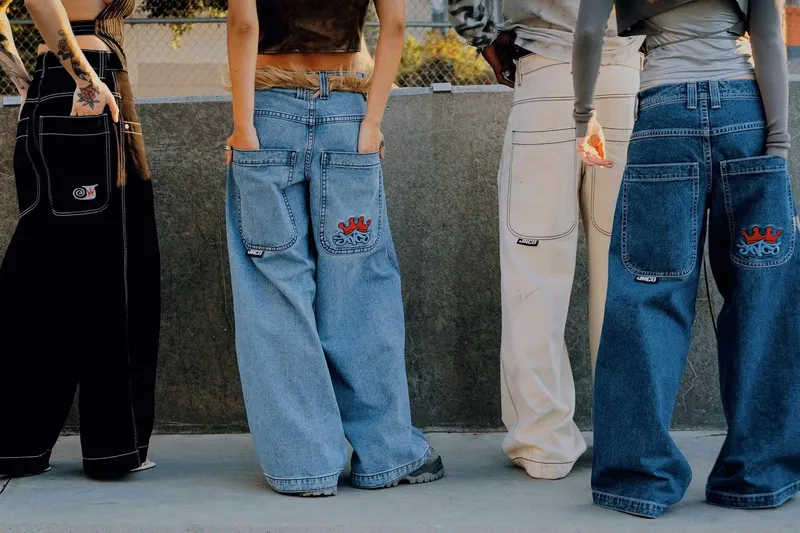
The honest truth is that wide-leg denim never needed JNCO specifically to come back — plenty of brands have sold baggy jeans since 2020. What JNCO has that a generic wide-leg pair from a fast-fashion rack doesn’t is the actual archive: the crown logo, the Crime Scenes name, the exact 50-inch number teenagers used to brag about. If you’re going to wear something this loud, you might as well wear the original. Thirty years after the Revah brothers bet a skateboarding magazine ad could sell impossible pants, teenagers are betting on the same silhouette again — this time with a four-figure resale market backing them up.
Sources
- 12 Oversized Facts About JNCO Jeans — Mental Floss, sales figures, counterfeiting, school bans, and the 2019 relaunch.
- JNCO — Wikipedia, brand history, bankruptcy, and product specifications.
- Why Were JNCO Jeans a Huge Part of Nu-Metal Fashion? — Loudwire, on Limp Bizkit, Korn, and the hip-hop lineage of baggy denim.
- How Teens Buy — Fortune, 1998 archive coverage of JNCO’s teen marketing and Merry-Go-Round retail ties.
- About JNCO — JNCO’s official brand history and archival imagery.
- JNCO Jeans Are Totally Coming Back, Dude — on the 2026 Gen Z revival and current retail availability.
The Retro Almanac
A monthly roundup of "on this day" highlights from that month, decades back — plus first dibs on new retro merch drops. No spam, just the good stuff.