On This Day: September 19, 1989 — Janet Jackson’s Rhythm Nation Takes Over
Janet Jackson had just spent three years as the biggest pop star to come out of the Jackson family that summer, and A&M wanted more of the same. Control had sold four million copies on songs about independence and romantic frustration. The obvious move was Control 2. Jackson, 23 years old and fresh off buying out her own management contract, told her label no.
The Label Wanted “Control 2.” Janet Had Other Plans
Jackson brought the idea to producers Jimmy Jam and Terry Lewis at Flyte Tyme Studios in Minneapolis in early 1989, and it wasn’t a pitch A&M was expecting. She wanted an album about the things she’d been reading about in the news — drug addiction, school dropout rates, racial violence — stitched together with spoken interludes that sounded like public service announcements. Jam and Lewis, who’d built their reputation on club and radio hits, had to relearn how to write music around a thesis instead of a hook.
The Retro Almanac
A monthly roundup of "on this day" highlights from that month, decades back — plus first dibs on new retro merch drops. No spam, just the good stuff.
The title itself was the tell. “1814” is the year Francis Scott Key wrote “The Star-Spangled Banner” — Jackson wasn’t rejecting American identity, she was arguing the country hadn’t lived up to its own anthem yet. That’s a heavier idea than anything on Control, and six of the album’s tracks carry Jackson’s own writing credit alongside Jam and Lewis, a bigger creative stake than she’d taken on any previous record.
Jam and Lewis weren’t an obvious choice for a protest record either. Both had come up playing in Flyte Tyme, the Minneapolis band that eventually became Prince’s backing group, the Time — and Prince fired them both in 1983 after they moonlighted producing an S.O.S. Band hit against his rules. That firing pushed them into starting their own studio, and the sound they built there, all synthesizers standing in for horns, became known as the Minneapolis Sound. By the time Jackson walked in with an album about systemic racism, Jam and Lewis had the production chops to make it sound like a party and the outsider’s chip on their shoulder to take the subject seriously.
What “1814” Actually Means
Rhythm Nation 1814 isn’t a loose collection of singles with a few ballads dropped in. It’s sequenced like a broadcast, opening with a spoken “Pledge” that asks listeners to set aside race, gender, and class to fix what’s broken, then moving through short interstitial tracks that function almost like news bumpers between the singles. “Livin’ in a World (They Didn’t Make)” addresses child poverty and violence directly. “State of the World” indicts systemic neglect. It’s blunt, occasionally didactic, and it worked anyway because the grooves underneath were some of the tightest New Jack Swing production Jam and Lewis ever built.
Critics at the time were split on whether a 23-year-old pop star had any business writing about the national condition. Thirty years of hindsight reads differently — an artist at the height of her commercial power spending that capital on an album about poverty and racism instead of another round of radio-friendly love songs isn’t the safe choice. It’s the one nobody with a platform that big makes anymore.
The Video That Rewrote the Rulebook
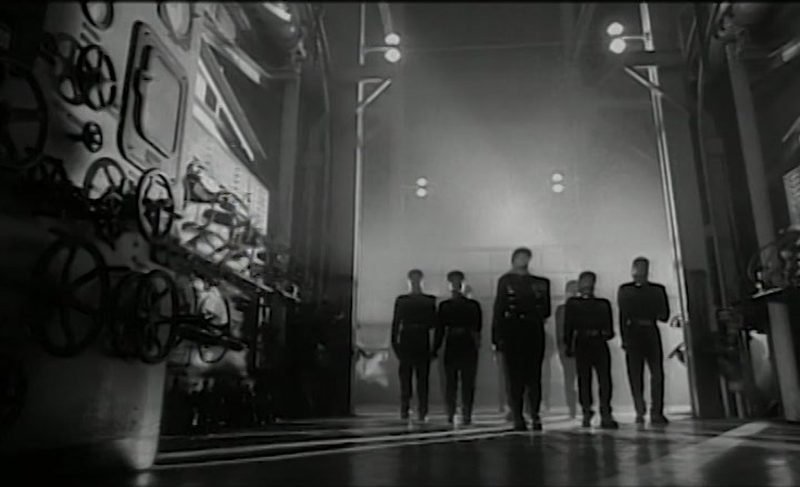
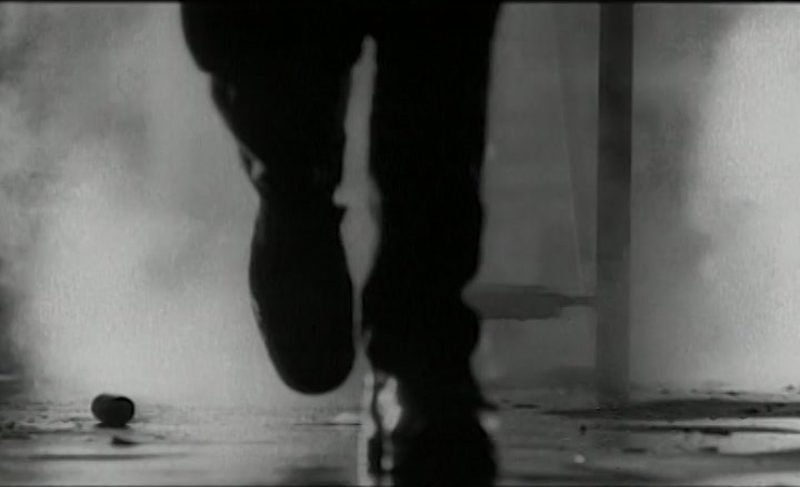
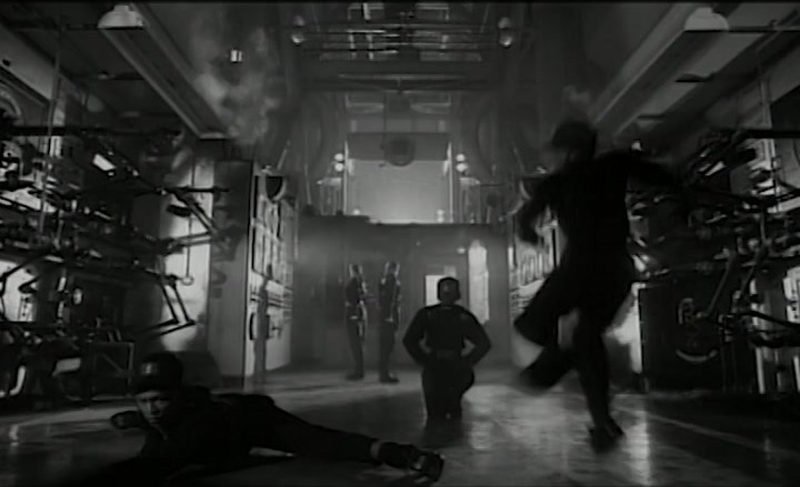
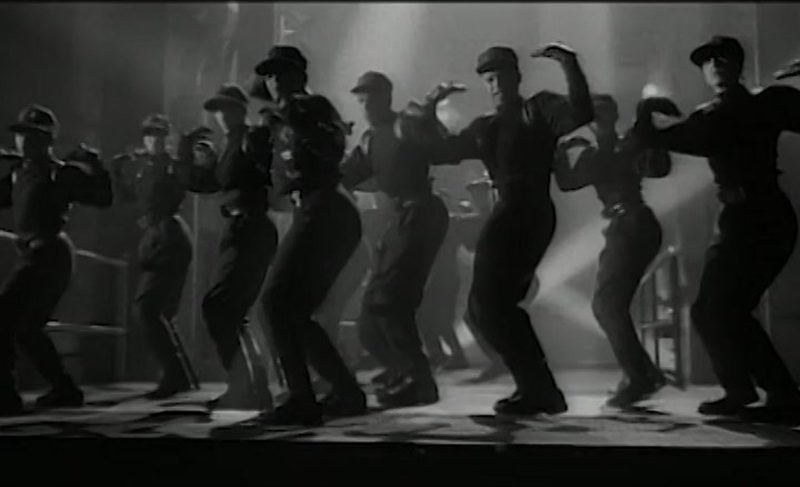
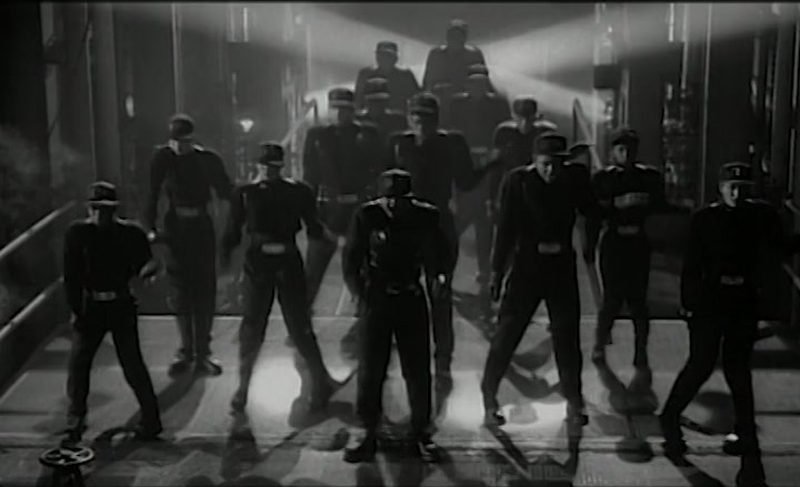
Director Dominic Sena shot the “Rhythm Nation” video in a converted warehouse in August 1989, in stark black and white, with Jackson and her dancers dressed in unisex military-style jackets, matching caps stamped with “1814,” and combat boots. The wardrobe wasn’t decoration — stripping away anything that read as traditionally feminine or masculine was the point, a visual echo of the album’s “doesn’t matter if you’re black or white” refrain.
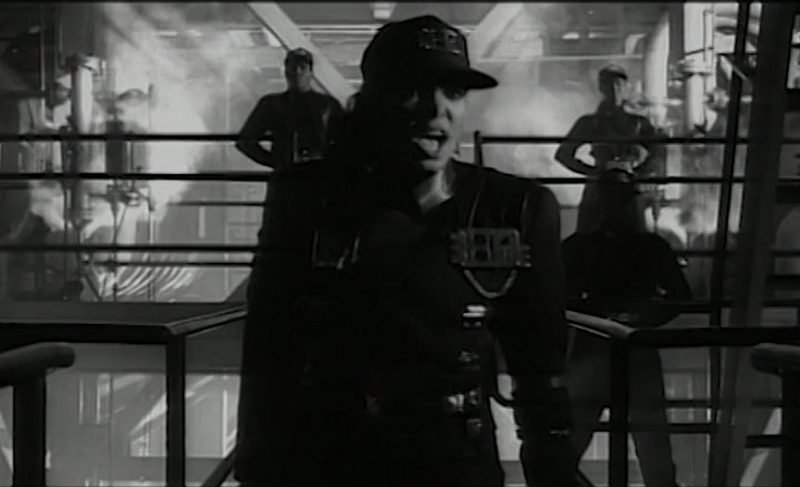
The choreography, credited to Jackson and a then-unknown Anthony Thomas, is the part that actually changed music videos going forward. Rows of dancers moving in identical, razor-sharp unison through a fog-filled industrial set became the template MTV directors chased for the next decade — you can trace a direct line from this video to nearly every synchronized-dance pop video that followed it. It won Best Choreography at the 1990 MTV Video Music Awards and picked up a Best Dance Video nomination the same night.
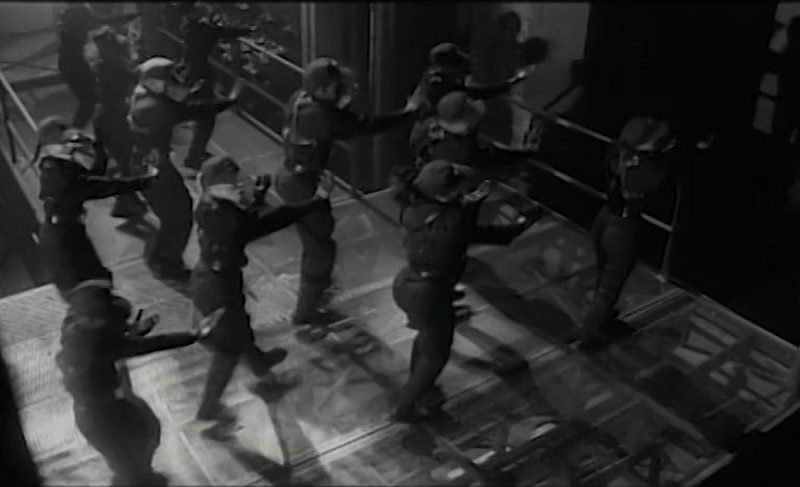
MTV liked the video enough to build an entire 30-minute film around it. Rhythm Nation 1814 (the short film) strung together several of the album’s videos with a loose narrative about kids banding together against a broken system, and it aired on the network that September to promote the record — a promotional format almost nobody attempts anymore because music videos stopped being appointment television.
That warehouse choreography didn’t stay locked in 1989, either. Beyoncé’s military-precision staging on the Formation tour draws visibly from it, Normani built the group formations in her “Motivation” video around the same sharp, unison lines, and performers from Ciara to Rihanna have referenced the uniforms and the drill-team footwork in their own live shows. Choreographers Darrin Henson and Travis Payne, who went on to shape a generation of pop videos themselves, have both pointed to this specific shoot as the one that showed them what a music video could look like when the dancing carried the entire narrative.
Seven Top-Five Hits — A Chart Record Nobody’s Broken Since
Here’s the number that still holds up: Rhythm Nation 1814 is the only album in Billboard Hot 100 history to produce seven commercial singles that all reached the top five. “Miss You Much,” “Rhythm Nation,” “Escapade,” “Alright,” “Come Back to Me,” “Black Cat,” and “Love Will Never Do (Without You)” all landed there, a spread that took the label well into 1991 to fully release. Four of those seven — “Miss You Much,” “Escapade,” “Black Cat,” and “Love Will Never Do (Without You)” — hit number one outright.
That rollout also made Rhythm Nation 1814 the first album to generate number-one hits in three separate calendar years: 1989, 1990, and 1991. A&M was still squeezing chart-topping singles out of a record more than eighteen months after it dropped, which is closer to how a catalog album performs than a new release. Billboard’s own retrospective ranking of the album’s tracks still treats “Black Cat” — the hardest rock song Jackson ever released — as the record’s biggest surprise, mostly because nobody expected the Control singer to pull off a guitar-driven anthem that convincingly.
Love the retro era? Browse our shop for vintage finds, retro clothing, and 80s/90s nostalgia gear.
The Tour That Turned Janet Into a Headliner
A&M announced the Rhythm Nation World Tour that fall, and it launched March 1, 1990, running through North America, Europe, and Japan into mid-November. It was Jackson’s first tour as a headliner — Control had made her a star, but she’d never carried a full arena show on her own name before. Musical director Chuckii Booker and choreographer Anthony Thomas built a production around the same militaristic visual language from the videos, six dancers and eleven musicians recreating the warehouse choreography on stage night after night.
The same year, MTV handed Jackson the Video Vanguard Award at the VMAs — the network’s career-achievement honor, and one she received at 24, younger than almost anyone else who’s won it. Between the tour, the award, and the run of number-one singles, 1990 is the year Janet Jackson stopped being introduced as Michael’s little sister and started being covered as an artist competing with him directly on the charts.
Why the Library of Congress Now Owns a Copy
In March 2021, the Library of Congress added Rhythm Nation 1814 to the National Recording Registry, the federal government’s official list of recordings judged culturally, historically, or artistically significant enough to preserve permanently. It’s the kind of honor usually reserved for jazz standards and speeches — Jackson’s album made the cut in the same class as Nas’s Illmatic, recognized specifically for pairing socially conscious songwriting with mainstream commercial success at a scale almost nobody has repeated since.
Grammy.com’s retrospective on the record makes the same point a different way: Rhythm Nation 1814 proved a pop star could spend her biggest commercial moment on a message record without losing the audience. Jackson would go on to explore sexuality and independence more directly on janet. in 1993, but she never returned to the interlude-heavy, protest-record structure of Rhythm Nation. She didn’t need to — it had already done what she built it to do.
Jackson wasn’t the only Jackson sibling reshaping pop culture that year, and she wasn’t the last artist to prove a concept album about hard subjects could still top the charts — her 1993 pairing with Tupac in Poetic Justice leaned on the same credibility Rhythm Nation had built. A year later almost to the week, Madonna and a wave of female pop stars would take over the entire Billboard Top 5, a chart takeover Jackson’s own run had helped set up. And the visual language Sena and Thomas built in that warehouse would keep echoing through MTV’s next decade, the same network that was busy turning hip-hop into appointment television with shows like Yo! MTV Raps.
Watch the original video and it’s easy to forget it’s 37 years old — the choreography still reads as sharp, the message still lands, and the record still holds a chart mark nobody’s come close to matching.
Sources
- Billboard — “Janet Jackson’s Rhythm Nation 1814 Turns 30: All the Songs Ranked” — chart performance and track-by-track breakdown
- Library of Congress — National Recording Registry press release — official record of the album’s 2021 induction
- Grammy.com — “Janet Jackson’s ‘Rhythm Nation 1814’: For The Record” — background on the album’s creation and legacy
The Retro Almanac
A monthly roundup of "on this day" highlights from that month, decades back — plus first dibs on new retro merch drops. No spam, just the good stuff.