On This Day: June 14, 1994 — Rangers Stanley Cup Win
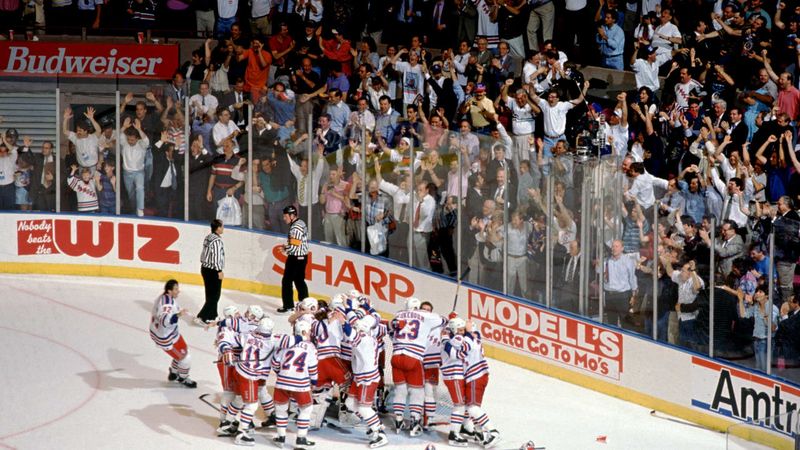
Madison Square Garden held its breath for 1.6 seconds. That is how long the game clock stretched on the final faceoff of the 1994 Stanley Cup Final, with Vancouver pressing in the New York zone and a 54-year nightmare one icing call away from waking back up. When the puck finally went the other way and the horn blew, the Rangers Stanley Cup drought — the longest active championship streak without a title in pro sports — was over. New York 3, Vancouver 2. June 14, 1994. Madison Square Garden was the loudest building on the planet.
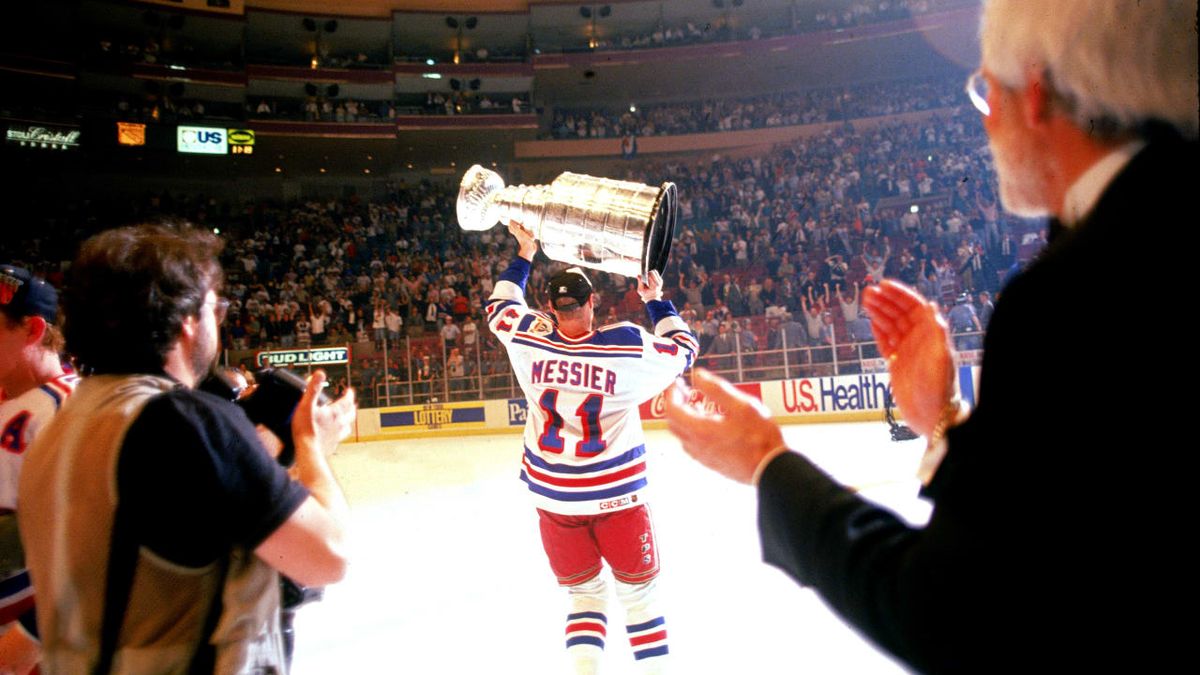
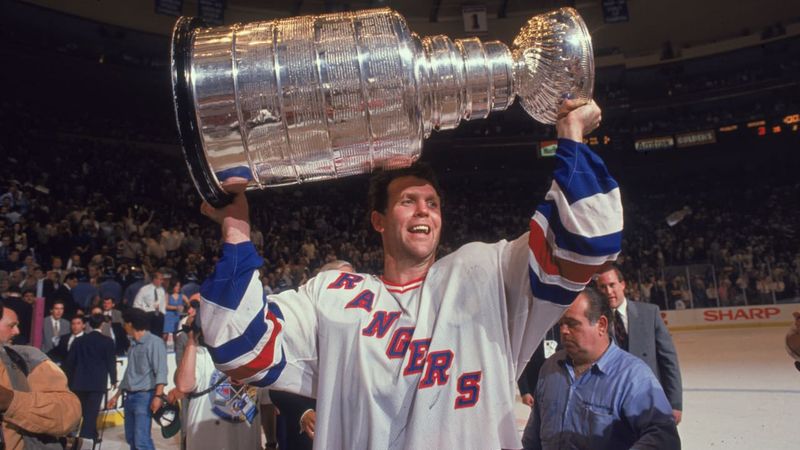
The Rangers had not won a championship since 1940. Most of the building was not alive the last time it happened. Captain Mark Messier paraded the trophy around the ice, paused near the bench, and handed it off to defenseman Jeff Beukeboom. Up in section 410, a fan unfolded a hand-printed sign that became the line that defines the night.
“Now I can die in peace.”
The Retro Almanac
A monthly roundup of "on this day" highlights from that month, decades back — plus first dibs on new retro merch drops. No spam, just the good stuff.
A 54-Year Wait That Felt Older Than the Building
The Rangers won their third Stanley Cup in April 1940, riding goalie Davey Kerr and the Colville brothers past Toronto. The next time the team won a playoff series of any kind would not come for another 33 years. Generations of Garden fans grew up, raised kids, and buried parents while the “1940” chant became the running joke of every visiting team’s trip to New York.
By the early 1990s the drought had its own folklore. Devils fans had perfected the four-syllable cadence — “Nine-teen-for-tee” — and weaponized it across the Hudson. The number stopped being a year and became an insult. Even some Rangers fans started chanting it at themselves as gallows humor. None of that disappeared in May 1994. It disappeared the second the horn sounded on June 14.
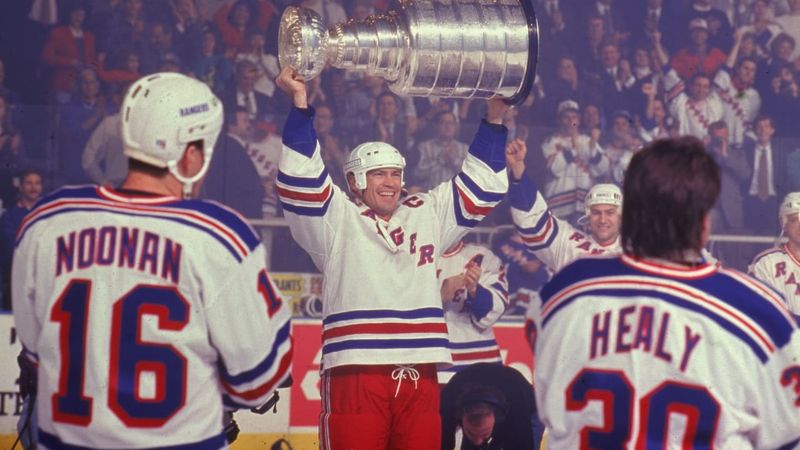
Messier Looked Into a Camera and Said It
The Rangers should not have reached the Final. Down 3-2 in the Eastern Conference Final to a New Jersey Devils team that had outplayed them for five games, they faced elimination in Game 6 at the Meadowlands on May 25. Mark Messier — captain, five Cups in Edmonton, the most respected leader in the sport — sat down with reporters before the game and did the most reckless thing a player can do before a sudden-death road game.
He guaranteed the win. The exact line — “We’re going to go in there and win Game 6” — ran on the back of the New York Post the next morning under one word: MESSIER. Then he went out and scored a natural hat trick in the third period to drag the Rangers back from a 2-0 deficit, force a Game 7, and stake claim to one of the more outrageous quote-and-deliver performances in NHL history. Reporters who covered him for years still describe that night the same way: like a captain willing his bench across a line they could not cross alone.
What gets forgotten is how rare a real guarantee is in modern hockey. Joe Namath gets all the credit for Super Bowl III. Messier did it in a deciding playoff game, on the road, against a Devils team built specifically to suffocate his line. The Rangers won 4-2, the only player on the scoresheet for New York in the third period was Mark Messier, and the building went home in shock.
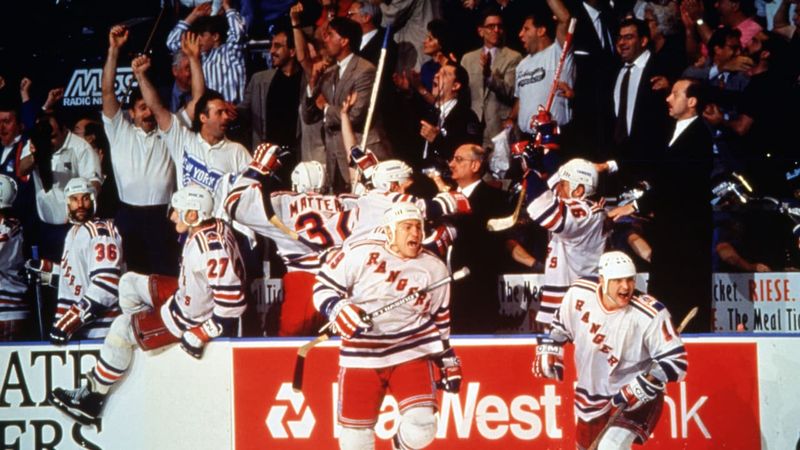
Matteau, the Devils, and the Long Road to a Final
Game 7 against the Devils, played at the Garden on May 27, 1994, is its own folklore. Tied 1-1 after regulation. Tied 1-1 after the first overtime. Stéphane Matteau — a deadline pickup the Rangers grabbed from Chicago on March 21 — scored on a wrap-around at 4:24 of double overtime. Howie Rose’s radio call — “Matteau! Matteau! Matteau!” — still loops on every Rangers anniversary broadcast and got pressed onto T-shirts within 48 hours. New York escaped to the Final with one of the rawest playoff series wins of the decade.
Vancouver had its own miracle to get there. The Canucks were the seventh seed in the West, scraping past Calgary in seven games (three wins in overtime, including Pavel Bure’s series-winner in double OT on a Greg Adams pass) before rolling Dallas and Toronto. By the time both teams reached the Final, the script was set: the team that refused to lose against the team that refused to die. Vancouver pushed Game 1 to overtime at the Garden and stole it on a Greg Adams goal. New York responded by winning three straight. Vancouver should have been dead at 3-1. Instead they ripped off two straight wins to force Game 7.
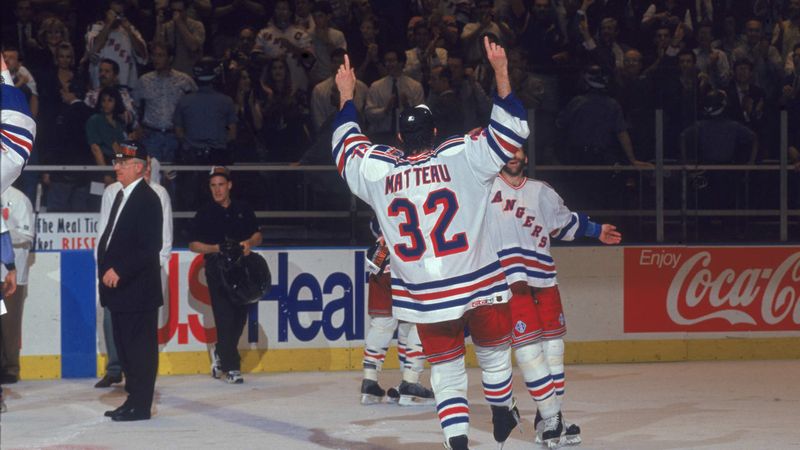
Game 7: The Last 60 Minutes That Mattered
The Canucks came home to the Garden as the underdog that suddenly looked like a buzzsaw. Game 7 started exactly the way New York needed it to. Brian Leetch scored at 11:02 of the first period, breaking the early scoreless tension on a slick give-and-go with Sergei Zubov. Adam Graves added a power-play goal three minutes later. 2-0. Then Trevor Linden — the best Canuck of the series and the most underrated star of his era — answered with a shorthanded goal early in the second to make it 2-1.
Messier restored the two-goal cushion on a power play late in the period, banging in a rebound off a Tony Amonte shot at 13:29. 3-1, and the Garden was already roaring at a volume that should not have been possible inside a closed building. Linden scored again in the third on a power play to make it 3-2 with about 16 minutes left, and the last stretch turned into pure dread.
Mike Richter held his net through three Canucks faceoffs in the Rangers zone in the final 37 seconds. Kirk McLean was pulled. Pavel Bure was charging the slot. Craig MacTavish won the last draw clean and the puck cleared the zone. The horn blew. The Garden lost its mind.
“Now I Can Die in Peace”
The sign was printed by hand on poster board. Dave Zaretsky was 71 years old, sitting at the Garden that night with his twin sons Steven and Michael and his nephew Gary Morris. Michael drew the letters. The family unfolded the sign during the on-ice celebration. ABC’s cameras found it within minutes, and within an hour it was the photograph of the night — six words that summed up what 54 years of waiting had done to Rangers fans.
The Zaretsky family is still alive. The sign survived. It has been referenced in books, parodied on T-shirts, used in commercials, and pulled out at the Garden every time the Rangers reach a deep playoff round. A fan literally said “Now I can die in peace” on television, and three decades later it still hits as one of the cleanest crystallizations of fandom anybody has ever put on a piece of cardboard.
Brian Leetch and the Trophy No American Had Won
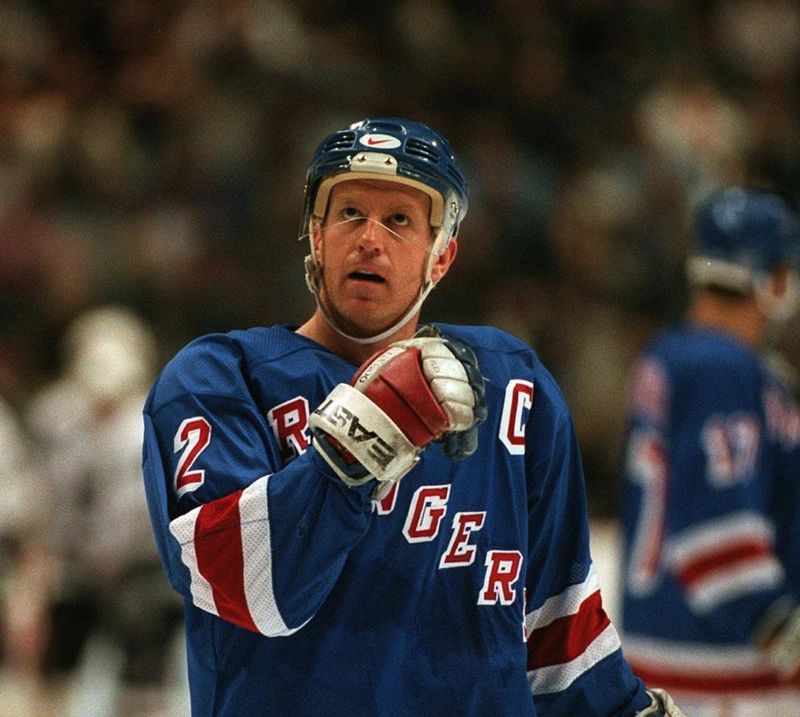
Mark Messier got the headlines because Mark Messier always got the headlines. The Conn Smythe Trophy — playoff MVP — went to Brian Leetch. The kid from Corpus Christi, Texas who learned hockey in suburban Connecticut led the entire postseason in assists (23) and points (34), set Rangers single-postseason franchise records, and became the first American-born player ever to win the Conn Smythe in the trophy’s 30-year history.
Leetch is also one of only two players ever to win the Calder Trophy (rookie of the year), the Norris Trophy (top defenseman), and the Conn Smythe. The other is Bobby Orr. That is the company he keeps. The truth is, Leetch’s defensive run that spring — taking on Eric Lindros, then Scott Stevens’s Devils, then Pavel Bure — was probably the best individual playoff stretch by a defenseman since Orr in 1972. Messier won the guarantee. Leetch won the trophy. Both wore the same crown when the building emptied out.
The Rangers Stanley Cup Parade Down the Canyon of Heroes
The Canyon of Heroes parade rolled down lower Broadway on June 17, 1994 — three days after Game 7 — and 1.5 million people showed up in 89-degree heat to throw 20 tons of paper into the air. Mark Messier, Adam Graves, Mike Richter, Brian Leetch, Steve Larmer, and Kevin Lowe took turns hoisting the Cup on the lead float. The line that survived the parade was Richter’s: leaning over to Messier, the goalie said he hoped they would get a flat tire so the float would have to stay right there.
Older Rangers fans cried. Younger ones drank. Office workers dumped shredded paper out of skyscrapers that had not seen confetti in years. For context: New York would not throw another championship parade until the Yankees won the 1996 World Series two years later. The 1994 Rangers were the first ticker-tape parade of the post-Cold War decade and, for a lot of New Yorkers, the most emotional one of any era.
Why That Night Still Plays in New York
The Rangers have not won another Stanley Cup since. Three trips to the Final in the 30+ years since (1994, 2014, 2024) and only the one came home. That is part of why June 14, 1994 sits in a different drawer than a normal championship. It was not a sports moment — it was a cultural release, the kind of catharsis that a city only earns by stewing for half a century first.
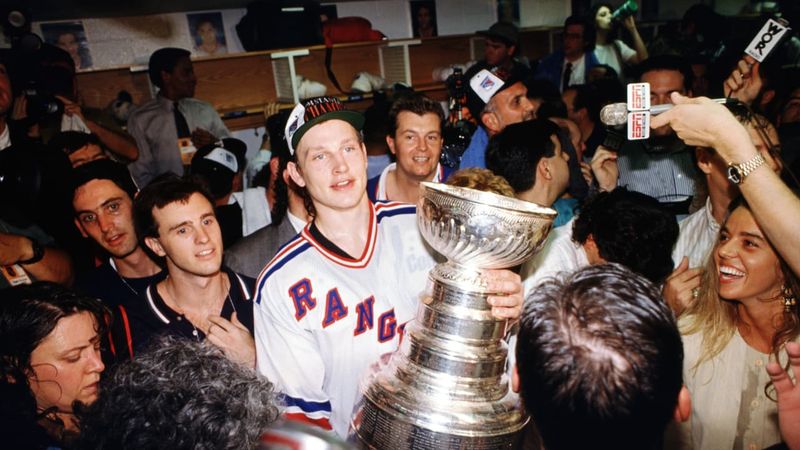
Mike Keenan, the head coach who held the room together that spring, was gone within months — off to St. Louis in a contract feud the Rangers front office never recovered from. Mark Messier played four more seasons in New York, then two in Vancouver, then came back to retire as a Ranger. Brian Leetch’s number 2 hangs from the Garden rafters. Mike Richter’s 35 is up there too. Adam Graves’s 9 also. Glenn Healy, the backup goalie sobbing in the locker room photo that night, is now the team’s longtime studio analyst on Rangers broadcasts in Canada. The 1994 team is still everywhere if you know where to look.
The “Now I Can Die in Peace” sign is in a frame somewhere in the Zaretsky family living room. Three decades on, every word of it still works. If you were a Rangers fan that night, June 14 is not a date — it is the day everything got finally even.
More 90s sports nostalgia on Retro Radical: Wayne Gretzky’s Final Game · Michael Jordan’s 69-Point Game · The First Women’s World Hockey Championship.
Sources
- 1994 Stanley Cup Final — Wikipedia — Game-by-game series detail, scorers, and Messier’s two-team captain milestone.
- Hockey-Reference Game 7 Box Score (June 14, 1994) — Goal times, save totals, and ice time for the deciding game.
- NHL.com Rangers 1994 Stanley Cup Archive — Official Rangers history page with team photos and player notes.
- NBC New York — “Now I Can Die in Peace” 20-Year Retrospective — Background on Dave Zaretsky and his family at MSG that night.
- NHL.com — Trevor Linden’s Heroic 1994 Final — The Vancouver side of the series and Linden’s two Game 7 goals.
The Retro Almanac
A monthly roundup of "on this day" highlights from that month, decades back — plus first dibs on new retro merch drops. No spam, just the good stuff.