On This Day: July 13, 1985 — Live Aid Unites the World
At 12:01 pm on a warm Saturday in July, Status Quo hit the opening chords of “Rockin’ All Over the World” and 72,000 people at Wembley roared. Nobody in that stadium — and none of the 1.9 billion watching at home — had ever seen anything like what came next. For the next 16 hours, the biggest names in music played for free on two continents, and roughly 40 percent of the planet tuned in to watch. This is the day rock and roll decided it could change the world, and very nearly did.
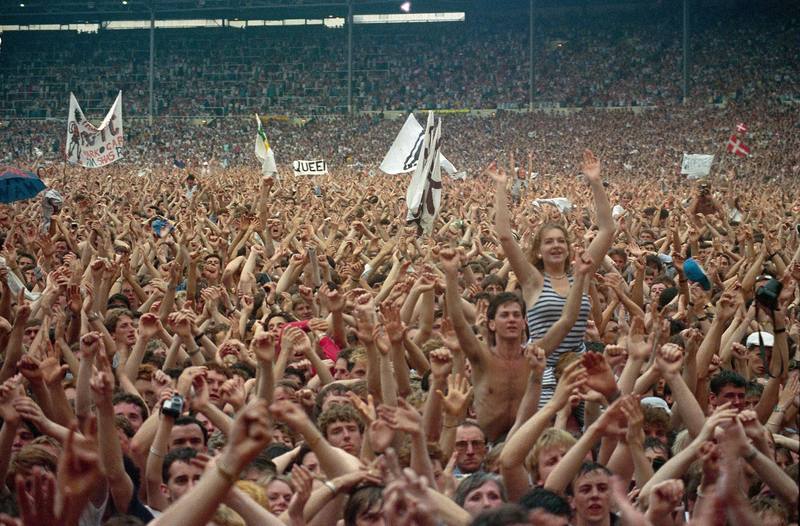
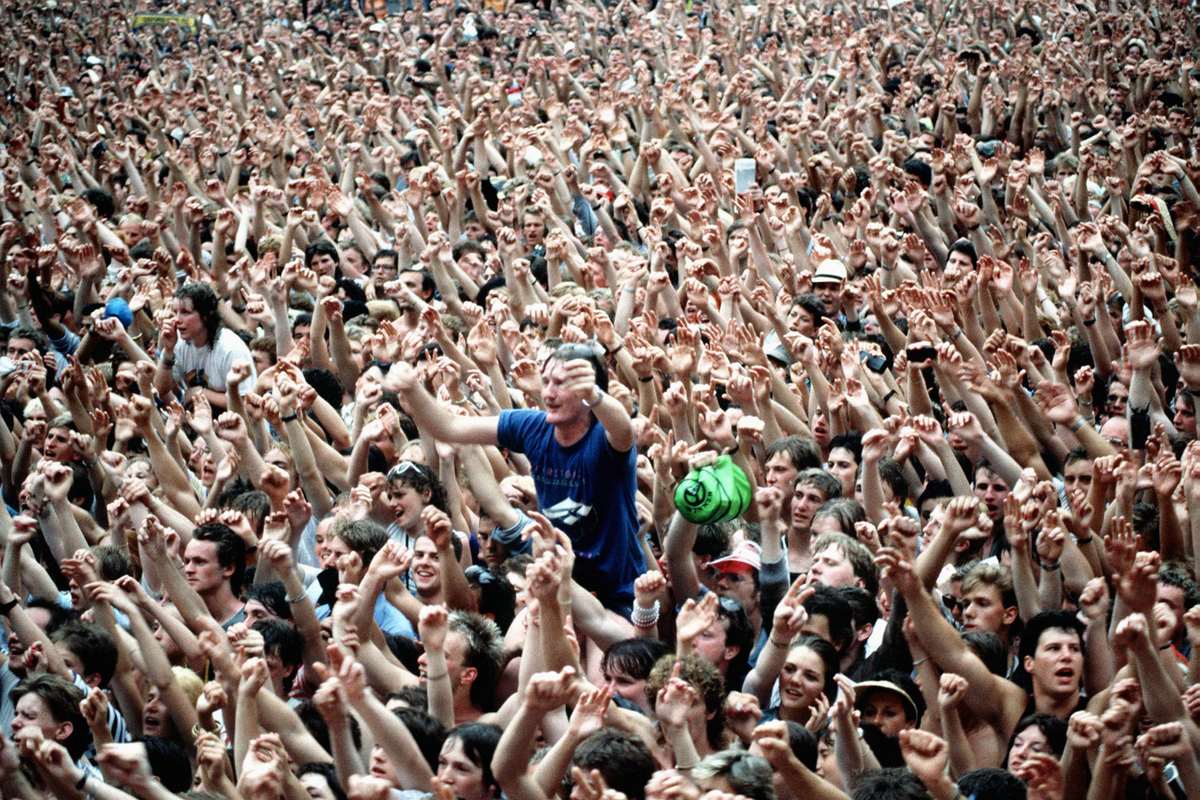
A sea of hands at Wembley — a “Queen” banner already flying hours before the band took the stage.
The Retro Almanac
A monthly roundup of "on this day" highlights from that month, decades back — plus first dibs on new retro merch drops. No spam, just the good stuff.
Live Aid 1985: How One Phone Call Started It All
The whole thing traces back to a single BBC news report. In October 1984, footage of the Ethiopian famine reached British living rooms, and Boomtown Rats singer Bob Geldof couldn’t shake it. He rang up Ultravox’s Midge Ure, and within weeks the pair had written “Do They Know It’s Christmas?” and pulled together 40 pop stars as Band Aid. The single sold a million copies in its first week.
But Geldof wanted more than a Christmas record. He wanted a global broadcast — a “jukebox” of the world’s biggest acts beamed to every country that could pick up a satellite feed. Promoters told him it was impossible. He ignored them. The truth is, Live Aid worked precisely because Geldof refused to hear the word no; he browbeat managers, guilt-tripped superstars, and famously swore live on air to shake donations loose.
Two Stadiums, One Show, Zero Precedent
The logistics were staggering for 1985. Wembley kicked off at noon London time; JFK Stadium in Philadelphia joined a couple of hours later, and the feeds crossed back and forth across the Atlantic all day. A revolving stage at each venue meant one act played while the next set up behind them — the only way to fit 60-plus performers into a single day without hours of dead air.
Prince Charles and Princess Diana officially opened the London show, sitting in the royal box as the crowd bounced below them. It was the rare event where royalty, punks, and pop idols shared the same afternoon without anyone looking out of place.
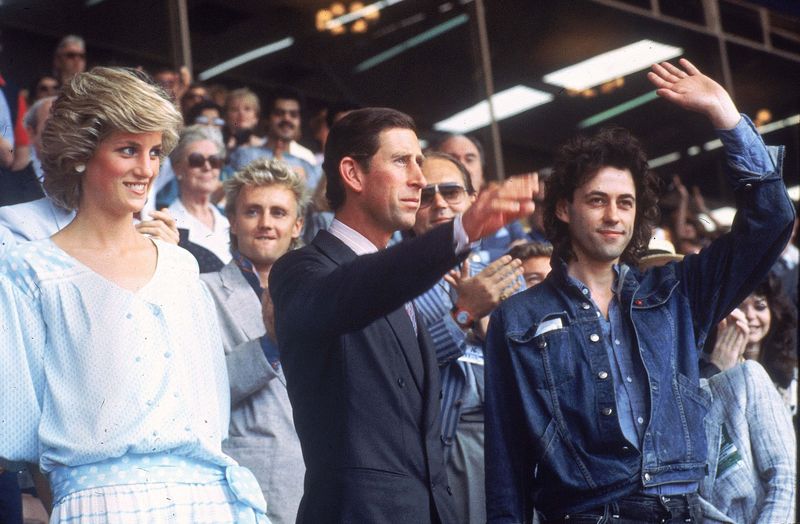
Princess Diana and Prince Charles with organizer Bob Geldof, who wore denim to meet royalty.
The Set That Stopped Time: Queen at Wembley
Queen almost didn’t play. The band had wobbled through a rough patch and weren’t sure a 20-minute charity slot was worth it. Then they walked on at 6:41 pm and rewrote the rulebook. Freddie Mercury, in white tank top and studded armband, treated 72,000 people like his personal choir. His 30-second “aaay-o” call-and-response — the entire stadium echoing him note for note — is one of the most replayed moments in music history.
They crammed six songs into the slot: “Bohemian Rhapsody,” “Radio Ga Ga,” “Hammer to Fall,” “Crazy Little Thing Called Love,” “We Will Rock You,” and “We Are the Champions.” A poll of more than 60 music-industry figures later named those 21 minutes the single greatest live performance in rock history. Watch it below and it’s hard to argue.
Bowie, Elton, and a Stacked British Bill
Queen weren’t the only legends on the Wembley stage. David Bowie, sharp in a powder-blue suit, delivered “Heroes” — and then gave up part of his slot to air a harrowing film of starving children set to The Cars’ “Drive,” a gut-punch that spiked the phone lines instantly. It remains one of the smartest, least selfish moves any headliner made all day.
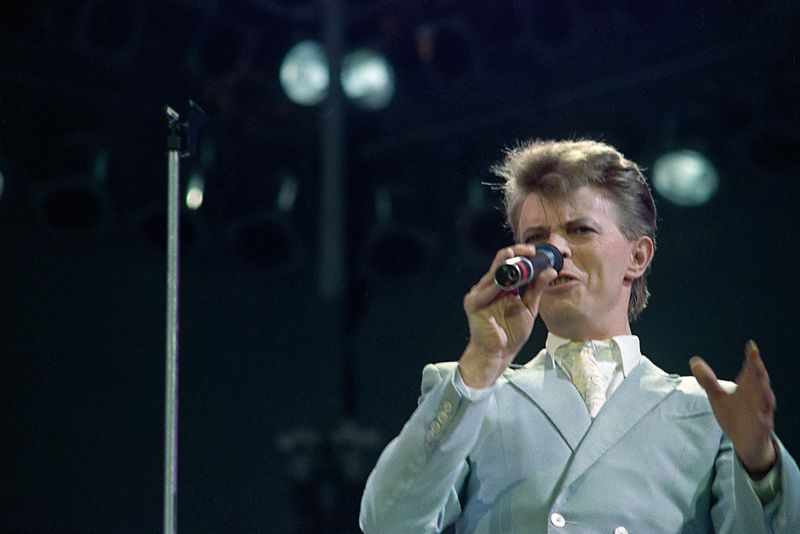
David Bowie at Wembley — his decision to cut a song for a famine film moved millions.
Elton John showed up in a full sequined get-up, ran through his hits, and pulled out George Michael for a knockout “Don’t Let the Sun Go Down on Me.” U2 nearly derailed their own set when Bono leapt into the crowd during “Bad” to slow-dance with a fan, eating up so much time the band only played two songs. Bono thought he’d blown it; instead it became one of the day’s defining images.
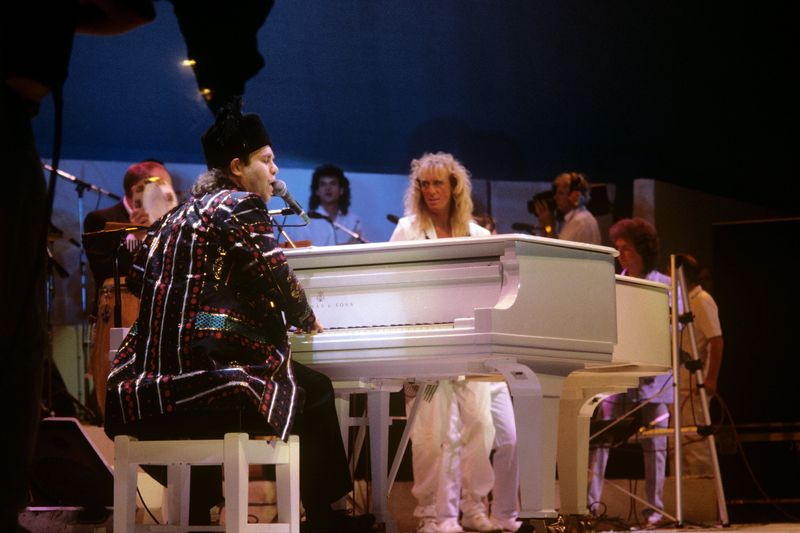
Elton John holding court at the white piano during his Wembley slot.
Phil Collins and the Concorde Stunt
Here’s the piece of Live Aid trivia that still sounds made up. Phil Collins played a short piano set at Wembley in the afternoon, hopped a helicopter to Heathrow, boarded a Concorde, and landed in time to drum for Eric Clapton and a rebuilt Led Zeppelin at JFK Stadium the same day. He is the only person to perform at both venues on July 13 — a genuine world first, powered by supersonic travel and pure nerve.
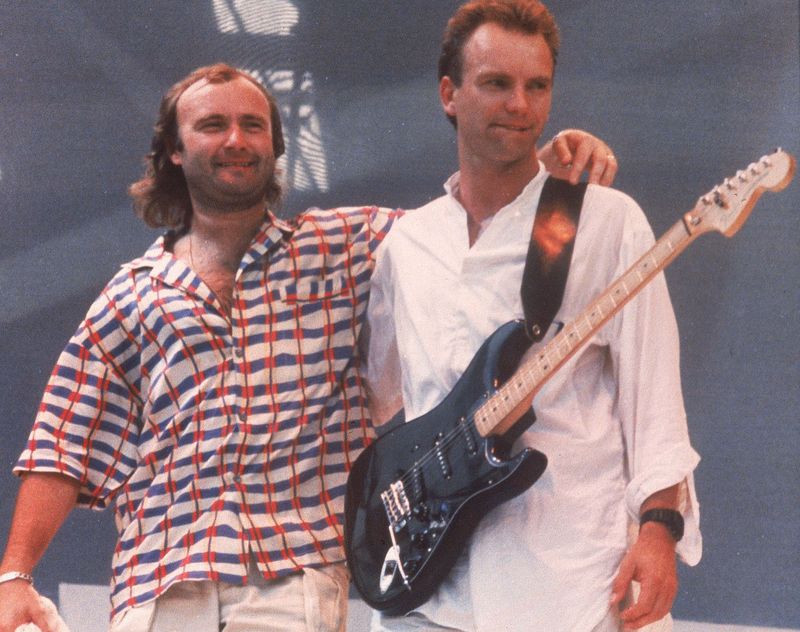
Phil Collins with Sting at Wembley — hours before his Concorde dash to Philadelphia.
Meanwhile in Philadelphia
The American half of Live Aid was every bit as loaded. JFK Stadium packed in around 89,000 fans and served up Madonna, Tom Petty, The Beach Boys, Run-DMC, Santana, and a Black Sabbath reunion with the original lineup. The night built to a run of icons: Eric Clapton, that shaky Led Zeppelin reunion, and a closing stretch featuring Mick Jagger and Tina Turner tearing through a duet that nearly stole the Philadelphia show.
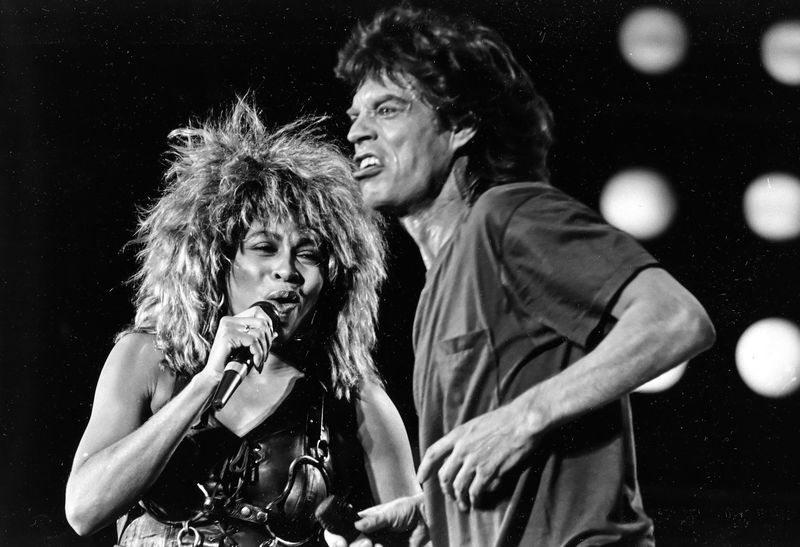
Mick Jagger and Tina Turner’s electric duet at JFK Stadium in Philadelphia.
Bob Dylan closed the American bill alongside Keith Richards and Ronnie Wood, before both stadiums joined their respective all-star finales — “Do They Know It’s Christmas?” at Wembley and “We Are the World” in Philadelphia.
The Broadcast That Almost Didn’t Happen
The music gets the glory, but the real miracle of Live Aid 1985 was the wiring behind it. Coordinating a live satellite hand-off between London and Philadelphia — then relaying it to more than 150 countries in real time — had never been attempted at this scale. Thirteen satellites carried the signal. A single dropped feed at the wrong moment could have killed the momentum stone dead, and with it the donations.
It nearly did go wrong more than once. The transatlantic switches occasionally clipped the start of a song, and the American broadcast fought its own technical gremlins all afternoon. But the gamble paid off: viewers in Australia, Japan, and across Europe watched the same performances within seconds of each other. For a pre-internet world, that shared, simultaneous experience was genuinely new — the closest the planet had ever come to gathering in one room.
How Much Did Live Aid Actually Raise?
Geldof originally hoped for maybe a million pounds. Live Aid blew past that within hours. The single-day event raised over $100 million for famine relief, and the phone banks that took pledges were overwhelmed the moment Bowie’s famine film aired. The concert also proved a template — every stadium telethon since, from Farm Aid to the 2005 Live 8 follow-up, owes its DNA to what happened on July 13, 1985.
The legacy isn’t spotless. Critics have long questioned how much aid reached the people who needed it, and Geldof himself has spent decades defending the operation. But the cultural shift was real: Live Aid showed that a rock concert could command the attention of nearly half the planet and turn that attention into action. It also rewired the music industry’s sense of what was possible — artists who had spent careers guarding their own spotlight suddenly understood that sharing a stage could be the point, not the sacrifice. Record sales for nearly every act on the bill jumped in the weeks after, proof that generosity and self-interest weren’t always at odds.
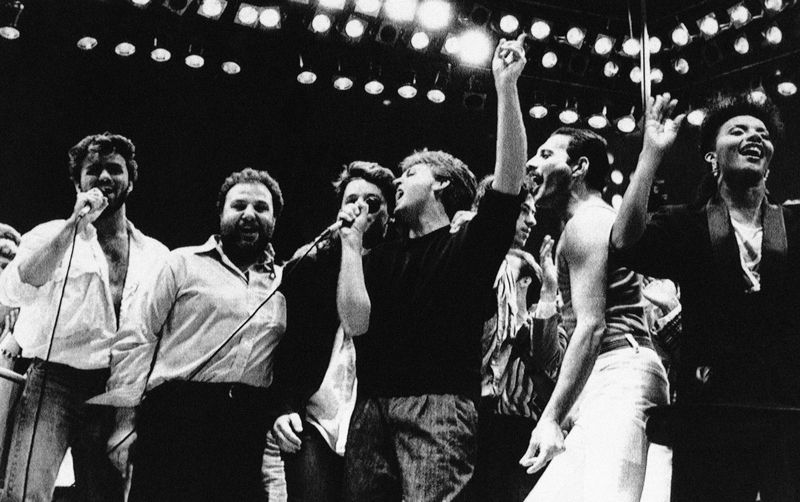
The Wembley finale — George Michael, Paul McCartney, and Freddie Mercury among the all-star chorus.
Why Live Aid Still Matters 40 Years On
Four decades later, Queen’s set gets re-released, remastered, and streamed by fans who weren’t born in 1985. The 2018 film Bohemian Rhapsody rebuilt the Wembley performance shot for shot and introduced it to a whole new generation. If you grew up on 80s culture, Live Aid is the high-water mark — the day the decade’s biggest stars stood on the same stage for something bigger than a hit single.
If this slice of 1985 hits the nostalgia button, dig into the rest of that year on the site: the summer Back to the Future hit theaters, the fall MacGyver debuted on ABC, and the July afternoon a teenage Boris Becker stunned Wimbledon. 1985 was a ridiculous year to be alive — and Live Aid was its loudest moment.
Sources
- HISTORY — Live Aid concert raises more than $100 million for famine relief — date, fundraising totals, and background.
- Encyclopaedia Britannica — Live Aid — attendance, viewership, and organizer details.
- Wikipedia — Queen’s performance at Live Aid — setlist and the “greatest performance” poll.
- Radio X — Live Aid 1985 line-up and setlist — full running order for both stadiums.
The Retro Almanac
A monthly roundup of "on this day" highlights from that month, decades back — plus first dibs on new retro merch drops. No spam, just the good stuff.