How Conscious Hip-Hop Gave the Golden Age Its Conscience
In 1990, Chuck D of Public Enemy declared that rap music was “Black America’s CNN.” He wasn’t being poetic. At a moment when mainstream television was either ignoring or criminalizing Black urban life, hip-hop was filing dispatches from the inside. The Golden Age — roughly 1990 to 1999 — produced some of the most commercially successful records in the genre’s history. It also produced some of its most politically charged, intellectually demanding, and morally serious work. This is the story of the artists who refused to let the beat exist without the argument.
Chuck D and the Microphone as Megaphone
Public Enemy had already lit the fuse in 1987 and 1988 with Yo! Bum Rush the Show and It Takes a Nation of Millions to Hold Us Back. But Fear of a Black Planet, released in April 1990, was the detonation. Produced by the Bomb Squad — Hank Shocklee, Keith Shocklee, Eric “Vietnam” Sadler, and Chuck D — it layered dozens of samples into a wall of controlled noise that felt less like an album and more like an emergency broadcast. It was confrontational in form before it was confrontational in content.
The politics weren’t buried in abstraction. “911 Is a Joke,” fronted by Flavor Flav, indicted emergency services for treating Black neighborhoods as disposable. “Who Stole the Soul?” turned the lens on the music industry itself. “Fight the Power,” which had already set Spike Lee’s Do the Right Thing ablaze the previous summer, remained a rallying cry that white America couldn’t comfortably mute. Chuck D wasn’t looking for consensus. He was looking for a verdict.
The Retro Almanac
A monthly roundup of "on this day" highlights from that month, decades back — plus first dibs on new retro merch drops. No spam, just the good stuff.
The Bomb Squad’s production aesthetic matched the ambition. Dense sample collages — sourced from James Brown, blues records, news broadcasts, and street noise — created a sonic argument before the first word was rapped. You couldn’t play Fear of a Black Planet as background music. It was designed to demand full attention. For Gen X teenagers encountering it in 1990, that demand was the point. This was music that took itself seriously, and expected the listener to do the same.
KRS-One’s Classroom Without Walls
If Chuck D was hip-hop’s editorial board, KRS-One was its professor. Born Lawrence Parker, he renamed himself Knowledge Reigns Supreme Over Nearly Everyone — less a boast than a manifesto. By 1990, Boogie Down Productions had released Edutainment, an album whose title left nothing to interpretation. KRS rapped about Afrocentrism, vegetarianism, the criminal justice system, and the cyclical nature of urban violence with a didactic precision that set him apart from nearly everyone else on the dial.
A year before Edutainment, KRS had co-organized the Stop the Violence Movement, convening Big Daddy Kane, MC Lyte, Doug E. Fresh, and Kool Moe Dee to record “Self-Destruction” in 1989. The single addressed urban violence as a community crisis rather than entertainment — a distinction that mattered enormously. The record raised over $400,000 for the National Urban League. It was hip-hop functioning as civic infrastructure, not just soundtrack.
The distinction between preaching at an audience and organizing within a community was one KRS understood viscerally. He had been homeless before hip-hop gave him a platform, living in a Bronx shelter where he first met DJ Scott La Rock. That biography shaped the philosophy: this wasn’t abstract intellectual politics. It was lived.
The BDP Doctrine
What set KRS apart from even his conscious-rap peers was the insistence that hip-hop was not a genre — it was a living culture, a philosophical framework. He spent the decade lecturing at universities, engaging in formal debates with politicians, and challenging journalists who dismissed rap as noise. Albums like Sex and Violence (1992) and Return of the Boom Bap (1993) held the lyrical and intellectual line even as commercial forces pulled the genre toward easier territory.
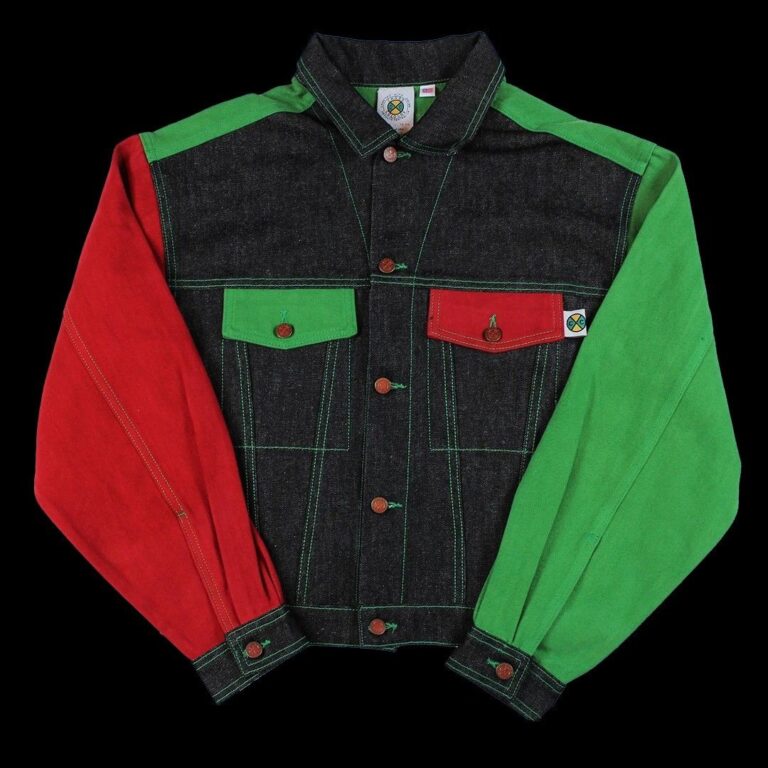
The ecosystem KRS helped build extended well beyond BDP. Brand Nubian, X Clan, Poor Righteous Teachers, and the Jungle Brothers were constructing the same philosophical territory from different angles — Five-Percent Nation theology, Afrocentrism, and jazz-inflected wordplay weaving together into what would come to be called conscious rap. Brand Nubian’s debut One for All (1990) and X Clan’s To the East, Blackwards (1990) landed in the same year as Fear of a Black Planet, making 1990 something close to a year zero for the entire movement.
A Tribe Called Quest and the Quiet Revolution
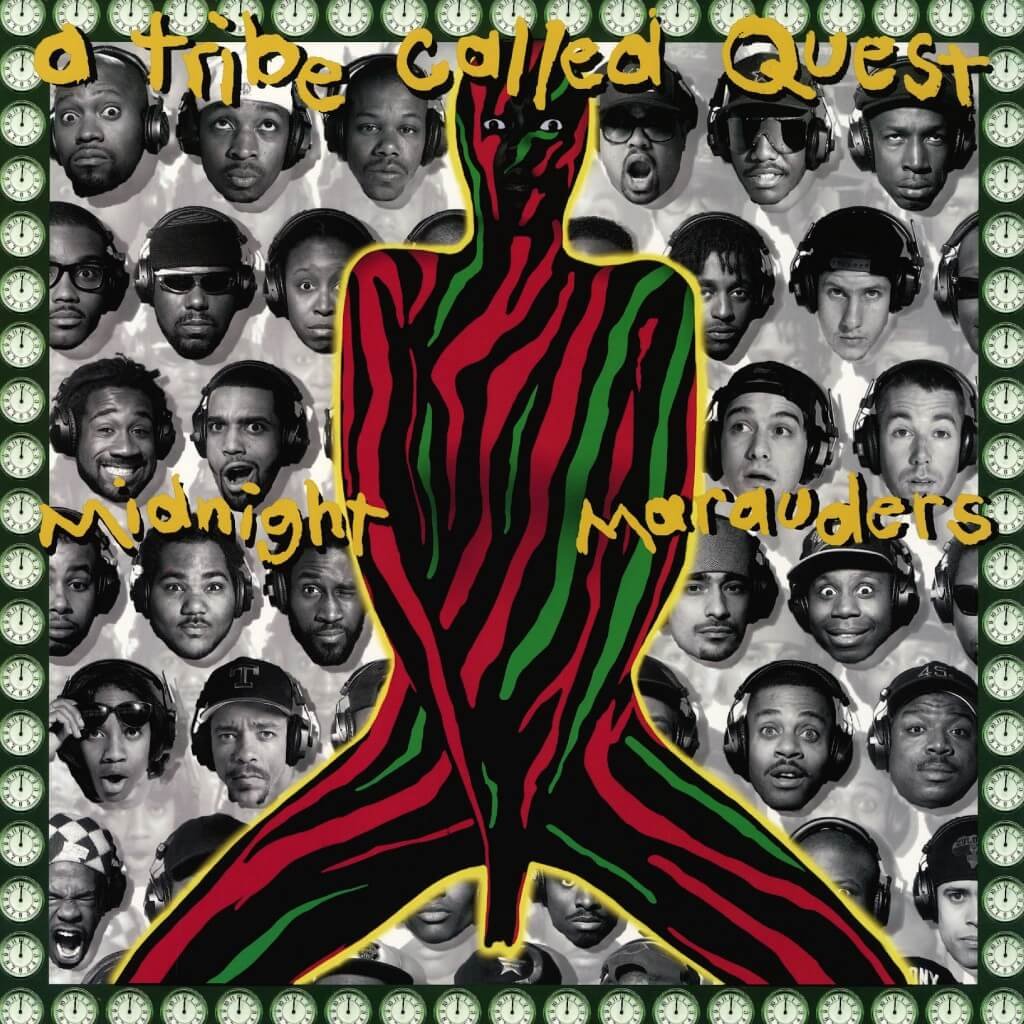
Not every political act arrived with a bullhorn. A Tribe Called Quest — Q-Tip, Phife Dawg, Ali Shaheed Muhammad, and Jarobi White — worked at a lower register. Their politics were embedded in aesthetic choices: the jazz samples that displaced aggression with swing, the relaxed cadences that rejected urgency for clarity, the wholesale refusal to glorify violence or material accumulation. The Low End Theory (1991) and Midnight Marauders (1993) didn’t announce a worldview. They demonstrated one.
Q-Tip’s lyrics circled constantly around themes of authentic selfhood, community responsibility, and the absurdity of equating life with status symbols. The broader Native Tongues collective — which included De La Soul, the Jungle Brothers, and Black Sheep alongside the Tribe — represented a coherent aesthetic alternative to both gangsta rap and the harder-edged conscious tradition. They made thoughtfulness look effortless, which was in some ways the more radical act. Where Chuck D made you attend, Q-Tip made you want to.
The 1991–1993 period was the commercial peak of this alternative current. The Low End Theory, De La Soul’s De La Soul Is Dead, and the Jungle Brothers’ work were charting simultaneously in a brief window when jazz-inflected, ideas-first hip-hop genuinely competed for radio play rather than retreating to college campuses and independent record stores.
Tennessee — The Year the Grammys Caught Up
In February 1993, Arrested Development walked onto the Grammy stage and collected two awards: Best New Artist and Best Rap Duo or Group Performance. It was the first time the Recording Academy appeared to understand what hip-hop was capable of being. The group, fronted by Speech and Headliner out of Atlanta, had released 3 Years, 5 Months & 2 Days in the Life Of… the previous year, and the lead single “Tennessee” had accomplished something genuinely rare — it made the weight of Black American history feel tender rather than angry.
“Tennessee” was a prayer. Speech rapped about returning south, about his grandfather, about the psychic inheritance of history and the search for roots. It was hip-hop in a key no one had heard before — not Public Enemy’s controlled fury, not the street naturalism of NWA, but something elegiac and deliberate. Radio played it. VH1 played it. It crossed into living rooms and bedrooms where Public Enemy had been turned off at the source. That reach was its own kind of argument.
What made that Grammy moment historically significant wasn’t just the win. It was what it signaled about appetite. Atlanta would go on to become a dominant force in the genre through the 2000s and beyond. In 1992, the Recording Academy was partly paying attention to something already happening far from Compton and the Bronx — a Southern, rural, spiritually rooted hip-hop that the genre’s coastal gatekeepers hadn’t anticipated.
Two Truths in the Same Room
It’s tempting to frame conscious hip-hop and gangsta rap as opposites — as if every listener had to pick a side. But for most of the generation that grew up with Golden Age music, that binary never really held. A teenager in 1992 could have Ice Cube’s AmeriKKKa’s Most Wanted and A Tribe Called Quest’s The Low End Theory in the same CD case, and both would have felt necessary. Not contradictory. Complementary.
Gangsta rap was testimony. Conscious rap was analysis. They were reporting from adjacent rooms in the same burning house. Ice Cube describing LAPD violence in Compton and Chuck D cataloguing systemic racism in the recording industry were making arguments about the same structures from different vantage points. The Golden Age was large enough to hold both truths simultaneously, without demanding they reconcile. That wasn’t a contradiction — it was an honest accounting of a complicated country, and it is one of the things that made the era genuinely irreplaceable.
What the Rhyme Left Behind
By the late 1990s, commercial gravity had shifted decisively. Jay-Z and the Notorious B.I.G. were rewriting what success meant in hip-hop — success as accumulation, as aspiration made audible. Diddy was packaging the genre in ways that made it irresistible to advertisers and radio programmers. The bling era was arriving, and conscious rap — never disappearing entirely — lost the mainstream real estate it had occupied in the early part of the decade. The albums were still being made. The audiences grew more deliberate, and smaller.
But the template held. When Kendrick Lamar released To Pimp a Butterfly in 2015, he was doing what KRS-One did at Columbia — using the album as lecture, the beat as evidence, the rhyme as argument. J. Cole, Common, Lupe Fiasco, Talib Kweli: the entire tradition of thought-forward hip-hop that followed ran on infrastructure laid between 1990 and 1999. The idea that a rap record could carry moral and intellectual weight wasn’t invented in that era, but it was proved there, across dozens of albums, in front of millions of listeners who were paying close attention.
For the Gen X listeners who were there — who bought Fear of a Black Planet on cassette, who wore out The Low End Theory, who heard “Tennessee” come on the radio and felt something shift — the memory carries more than nostalgia. It carries instruction. The Golden Age’s conscience was built in public, over a decade, by artists who understood that the microphone was the most powerful tool they had. They were right about that. And the music they made with it is still right.
Sources
- Fear of a Black Planet — Wikipedia
- KRS-One — Wikipedia
- Arrested Development — Wikipedia
- A Tribe Called Quest — Wikipedia
Image credit: hiphopgoldenage.com
The Retro Almanac
A monthly roundup of "on this day" highlights from that month, decades back — plus first dibs on new retro merch drops. No spam, just the good stuff.