On This Day: October 3, 1995 — O.J. Simpson Acquitted
Judge Lance Ito had the jury’s decision in hand a full day before anyone heard it. Deliberations wrapped on the afternoon of October 2, but Ito delayed the announcement until the next morning, reportedly worried about security and wanting time to brief law enforcement in case of unrest. So Los Angeles spent the night of October 2 in suspended animation, news helicopters already circling, before the verdict finally aired live the following day to what Nielsen estimated was the largest television audience in American history outside the Super Bowl.
A Chase That Rewrote Live Television
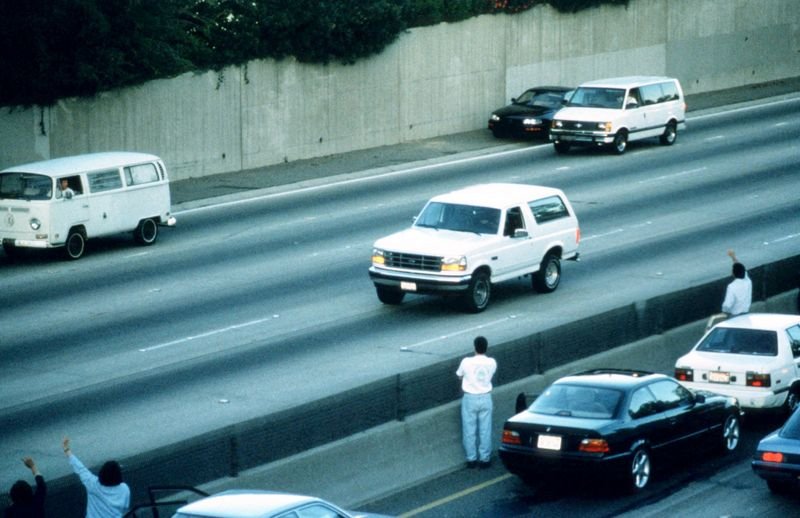
The trial never would have gripped the country the way it did without what happened sixteen months earlier. On June 17, 1994, Simpson led a phalanx of LAPD cruisers on a 60-mile freeway chase in a white Ford Bronco driven by his friend Al Cowlings, with Simpson in the back seat holding a gun to his own head. ABC, CBS, and NBC all cut into prime-time programming to carry it live; an estimated 95 million people watched some portion of the chase, more than had tuned in for that year’s Super Bowl. We covered that night in full here — it’s worth revisiting, because the chase set the template for everything that followed: a story too strange for anyone to look away from, playing out in real time on every channel at once.
The Retro Almanac
A monthly roundup of "on this day" highlights from that month, decades back — plus first dibs on new retro merch drops. No spam, just the good stuff.
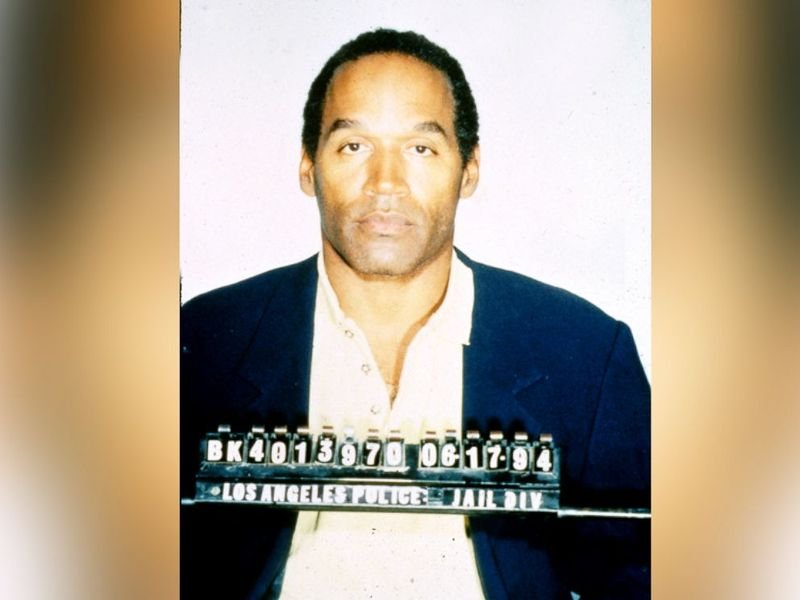
Simpson was arrested that night and charged with the murders of his ex-wife Nicole Brown Simpson and her friend Ronald Goldman, who had been stabbed to death outside her Brentwood condo five days earlier. His booking photo — bruised knuckles, hollow stare — ran on front pages across the country within hours.
Building the Dream Team
Simpson could afford a defense most defendants never see. Robert Shapiro assembled what the press immediately dubbed the “Dream Team”: Johnnie Cochran as lead trial attorney, Harvard’s Alan Dershowitz handling appeals strategy, F. Lee Bailey cross-examining detectives, Barry Scheck picking apart the LAPD’s DNA handling, and Simpson’s close friend Robert Kardashian sitting at the defense table through nearly every session. It is strange now to think that Kardashian’s presence on television every day that year is a large part of why his family became famous at all — a footnote nobody could have predicted in October 1995.
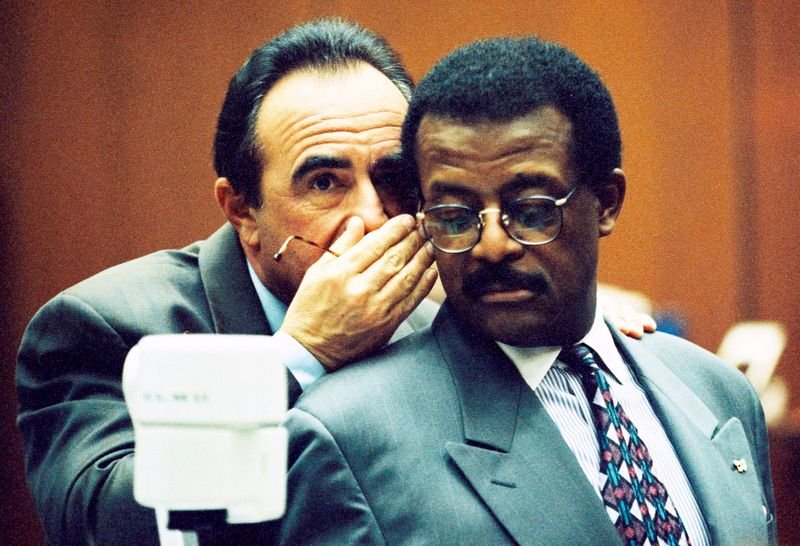
Cochran’s instinct for narrative ended up out-trying a mountain of forensic evidence. The prosecution had blood at the scene matching Simpson’s at odds of one in 170 million, fibers from his Bronco, and a trail of drops leading to his own driveway. None of it mattered as much as nine words Cochran delivered after a bloody glove, pulled tight by cold storage, wouldn’t fit over Simpson’s hand in front of the jury: “If it doesn’t fit, you must acquit.” Prosecutors had asked for that demonstration themselves, assuming it would seal the case. It became the defining sound bite of the entire trial instead.
Eight Months Inside Department 103
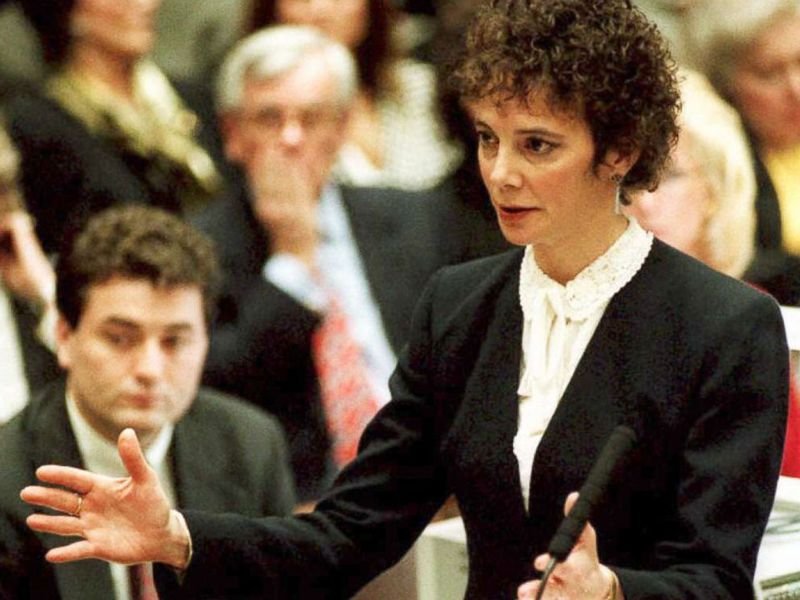
Lead prosecutor Marcia Clark spent 133 days building a case on physical evidence, methodically walking jurors through blood spatter and DNA matches that, on paper, looked close to overwhelming. Television audiences who tuned in daily came to know her as well as any recurring character on a network drama — which, in a real sense, is what the trial had become.
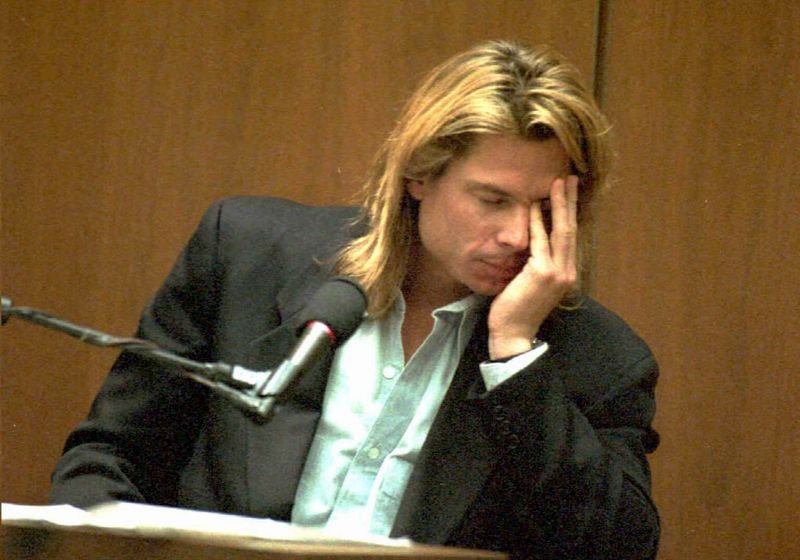
The defense’s real breakthrough wasn’t scientific at all — it was Detective Mark Fuhrman. Tapes surfaced of Fuhrman using racial slurs and boasting about planting evidence on Black suspects in unrelated cases, years before he ever set foot on Bundy Drive. For a nearly all-Black Los Angeles jury that had lived through the 1991 Rodney King beating and the riots that followed Fuhrman’s colleagues’ acquittal, the tapes did more damage to the prosecution than any defense witness could have. Fuhrman later pleaded no contest to perjury for denying under oath that he’d used the word. The trial also produced its share of comic relief in witnesses like Brian “Kato” Kaelin, the houseguest whose rambling, evasive testimony turned him into an unlikely tabloid celebrity in his own right.
None of this would have mattered to anyone outside Los Angeles without Court TV and CNN carrying every session gavel to gavel. Judge Ito allowed cameras in Department 103 over prosecutors’ objections, and the decision turned a county murder trial into a daily national soap opera with its own recurring cast, catchphrases, and merchandise. Entertainment Tonight ran Simpson trial segments more nights than not; late-night hosts built entire monologues around Kato Kaelin and the bloody glove. Media historians generally point to the Simpson trial as the moment cable news realized a single ongoing story could hold a national audience for the better part of a year — a lesson every 24-hour news cycle since has borrowed from, for better and worse.
The Verdict Heard Around the World
Businesses turned on lobby televisions. Classrooms rolled in TV carts. Airport gates fell quiet. CNN’s ratings for the verdict broadcast beat the network’s coverage of the Gulf War’s start four years earlier, and long-distance phone traffic reportedly dropped by close to 60 percent nationwide in the minutes the verdict was read, as if the entire country had agreed, without discussing it, to stop talking and just watch.
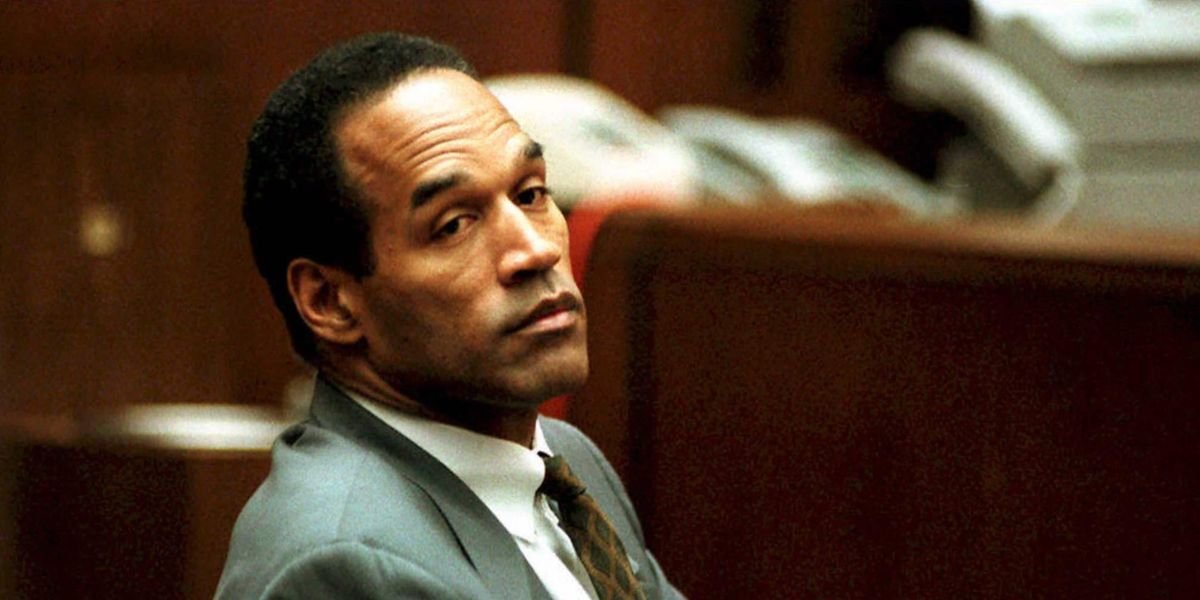
Simpson stood between Cochran and Shapiro as the verdict was read, his face tightening into the clenched, unreadable expression that became one of the most reproduced news photographs of the decade. He mouthed a brief thank-you to the jury. Within the hour he was back at his Rockingham estate, free, while prosecutors gave a stunned press conference blocks away.
A Country Split Exactly in Half
Gallup polling taken within days of the verdict found roughly 85 percent of Black Americans believed Simpson was innocent or that the case against him was fatally flawed, while a similar majority of white Americans believed he was guilty. News crews captured the gap on camera in real time — jubilant celebration outside the courthouse in some crowds, stunned silence or outright anger in others, often separated by nothing more than which side of the plaza someone happened to be standing on. It wasn’t the first time Los Angeles had split along these lines inside a courtroom; six years earlier the city had watched the Menendez brothers’ trial for similarly split, if less racially charged, reasons, and that case’s own strange afterlife is a story we’ve told separately.

The split didn’t close with time the way most news cycles eventually fade. Academics still cite the Simpson verdict as one of the widest, most durable perception gaps ever measured between Black and white Americans on a single news event, and surveys repeated decades later found the gap had narrowed only modestly. Part of what made the reaction so raw was context the televised trial rarely dwelled on: for many Black Angelenos, the case became a referendum less on Simpson’s guilt than on whether the LAPD — an institution whose credibility had already been shattered by the Rodney King video — could be trusted to tell the truth under oath. For many white Americans watching the same broadcast, the verdict read instead as a wealthy celebrity defendant buying his way out of overwhelming physical evidence. Both reactions were watching the same four hours of deliberation. Almost nobody was watching the same trial.
What Happened After the Cameras Left
The story wasn’t over. In 1997, a civil jury — this one not bound by the criminal standard of proof beyond a reasonable doubt — found Simpson liable for both deaths and ordered him to pay $33.5 million to the victims’ families, a judgment he spent the rest of his life mostly dodging. Johnnie Cochran went on to lecture at Harvard Law School and build one of the country’s best-known personal injury practices before his death in 2005; Marcia Clark left prosecution behind for a career writing crime novels and legal commentary.

Simpson himself never fully escaped the case. In 2008 he was convicted on unrelated armed robbery and kidnapping charges tied to a Las Vegas hotel room confrontation over sports memorabilia he claimed was stolen from him, and he served nine years before parole. He died of cancer in April 2024, and even his obituaries led with October 3, 1995, ahead of two Super Bowl-caliber football seasons and a Hall of Fame career — proof that for Simpson, the verdict outlasted everything that came before it.
Love the retro era? Browse our shop for vintage finds, retro clothing, and 80s/90s nostalgia gear.
Sources
- History.com — O.J. Simpson Acquitted — Verdict timeline and viewership figures
- Britannica — O.J. Simpson Trial — Full trial background and key evidence
- Wikipedia — Murder Trial of O.J. Simpson — Detailed case record, jury deliberation, and aftermath
- ABC News — 10 Classic Images That Explain the O.J. Simpson Trial — Key trial figures and photographs
The Retro Almanac
A monthly roundup of "on this day" highlights from that month, decades back — plus first dibs on new retro merch drops. No spam, just the good stuff.