On This Day: October 17, 1989 — The World Series Earthquake Hits
Sixty-two thousand people were filing into Candlestick Park for an all-Bay-Area World Series, the first time the Giants and the A’s had ever met in October. ABC had a blimp in the air, Al Michaels was in the booth, and ground crews were still smoothing the infield dirt when the earth moved. What happened in the next fifteen seconds turned a baseball broadcast into the most-watched live disaster coverage in American television history up to that point.
Seismologists first logged the quake at 7.1 on the Richter scale before later recalculating it at 6.9 on the moment magnitude scale now used for large earthquakes — the figure you’ll find in most modern references. Either number describes the same quarter-minute of shaking that rippled out from a rupture nearly 11 miles beneath Loma Prieta Peak in the Santa Cruz Mountains, roughly 60 miles south of San Francisco.
The Retro Almanac
A monthly roundup of "on this day" highlights from that month, decades back — plus first dibs on new retro merch drops. No spam, just the good stuff.
A Series Nobody Outside the Bay Area Wanted
The 1989 World Series had a reputation problem before it even started. The Oakland Athletics, loaded with Jose Canseco and Mark McGwire, had crushed the San Francisco Giants in the first two games by a combined score of 10-3, and national writers were already calling it a sweep in the making. Bay Area fans didn’t care. This was the first Bay Bridge Series in history, a true backyard rivalry between two teams separated by eight miles of water, and Candlestick Park was packed for Game 3 well before the gates even opened.
Fans who’d left work early to beat traffic were in their seats by mid-afternoon. Players were stretching on the field. The Goodyear blimp circled overhead for the ABC broadcast. It was, by every account, a normal pregame buildup for one of the biggest nights of the baseball calendar — right up until it wasn’t.
“We’re Having an Earth—”: The Broadcast That Caught It Live
ABC had just come back from a video package on the A’s Game 2 win when the picture started to shake. Al Michaels, mid-sentence, got out “I’ll tell you what, we’re having an earth—” before the signal cut to black. For a few seconds, tens of millions of households across the country had no idea whether they’d just watched a broadcast glitch or something far worse.
Behind the dead screen, ABC’s production truck became ground zero for the biggest story in the country. Michaels left the booth, made his way to the truck, and spent the rest of the night anchoring earthquake coverage instead of play-by-play — a shift so seamless that he later earned a News Emmy nomination, a rarity for a sportscaster. Giants catcher Terry Kennedy, down in the Candlestick dugout when the shaking started, put the sound of it bluntly: “It was like placing your ear on the ground next to a train track.”
Fifteen Seconds Inside a Stadium That Held
Candlestick Park shook hard enough that fans later described the upper deck swaying by several feet, and chunks of concrete fell from an expansion joint near the baffle at the top of the stadium. But fewer than half of the announced 62,000 fans had actually made it to their seats yet, which meant a lighter structural load at the exact moment the ground moved. When the shaking stopped and the stadium was still standing, the crowd did something that surprised even the players: it cheered.
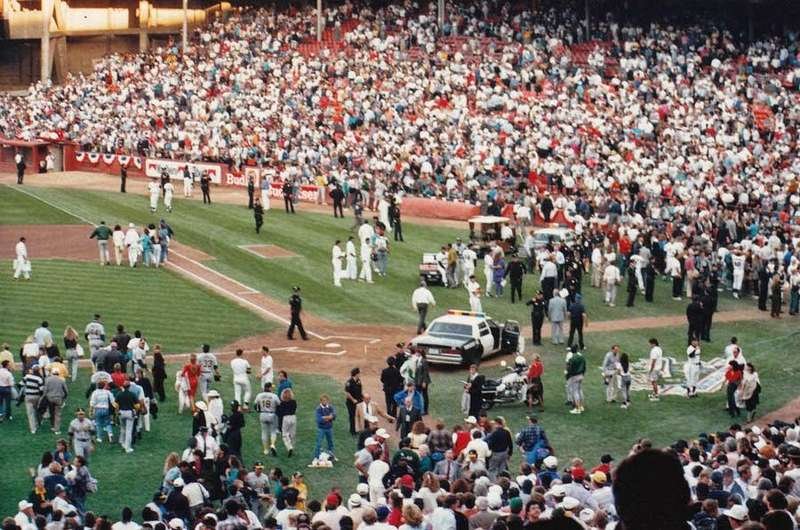
There was no panic, at least not at first. Fans in the stands cracked jokes about San Francisco staging its own pregame show. Players gathered their families down on the infield grass. It took nearly an hour, and transistor radios carrying real news from outside the ballpark, before the mood on the field caught up to the scale of what had actually happened a few miles away. Commissioner Fay Vincent eventually grabbed a police car’s bullhorn and announced the game was off — not delayed to the next inning, but off entirely, with no idea yet for how long.
The City Beyond the Ballpark
Candlestick Park came through the Loma Prieta earthquake essentially intact. The rest of the Bay Area did not. A section of the upper deck on the San Francisco–Oakland Bay Bridge collapsed onto the deck below, shutting down the single busiest commuter route in Northern California for a month. In San Francisco’s Marina District, built largely on landfill from the 1915 Panama-Pacific Exposition, the ground liquefied under older apartment buildings and ignited a gas-fed fire that firefighters battled into the night using seawater pumped from the bay after mains ruptured.
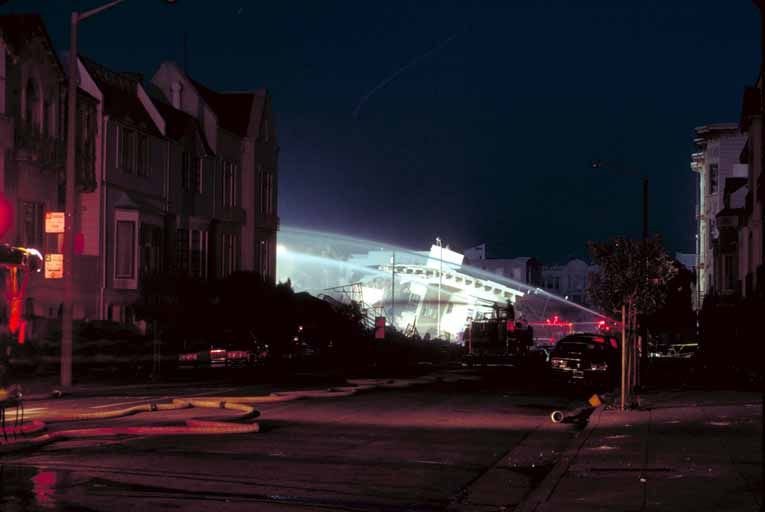
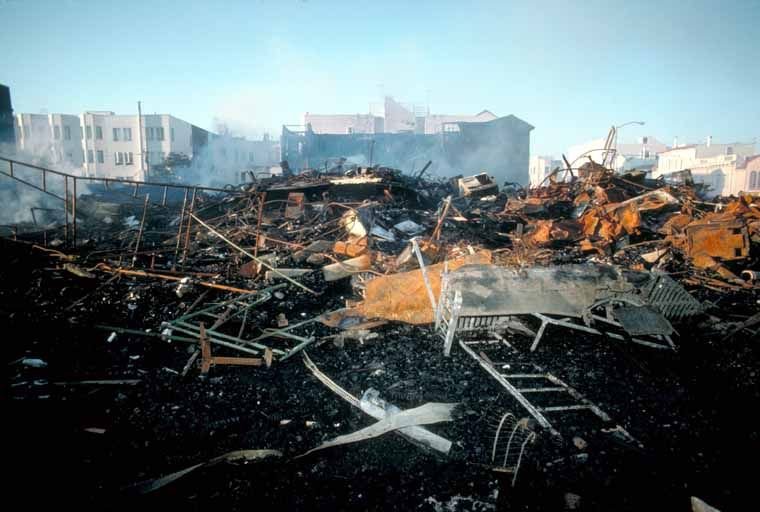
By sunrise, an entire block at Beach and Divisadero Streets had burned down to blackened framing and ash. Crews spent days pulling twisted furniture and collapsed walls out of the rubble before the lot could even be assessed for rebuilding, and the smell of smoke reportedly lingered over that stretch of the Marina for a full week.
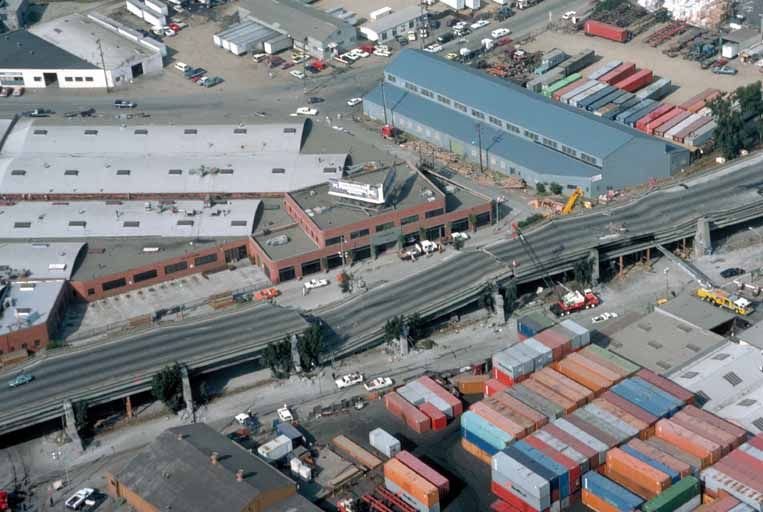
The deadliest single site was the Cypress Street Viaduct in Oakland, a double-decker stretch of Interstate 880 where the upper roadway pancaked directly onto the lower one. Forty-one of the earthquake’s 63 confirmed deaths happened on that three-quarters of a mile of freeway. Investigators later traced the collapse to support columns built to a design standard that predated modern seismic codes — a gap that triggered a statewide retrofit program for elevated freeways that’s still shaping California infrastructure decisions decades later.
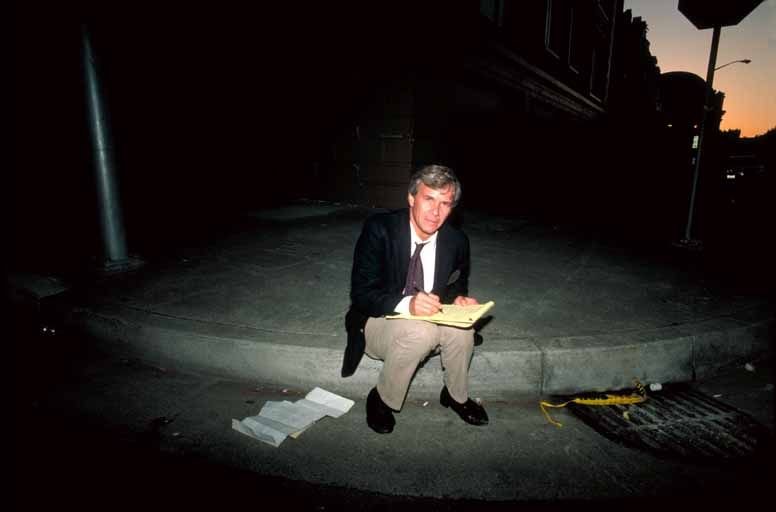
NBC’s Tom Brokaw, in town for the World Series like most of the national press corps, ended up anchoring Nightly News live from a Marina District curb that evening, script balanced on his knee under a single portable light. He wasn’t alone — every network that had sent a baseball crew to San Francisco that week suddenly had a disaster crew instead, which is part of why Loma Prieta became, as one media researcher later described it, the first truly instantaneous television disaster.
The Epicenter Barely Made the Headlines
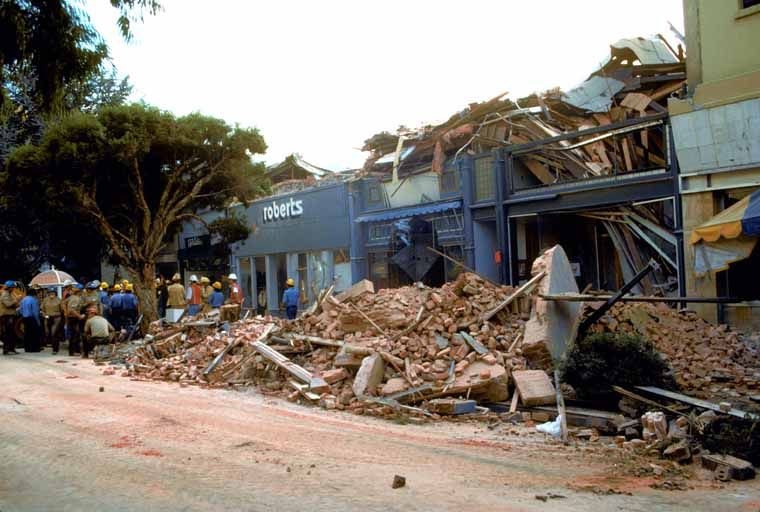
San Francisco’s TV-friendly disaster scenes — the bridge, the Marina fire, a stadium full of baseball fans — dominated national coverage. But the actual epicenter sat in the Santa Cruz Mountains near Loma Prieta Peak, and the towns closest to it took the hardest structural hit of any communities in the Bay Area. Downtown Santa Cruz’s Pacific Garden Mall, a strip of century-old unreinforced brick buildings, partially collapsed and killed several shoppers and employees. In Watsonville, more than one in ten homes was damaged badly enough to be condemned.
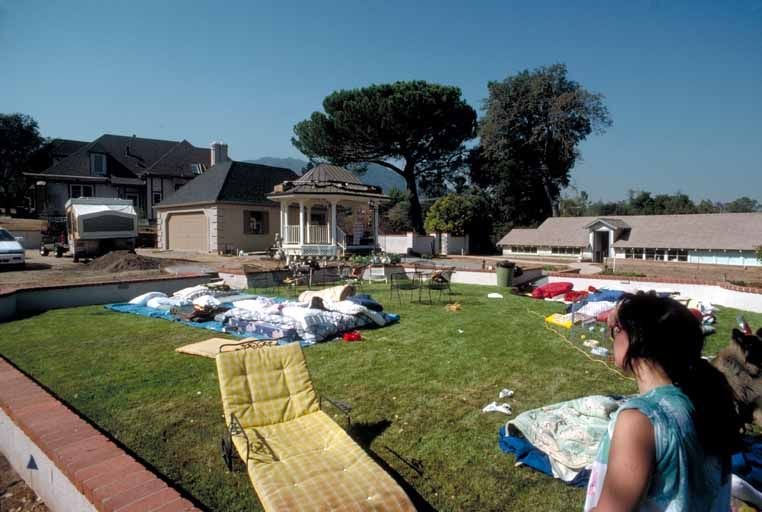
Thousands of Bay Area residents spent that first night, and plenty of nights after, camped in their own backyards rather than risk sleeping inside homes that hadn’t been inspected yet. It’s an image that rarely makes the earthquake’s highlight reel next to the collapsed freeway and the dead broadcast signal, but it’s closer to what Loma Prieta actually looked like for most people who lived through it: not a single dramatic collapse, but weeks of aftershocks and a city checking its foundations one house at a time.
Ten Days, Then Baseball Again
Commissioner Fay Vincent faced a genuinely ugly decision: resume a World Series in a region that was still counting bodies, or cancel it and hand both teams and both fanbases an ending nobody wanted. Some local officials pushed to scrap the rest of the Series outright, arguing that Candlestick Park’s lighting towers and emergency systems hadn’t been fully re-certified and that staging a sporting event while rescue crews were still working the Cypress structure sent the wrong message. Vincent landed on a middle path instead — wait, let the city catch its breath and let inspectors finish their work, then play. The Series resumed on October 27, ten days after the quake, the longest gap between World Series games on record and nearly three times longer than any prior delay.
A’s starter Dave Stewart became an unlikely face of the recovery in between. The night of the earthquake, after confirming his own family was safe, he drove to the collapsed Cypress structure with food and coffee for rescue workers still searching the wreckage. When the Series resumed, Stewart took the mound for Game 3 and threw seven strong innings in a 13-7 Oakland win. The A’s closed it out the next night, sweeping the Giants 4-0 for their first championship since 1974 — a title that nobody in the Bay Area remembers for the baseball.
Why the 1989 World Series Earthquake Still Gets Studied
Loma Prieta happened five years before cable news had fully figured out live disaster coverage, and the accident of having three network sports crews and a blimp already stationed in San Francisco for the World Series meant the country got real-time pictures of a major American earthquake for the first time in television history. Communications researchers point to October 17, 1989 as a hinge moment — the night regular broadcast television proved it could pivot from entertainment to rolling disaster coverage in real time, years before that became the default setting for a breaking national story. Baseball and October would collide with crisis again five years later, though that time it was the players who shut the World Series down, not the ground underneath it.
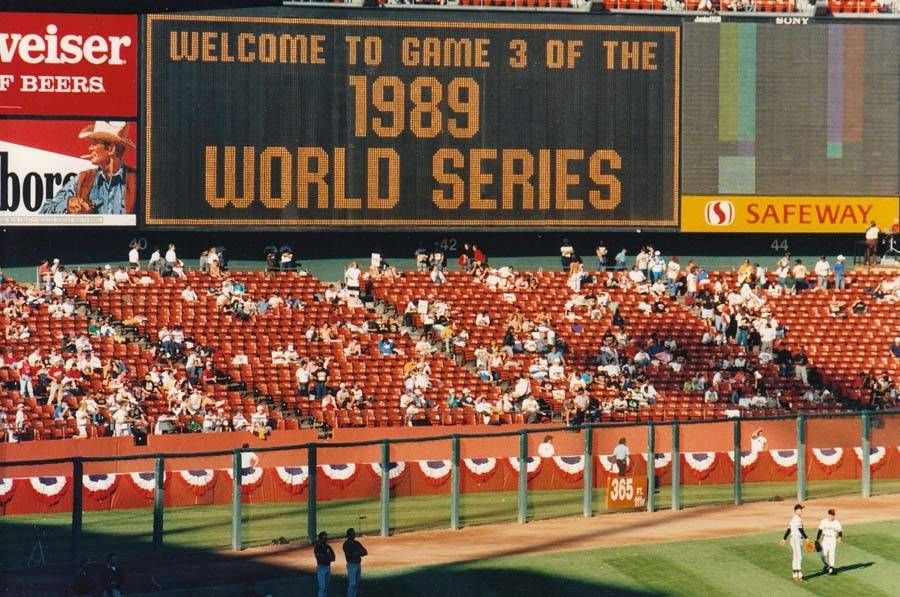
Candlestick Park itself is long gone now, demolished in 2015, but the stretch of upper deck where that scoreboard once flashed “Welcome to Game 3 of the 1989 World Series” is still the image most Bay Area natives reach for first when someone asks where they were on October 17, 1989 — not a highlight, but a half-second before the broadcast cut to black.
Sources
- 1989 Loma Prieta earthquake — Wikipedia — magnitude, casualty, and damage figures
- 1989 Loma Prieta Earthquake Photo Archive — U.S. Geological Survey — official damage photography
- “The sound of fear”: Thirty years ago, the Loma Prieta earthquake shook the World Series — ESPN — Dave Stewart and broadcast quotes
- Loma Prieta earthquake strikes near San Francisco — History.com — timeline and regional impact
- Earthquake World Series 1989 — FoundSF — Candlestick Park eyewitness account and photography
Love the retro era? Browse our shop for vintage finds, retro clothing, and 80s/90s nostalgia gear.
The Retro Almanac
A monthly roundup of "on this day" highlights from that month, decades back — plus first dibs on new retro merch drops. No spam, just the good stuff.