On This Day: October 12, 1997 — John Denver Dies in a Plane Crash
Denver had logged about thirty minutes in that specific airplane, total, before he took it up alone on the afternoon of October 12, 1997. The Long-EZ wasn’t new — it had been built years earlier by a different owner — but it was new to him, and whoever built it had moved the fuel selector valve to a spot behind the pilot’s seat instead of the factory location within easy reach. Denver was a careful, licensed pilot with thousands of hours in the air and a father who’d set Air Force speed records. None of that saved him once the primary tank ran dry over open water.
The John Denver Plane Crash: How It Happened
It was a clear Sunday evening, a little before 6 p.m., when Denver taxied out of the Monterey Peninsula Airport runway and climbed over the bay to run through some maneuvers. Witnesses on the Pacific Grove shoreline, less than a mile out, watched the small white-and-blue plane bank, dip, and then drop almost straight down into the water. There was no fireball, no explosion — just a hard impact that broke the aircraft apart on contact. Rescue boats reached the wreckage within minutes. Denver was killed on impact; investigators would later determine he never had the chance to attempt a water landing or bail out.

The Retro Almanac
A monthly roundup of "on this day" highlights from that month, decades back — plus first dibs on new retro merch drops. No spam, just the good stuff.
The Long-EZ is a homebuilt, canard-wing design popular with experimental-aircraft hobbyists in the 1990s — fast, fuel-efficient, and genuinely fun to fly, but unforgiving if a pilot gets distracted at low altitude. Denver had bought this particular one from a builder named Adrian Davis a few weeks earlier and had taken exactly one orientation flight with Davis in the back seat the day before the crash. That flight lasted roughly half an hour. It was his only hands-on introduction to a plane with a cockpit layout different from anything he’d flown before.
What the NTSB Investigation Actually Found
The National Transportation Safety Board’s final report is unusually specific about what went wrong, and it isn’t a story about pilot error in the broad sense. Denver’s primary fuel tank ran dry during the flight — a routine, expected event on a plane with multiple tanks, provided the pilot can reach the valve that switches between them. On a standard Long-EZ, that valve sits low and forward, visible and reachable without much effort. On this particular aircraft, Davis had relocated it to a spot behind and below the pilot’s left shoulder, a modification Denver had no real practice using.
To switch tanks, Denver had to twist his upper body around in a cramped cockpit while the plane was in the air. The NTSB concluded that in doing so, his foot came down on the right rudder pedal. At the altitude he was flying — reports put it under 500 feet — there was no room to recover. The plane rolled and dove into the bay in seconds. Toxicology results came back completely clean: no alcohol, no drugs, nothing that would point to impairment. This was a mechanical and ergonomic failure compounding an unfamiliar aircraft, not recklessness.

A Veteran Pilot Undone by a Few Inches of Cockpit Space
That detail is what makes the crash sting in a way that a generic “small plane goes down” story wouldn’t. Denver wasn’t some celebrity dabbling in aviation for the photo opportunity. He’d been flying for decades, owned multiple aircraft over the years, and had been partly trained by his father, Lt. Col. Henry John Deutschendorf Sr., an Air Force pilot who’d set transcontinental speed records in a B-58 Hustler. Flying was close to a family language in that household. The crash wasn’t a failure of skill. It was a failure of cockpit ergonomics meeting bad timing, at an altitude that left zero margin for the correction he never got the chance to make.

From the Mitchell Trio to “Rocky Mountain High”
Before any of that, there was a kid from Roswell, New Mexico, born Henry John Deutschendorf Jr. on the last day of 1943, who got his break replacing Chad Mitchell in the folk group the Mitchell Trio in 1965. He took the stage name Denver after the city he loved, and within a few years he’d written “Leaving on a Jet Plane,” which became a number-one hit for Peter, Paul and Mary in 1969 — a song Denver himself hadn’t yet had a hit with under his own name.

His own breakthrough came in 1971 with “Take Me Home, Country Roads,” followed a year later by “Rocky Mountain High,” a song inspired by his move to Aspen and later named one of Colorado’s two official state songs in 2007 — the kind of honor that usually arrives decades after anyone remembers why it mattered, except in Denver’s case people never stopped remembering. “Sunshine on My Shoulders” and “Annie’s Song,” both from 1974, cemented him as one of the biggest-selling recording artists of the decade. The Country Music Association named him Entertainer of the Year in 1975, a fairly remarkable honor for a performer whose sound owed as much to folk and soft pop as it did to Nashville.
Denver’s music gets filed under easy-listening nostalgia now, and there’s a reason for that — it’s gentle, melodic, unthreatening. But dismissing it as background music misses what made it land commercially: the guy could write a hook, and “Rocky Mountain High” and “Take Me Home, Country Roads” have outlasted plenty of harder-edged 1970s rock that was supposed to be the more durable stuff.
Beyond the Hits: Windstar, World Hunger, and Plant-It 2000
Denver spent nearly as much energy on causes as he did on chart positions. In 1976, he co-founded the Windstar Foundation near Snowmass, Colorado, an environmental and sustainability education nonprofit built on roughly a thousand acres of land he helped conserve. He served on President Carter’s Presidential Commission on World Hunger and co-founded The Hunger Project, and in 1977 he and his wife Annie visited the Carter White House, a photo the Jimmy Carter Presidential Library still shares every October 12 as a small, strange footnote to the date.

He also started Plant-It 2000, a tree-planting initiative, and in 2011 was named the inaugural inductee into the Colorado Music Hall of Fame — fitting, given how much of his catalog is essentially a long love letter to that one state. None of this made him immune to the mockery that followed “granola rock” artists through the louder, meaner decades of music that came after him. It also didn’t stop any of it from being real. Windstar outlived him by fifteen years before closing its doors in 2012.
The Almost-Astronaut: Denver’s Bid for the Space Shuttle
Here’s the detail that still catches people off guard: John Denver tried to go to space. NASA’s Citizens in Space program, officially the Space Flight Participant program, was recruiting civilians to fly on the Space Shuttle in the mid-1980s, and Denver applied, passed the physical and mental qualification testing, and genuinely wanted the seat. He didn’t get it. Teacher Christa McAuliffe was selected instead for mission STS-51-L, which ended in the Challenger disaster on January 28, 1986.
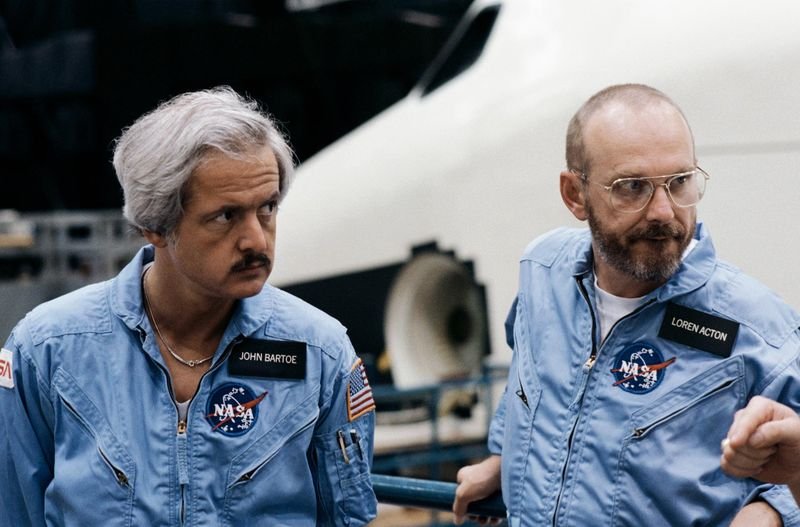
It’s an uncomfortable thing to sit with — not a brush with death exactly, since Denver wasn’t on that flight, but a near-miss of a different kind, one that quietly reroutes a person’s place in history. A decade later, Denver died anyway, in a different kind of aircraft, in a different kind of failure. Challenger had flown successfully just two years before the disaster, carrying a crew that included two women and a Canadian astronaut — a reminder of how routine shuttle missions had briefly felt before January 1986 changed that. Denver wanting a seat on one of those flights isn’t really irony. It’s just what it looks like when two unrelated kinds of aviation risk almost intersect and then don’t.
Why This One Still Lands Differently
Plenty of musicians have died in plane crashes — Buddy Holly, Otis Redding, Patsy Cline, Ricky Nelson, members of Lynyrd Skynyrd. John Bonham’s death five years earlier was sudden in its own way, but Denver’s case gets remembered differently because he was the one actually flying the plane, and because the mistake that killed him was so specific and so avoidable: a valve in the wrong place, a twist of the torso, a foot landing where it shouldn’t have. There’s no dramatic storm, no mechanical failure out of anyone’s control. Just a bad modification and thirty minutes of unfamiliarity meeting an altitude with no room for error.
My honest read, three decades out: the crash gets treated as a footnote to the music, and that undersells how close Denver came to being remembered for something else entirely — either as an astronaut, or as one of a handful of commercial pilots whose aircraft modification complaints actually led to a safety-standard change. The FAA pushed general aviation manufacturers to standardize experimental-aircraft fuel valve placement in the years after 1997, directly citing this crash. That’s not nothing. Celebrity deaths from this era tend to calcify into one clean narrative, and Denver’s has calcified into “folk singer dies in plane crash” when the more interesting story is an experienced pilot killed by a design decision he had every reason to trust.

Twenty-nine years on, “Take Me Home, Country Roads” still gets sung at West Virginia University football games, still shows up on road-trip playlists for people who weren’t alive when Denver recorded it, and still outperforms a lot of its 1970s chart peers in pure staying power. That’s the part of the story that didn’t crash into Monterey Bay.
Love the retro era? Browse our shop for vintage finds, retro clothing, and 80s/90s nostalgia gear.
Sources
- John Denver Dies in an Aircraft Accident — History.com — overview of the crash and timeline.
- How Did John Denver Die? — Encyclopaedia Britannica — biographical and crash summary.
- October 12, 1997: Singer John Denver Dies in Plane Crash — Gulf News — contemporary news framing of the event.
- Did You Know John Denver Nearly Took Part in the Challenger Space Shuttle Mission? — American Songwriter — detail on Denver’s NASA Citizens in Space application.
The Retro Almanac
A monthly roundup of "on this day" highlights from that month, decades back — plus first dibs on new retro merch drops. No spam, just the good stuff.