Belly 1998 Movie: Hype Williams’ Only Film
Three million dollars bought Hype Williams exactly one movie. He spent it on a nightclub robbery lit like a music video, a Queens drug operation shot in blown-out blues and ambers, and two rappers who had never acted a day in their lives. Belly opened in 1,068 theaters on November 4, 1998, pulled in $9.6 million, and got savaged by nearly every critic who reviewed it. Then it refused to die. Twenty-eight years later, it’s the reference point every music-video director secretly studies before shooting their first feature.

What Belly (1998) Is Actually About
Belly follows two childhood friends from Queens, Tommy “Buns” Bundy (DMX) and Sincere (Nas), as power and money pull them in opposite directions. The film opens in the summer of 1999 and counts down to the millennium, using Y2K as a loose deadline for both men to decide what kind of life they actually want. Buns stays in the game and drifts toward a reverend’s influence and a late-film spiritual reckoning. Sincere grows tired of the lifestyle faster and starts planning to move his family to Africa, treating the continent less as a literal destination and more as an escape hatch from everything Queens represents.
It’s a thin plot by design. Williams and co-writer Anthony Bodden weren’t building a conventional gangster narrative — they were building a mood board with a runtime, something closer to Scorsese and De Palma filtered through a hip-hop video budget and aesthetic, in the same lineage as New Jack City and Juice before it.
The Retro Almanac
A monthly roundup of "on this day" highlights from that month, decades back — plus first dibs on new retro merch drops. No spam, just the good stuff.
DMX and Nas Made Their Film Debuts Here — Jay-Z Almost Got There First
Neither DMX nor Nas had acted before Belly. Williams cast them off pure presence, not résumé, and it shows in exactly the way you’d expect: both performances are stiff in the dialogue scenes and completely magnetic in the moments where the camera just lets them exist. DMX, barely a year removed from his debut album, brings the same raw physicality to Buns that made his music explosive. Nas plays Sincere closer to his own introspective persona — Williams leaned into that rather than fighting it.
Before either rapper signed on, Williams had floated Jay-Z for the lead role. Jay-Z passed, and the part that became Buns went to DMX instead — a casting swap that’s easy to take for granted now but completely changes the film’s energy. DMX’s volatility reads differently on screen than Jay-Z’s cooler, more controlled public persona would have.
The Nightclub Robbery That Opens the Film Is the Whole Movie in Miniature
Belly opens cold, with on-screen text reading “SUNDAY NIGHT / AT THE TUNNEL / NEW YORK CITY / PERFORMING LIVE / DMX” over footage shot at the real Tunnel nightclub. Buns and Sincere walk into a topless club mid-performance, plant guns in the bathroom ahead of time, and pull off a smash-and-grab robbery lit entirely in black light and red strobe, cut to Soul II Soul’s “Back to Life.” It’s four minutes of pure sensation before a single line of real dialogue — Williams telling you exactly what kind of movie you’re about to watch.

The Tunnel robbery sequence that opens Belly — shot at the real NYC nightclub.
That opening sets up a structural trick the rest of the film repeats: scenes exist to look a specific way first, and to advance plot second. Critics in 1998 read that as a failure of storytelling. Audiences rediscovering the film on 4K two decades later tend to read it as the point.

Malik Sayeed’s Camera Did What the Script Couldn’t
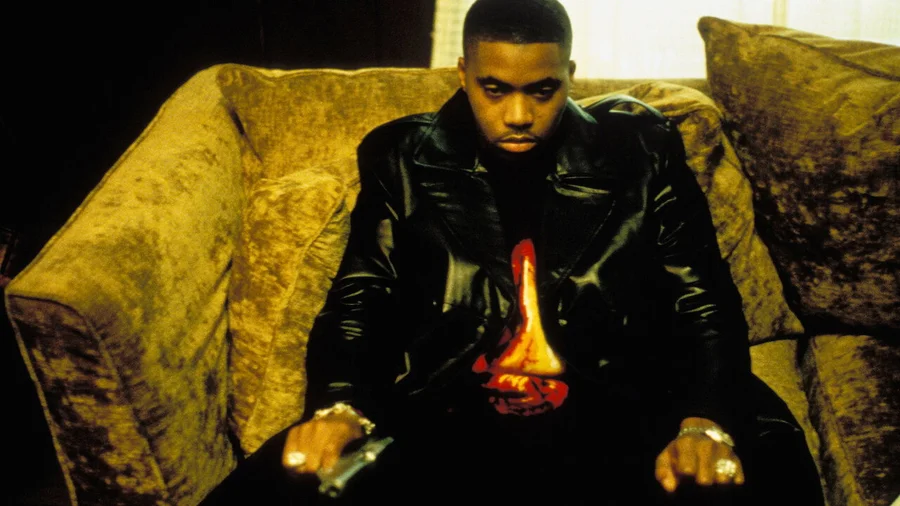
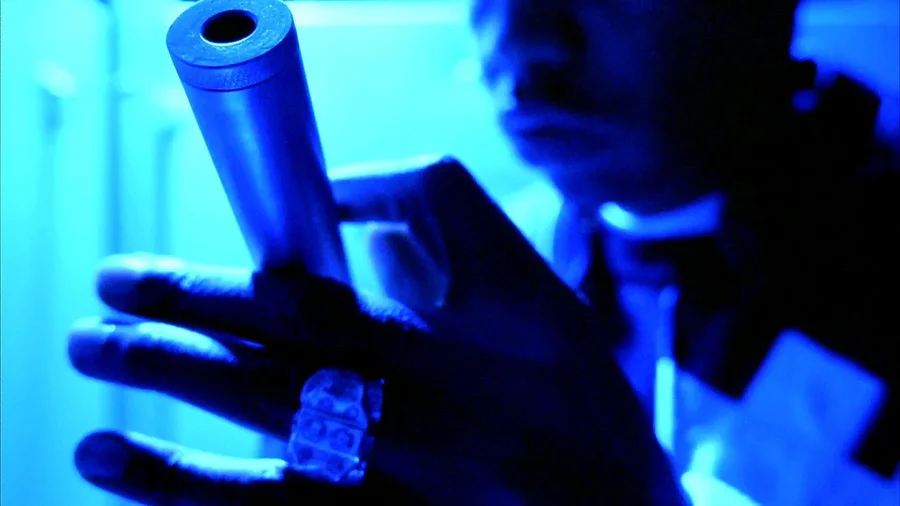
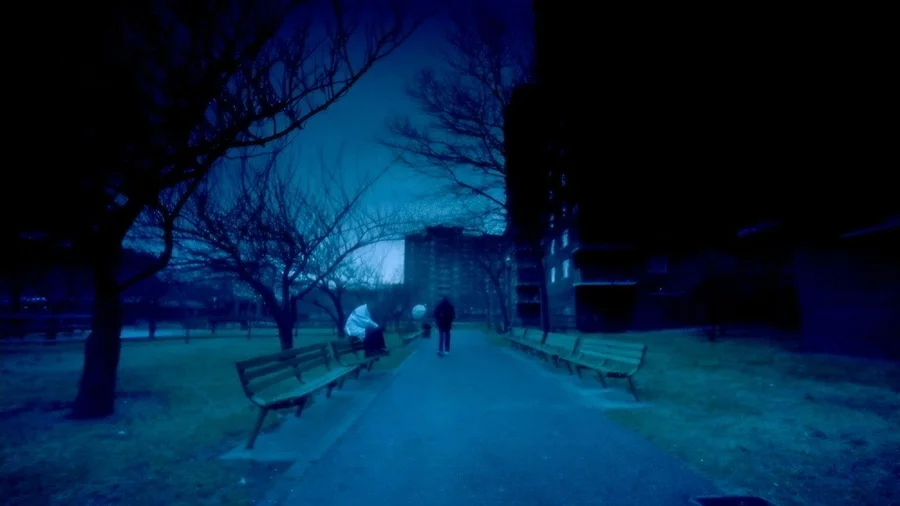
Cinematographer Malik Sayeed and costume designer June Ambrose built Belly‘s look from the ground up, and Ambrose has been explicit that the goal was to “forecast what the hip-hop genre’s gonna look like in the millennium” — not document 1998, but imagine forward from it. Sayeed shoots interiors in deep blues and ambers that swallow half the frame in shadow, favors wide static compositions over the whip-pans and jump cuts you’d expect from a music-video director’s first feature, and treats every nightclub and apartment like its own distinct color story.
Nas, lit in cold blue with his eyes catching stray light sources, became one of the film’s most reproduced images almost by accident — a single-source lighting trick that’s since shown up, consciously or not, in a thousand music videos and at least one HBO prestige drama. Writers have directly traced Euphoria‘s neon-soaked visual language back to the same instincts Williams and Sayeed were working with here, a full 20 years earlier.
Why Critics Tore It Apart in 1998
Rotten Tomatoes currently has Belly at 23% positive; Metacritic puts it at 36 out of 100. The reviews that ran in November 1998 hit the same two notes over and over — gorgeous to look at, close to incoherent as a story, with lead performances critics dismissed outright as nonacting. Magic Johnson Theatres, a chain built specifically to serve Black neighborhoods, refused to book the film at all, citing what it called negative and violent depictions of African Americans.
That reaction wasn’t unreasonable given what was actually on screen — a nightclub robbery, an extended drug-trade plot, recurring gun violence — but it also missed that the film’s back half is explicitly about both leads trying to get out. Buns finds religion. Sincere books a flight. Neither resolution is subtle, and that’s arguably the point: Belly wanted its violence read as a trap, not a lifestyle ad, and a lot of 1998 coverage reviewed the surface instead of the arc.
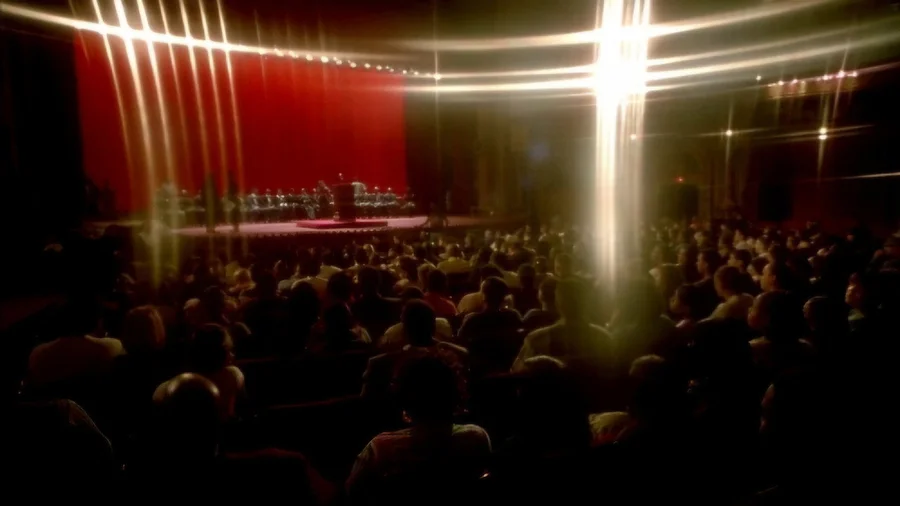
Buns’ arc pulls him toward a reverend and a late-film spiritual reckoning.

The Soundtrack Outperformed the Movie
Belly‘s soundtrack landed a day before the film, on November 3, 1998, through Def Jam, and did what the movie itself couldn’t: it charted at #5 on the Billboard 200 and #2 on the R&B/Hip-Hop Albums chart, and went Gold. That’s not a coincidence of timing — the soundtrack is arguably the more complete artistic statement, built from the same D’Angelo and Wu-Tang-adjacent well that scores the film’s quieter scenes. A lot of viewers in 1998 bought the album and skipped the theater. In hindsight, that was the correct read on where the real craft was concentrated.
Hype Williams Never Directed Another Movie
This is the detail that makes Belly more than a cult curiosity: it’s not an early entry in Hype Williams’ filmography, it’s the whole filmography. Williams went on to direct hundreds of music videos for everyone from Jay-Z and Beyoncé to Coldplay and Megan Thee Stallion, building a case as the most influential video director of his generation — but he never stepped behind a feature camera again. Not a flop-and-retreat story, not a long gap before a comeback. One movie, full stop, for nearly three decades and counting.
That makes Belly‘s visual DNA — the ambient color, the music-video pacing, the willingness to let a shot breathe for its own sake over narrative efficiency — something Williams has spent every video since 1998 refining in three-to-five-minute bursts instead of a 92-minute feature. Watch any high-end rap video from the last ten years and you’re looking at fragments of the same instincts Belly tried to sustain across a full runtime, with mixed results, exactly once.
Where to Watch Belly in 2026
Lionsgate gave Belly a proper 25th-anniversary 4K Ultra HD release with Dolby Vision in January 2023, finally doing justice to Sayeed’s color work on a format that can hold it. The Criterion Channel has featured it in its streaming lineup alongside other late-90s touchstones, which is about as close to institutional vindication as a 23%-on-Rotten-Tomatoes movie gets. If you’ve only ever seen low-bitrate rips on YouTube, the 4K disc is a genuinely different viewing experience — the blues hold detail instead of crushing to black, which was always half the argument for the film in the first place. For more of the genre it helped define, see our breakdown of Clockers, the hood film Scorsese handed off the same year Williams was shooting his.
Frequently Asked Questions
Is Belly (1998) based on a true story?
No. Belly is a fictional crime drama written by Hype Williams and Anthony Bodden, though it draws heavily on the real Queens drug-trade atmosphere both writers grew up around.
Why did DMX and Nas never act together again?
Belly remained a one-off for both. DMX went on to a handful of other action and drama roles (Romeo Must Die, Exit Wounds), while Nas largely stayed out of film acting and focused on music.
Is Belly worth watching if you don’t like 90s hip-hop movies?
If you care about cinematography more than plot, yes — it’s closer to a feature-length lighting demo than a conventional crime drama, which is exactly why film students and music-video directors still study it.
Sources
- Belly (film) — Wikipedia — plot, cast, production, and reception details
- Belly (soundtrack) — Wikipedia — chart performance and certification
- ‘Belly’ Was the Only Movie Hype Williams Ever Made, and That’s a Shame — Collider — Jay-Z casting detail and Williams’ post-Belly career
- How Euphoria Proves Belly Was Ahead of Its Time — Paste Magazine — visual-style legacy and Euphoria comparison
The Retro Almanac
A monthly roundup of "on this day" highlights from that month, decades back — plus first dibs on new retro merch drops. No spam, just the good stuff.