Rolling Stones 80s Albums: 4 Wild Years
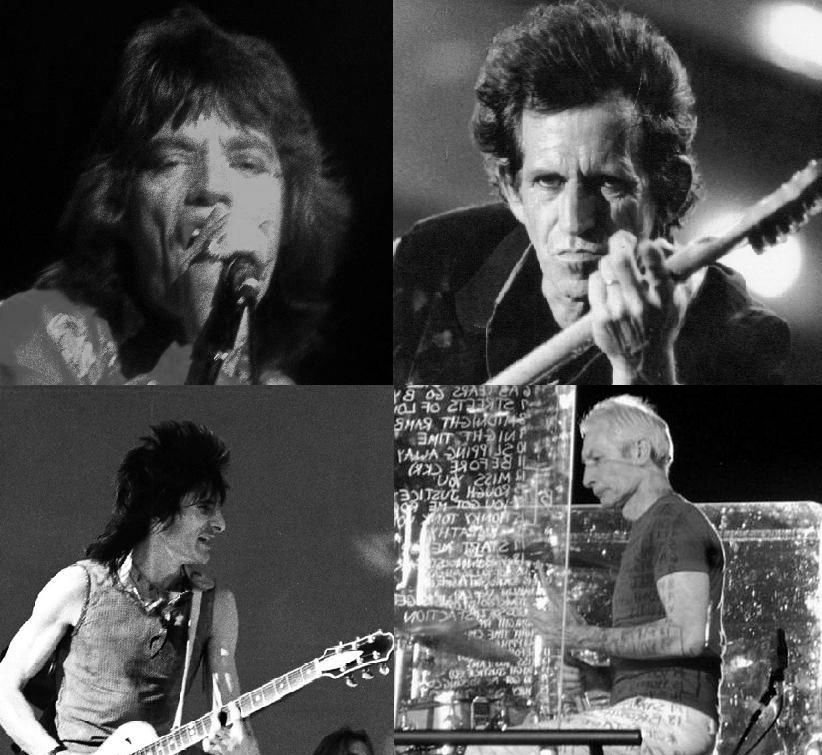
There is a version of Rolling Stones history that skips clean from Some Girls (1978) straight to the 1989 Steel Wheels tour, as if the intervening decade simply did not happen. That version is wrong — and more importantly, it is boring. The Rolling Stones’ 1980s are a ten-year saga of ego, genius, silence, spite, and improbable resurrection. Four studio albums, two notable solo detours, one near-fatal feud between the two men who built the band, and a comeback tour so enormous it essentially redefined what arena rock could be.
Why the Rolling Stones 80s Albums Still Matter
Ask any rock critic to rank the Rolling Stones catalog and you will almost certainly find the four 1980s studio albums clustered somewhere in the bottom half. Tattoo You, Undercover, Dirty Work, and Steel Wheels — none of them are Exile on Main St. None of them are Sticky Fingers. But ranking them against those monuments misses the point.
The Retro Almanac
A monthly roundup of "on this day" highlights from that month, decades back — plus first dibs on new retro merch drops. No spam, just the good stuff.
What these albums document is a band under genuine pressure: changing musical fashion, the rise of MTV, synthesizers creeping into rock production, and a crack running through the center of the songwriting partnership that had fueled everything. Jagger wanted to be a pop star for the MTV generation. Richards wanted to make the same record they had been making since 1968, just better. Neither of them was entirely wrong, and the tension between those two positions is what makes the decade’s recordings so compelling — and sometimes so infuriating.
For fans of 80s nostalgia, these albums represent something specific: the sound of the biggest rock band in the world trying to figure out what it meant to be the biggest rock band in the world when the world had moved on to Michael Jackson, Prince, and Duran Duran. That they survived — that Steel Wheels launched a tour grossing over $260 million — is one of rock history’s great second acts.
Tattoo You (1981): The Last Great One
Released on August 24, 1981, Tattoo You reached number one on the US Billboard 200 for nine weeks and number two in the UK. It was certified 4x Platinum in the United States, selling four million copies, and won a Grammy for Best Album Package. Its opening track — “Start Me Up” — became one of the most recognizable guitar riffs in rock history, later licensed to Microsoft for the launch of Windows 95 for a reported $3 million.
Here is the dirty secret behind that success: almost nothing on Tattoo You was recorded for Tattoo You. Associate producer Chris Kimsey spent three months excavating the Stones’ tape vaults, pulling outtakes and abandoned recordings dating back through the mid-1970s. “Start Me Up” had originally been cut during the Some Girls sessions in 1978 — as a reggae track, of all things. “Waiting on a Friend” dated back even further, to sessions in Jamaica in 1972 during the Exile period. Jagger had to go back and write new lyrics and melodies for several tracks because the originals were incomplete or missing entirely.
What this means is that Tattoo You is simultaneously the best Rolling Stones album of the 1980s and, in a meaningful sense, not really an 80s album at all. It is a greatest-hits collection assembled from sessions the band had abandoned — curated brilliantly and released at exactly the right moment, as MTV was launching and rock radio was desperate for something that sounded like classic rock without being old.
“Start Me Up” arrived on MTV in August 1981 and went into heavy rotation almost immediately. The video was simple — just the band performing against a black background — but Jagger’s physical performance was extraordinary. The song reached number two on the US Hot 100 and number seven in the UK. “Waiting on a Friend,” featuring jazz saxophone from Sonny Rollins, showed a warmer, more reflective side of the band and hit the US top ten.
The accompanying tour, their first in three years, drew more than three million fans across North America and helped define what large-scale stadium rock would look like for the rest of the decade — we’ve covered that run show by show in our deep dive on the 1981 American Tour. At this point, the Stones were still unambiguously the biggest rock band on the planet, and Tattoo You felt like confirmation of that status rather than a challenge to it.

Undercover (1983): The First Signs of Trouble
Two years later, the cracks were showing. Undercover, released in November 1983, was the band’s first all-new studio recording of the decade — no recycled outtakes this time. It peaked at number four in the United States, ending an eight-album streak of number-one placements that stretched back to 1969. In the UK it reached number three, which looked fine on paper but represented a real step back for a band accustomed to automatic chart domination.
The sessions, spread across studios in Paris, Nassau, and New York between late 1982 and mid-1983, were marked by creative disagreement. Jagger was listening to new wave, funk, and reggae; Richards was pulling toward the blues-rock foundation that had always been his compass. The result was an album that tried to do too many things at once and fully succeeded at none of them — though it has some genuinely exciting moments.
The lead single, “Undercover of the Night,” was the most overtly political thing the Stones had released since the early 1970s, with Jagger addressing human rights abuses in Central America over a funk-tinged backing track. The promo video, directed by Julien Temple, was so graphically violent that MTV initially refused to air it before dropping it into a post-9pm-only slot. The controversy gave the song notoriety, but it still only reached number nine in the US and number eleven in the UK — well below what a Stones lead single was expected to do.
The rest of Undercover ranged from the genuinely sinister — “Too Much Blood,” inspired by a real-life cannibal murder case in France — to the pleasantly forgettable. Rolling Stone‘s Kurt Loder gave it four-and-a-half stars and called it “rock and roll without apologies.” Robert Christgau, harder to please, dismissed it as “murky, overblown, incoherent.” The truth sat somewhere in between: a band finding its way in a new decade, sometimes successfully, often not. The album went platinum in the US with a million copies sold — respectable for almost any other band, but a comedown from Tattoo You‘s four million. The Stones did not tour behind Undercover, which in retrospect looks like an early symptom of the dysfunction that would peak three years later.

The Feud That Nearly Ended Everything
To understand Dirty Work, you have to understand what Mick Jagger did in 1985. He had been nursing solo ambitions for years, and in March 1985 he released She’s the Boss, a full-blown pop album produced with heavy synthesizers and featuring collaborations with Pete Townshend and Herbie Hancock. It reached number 13 in the United States and went platinum. To Jagger, this was proof he could have a career independent of the Stones. To Richards, it was betrayal.
The moment that crystallized the split for the wider public came on July 13, 1985, at Live Aid. Jagger performed solo in Philadelphia, sharing the stage with Tina Turner. Meanwhile, Richards and Ronnie Wood were in London backing Bob Dylan during an admittedly shambolic Wembley Stadium set. The two halves of the world’s best-known songwriting partnership were on different continents, performing at different shows, on the same day. The symbolism was impossible to miss.
Richards later described this period in blunt terms in his autobiography Life: he felt Jagger had abandoned the band for the sake of his own ambitions, and he found it unforgivable. Jagger, for his part, believed the Stones had become too rigid and needed to evolve. Both men were right, and both men were impossible, and what came out of that standoff was Dirty Work.
Dirty Work (1986): The Disaster Year
The sessions for Dirty Work, held at Pathé Marconi Studios in Paris between April and August 1985, were by most accounts deeply unhappy. Jagger was frequently absent, sometimes arriving late or not at all. When he did show up, the atmosphere between him and Richards was described by multiple participants as poisonous. Wood, Watts, and bassist Bill Wyman essentially became session musicians propping up a record with no unified creative vision behind it.
The album, released in March 1986, reached number four in both the US and UK, which made it sound like a success on paper. But context matters: the Stones’ previous three studio albums had all reached the top five, and Dirty Work felt noticeably thinner than its predecessors. Producer Steve Lillywhite, then known mainly for his work with U2 and Simple Minds, pushed the band toward an 80s stadium-rock sheen that suited them poorly.
The album’s most successful moment was a cover: “Harlem Shuffle,” originally recorded by Bob and Earl in 1963, was spun into a glossy funk-rock single that reached number five in the US and became the record’s calling card. It was a good record — but a cover single as your best moment is a particular kind of indictment for a band built on original songwriting. “One Hit (To the Body),” featuring Jimmy Page on lead guitar, had some of the raw energy the rest of the album lacked, but not enough to disguise the real problem: this was Richards, Watts, Wood, and Wyman making the best of a bad situation while their frontman did something else.
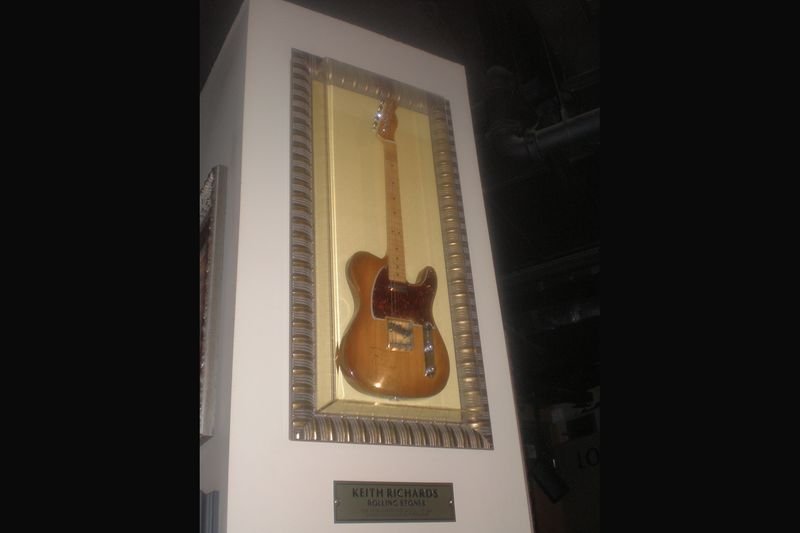
When Dirty Work was finished, Jagger refused to tour behind it. He said he did not see the point. Richards was furious — not just at the decision but at what it said about Jagger’s commitment to the band. In a 1987 interview, Richards memorably described Jagger as “Brenda,” his private nickname for a man he regarded as increasingly precious and difficult. The feud was now fully public. Most observers began quietly writing the band’s obituary.
Keith Richards’ Solo Album and the Road Back
With the Stones effectively on ice, both men retreated to separate solo projects. Jagger released a second solo album, Primitive Cool, in 1987. It sold less than She’s the Boss and drew mixed reviews — evidence, maybe, that Jagger’s star power was more tied to the Stones than he had believed.
Richards, meanwhile, assembled a group of musicians he called the X-Pensive Winos and made Talk Is Cheap, released in October 1988. The title was widely understood as a direct message to Jagger. The album was a revelation: stripped-down, guitar-driven, rooted in the blues and R&B tradition Richards had always championed, with none of the over-produced gloss that had marked Dirty Work. It reached number 24 in the US and number 37 in the UK — not blockbuster numbers, but it drew the best reviews of any record connected to the Stones since Some Girls a decade earlier.
More importantly, Talk Is Cheap proved something: Richards did not need Jagger to make a great record. That realization may have been what made reconciliation possible — with neither man’s solo career clearly ahead of the other’s, they could finally talk as equals again. In January 1989, just before the Rolling Stones were inducted into the Rock and Roll Hall of Fame, Jagger and Richards sat down, worked through their differences, and began writing together for the first time in years.
Steel Wheels (1989): The Comeback

The sessions for Steel Wheels at AIR Studios in Montserrat in early 1989 produced roughly fifty new songs in a matter of weeks. The energy of reunion was palpable. Ronnie Wood later described it as the album that reunited the band after a three-year hiatus that was almost permanent. The finished record, released in August 1989, reached number two in the UK and number three in the US, where it went double platinum. In Canada it hit number one.
“Mixed Emotions,” the lead single, was explicitly about the reconciliation between Jagger and Richards — its lyrics circled the complicated feelings of repairing a damaged relationship. It reached number five in the US, the Stones’ last major American hit, and number one in Canada. “Rock and a Hard Place,” the second single, gave the album its spine, a snarling rocker that reached the US top forty and showed the band could still trade in straight-ahead guitar rock without apology.
Critical reception was measured — AllMusic‘s Stephen Thomas Erlewine noted the record “doesn’t make for a great Stones album, but it’s not bad, and it feels like a comeback” — but measured was fine. Measured was vastly better than the hostile reviews that had greeted Dirty Work. The band had made a competent, professional, occasionally excellent rock record, and after what they had been through, that felt close to a miracle.
The Steel Wheels Tour: Saving the Brand
If the album was a solid comeback, the tour that followed was a phenomenon. The Steel Wheels/Urban Jungle Tour launched in late August 1989 and ran through September 1990, covering North America, Europe, Japan, and the Pacific. It became, at that point, the highest-grossing concert tour in history. FOX broadcast a 3-D television special in 1990, and an IMAX film followed in 1991.
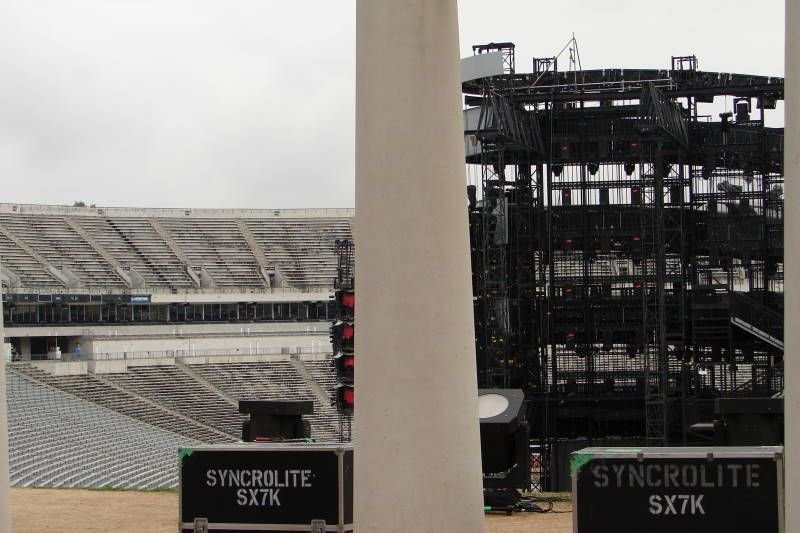
The production was unprecedented for its time: giant inflatable figures, a stage set resembling an industrial wasteland, and video screens that made the band visible from the furthest corners of the largest stadiums. Charlie Watts anchored everything with his usual understatement while Ronnie Wood sprinted across the stage, keeping Richards and Jagger connected to the same performance. More importantly, the tour reminded a generation of MTV-raised fans what the Rolling Stones actually were — not a nostalgia act, but a live band that still played with genuine fire. It grossed over $260 million, a figure that would not be topped until U2’s PopMart Tour eight years later, and it set the template every mega-tour since has followed, including the Stones’ own string of blockbuster runs in 1994, 1997, 2002, and beyond.
The Legacy of the 80s Stones Catalog
Looking back across four decades, the Rolling Stones’ 1980s output occupies a strange and interesting place in the catalog. None of it reaches the peaks of the 1969-1972 run. But dismissing it entirely means missing a few things worth knowing. Tattoo You contains some of the best individual Stones performances ever recorded — “Start Me Up” is a near-perfect rock single, and “Waiting on a Friend” is one of the most beautiful songs Jagger ever sang. Undercover, for all its incoherence, documents a band genuinely trying to engage with contemporary music rather than repeating itself. Dirty Work‘s chaos is audible but interesting — it sounds like what it was, a band in crisis, and there is something honest about that. And Steel Wheels, whatever its limits as a studio record, launched an era of live Rolling Stones performance that has never really ended.
The decade also gave us Talk Is Cheap, which deserves mention as one of the great overlooked albums of the 1980s — a reminder, same as the KISS catalog we ranked record by record here, that a band’s messiest decade can still hide some of its best individual work. Whatever you think of Dirty Work, the fact that it was followed by Steel Wheels is a story worth knowing.
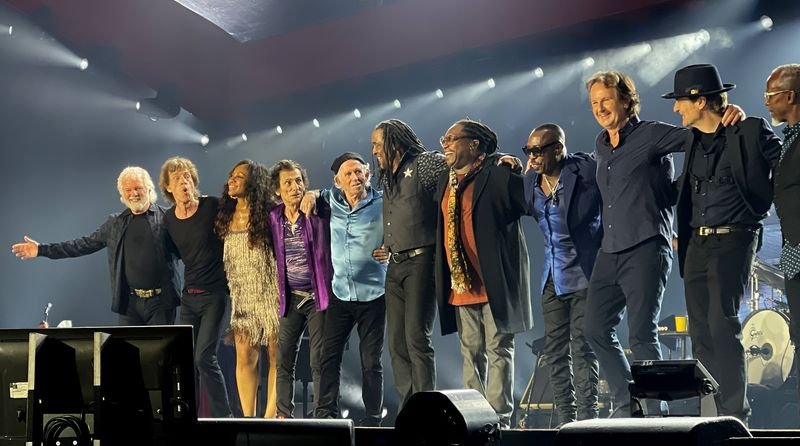
For anyone exploring Rolling Stones 80s albums for the first time: start with Tattoo You, obviously, then go straight to Steel Wheels for the comeback narrative. Come back to Undercover when you want to hear the seams starting to show, and save Dirty Work for when you’re in the mood for something that sounds exactly as troubled as it was. If you want the Guns N’ Roses version of the “chaos behind a classic record” story, our deep dive on Appetite for Destruction is a solid next stop. The whole Stones decade is worth your time.

Frequently Asked Questions About Rolling Stones 80s Albums
What was the best Rolling Stones album of the 1980s?
By commercial performance and critical consensus, Tattoo You (1981) is the standout. It reached number one in the US for nine weeks, was certified 4x Platinum, and produced one of the band’s signature songs in “Start Me Up.” Worth noting: most of the album was assembled from outtakes recorded in the 1970s rather than freshly written material.
Why did the Rolling Stones feud in the 1980s?
The Jagger-Richards feud stemmed from disagreements about the band’s direction and Jagger’s decision to pursue a solo career. Jagger released solo albums in 1985 (She’s the Boss) and 1987 (Primitive Cool), and refused to tour for Dirty Work in 1986. Richards felt Jagger had abandoned the band for personal ambition. The feud was public and bitter, lasting roughly three years before they reconciled in January 1989.
Did the Rolling Stones tour in the 1980s?
They toured extensively for Tattoo You in 1981-82, drawing three million fans in North America alone. They did not tour for Undercover (1983) or Dirty Work (1986) — the latter refusal a major point of contention between Jagger and Richards. The decade ended with the massive Steel Wheels/Urban Jungle Tour of 1989-90, the highest-grossing concert tour in history at that point, grossing over $260 million.
What is Dirty Work and why did it nearly break up the Rolling Stones?
Dirty Work (1986) was recorded during the period of maximum tension between Jagger and Richards. Jagger was frequently absent from sessions, saving his energy for his solo work. When the album was finished, Jagger refused to tour behind it, which Richards considered a betrayal. The album reached number four in the US and UK and went platinum, but the behind-the-scenes dysfunction nearly ended the band permanently.
How did Steel Wheels save the Rolling Stones?
Steel Wheels (1989) was the Stones’ comeback after three years of hiatus and infighting. Jagger and Richards reconciled in January 1989 and wrote roughly fifty songs together in a matter of weeks — their most prolific collaborative burst in years. The album went double platinum in the US, and the Steel Wheels/Urban Jungle Tour became the highest-grossing concert tour in history at the time, re-establishing the Stones as a live touring phenomenon that is still running today.
Sources
- Tattoo You — Wikipedia — chart performance, certification, and recording history.
- Undercover — Wikipedia — recording sessions and chart data.
- Dirty Work — Wikipedia — session details and the Jagger-Richards rift.
- Steel Wheels — Wikipedia — album details and reunion sessions.
- Steel Wheels/Urban Jungle Tour — Wikipedia — tour grosses and production details.
- AllMusic — Steel Wheels review — Stephen Thomas Erlewine’s critical assessment.
- Rolling Stone — contemporary album reviews and reporting.
The Retro Almanac
A monthly roundup of "on this day" highlights from that month, decades back — plus first dibs on new retro merch drops. No spam, just the good stuff.