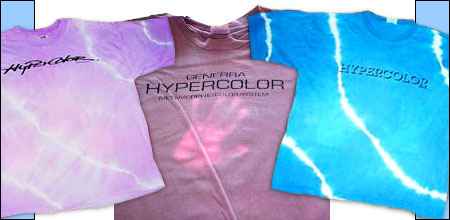
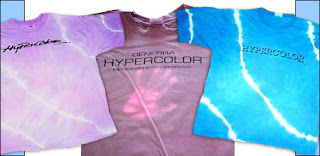
The Generra Hypercolor lineup came in wild neon colors that shifted and changed with your body heat.
Remember walking into school and seeing someone’s shirt literally change color right before your eyes? That was the magic of Hypercolor shirts — the 90s fashion craze that turned every kid into a walking science experiment. These heat-sensitive t-shirts from Generra Sportswear hit stores in 1991 and absolutely blew our collective minds. Touch a purple shirt, leave a pink handprint. Walk outside on a hot day, watch your blue tee morph into green. It was basically a mood ring you could wear as a shirt, and for one wild year, everybody had to have one.
If you grew up in the late 80s or early 90s, Hypercolor shirts weren’t just clothing — they were an event. And the story behind their meteoric rise and spectacular crash is one of the wildest tales in fashion history.
How Hypercolor Shirts Actually Worked
The thermochromic technology behind Hypercolor shirts made fabric react to body heat and touch.
The secret sauce behind Hypercolor shirts was something called thermochromism — basically, dyes that change color when they get warm. Generra called it their “Metamorphic Color System,” which sounded impossibly futuristic to a bunch of 12-year-olds in 1991.
Here’s how it worked: each shirt got dyed twice. First, a permanent base color was applied to the cotton fabric — say, blue. Then a second layer of thermochromic dye made from leuco dyes was added on top. These special dyes were encapsulated in microscopic capsules bonded directly to the fabric fibers.
When the shirt was cool, you saw the combination of both dye colors. But when heat hit — body warmth, a friend’s sweaty palm, even breathing on it — the thermochromic layer would go transparent, revealing just the base color underneath. Orange shirts turned yellow. Purple went pink. Blue shifted to green. The whole thing reversed as soon as the fabric cooled back down.
The technology actually came from a Japanese chemical company called Matsui Shikiso Chemical, and Generra licensed it exclusively for the U.S. market. The color shift kicked in at around 86-95°F (about 30-35°C), which meant normal body heat was more than enough to trigger the effect.
Generra Sportswear: The Seattle Company Behind the Craze
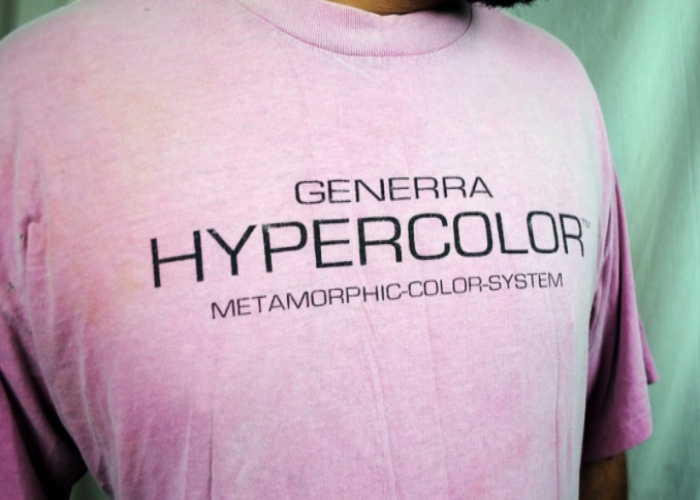
A vintage Generra Hypercolor t-shirt — the purple-to-pink color shift was one of the most popular combinations.
Generra Sportswear Company started out as a pretty standard men’s sportswear distributor in Seattle back in 1980. The founders — former execs from the Brittania clothing label — were always hunting for the next big thing that would set them apart from every other casual wear brand flooding the market.
In 1986, they expanded into kids’ and women’s clothing. But it wasn’t until they stumbled across Matsui Shikiso’s thermochromic pigment technology that everything changed. Generra became the exclusive U.S. licensee and started developing what would become the Hypercolor line.
The marketing campaign was genius. Generra blanketed MTV and teen magazines like Seventeen and Thrasher with ads that simply read: “Hypercolor, hypercool.” They ran TV commercials showing the shirts changing color in real time. It was the kind of product that basically sold itself — all you had to do was see it once and you wanted one.
And want them people did. Between February and May of 1991 alone, Generra sold a staggering $50 million worth of Hypercolor gear. By the end of that year, the brand and its spinoff line Hypergrafix had generated over $105 million in revenue. For a Seattle-based sportswear company, those numbers were absolutely insane.
Why Every 90s Kid Had to Have a Hypercolor Shirt
The early 90s were all about neon colors and bold fashion statements — Hypercolor fit right in.
You have to understand the context. The early 90s were peak neon. We were coming off the late 80s with our landline phones, acid wash jeans, and slap bracelets. MTV was still playing actual music videos. Beverly Hills, 90210 was the biggest show on TV. And Hypercolor shirts showed up on both of those cultural touchstones, cementing their status as the must-have fashion item of the year.
The appeal was dead simple: your clothes could do a magic trick. Sit down in class and watch your back turn a different color from the chair’s warmth. High-five someone and see their handprint glow on your chest for a few seconds. Breathe hard on your sleeve and watch the color shift in real time.
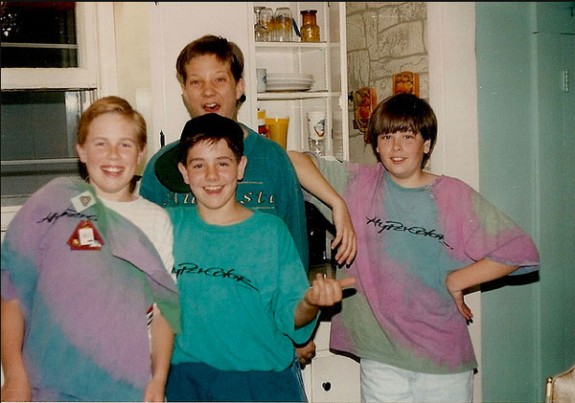
Kids on the playground immediately turned Hypercolor shirts into a contact sport. Remember getting your shirt grabbed by someone just so they could leave a handprint? Everyone suddenly had permission to touch your clothes — which, looking back, was kind of weird but felt totally normal at the time.
The shirts came in wild color combos: purple-to-pink, blue-to-green, orange-to-yellow. They ranged from t-shirts to shorts, sweatshirts, pants, and even tights. A basic Hypercolor tee ran about $20 (roughly $45 in today’s money), which wasn’t cheap for a t-shirt in 1991, but parents caved because the demand was relentless.
The Embarrassing Problem Nobody Talks About
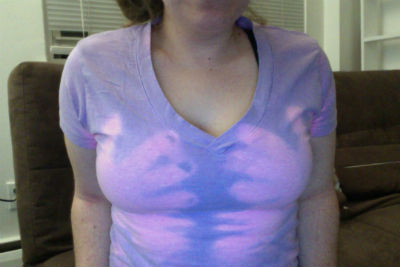
Hypercolor shirts looked amazing — until they started highlighting exactly where you were sweating.
Here’s the thing nobody mentions in those rosy nostalgia posts: Hypercolor shirts had a deeply embarrassing design flaw. The color changed wherever you were hottest. And where are teenagers hottest? Their armpits. Their lower back. Basically all the places you really, really don’t want to draw attention to.
So you’d be walking around school with bright pink splotches under your arms while the rest of your shirt stayed purple. It was like wearing a body-heat map that broadcast your sweat zones to the entire cafeteria. The shirts didn’t just show you were warm — they showed exactly where you were warm.
As one industry insider later put it: “I guess folks didn’t want them because when the color changed, it changed in places where you don’t want it to change.”
It was a classic case of a product being simultaneously amazing and mortifying. You looked like a wizard for about ten minutes, then you looked like you desperately needed antiperspirant.
What Killed Hypercolor Shirts?
The thermochromic dye technology was cutting-edge, but it couldn’t survive a hot wash cycle.
The sweat problem was bad, but it wasn’t what killed Hypercolor. The real death blow came from your mom’s washing machine.
Those thermochromic dyes were incredibly fragile. Wash a Hypercolor shirt in hot water? The color-changing effect would permanently die. Toss it in the dryer on high heat? Same thing. Iron it? Forget about it. Even bleach would destroy the thermochromic capsules beyond repair.
After just a few wash cycles — sometimes even one, if the water was too hot — your $20 magic shirt would turn into a sad, permanently tie-dyed looking rag that never changed color again. The care instructions basically demanded you treat the shirt like a newborn: cold water only, air dry, no ironing, no bleach. Asking the average 90s teenager to follow those instructions was like asking a cat to do your taxes.
Generra also became a victim of their own success. The demand was so overwhelming that they couldn’t keep up with production. Stores couldn’t stock them fast enough. Knockoff brands flooded the market with cheaper versions that worked even worse. The company expanded too fast, took on too much debt trying to scale up manufacturing, and the whole house of cards started wobbling.
By early 1992, the fad had burned out almost as quickly as it started. Like the pager boom that followed it, Hypercolor went from everywhere to nowhere in record time. Generra laid off a quarter of its staff in spring 1992 and filed for bankruptcy shortly after. The company that had made $105 million in a single year couldn’t survive the hangover.
Did Hypercolor Shirts Ever Come Back?
Original Hypercolor shirts are now sought-after vintage collectibles for 90s fashion enthusiasts.
The Hypercolor technology didn’t completely disappear after Generra’s collapse. The company’s U.S. Hypercolor business was sold to The Seattle T-shirt Company in 1993, and the rights have changed hands several times since.
In the early 2000s, the Los Angeles Times reported that Hypercolor was “hot again,” with several brands trying to revive thermochromic clothing. Companies like Gecko Hawaii eventually brought back color-changing tees using improved thermochromic technology. And in 2020, color-changing swim trunks went viral on social media, proving the concept still has legs.
Modern versions have solved some of the original problems. The dyes are more wash-resistant. The color shifts are more dramatic. And thanks to companies like Shadow Shifter, you can even get custom-printed thermochromic shirts — something Generra never offered.
But nothing has quite recaptured the lightning-in-a-bottle magic of those original 1991 Hypercolor shirts. Part of it was the novelty — we’d never seen anything like it before. Part of it was the timing — it hit right when 90s pop culture was at its most colorful and experimental. And part of it was just being the right age to think a color-changing shirt was the absolute coolest thing that had ever happened.
What Are Vintage Hypercolor Shirts Worth Today?
If you somehow managed to keep your original Hypercolor shirt in decent condition (and if the color-changing effect still works), you’re sitting on a genuine piece of 90s fashion history. Original Generra Hypercolor tees regularly sell for $75 to $200+ on eBay and vintage clothing sites, depending on condition and whether the thermochromic effect is still active.
Dead Hypercolor shirts — ones where the color-changing no longer works — still fetch $30-50 as nostalgia pieces. The Generra branding and “Metamorphic Color System” tag on the inside are enough to make collectors happy, even without the magic.
The rarest finds are new-old-stock Hypercolor shirts that were never worn or washed. These can command serious money from serious collectors, especially in unusual colors or sizes.
This classic 1991 Hypercolor commercial captures everything rad about the 90s color-changing fashion trend.
The Legacy of a One-Hit Fashion Wonder
Hypercolor shirts are the perfect 90s story: a brilliant idea, impossibly fast success, spectacular failure, and a permanent spot in the nostalgia hall of fame. Generra went from a small Seattle sportswear company to a $105 million phenomenon and back to bankruptcy in less than two years. That rise-and-fall timeline is almost as dramatic as the shirts themselves.
But here’s what the business failure doesn’t capture: the joy of those shirts. The first time you put one on and pressed your hand against it. The way everyone in your friend group compared colors. The playground experiments with hair dryers and ice cubes. For a brief, beautiful stretch of 1991, wearing a Hypercolor shirt made you feel like you were living in the future.
And really, isn’t that what the best 90s trends were all about? Taking something ordinary — a t-shirt, a pair of shoes, a toy — and making it feel like pure magic, even if just for a little while.
Before DMs and chat rooms, there were 1-900 numbers and party lines. Here’s the wild story of how we socialized by phone before the internet changed everything.
From the Block to the Runway Hip-hop didn’t just change music in the 90s — it rewrote the entire fashion playbook. What started on the streets of New York, Atlanta, and Los Angeles became the most influential style movement of the decade. Designers who once looked down on streetwear were soon copying it. The 90s…
The Sound That Connected a Generation KSHHHHHH-DING-DING-DING-BRRRRRRRR-KSHHHHHH. If you know, you know. The dial-up modem connection sound was the overture to the greatest cultural revolution since television. You’d pick up the phone, realize someone was online, and either wait impatiently or scream “GET OFF THE INTERNET!” — a sentence that made perfect sense in 1997….
From 143 to 911, pager codes defined 90s communication. Explore the Motorola Bravo era, payphone sprints, and why beepers ruled before smartphones took over.
From Rugrats to Are You Afraid of the Dark, 90s Nickelodeon gave kids their own TV kingdom. Relive the Nicktoons, SNICK nights, slime-soaked game shows, and the orange-splattered era that made every afternoon feel like a holiday.
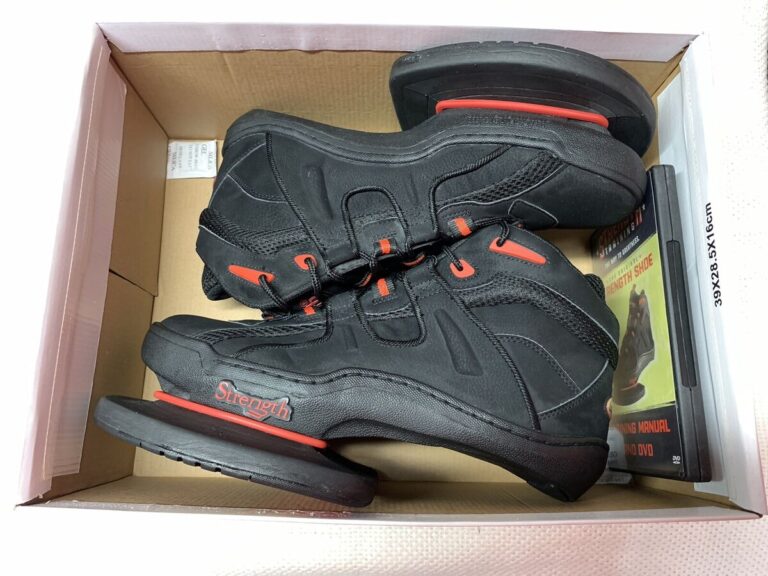
Strength Shoes were the 90s basketball training obsession that promised every gym-rat and blacktop baller a ticket to Dunk City. They were those wild-looking high-tops with a thick rubber platform bolted to the front, forcing you onto your tiptoes 24/7 — and half a generation of basketball kids begged their parents for a pair. Every…