On This Day: August 7, 1997 — Garth Brooks Brought a Million People to Central Park
The New York City Fire Department put the number at 980,000, and even that figure has been argued over for nearly three decades. What nobody disputes: on a Thursday evening in August 1997, Garth Brooks packed the North Meadow of Central Park so completely that city officials could barely count the people, let alone manage them. He did it for free. He did it with a 360-foot stage. And by the end of the night, Billy Joel was climbing on a piano and a million people were singing “American Pie.”
They called it Garthstock.
The Retro Almanac
A monthly roundup of "on this day" highlights from that month, decades back — plus first dibs on new retro merch drops. No spam, just the good stuff.
The North Meadow of Central Park, August 7, 1997. The FDNY estimated 980,000 in attendance.
How a Country Singer from Oklahoma Took Over New York
By 1997, Garth Brooks was the best-selling solo recording artist in American history, with more than 60 million albums sold — more than any country act before him and more than most rock acts as well. His 1996–1998 world tour was already one of the highest-grossing in history when someone floated the idea of a free show in Central Park. The pitch was straightforward: bring country music to New York City, where it had never had a real stronghold, and do it at a scale that couldn’t be ignored. Parks Commissioner Henry Stern signed off. HBO agreed to broadcast it live. Word went out that Garth Brooks would perform in Central Park at no charge.
The previous record for a Central Park concert had been set by Paul Simon in 1991, estimated at around 600,000. Everyone involved knew that record was about to fall.
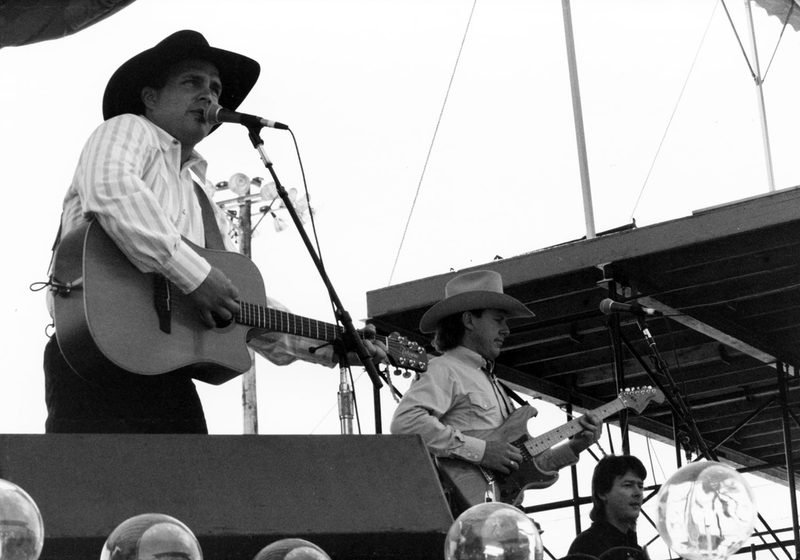
Garth Brooks performing at Fan Fair, Nashville, 1990 — the year his rise to dominance began. (Country Music Hall of Fame)
The Stage Built for a Million People
The production crew built a stage 360 feet wide — longer than a football field — with a circular lighting rig extending 100 feet above it. Five jumbo video screens surrounded the performance area. Twenty-four cameras covered the show, including a “rail cam” that concert producers were using for the first time anywhere in the world. Director Marty Callner, who had worked with everyone from Def Leppard to Bette Midler, designed the broadcast as a live film rather than a standard concert recording.
The city asked attendees to bring blankets no larger than a king-size bed. The logic: oversized tarps wasted space and cut capacity. People started arriving hours before showtime, camping on the meadow grass through the August heat. By the time Brooks took the stage, the North Meadow was a sea of faces stretching back to the tree line.
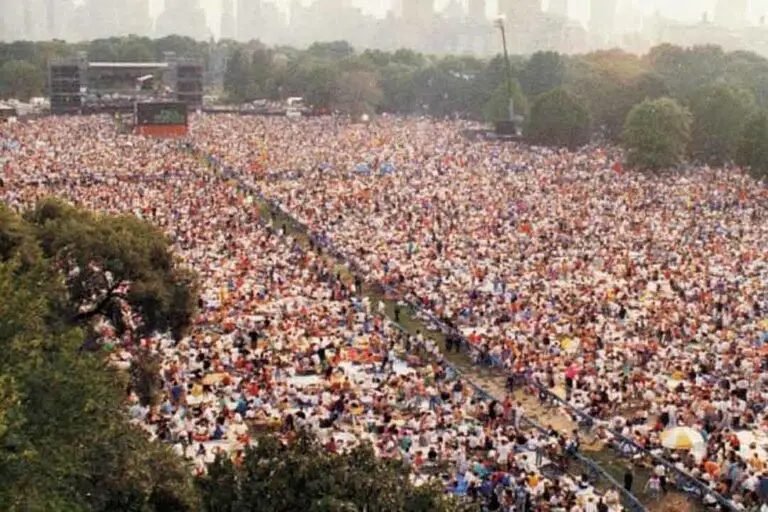
Fans packed the North Meadow hours before showtime. The crowd stretched as far as anyone could see.
The Show Itself
Brooks opened with a recorded intro — “A Heart in New York,” a deliberate nod to Paul Simon, whose 1991 record he was about to break. Then the full band hit and the night became something else entirely.
He played 17 songs in the main set: “Rodeo,” “The Thunder Rolls,” “Unanswered Prayers,” “Friends in Low Places,” “The Dance,” and more. If you were there — and hundreds of thousands of people say they were — the sound of a crowd that size singing “Friends in Low Places” back at the stage is what you remember. It’s not a subtle song. It’s built for exactly this kind of moment.
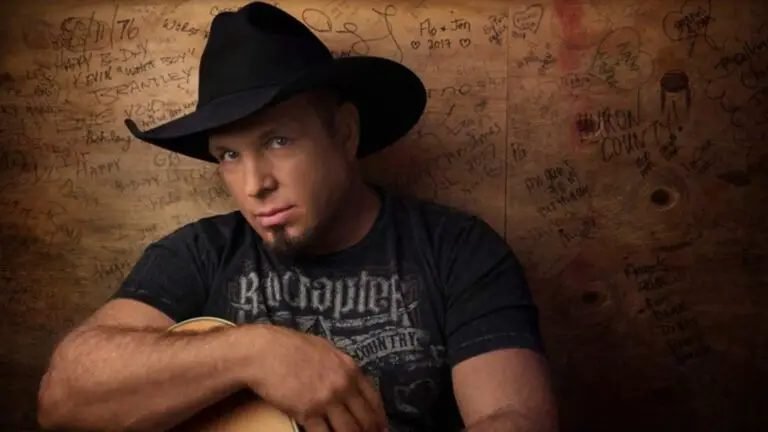
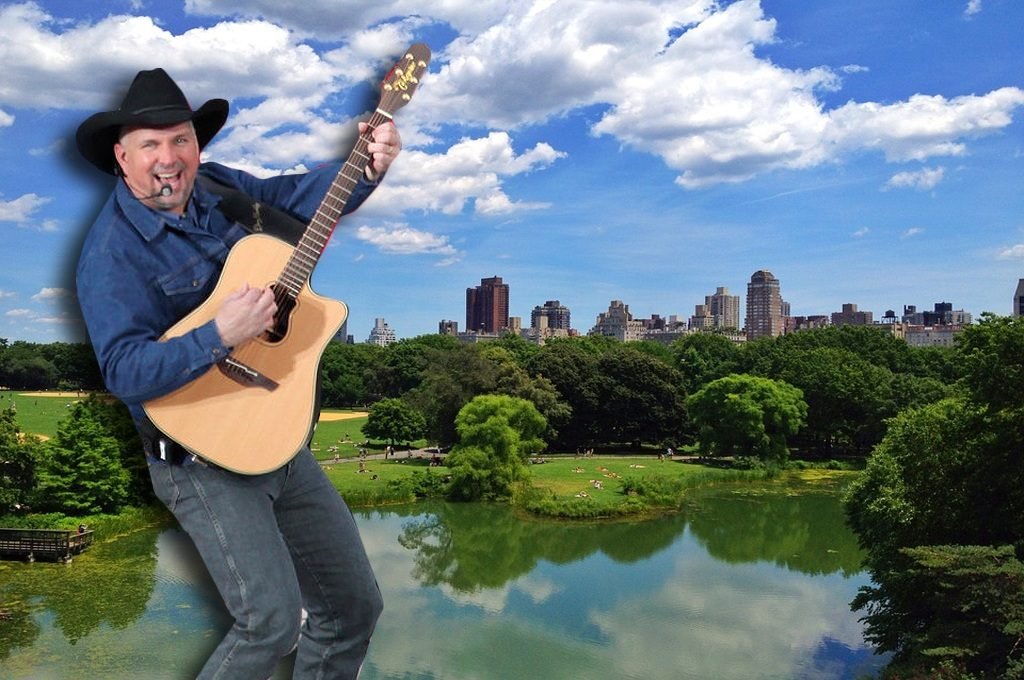
Garth Brooks performing at Central Park on August 7, 1997.
Brooks was also a physical performer in a way that many country artists of the era weren’t. He ran across that 360-foot stage. He worked the crowd at the rail. He climbed rigs. On a stage that wide, with screens that large, you could put almost anyone out there and let the cameras carry them. Brooks never let the cameras carry him.
Billy Joel Shows Up (and Gets His Piano Climbed)
The first surprise guest was Billy Joel, which was exactly the right call for a New York City audience that might have been skeptical about country music taking over their park. Joel performed “New York State of Mind” with Brooks, which turned a concert into something closer to a civic event. Then they did “You May Be Right” — and at some point during that number, Brooks climbed on top of Joel’s piano while Joel kept playing. Joel, who has seen everything, barely broke stride.
They also performed “Ain’t Goin’ Down (‘Til the Sun Comes Up)” together, a Brooks deep cut that isn’t the obvious collaboration choice, which made it better. The pairing worked because neither artist was performing for the other’s crowd. They were performing for the same crowd — one that had wandered in from all over New York and happened to end up on the same meadow.
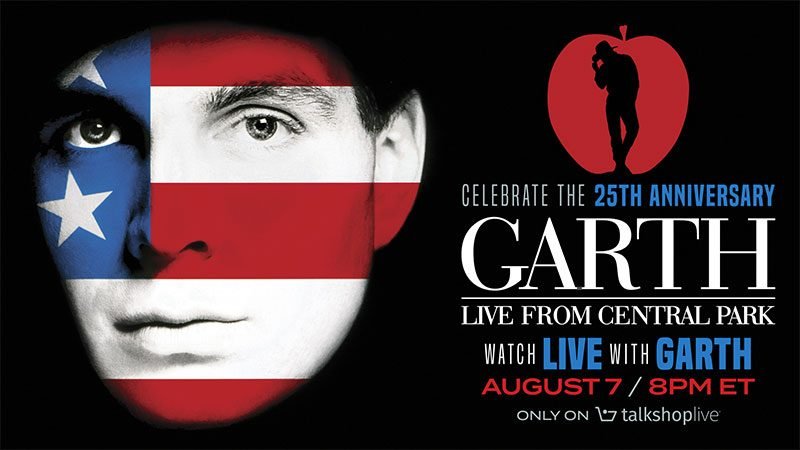
The 1997 Central Park concert marked one of the defining moments in American music history.
For scale, consider Live Aid in 1985, where an international coalition of rock stars coordinated a split global broadcast across two continents. Garthstock was one man, one park, one evening — and he won over a city that wasn’t sure it wanted him there.
Don McLean and “American Pie” Under the Stars
The second surprise guest was Don McLean, who came out for the encores to perform “American Pie” with Brooks and the crowd. There are songs that work at scale and songs that don’t. “American Pie” — eight minutes, multiple verses, a melody that everyone over the age of twelve already knows — works at a scale of nearly a million people better than almost anything ever written. The accounts from people who attended converge on that moment as the one they carry: the sky dark over Central Park, the Manhattan skyline visible beyond the tree line, and a crowd of hundreds of thousands singing a song about the day the music died.
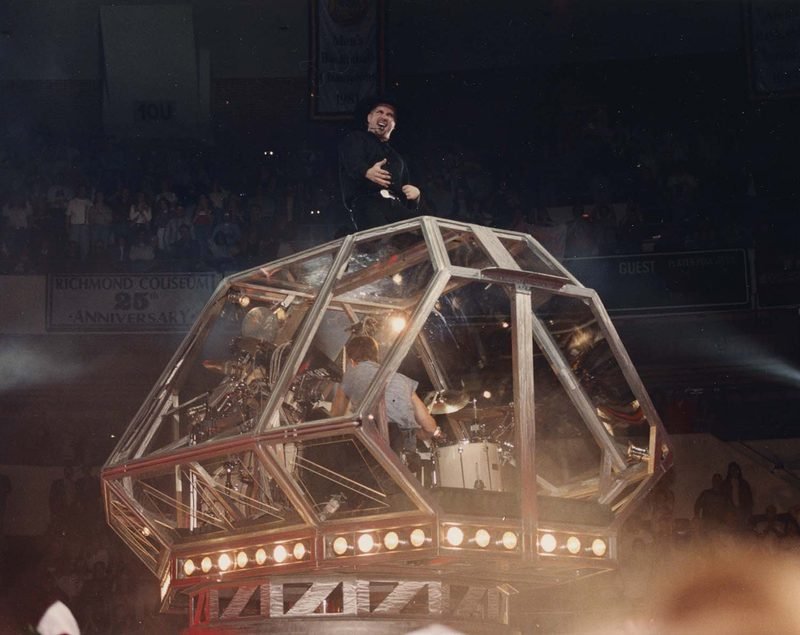
Garth Brooks on his 1996–1998 world tour, one of the highest-grossing tours in history at the time. (Country Music Hall of Fame)
The HBO Special That Rewrote Cable Records
The live broadcast on HBO drew 14.6 million viewers — the highest-rated original program the network aired all year and the most-watched cable special of 1997. “Garth: Live from Central Park” was later nominated for six Primetime Emmy Awards, including Outstanding Variety, Music, or Comedy Special, and Brooks took home the Academy of Country Music Special Achievement Award for the event.
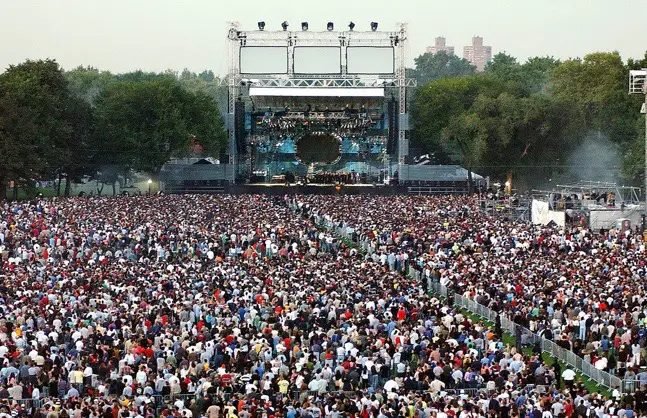
Garthstock became one of the most-watched cable specials in television history.
The special was later included in Brooks’ 2006 DVD box set “The Entertainer.” On the 25th anniversary in August 2022, a streaming replay on TalkShopLive drew another 1.09 million viewers. The appetite for that night has not faded.
Watch a retrospective of the concert:
The Million People Question
The Garthstock attendance figure has never been fully settled. The FDNY estimate was 980,000; Brooks’ camp rounded up to a million; Mayor Rudy Giuliani’s office put the number closer to 300,000. A detailed 6sqft retrospective made the uncomfortable point that when Central Park installed physical click-counters at its entrances after 2000, the Bon Jovi concert in 2008 — another major free show — drew about 48,538 people. Pre-digital outdoor estimates were routinely inflated by promoters and officials with every incentive to claim a historic crowd.
The real number was almost certainly under a million. It does not matter. It was still the largest concert Central Park has ever hosted, larger than Paul Simon’s 1991 record, and larger than anything that came after. The HBO numbers — 14.6 million viewers, six Emmy nominations — are hard figures from a verifiable source. The television audience alone dwarfs most concert attendance claims.
What Garthstock Actually Proved
The lasting argument of that August evening is simpler than the attendance debate suggests. For years, country music’s relationship with cultural gatekeepers in New York and Los Angeles had been arms-length at best. The MTV era had built a spectacle culture around pop and rock that country couldn’t quite crack. Brooks crossed that gap differently: in person, in a park, for free, with Billy Joel at the piano and a million people refusing to go home until Don McLean finished “American Pie.”
Central Park hasn’t seen a crowd that size since. Nobody has tried to match Garthstock at the same venue, and the outdoor concert as pure cultural event — the kind of show that becomes a shared memory for people who couldn’t even get there — has been attempted many times and matched almost never. August 7, 1997 remains the benchmark.
Love the retro era? Browse our shop for vintage finds, retro clothing, and 80s/90s nostalgia gear.
Sources
- Wikipedia: Garth: Live from Central Park — Full concert details, setlist, Emmy nominations, and broadcast figures.
- American Songwriter: On This Day in 1997, Garth Brooks Set a New Attendance Record — Concert history and cultural context.
- NYS Music: Flashback — Garth Brooks Holds the Largest Concert in Central Park History — Local New York coverage and event documentation.
- 6sqft: Why Central Park Hasn’t Had a Six-Figure Crowd Since Garth Brooks’ Concert — Retrospective attendance analysis using modern click-counter data.
- GarthBrooks.com: 25th Anniversary of Garth: Live from Central Park — Official statement and 2022 streaming figures (1.09 million viewers).
The Retro Almanac
A monthly roundup of "on this day" highlights from that month, decades back — plus first dibs on new retro merch drops. No spam, just the good stuff.