On This Day: September 21, 1996 — The Secret Kennedy Wedding
Every other Kennedy wedding in living memory had been a production. This one was built, on purpose, to be the opposite. John Kennedy Jr. spent the better part of a year lying to the press about his relationship status while quietly buying out an entire island inn, chartering private planes under fake names, and handing his closest friends coins instead of paper invitations. The plan worked. By the time the story broke, the couple was already married, and the only photographs that existed were the ones John had agreed to release himself.
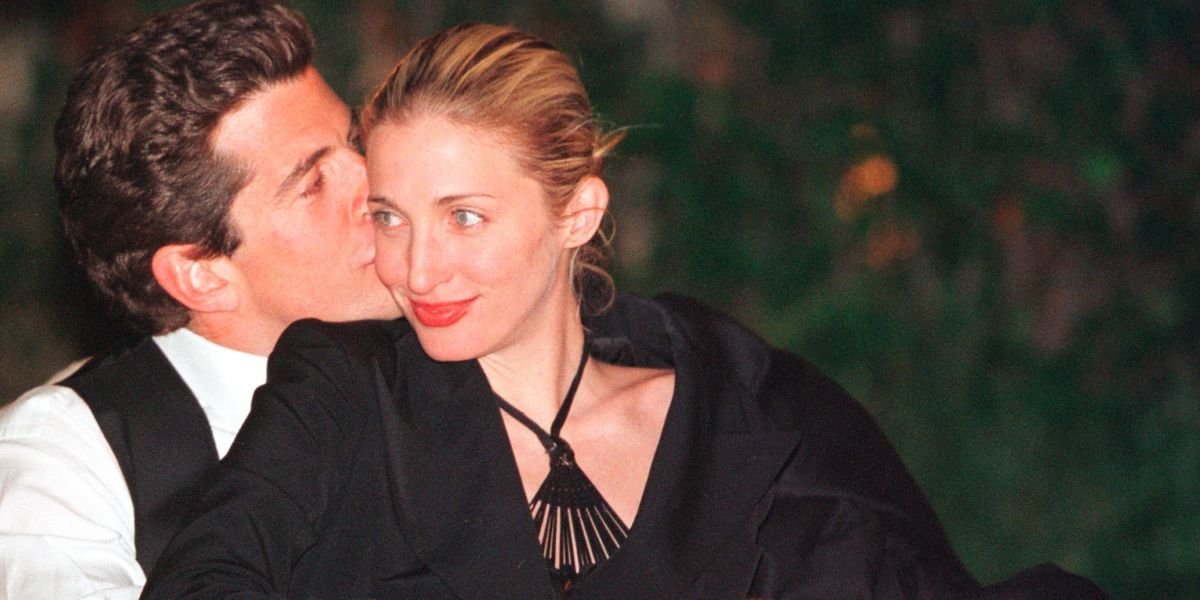
Two of the Most Photographed People in New York
By 1996, John F. Kennedy Jr. had spent his entire life in front of a camera, starting with the three-year-old saluting his father’s casket on live television. He’d graduated law school, failed the New York bar exam twice before passing on the third try, worked briefly as an assistant district attorney, and then walked away from law altogether to launch George, a political glossy that mixed Beltway coverage with celebrity covers. People had already named him the Sexiest Man Alive in 1988, a title that followed him into every restaurant and sidewalk for the next decade.
The Retro Almanac
A monthly roundup of "on this day" highlights from that month, decades back — plus first dibs on new retro merch drops. No spam, just the good stuff.
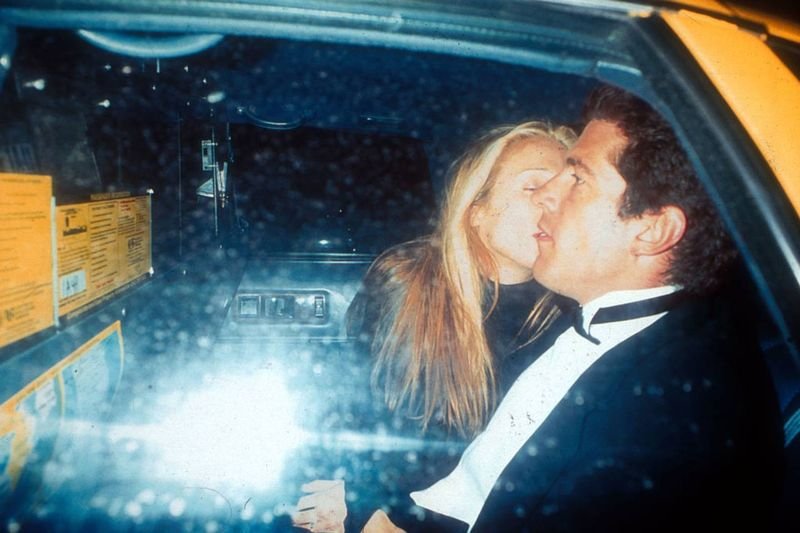
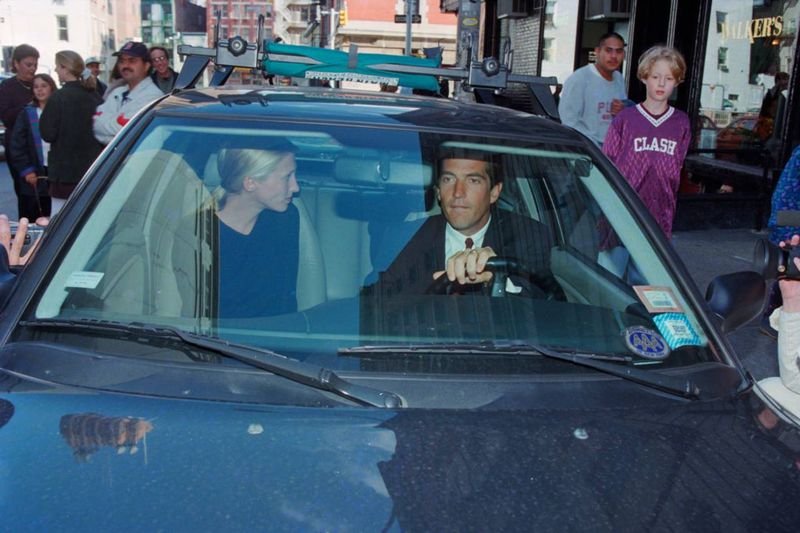
Carolyn Bessette had her own kind of fame, just quieter. She worked in publicity for Calvin Klein, where her sharp, minimalist style — slip dresses, slicked-back hair, no visible effort — helped define the label’s 1990s look before she’d ever been photographed with a Kennedy. Once the tabloids connected her to John in 1994, that anonymity ended overnight. Paparazzi camped outside her Calvin Klein office. Photo agencies paid stakeout crews to follow the couple’s black Wrangler jeep around the West Village.
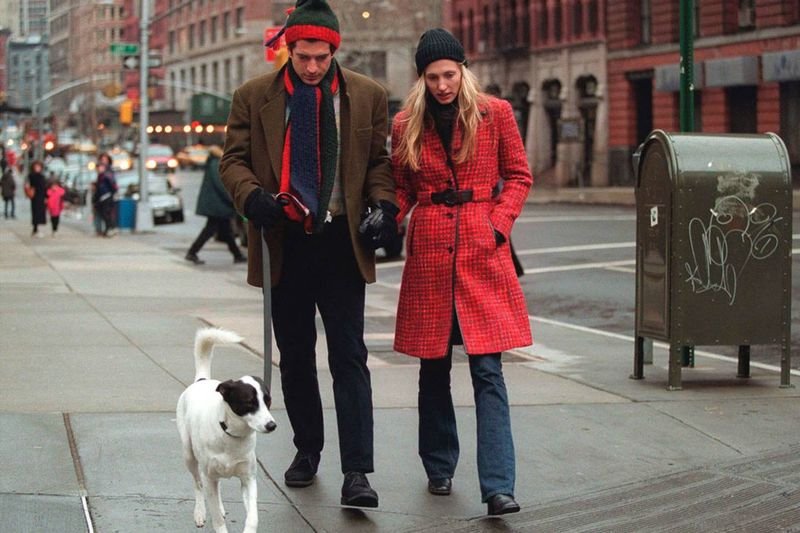
What the photos never showed was two people trying to have an ordinary relationship under constant surveillance. Friends who knew them both said the engagement, when it finally happened in early 1996, was as much a decision about how to survive fame together as it was a proposal. John had watched his mother rebuild a private life after his father’s assassination and his stepfather’s death. He wanted the same thing for his own marriage, and he was willing to spend real money and real effort making it happen.
Renting an Entire Island, Quietly
Cumberland Island sits off the Georgia coast, eighteen miles long, mostly undeveloped, and reachable only by boat. In 1996 it had no telephone lines, no paved roads, and exactly one place to stay: the Greyfield Inn, a converted Carnegie family mansion with a handful of guest rooms. John booked out the entire property for the weekend of September 21 months in advance, telling the owners only that it was for a private family function.
Guests weren’t told what they were actually attending until the invitations went out on September 17 — four days before the ceremony. Each one received an Indian Head nickel to carry to the island as identification; security checked names against a list and matched them to the coin before letting anyone through. Wedding planners were kept off the island entirely, replaced by Kennedy family friends who handled flowers, food, and seating without leaving a paper trail that a reporter could find.
Getting roughly forty people to a private island without tipping off a press corps that had been staking out John’s apartment for two years took its own kind of planning. Guests flew into small regional airports in Georgia and Florida on staggered schedules, then connected to the island by boat or seaplane rather than the main public ferry that tourists use today. Some were told only to clear their calendars for a weekend, with no destination attached, until a phone call confirmed the trip at the last possible moment. The couple’s own travel was arranged separately from everyone else’s, on the theory that reporters tailing John would learn nothing useful even if they somehow succeeded.
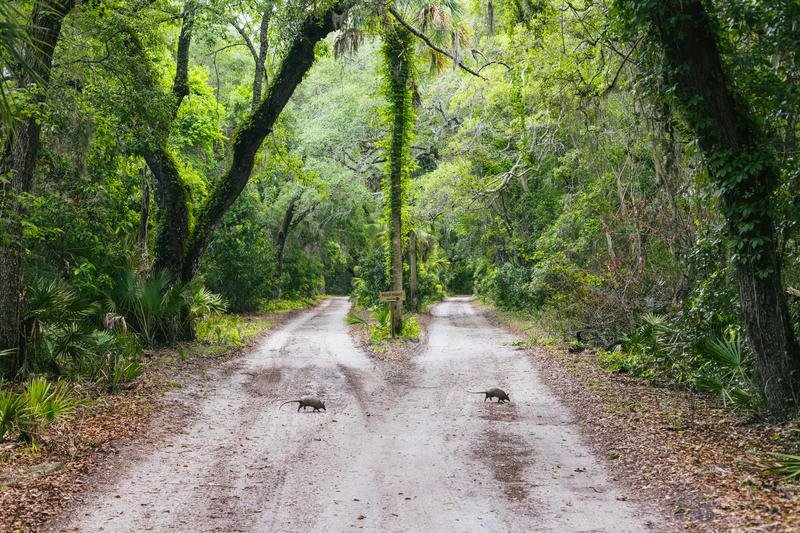
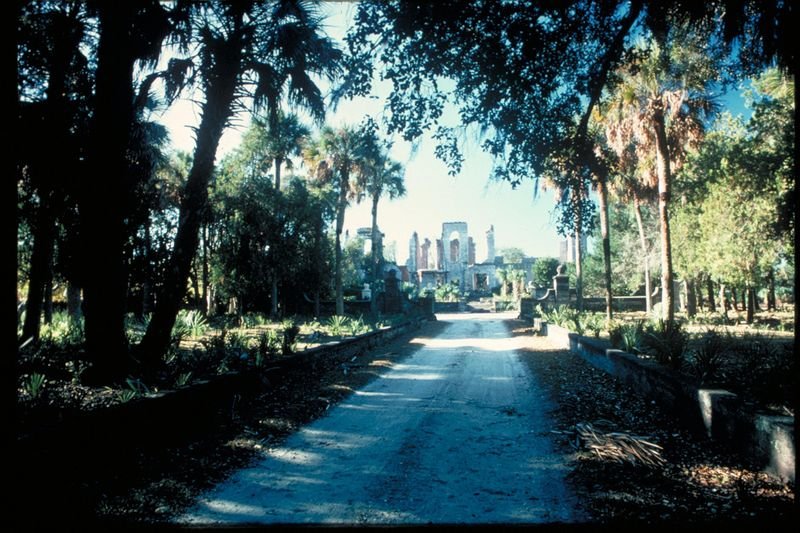
The logistics only worked because the island itself was already isolated. Even now, most of Cumberland is accessible only through a limited daily ferry and a National Park Service permit system, and large stretches of it look almost exactly as they did in 1996 — sand roads cutting through live oak canopy, wild horses wandering unfenced, and the crumbling shell of the old Carnegie mansion, Dungeness, sitting half-swallowed by palmetto scrub a short walk from where the reception tent went up.
A Wedding Lit by Candlelight
The ceremony itself took place at the First African Baptist Church, a one-room chapel built in 1893 by formerly enslaved residents of the island and rebuilt by their descendants in the 1930s. It seats around thirty people on wooden pews, has no electricity, and was lit entirely by candles for the ceremony — not for atmosphere, but because there was no other option. Carolyn wore a bias-cut silk crepe gown by Narciso Rodriguez, then a little-known designer working at Cerruti, and the dress went on to influence minimalist bridal fashion for the next two decades.
John Kennedy Jr.’s cousin, Anthony Radziwill, stood as best man; he was already fighting the cancer that would kill him three years later, and friends have since said John moved up his own wedding timeline in part so Anthony could be there healthy enough to stand beside him. The reception that followed was held under a tent at Greyfield, with a live band, a dance floor built for the weekend, and a bonfire on the beach that ran past midnight for guests who stayed up.
Only one photographer was allowed anywhere near the event: Denis Reggie, whose sister was married to Ted Kennedy’s son and who had photographed several Kennedy family weddings before. He wasn’t hired as press — he was a guest with a camera, shooting on spec with the family’s blessing. That single decision is the reason there’s any authorized documentation of the day at all.
Beating the Tabloids at Their Own Game
News of the wedding leaked almost immediately once the ceremony ended, and every major outlet in the country wanted photos. Rather than let paparazzi shots define the story, the Kennedy camp released one of Reggie’s images — John kissing Carolyn’s hand outside the chapel — to the Associated Press within days. It ran on front pages worldwide and became, by most measures, the most reproduced wedding photograph of the decade. Handing over a single controlled image, instead of letting a bidding war for stolen photos play out, headed off exactly the kind of chaos that had already made both their lives difficult for two years.
It’s a strategy that looks obvious now — celebrities manage their own image releases constantly — but in 1996 it was closer to unheard of. Most famous couples either fought the tabloids for years or gave in and did the staged magazine spread. John split the difference: one real, unposed photo, on his terms, and nothing else. The gambit meant the world got a wedding picture without ever getting a wedding story, and the couple bought themselves a few more months of relative privacy before the marriage itself became tabloid fodder again.
Once the news did break, the press response validated every precaution the couple had taken. Helicopters chartered by news outlets circled the island within a day of the ceremony, and boats carrying photographers anchored as close to the shoreline as the National Park Service would allow, hoping for a long-lens shot of anything resembling a bride. None of them got one. By the time the aerial coverage started, the reception had ended, the guests had scattered back to their staggered flights, and there was nothing left on Cumberland Island to photograph except an empty tent coming down.
The marriage didn’t stay easy. Friends described a couple who fought publicly on Manhattan sidewalks as often as they were photographed happy, and the same fame that made the secret wedding necessary never actually let up once they were married. None of that undoes what they pulled off on Cumberland Island. For one weekend, two of the most photographed people in the country got a ceremony that belonged only to them.
Less than three years later, on July 16, 1999, John, Carolyn, and Carolyn’s sister Lauren Bessette died when the plane John was piloting crashed into the Atlantic off Martha’s Vineyard. The wedding photograph Reggie shot in 1996 is now the image most people picture first when they think of either of them — not a tragedy, but two people who, for one night, managed to keep something for themselves.
The First African Baptist Church still stands on Cumberland Island today, reachable only through the National Park Service’s guided Lands and Legacies tour. It looks almost exactly as it did that night — no electricity, no crowd, just a small wooden room that briefly held the wedding every magazine in America wanted to see and almost didn’t get to.
Love the retro era? Browse our shop for vintage finds, retro clothing, and 80s/90s nostalgia gear.
Every decade seems to get one wedding people can’t stop talking about. The 1980s had Charles and Diana’s televised spectacle in front of a global audience of 750 million. The 1990s answered with the opposite instinct entirely — a wedding built to be seen by almost no one, on an island most Americans couldn’t find on a map. It’s a split that says something about how the two decades handled fame in general, the same gap between spectacle and control you can see in how NBC bet on The Cosby Show or in the way Janet Jackson reintroduced herself that same era — less noise, more precision.
Sources
- TODAY — Inside JFK Jr. and Carolyn Bessette’s Top-Secret Wedding — details on the Cumberland Island logistics and secrecy measures
- TODAY — The Only Photographer at JFK Jr.’s Wedding Shares His Memories — Denis Reggie’s account of shooting the ceremony
- Wikipedia — Wedding Dress of Carolyn Bessette — background on the Narciso Rodriguez gown
- Wikipedia — First African Baptist Church at Raccoon Bluff, Cumberland Island — history of the chapel
The Retro Almanac
A monthly roundup of "on this day" highlights from that month, decades back — plus first dibs on new retro merch drops. No spam, just the good stuff.