Garbage Pail Kids History: 7 Reasons These 1985 Cards Won
Garbage Pail Kids turned a five-cent piece of Topps bubble gum into the most banned trading card set in American school history. In June 1985, a sticker called Adam Bomb — a chubby-cheeked kid pressing a detonator while a mushroom cloud erupted from his exposed skull — slipped into wax packs alongside a stick of pink gum, and by Christmas every lunchroom in the country had been quietly poisoned. Parents called the principal. Principals called Topps. Topps shipped Series 2. The crusade never really stopped, and neither did the cards.
How Garbage Pail Kids Started in a Topps Office in Brooklyn
The whole thing came out of a back room at Topps in Bush Terminal, Brooklyn, where a young cartoonist named Art Spiegelman had been on the company payroll since 1966, dreaming up gags for Wacky Packages and Garbage Can-dy. By 1984, Cabbage Patch Kids dolls were the Christmas hysteria of the moment — riots at Toys “R” Us, scalpers in suburban parking lots, news anchors using the phrase “moral collapse” with a straight face. Spiegelman, who would win a Pulitzer eight years later for Maus, looked at the doll line and saw the perfect target.
The Retro Almanac
A monthly roundup of "on this day" highlights from that month, decades back — plus first dibs on new retro merch drops. No spam, just the good stuff.
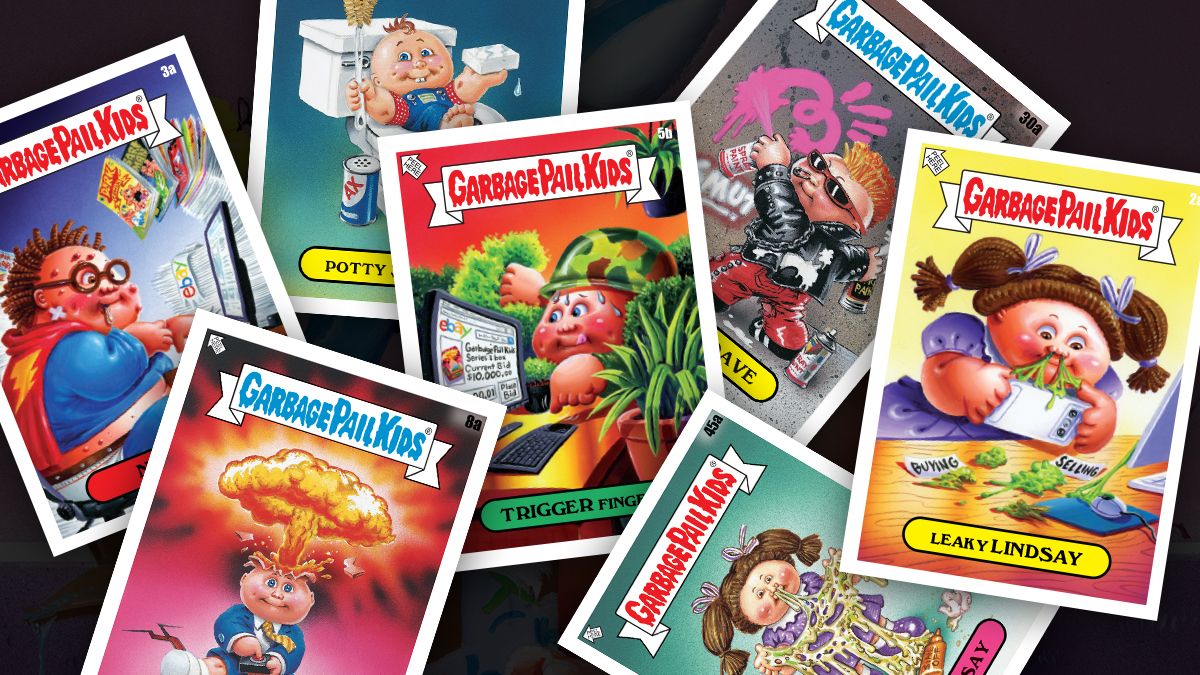
Working with Mark Newgarden and Topps lifer Jay Lynch, Spiegelman sketched the first wave of mutant babies and handed the painting work to a young illustrator named John Pound. Pound delivered the first run alone, which is wild to think about — every one of those original Series 1 portraits, the gross-out yearbook of suburban America, came from one guy’s airbrush. The team named each character with a deliberately stupid pun: Adam Bomb, Nasty Nick, Leaky Lindsay, Potty Scotty, Up Chuck. Topps released Original Series 1 in June 1985 — 41 paintings, each printed in two name variants for 82 stickers total — and the wax packs were gone from drugstore counters within a week.
Adam Bomb and the Mushroom Cloud That Sold a Generation
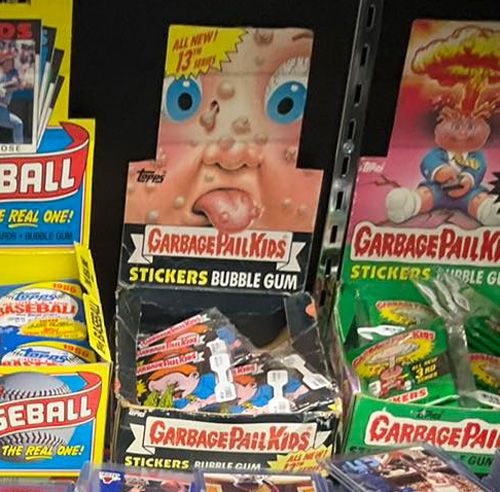
Adam Bomb is card #8a in the set. He is the face of Garbage Pail Kids the way Mickey is the face of Disney — except Adam is detonating himself. Pound painted him with one hand on a plunger, an open scalp, and a nuclear cloud rising from the top of his head. Topps liked the image so much they put Adam on the wax pack wrapper and the box for the first five series. If you opened a pack of GPKs in 1985, you saw Adam before you saw the gum.
People forget how nuclear-anxious 1985 actually felt. The Day After had aired on ABC less than two years earlier. WarGames was still in second-run theaters. Reagan was joking on a hot mic about bombing Russia. Adam Bomb wasn’t random gross-out humor — he was a Reagan-era political cartoon disguised as a kid’s sticker, and every 9-year-old in America stuck him to a Trapper Keeper without knowing they’d been radicalized.
Why Parents Lost Their Minds in 1986
Schools started banning the cards before the lawsuits even began. By late 1985, Chicago Tribune columnist Bob Greene was writing syndicated pieces about a student who had been bullied with a “Most Unpopular Student” card left on his desk. Other adults worried that any kid named Susie was about to be called Oozy Susie for the rest of fourth grade. Teachers confiscated the stickers in homeroom and put them in the desk drawer with the rubber bands and the broken pencil sharpeners. PTA newsletters used the word “tasteless.” It only made the cards harder to get and therefore more valuable.
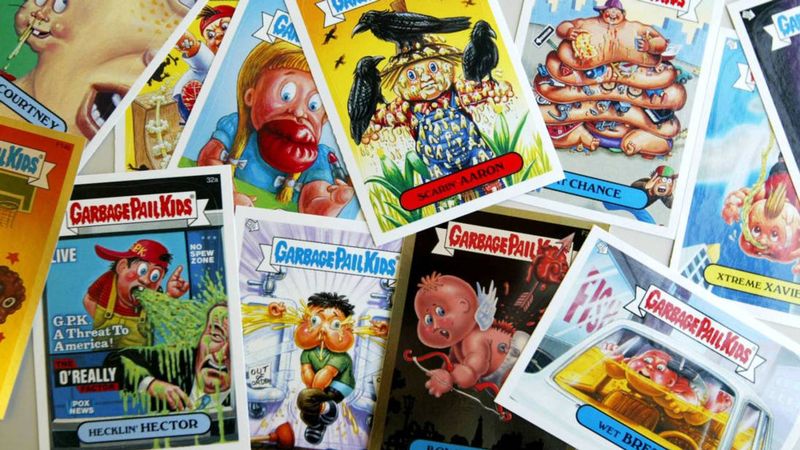
The truth is, most of the parents pearl-clutching about Adam Bomb were the same parents who would two years later go to war over Tipper Gore’s PMRC hearings and the Parental Advisory sticker. Same panic, different package. The cards weren’t corrupting anyone — they were teaching a generation that authority figures could be flustered by a piece of paper that cost a nickel. That’s a lesson that sticks.

The Cabbage Patch Lawsuit That Almost Killed Them
In May 1986, Original Appalachian Artworks — the company behind Cabbage Patch Kids — filed a $30 million suit in Atlanta federal court alleging copyright infringement, trademark infringement, and unfair competition. Topps tried the fair-use parody defense. It did not work. On August 29, 1986, Judge G. Ernest Tidwell ordered Topps to stop producing the stickers while he considered the full case, writing that there is “a fine line between parody and piracy” and that the GPK stickers were “an attempt to make money.”
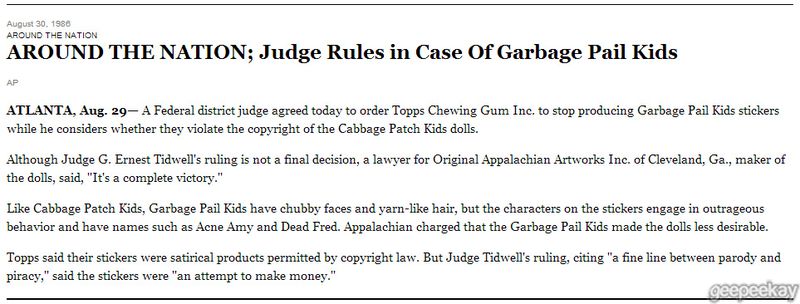
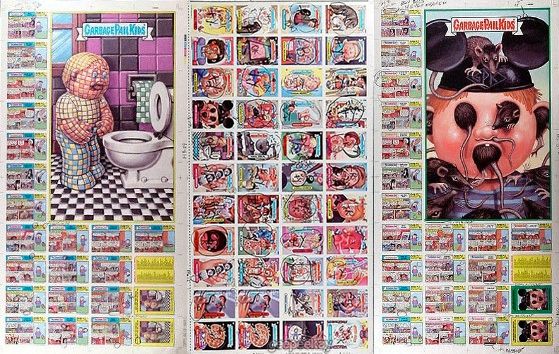
That ruling did not, however, stop the trains. Series 5, 6, 7 and 8 were already in production. The court order created a months-long collector frenzy in the fall of 1986 because nobody knew if the cards would ever be printed again. Eventually Topps settled out of court in February 1987, agreeing to round-down the oval heads, swap the yarn-like hair for normal hair, and change the logo. Anyone who collected past Series 9 can see the difference. The mutated kids stuck around. The Cabbage Patch resemblance did not.
The 1987 Movie That Should Have Ended Everything
Atlantic Releasing greenlit a live-action film almost the moment the suit was filed. The Garbage Pail Kids Movie hit theaters on August 14, 1987, directed by Rod Amateau, starring Mackenzie Astin as Dodger and the late Anthony Newley — yes, that Anthony Newley, the man who wrote half the Willy Wonka soundtrack — as a wizard named Captain Manzini. The film cost $1 million and made roughly $1.5 million. Roger Ebert walked out. It has a 0% on Rotten Tomatoes and lives forever on every “worst movies ever” list.
And yet. Every 12-year-old who saw it remembers it, because the seven main Kids in the film were animatronic puppets with rubberized faces that look, even now, like something John Carpenter would have invented to scare an adult. The puppeteering was done by MMI, the same shop that built the creatures for The Howling. The film is genuinely unwatchable. The puppets are genuinely iconic. Both things are true.
What a 1985 Adam Bomb Card Costs in 2026
Forty years later, the wax-pack economy never died. A standard 1985 Adam Bomb in PSA 10 Gem Mint has sold for over $7,600 at auction. The rare glossy-back checklist variant — the back has a checklist instead of a sticker — has crossed $25,000. Nasty Nick #1a, the first card in the set, sits in the same range. The PSA registry now tracks Garbage Pail Kids grades the same way it tracks 1952 Topps Mickey Mantles, which is its own kind of cosmic joke.
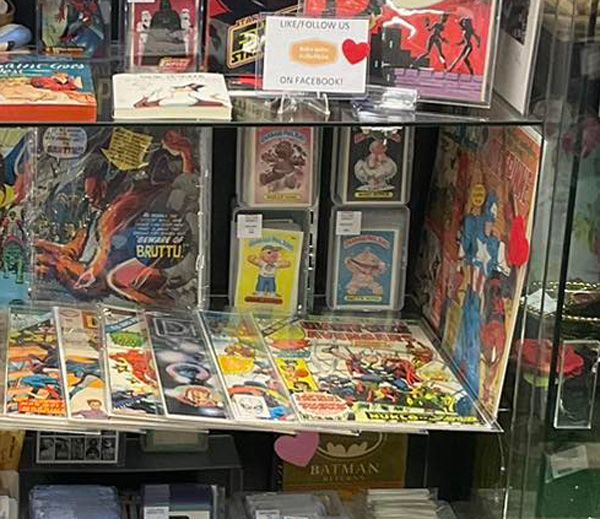
For context, here is what each tier of the original 1985 market looks like today:
- Common Series 1 cards (raw, played-with): $5–$20 per card
- Original Series 1 wax pack (sealed): $400–$1,500
- Full Series 1 wax box (sealed, 48 packs): $20,000+
- Adam Bomb 8a (PSA 9): $500–$1,500
- Adam Bomb 8a (PSA 10): $7,000–$9,000
- Glossy checklist variant in PSA 10: $14,000–$25,000
You probably threw yours out. Your mom probably threw yours out. So did everybody else’s, which is exactly why the survivors are worth a mortgage payment. The other detail collectors fight over is the print variant — early 1985 print runs have thinner ink layers and a slightly matte finish, while later 1985 reruns from the second print sheet have a glossier coat. Spotting the difference takes practice and a loupe, and grading services charge accordingly. A Series 1 wax pack that has never been opened sits in a hard plastic shell on the desk of more than one Wall Street trader I have heard about.
Why Topps Keeps Making Them Anyway
Topps could have walked away after the Cabbage Patch settlement. They did not. The original run continued through Series 15 in 1988, paused, then came roaring back in 2003 with All-New Series 1, this time with new artists like Joe Simko picking up where John Pound left off. Then came Flashback sets. Then Chrome. Then Brand-New Series. Then sketch cards and 1-of-1 inserts and convention exclusives.
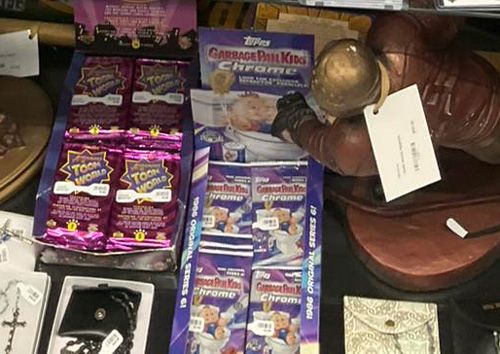
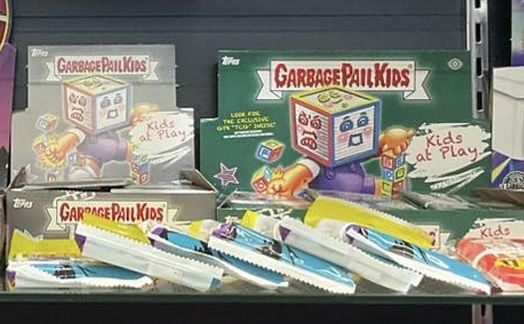
The most recent 2024 Kids at Play series sold out at hobby shops the day it dropped. NFT drops in 2021 sold out in minutes. The reason the franchise refuses to die is simple: every new generation of kids needs a sticker their parents can’t stand, and every Gen X parent secretly wants to buy them one. The cards became their own tradition.
The Real Reason They Still Hit Different
Spiegelman has gone on the record more than once saying the cards were “underground comix for kids.” That’s the actual takeaway. The same wave of cartoonists who made R. Crumb’s comics impossible to find at the drugstore got hired by Topps to make a candy product, and they used it to slip their sensibility — gross-out humor, anti-authority sarcasm, a refusal to take any of it seriously — into every elementary school in the country. It worked because parents couldn’t tell the difference between art they didn’t like and art that was dangerous, and they reacted the same way to both.
That’s the part you don’t see on the back of the wax pack. The cards beat the Cabbage Patch Kids in the only fight that mattered — cultural memory. Try naming a single Cabbage Patch doll by character name without checking Google. Now try Nasty Nick. Adam Bomb. Leaky Lindsay. Potty Scotty. The mutants won.
Are Garbage Pail Kids Coming Back?
They never left. They sat in a shoebox in your parents’ attic, waiting for you to grow up and discover that the PSA-graded Adam Bomb you tossed in 1987 is now a college tuition payment. Topps still drops a new series every year. The 2017 documentary 30 Years of Garbage introduced the franchise to a generation that had never heard of Cabbage Patch Kids, and that’s the inversion that should bother anybody who still owns the Cabbage Patch doll. The parody outlived the original. Garbage Pail Kids weren’t a passing schoolyard fad — they were a slow-rolling underground comic strip that infiltrated a generation through bubble gum and refused to leave.
If you want more on the era when adults absolutely lost the plot over kid culture, take a look at the toys that got banned for actually hurting kids or revisit why the 80s nostalgia industry refuses to age out. The pattern repeats every decade. The cards just got there first.
Sources
- Garbage Pail Kids — Wikipedia — Full overview of series history, artists, and legal disputes
- The Shocking History of Garbage Pail Kids — Den of Geek — 35-year retrospective covering the cultural impact
- The Snot-Soaked History of the Garbage Pail Kids — Mental Floss — Deep dive on the Spiegelman-era development
- Thirty Years of Garbage Pail Kids — Vice — Mark Newgarden interview on the Topps creative team
- Garbage Pail Kids will stop mocking Cabbage Patch Kids — UPI Archives, 1987 — Primary contemporaneous reporting on the Topps settlement
- Story Behind the Cards: Garbage Pail Kids — CGC — Card grading and valuation context
- History of Garbage Pail Kids — GeePeeKay — Fan archive with original printer sheets and court documents
Browse retro and vintage-inspired apparel at the RetroRadical shop →
The Retro Almanac
A monthly roundup of "on this day" highlights from that month, decades back — plus first dibs on new retro merch drops. No spam, just the good stuff.