On This Day: July 5, 1996 — Dolly the Sheep Is Born
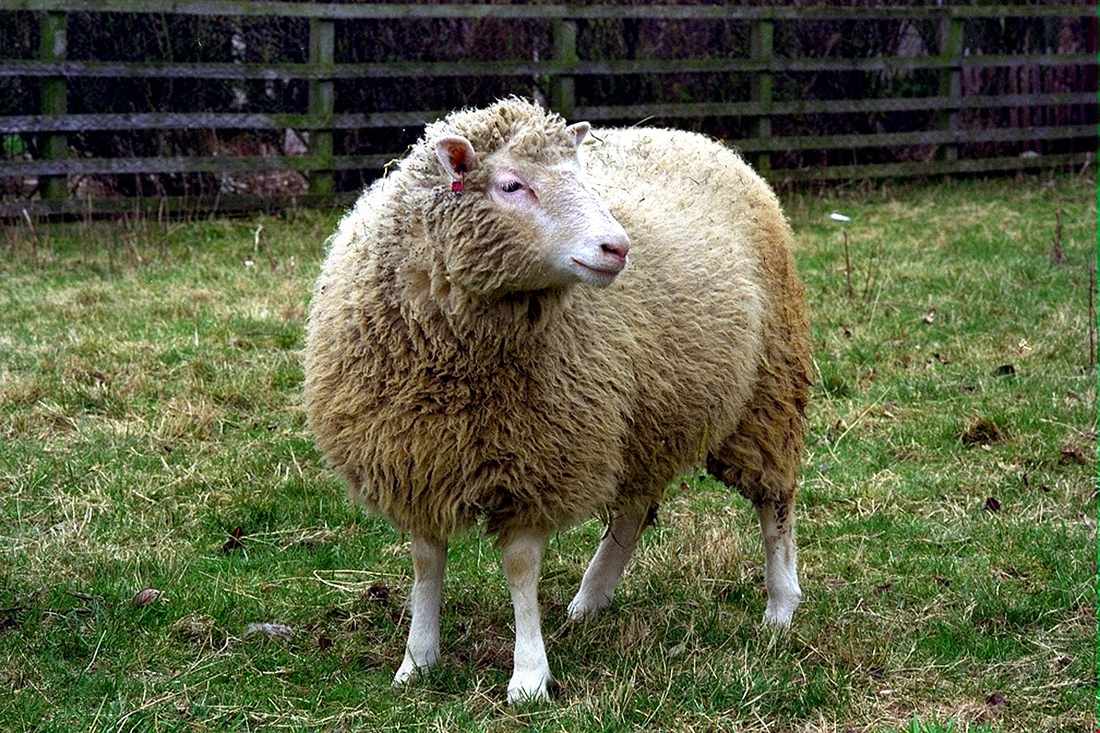
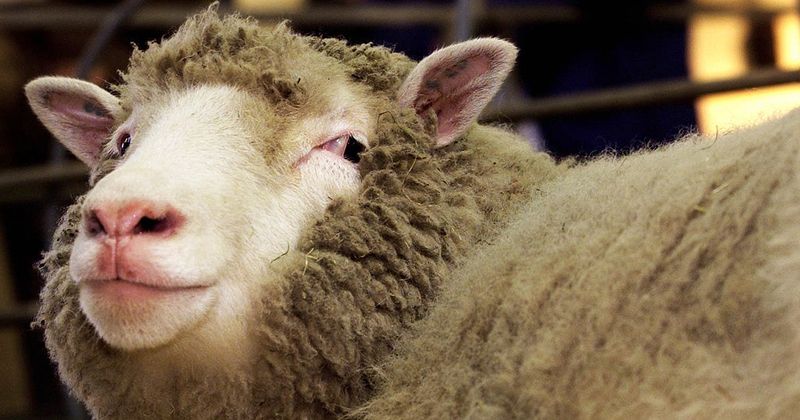
She was a plain white Finn-Dorset ewe with a slightly grubby fleece, and for the first seven months of her life almost nobody knew she existed. Dolly the sheep looked like every other lamb in the barn at Roslin, just south of Edinburgh. She was, in fact, one of the most radical science experiments of the twentieth century — a living copy grown from a single frozen cell that had been sitting in a lab freezer. When the world finally met her in February 1997, the reaction ran from wonder to outright panic.
A Lamb Born in Secret in a Scottish Shed
Dolly arrived at 5:00 p.m. on July 5, 1996, weighing 6.6 kilograms and looking entirely ordinary. Only a handful of researchers and a vet were in the room. There was no press release, no photograph in Nature, no announcement. The Roslin team had a reason to keep quiet: they needed months to run genetic tests confirming she really was a clone and not the product of some accidental contamination in the lab.
The Retro Almanac
A monthly roundup of "on this day" highlights from that month, decades back — plus first dibs on new retro merch drops. No spam, just the good stuff.
The institute itself was a modest government-funded agricultural research station, not a gleaming biotech campus. Much of the funding came from the Ministry of Agriculture and a small Edinburgh company, PPL Therapeutics, that wanted sheep engineered to produce medicines in their milk. Nobody set out to make a global celebrity. They set out to solve a farming problem — and stumbled into rewriting biology.
How Do You Clone a Sheep From a Single Cell?
The technique was called somatic cell nuclear transfer, and the short version is elegant enough to explain over coffee. The team took a cell from the mammary gland of a six-year-old Finn-Dorset ewe. Separately, they took an unfertilized egg from a second sheep and sucked out its nucleus, leaving an empty shell. Then they slid the udder cell next to the empty egg and hit it with a pulse of electricity, which fused the two together and jolted the hybrid into dividing as if it had just been fertilized.
That embryo was implanted into a third sheep, a Scottish Blackface surrogate, who carried it to term. Dolly therefore had three mothers and no father: one gave the DNA, one gave the egg, one gave the womb. The genuinely shocking part was philosophical, not technical. Biologists had long assumed that once a cell “decided” to become skin or udder or bone, that decision was permanent. Dolly proved a mature, specialized cell could be wound all the way back to a blank embryonic state. That assumption didn’t just bend. It broke.

Why Name Her “Dolly”?
The name is the best bit of trivia in the whole story, and it is entirely on-brand for a lab full of scientists with a sense of humor. Dolly was grown from a mammary — an udder — cell. Asked how they landed on the name, Ian Wilmut said they couldn’t think of a more impressive pair of mammary glands than Dolly Parton’s. The country legend took it as a compliment. “There’s no such thing as baaaa-d publicity,” she reportedly quipped. A cloned sheep named after a Nashville icon is exactly the kind of detail that made Dolly stick in the public imagination in a way that a lab code number never could.
277 Tries for One Lamb
Cloning in 1996 was not a reliable assembly line. It was closer to lightning in a bottle. Dolly was the single live birth out of 277 fused egg-cell pairs — a success rate barely above one third of one percent. Most attempts failed to develop at all; others ended in miscarriage or lambs that died soon after birth. That brutal ratio is a big reason the team stayed cautious about the ethics of ever pointing the technique at humans, and it fed straight into the storm that followed.
Seven Months of Silence, Then a Bombshell
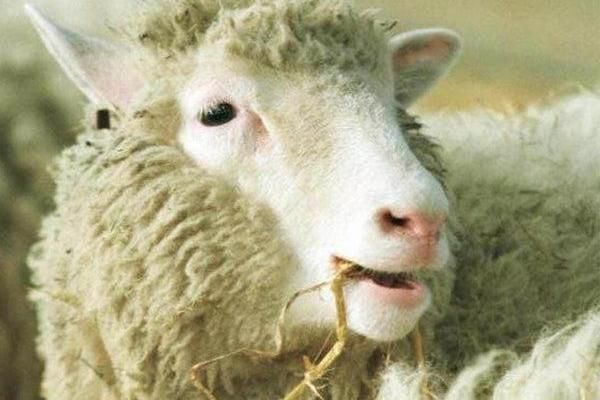
On February 22, 1997, Roslin went public, timed to a paper in Nature titled “Viable Offspring Derived from Fetal and Adult Mammalian Cells.” The reaction was instant and enormous. Within days Dolly was on the front page of newspapers on every continent. She became, by a wide margin, the most photographed sheep in history, complete with a spot on a US chat show and a Time magazine cover treatment.
The tabloids reached straight for the sci-fi panic button. Headlines screamed about armies of clones and copies of the rich and famous. Roslin later exhibited a papier-mâché model of Dolly pasted over with those very “CLONE SHOCK” front pages — a tidy monument to how fast a farming experiment became a referendum on the future of humanity.

The Clone Panic Nobody Was Ready For
Here is the honest read on 1997: the science was sober and the public reaction was not. Within weeks President Bill Clinton banned federal funding for human cloning research and asked a bioethics commission to report back in 90 days. The Vatican condemned it. Nineteen European nations signed a protocol against cloning people. Almost everyone leapt straight past “we cloned a farm animal to make better medicine” and landed on “someone is going to Xerox a person.”
That leap was understandable but wildly premature. Wilmut himself repeatedly said human cloning was both technically far off and ethically wrong, and he was right on both counts — nearly three decades later, no cloned human exists. The real story was quieter and, arguably, far more important than the movie-plot fears suggested.
Dolly’s Life and Her Six Lambs
Dolly lived her whole life at Roslin and, cloning aside, was a completely normal sheep. Bred with a Welsh Mountain ram named David, she conceived naturally and delivered a healthy lamb, Bonnie, in April 1998. Twins Sally and Rosie followed in 1999, then triplets — Lucy, Darcy and Cotton — in 2000. Six lambs, all ordinary, all conceived the usual way. That mattered: it showed a clone could reproduce normally and pass on healthy genes, quieting one early fear that cloned animals would be biological dead ends.
Arthritis, Illness, and an Early Goodbye
Dolly’s health was where the story turned bittersweet. In 2001 she developed arthritis in a hind leg, unusually early for a sheep, which stoked speculation that she had been “born old” — that inheriting a six-year-old cell’s DNA meant inheriting six-year-old wear and tear. Then, in early 2003, she contracted ovine pulmonary adenocarcinoma, a contagious lung cancer caused by a virus that spreads among sheep kept indoors. On February 14, 2003, with the disease advancing, she was put down at six and a half years old. A Finn-Dorset typically lives eleven or twelve years.
The premature-aging theory made for great headlines, but it hasn’t held up well. Other sheep housed alongside Dolly caught the same lung virus, and a 2016 follow-up study on thirteen aged clones — including four grown from Dolly’s own cell line — found no sign of early aging beyond mild osteoarthritis. The likeliest verdict is that Dolly died of a common barn infection, not because cloning cursed her with a short clock.
Where Dolly Is Now
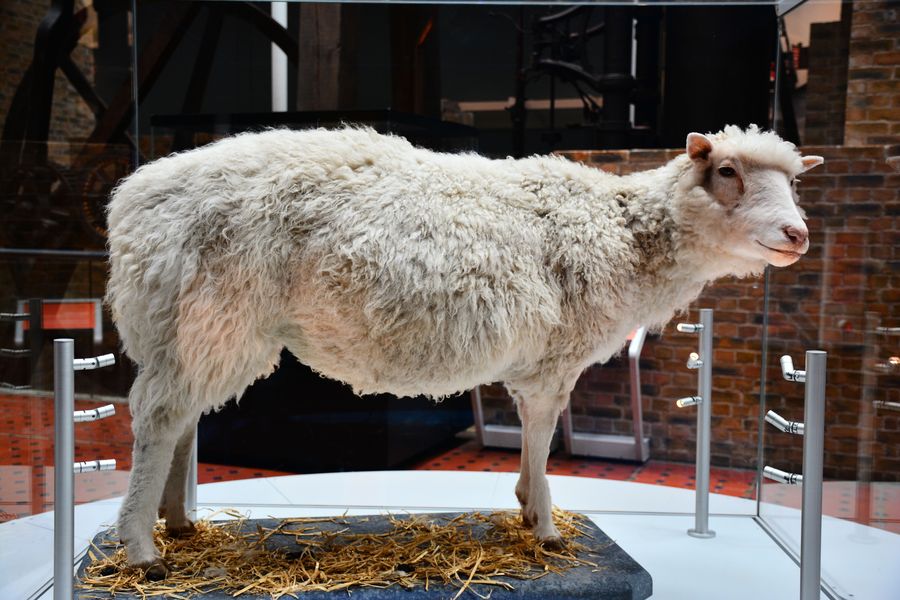
Dolly didn’t disappear into a research archive. After she died, the Roslin Institute had her preserved by taxidermists and donated her to the National Museum of Scotland in Edinburgh, where she has stood on a slow rotating turntable since 2003. She is one of the museum’s most popular exhibits, and in 2023 the museum even added wool from one of her shearings to the collection. If you ever find yourself in Edinburgh, you can stand a foot away from the animal that started the whole cloning era.
Dolly’s Real Legacy Isn’t What You Think
The armies of clones never showed up. What Dolly actually kicked off was a revolution in stem cell science. Her proof that a mature cell could be reprogrammed to an embryonic state pointed researchers toward induced pluripotent stem cells — ordinary adult cells coaxed back into blank slates that can become any tissue. That breakthrough won Shinya Yamanaka a share of the 2012 Nobel Prize and now underpins a huge slice of regenerative medicine, from lab-grown organ tissue to disease modeling.
Cloning itself didn’t vanish either. After Dolly, scientists cloned pigs, cattle, horses, deer and dogs, and in January 2018 the same nuclear-transfer method produced the first cloned primates, two macaques named Zhong Zhong and Hua Hua. Pet-cloning companies now exist. None of it — the stem cells, the endangered-species work, the ethics debates that still run today — happens without one grubby ewe born in a Scottish shed on July 5, 1996. Not a bad legacy for a sheep named after a country singer.
July 5 turned out to be a hinge in scientific history, right alongside other summer milestones like the Mars Pathfinder landing of July 1997 and the Shuttle-Mir docking of 1995. The 1990s were quietly stuffed with breakthroughs that felt like science fiction — the same decade that gave us secret pager codes also gave us the first cloned mammal. Dolly is a reminder that the future usually arrives without fanfare, wearing a wool coat.
Sources
- Dolly (sheep) — Wikipedia — Full biography, cloning method, health history, offspring and legacy.
- The Story of Dolly the Sheep — National Museums Scotland — Museum account of Dolly’s creation and her display in Edinburgh.
- Dolly at 20: The Inside Story — Scientific American — Behind-the-scenes on the Roslin team and Dolly’s scientific impact.
- Why Scientists Kept Dolly’s Birth Secret — Smithsonian Magazine — On the seven-month gap between birth and announcement.
- Dolly — Encyclopaedia Britannica — Overview of the somatic cell nuclear transfer breakthrough.
The Retro Almanac
A monthly roundup of "on this day" highlights from that month, decades back — plus first dibs on new retro merch drops. No spam, just the good stuff.