The Freddie Mercury Tribute Concert: What Happened When Rock Said Goodbye
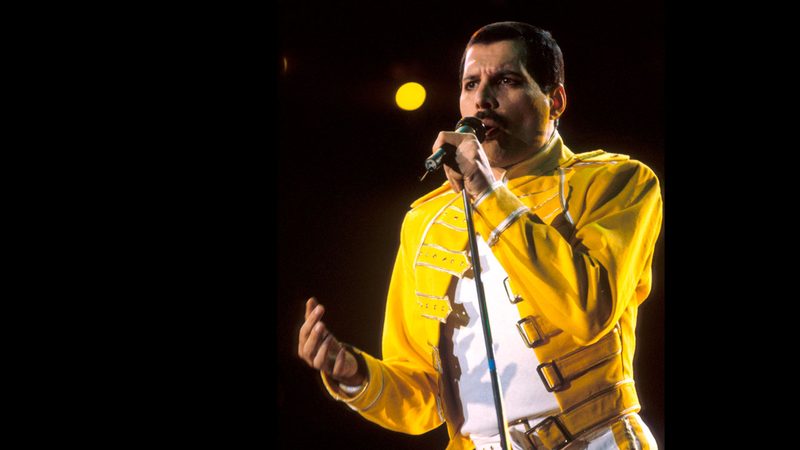
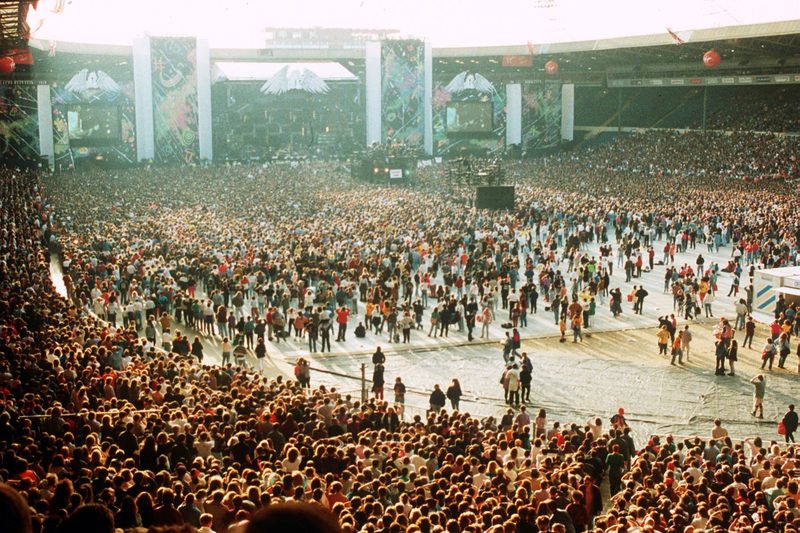
The Freddie Mercury Tribute Concert took place on April 20, 1992, at Wembley Stadium in London, and it remains the most ambitious farewell rock music has ever staged. On that Easter Monday evening, 72,000 fans packed the stadium while an estimated one billion people watched on television in 76 countries. It was a memorial, an AIDS awareness rally, and the greatest gig of the ’90s all at once.
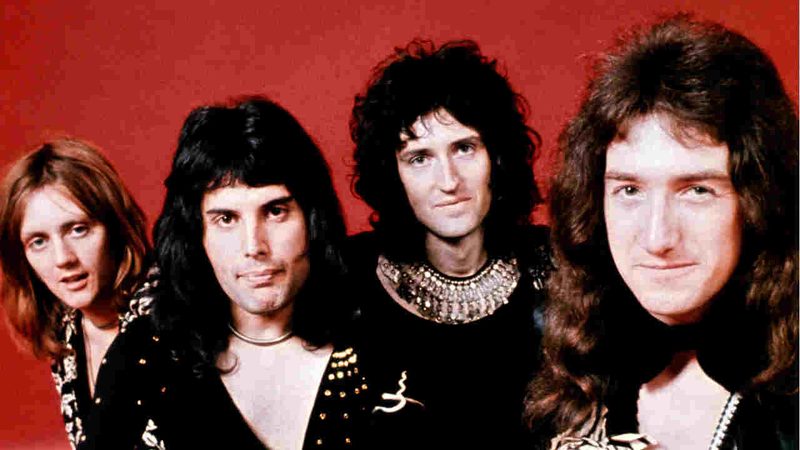
Queen had lost their frontman on November 24, 1991, just twenty-four hours after he confirmed to the world that he had AIDS. Five months later, Brian May, Roger Taylor, and John Deacon pulled rock’s biggest names onto one stage to say goodbye. The result felt more like a family reunion than a concert — messy, emotional, and impossible to repeat.
The Retro Almanac
A monthly roundup of "on this day" highlights from that month, decades back — plus first dibs on new retro merch drops. No spam, just the good stuff.
Why Wembley Erupted on April 20, 1992
The Freddie Mercury Tribute Concert sold out all 72,000 tickets in four hours, and no performers had been announced when they went on sale. Fans bought the tickets on the strength of Mercury’s name alone. That level of trust was rare in 1992, but so was the man being honored.
The show was billed as “A Concert for Life,” and the tagline did real work. Brian May used the opening minutes to tell the crowd that this was not a wake — it was a fight to stop the disease that had killed Mercury before it killed anyone else they loved. The stadium had hosted Live Aid seven years earlier, and the parallel was deliberate. Wembley had become the place rock came to mean something bigger than itself.
Ticket holders had no idea what they were about to see. The first half of the show featured guest acts paying their respects with Queen’s blessing. The second half was the surviving members of Queen playing their own songs with a rotating cast of singers. Nobody had ever attempted that lineup before, and nobody has done it since.
The Twenty-Four Hours That Made the Concert Necessary
On November 23, 1991, Mercury released a statement confirming the AIDS rumors that had circled him for two years. He had decided to go public, the statement read, because the time had come. His privacy was his own, but the disease was everyone’s, and he wanted the truth on the record. He died the next evening at his home in Kensington, surrounded by his partner Jim Hutton and a small circle of friends.
The world found out the next morning. By the end of the week, “Bohemian Rhapsody” had re-entered the UK charts at number one — the only single in British history to top the charts twice with two separate number-one runs. Queen’s surviving members watched the public reaction and made a decision quickly. There would be a concert. It would happen at Wembley. The money would go to AIDS research and patient care. The rest could be figured out later.
Five months between Mercury’s death and the show is almost no time at all to assemble a lineup like the one that took the stage that night. The fact that they pulled it off — and that nearly every artist they asked said yes within days — is the part of the story that gets glossed over. Rock’s biggest names cleared their calendars without a second thought.
Metallica, Extreme, and Guns N’ Roses Open the Lid
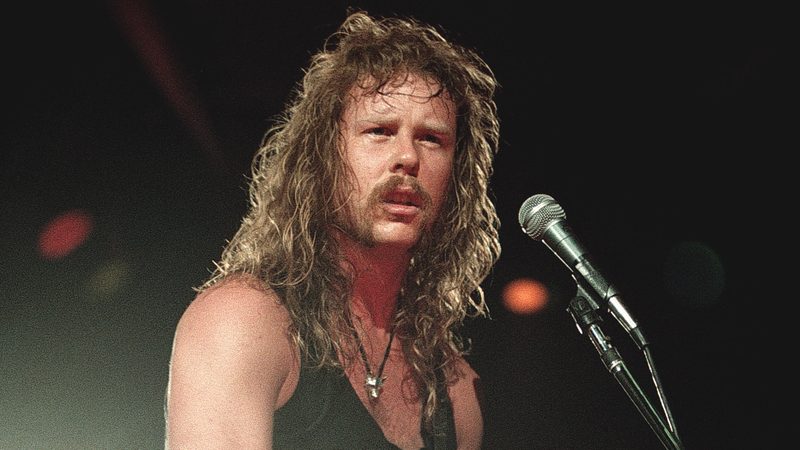
The first half of the concert was a parade. Metallica played a tight three-song set that included “Enter Sandman,” and James Hetfield’s vocals carried surprising emotion for a band that had just released the Black Album six months earlier. Extreme played a Queen medley that ran fifteen minutes — Nuno Bettencourt later said it was the most pressure he’d ever felt on a stage, because Brian May was watching from the wings.
Def Leppard came out next and reminded everyone why their late-80s run had been so dominant. Guitarist Steve Clark had died of his own addictions the year before, so the band had reasons of their own to be on that stage. Their cover of “Now I’m Here” was raw and a little ragged, which felt right. Def Leppard’s own story — how they almost broke up and then accidentally recorded the song that saved them — sits adjacent to the Queen story in interesting ways.
Guns N’ Roses arrived on stage in a haze. Axl Rose was at the absolute peak of his fame in 1992 and had famously feuded with half of rock music, but he was a Mercury obsessive who had once said Queen’s catalog was the only thing he wanted played at his own funeral. The band played “Paradise City” and “Knockin’ on Heaven’s Door,” and the latter became one of the night’s most chilling moments. The same crowd that had once written Guns N’ Roses off as cartoonish bad boys watched them turn into a working bar band paying respect to a giant.
Brian May Walks On Without Freddie
The second half opened with the surviving members of Queen plus Spike Edney on keys. There was a moment of held breath before they played — three musicians standing where there should have been four. Brian May walked to the mic and said only a few words about his friend. Then they played.
The guest vocalists rotated like a relay race. Joe Elliott of Def Leppard sang “Tie Your Mother Down.” Roger Daltrey of The Who took “I Want It All” and reminded a younger audience why he had been one of the great rock voices of the 60s. Robert Plant did “Innuendo” and “Crazy Little Thing Called Love” and made one of the few visible mistakes of the night, fluffing a lyric — he later said he had been overwhelmed.
The Queen songbook was so deep that nobody had to fight over scraps. Each guest got something that suited them. The arrangements stayed mostly faithful, with small adjustments for whoever was singing. This was not a karaoke night. This was a working band remembering how to play without its singer, and inviting the rest of rock to fill the hole.
The Elton John and Axl Rose Bohemian Rhapsody That Nobody Saw Coming
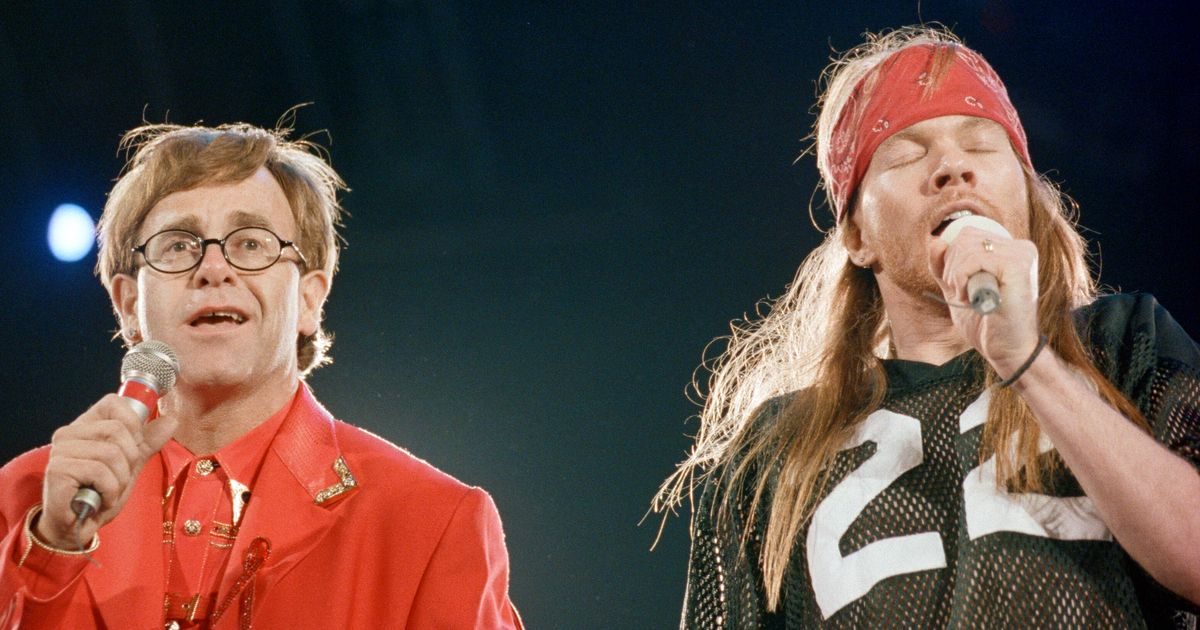
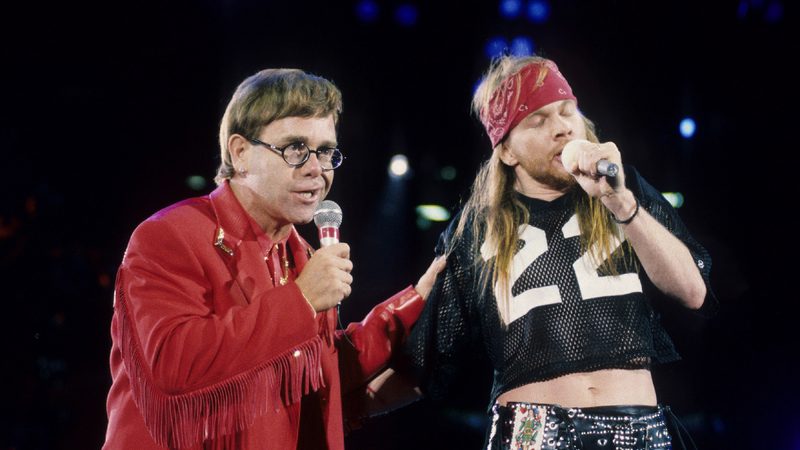
If the night had a single defining moment, it was this one. Elton John walked out for “Bohemian Rhapsody” and sang the opera-soft opening that Mercury used to lip-sync to a pre-recorded vocal in live shows. Halfway through, Axl Rose appeared from stage left in his white kilt and grabbed the harder second half. The crowd lost its mind.
The pairing made no sense on paper — a 45-year-old British piano legend and the most volatile frontman in American rock — and that was exactly why it worked. Both of them had real history with Mercury, and both of them showed up that night to honor it. Elton was so moved by the performance that he later said it was one of the few times he had cried on stage. Axl, famously combative with the press, did not give a single interview the entire night. He just sang and walked.
Elton’s relationship with AIDS activism predated and outlasted the concert. Two years earlier he had thrown himself into the Ryan White story — a teenage hemophiliac in Indiana who had been thrown out of school for being HIV positive — and his bond with the White family had reshaped his public role. The 1990 Farm Aid moment remains one of his most quietly important nights on stage.
David Bowie Drops to His Knees
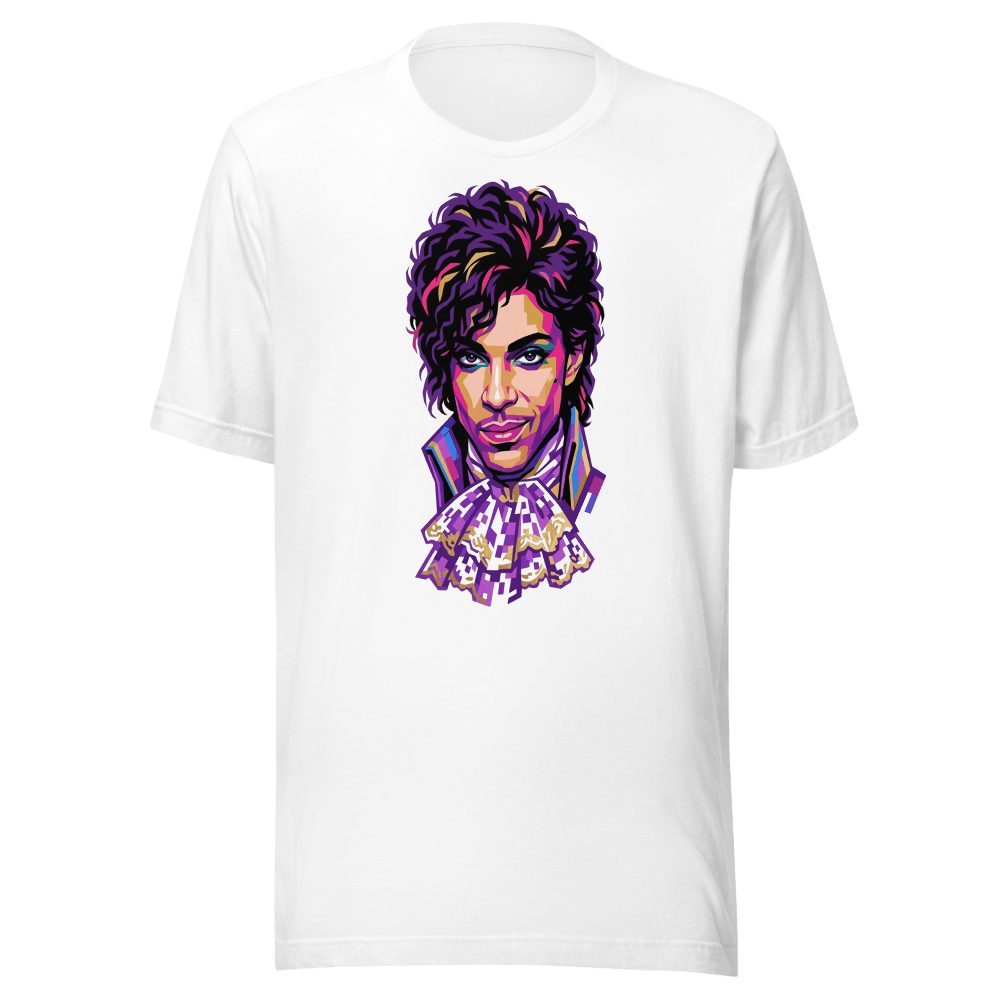
Bowie did three things that night. He played “Heroes” with the Queen band, sang “Under Pressure” with Annie Lennox, and then — without warning, without announcement, and against every rehearsal — got down on his knees at the front of the stage and recited the Lord’s Prayer.
It is one of the strangest moments in concert film history. A billion people watching, no warning to the band, no script provided to the cameras. Bowie later said he was thinking of a friend who had died of AIDS that month and could not get through the night without doing something for him. The crowd was confused for a beat, then quiet, then loud again. The footage holds up. It is not corny. It is not staged. It is one of the most public men in rock doing something private in front of the largest possible audience.
Annie Lennox came out in skeletal black-and-white face paint that looked like a Day of the Dead mask. Her version of “Under Pressure” with Bowie remains the most intense performance of that song ever filmed, and the visual — Bowie in a green suit, Lennox like a ghost — is permanently part of the song’s mythology now.
Liza Minnelli Closes a Night That Couldn’t Be Closed
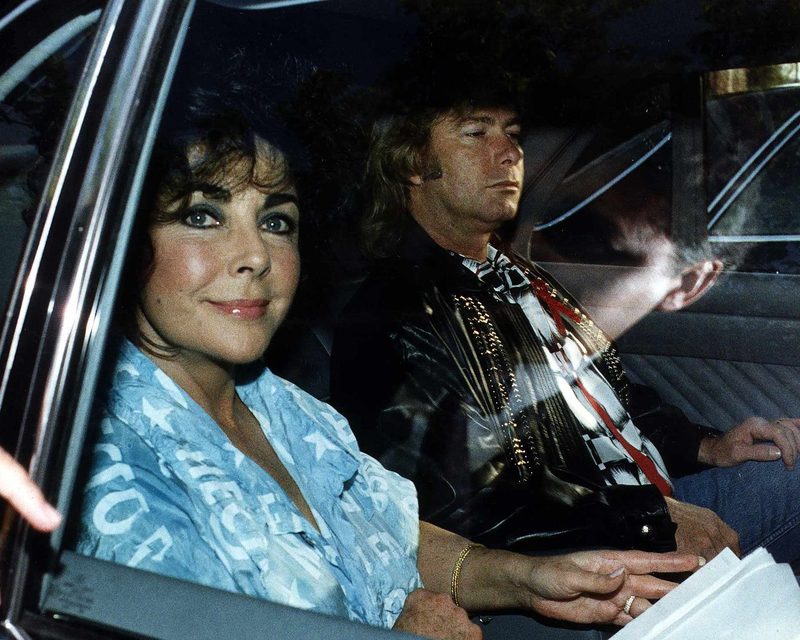
The final song was “We Are the Champions,” and the choice of singer surprised everyone. Liza Minnelli walked out in a sequined jacket and a fedora and led the entire stadium through it. The choice was Mercury’s own — he had told Brian May months before he died that if anything ever happened to him, he wanted Minnelli singing his last song. She had been a hero of his since he was a teenager, and the request was honored to the letter.
By the third chorus, every artist who had performed that night was back on stage. Guns N’ Roses, Metallica, Def Leppard, Roger Daltrey, Bowie, Lennox, Elton John, George Michael, Lisa Stansfield — the front of the stage was three rows deep with rock royalty trying to keep up with a Broadway veteran. The night ended with Brian May, Roger Taylor, and John Deacon standing at the front holding each other up.
What the Concert Actually Built: The Mercury Phoenix Trust
The numbers from that night are still being measured. The concert raised about £20 million for AIDS research and charities in its first wave, and the proceeds went on to seed the Mercury Phoenix Trust, which Brian May, Roger Taylor, and Mercury’s manager Jim Beach formally launched later that year. As of the early 2020s, the Trust has distributed more than $17 million to AIDS-related projects in over 60 countries.
That kind of follow-through is rare. Most benefit concerts are gestures — money raised, headlines collected, the cameras moved on. The Mercury Phoenix Trust has stayed in the work for over three decades. It funds clinics, education programs, and treatment access in places where the disease never stopped killing people just because the West stopped paying attention. Mercury would have approved of the unglamorous parts more than the glamorous ones, by every account from people who knew him.
Why It Still Hits Different Three Decades Later
The Freddie Mercury Tribute Concert is one of the few rock events that has gotten more powerful, not less, with time. The footage is on YouTube. The Bowie moment, the Elton-Axl duet, the Liza finale — all of it lives in the archive forever now. Kids who were not born in 1992 watch it on phones in 2026 and still feel something they cannot quite name.
Part of it is the lineup. You will never see Metallica, Guns N’ Roses, David Bowie, Elton John, George Michael, Annie Lennox, Roger Daltrey, and Liza Minnelli on the same stage on the same night again. That kind of cross-generational summit is a 20th-century artifact, and the technology that made it possible — global satellite broadcast, the lingering authority of MTV, the absence of social media to fragment everyone’s attention — does not exist anymore.
The other part is the man himself. Mercury was one of the great performers of any era, and the void he left was the right size for an event this big. There was no shortage of love to fill the gap. He just had a way of making the people around him better at their jobs, and the tribute concert was the last time the world saw what that pull looked like in motion. The era of the rock stadium farewell ended that night. Nothing has replaced it because nothing could.
If you want to chase the era harder, our archive includes the rise of 80s hair metal on the Sunset Strip and the collector’s guide to vintage band tees, both of which loop back to the same Wembley story in different ways.
Sources
- Mercury Phoenix Trust — Official AIDS charity founded by Brian May, Roger Taylor, and Jim Beach in 1992
- Queen Online — Official band site and concert archive
- BBC News: Freddie Mercury Tribute Concert anniversary coverage
- Rolling Stone — Contemporary 1992 concert coverage and retrospective features
- “A Concert for Life: The Freddie Mercury Tribute” — 1992 official PolyGram concert film
Browse retro and vintage-inspired apparel at the RetroRadical shop →
The Retro Almanac
A monthly roundup of "on this day" highlights from that month, decades back — plus first dibs on new retro merch drops. No spam, just the good stuff.