On This Day: July 17, 1994 — Baggio’s Miss Wins Brazil the Cup
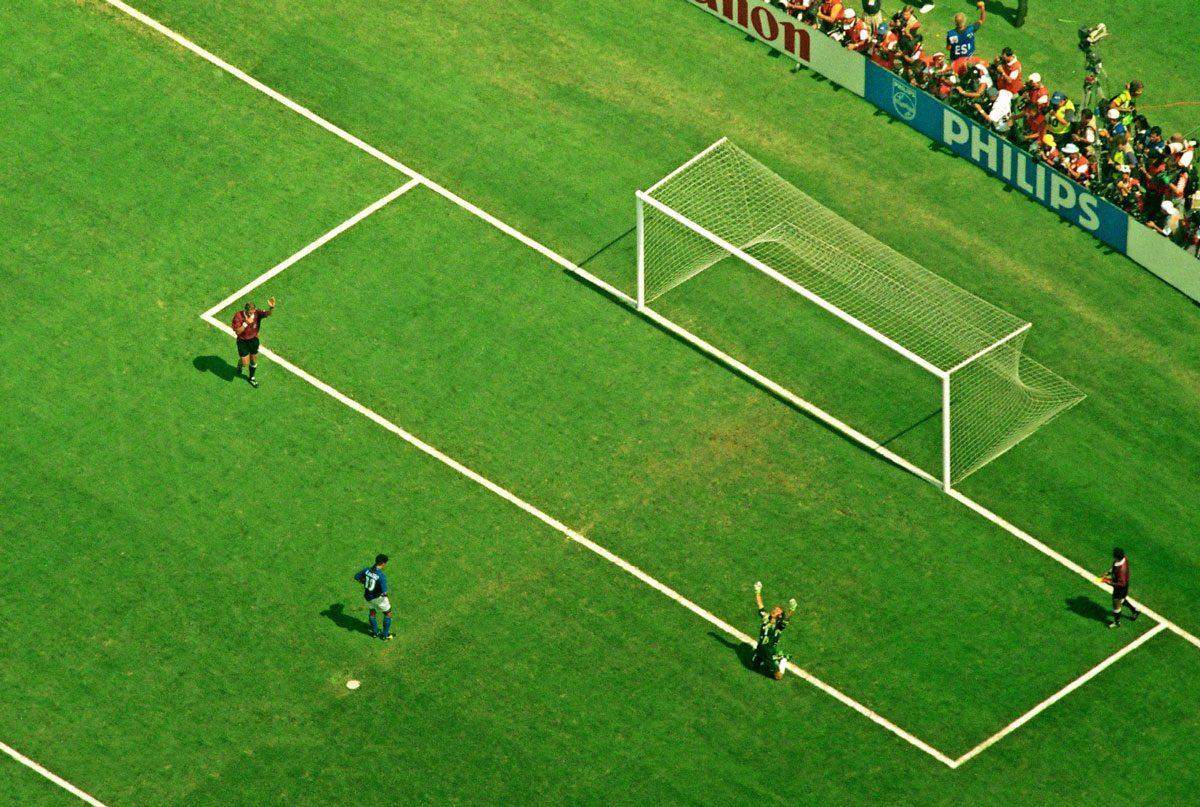
One kick, sailed high over the bar on a 100-degree Sunday afternoon in Pasadena, and Roberto Baggio—the best player Italy had produced in a generation—froze with his hands on his hips and his ponytail hanging, unable to look. That single miss on July 17, 1994 ended the first World Cup final in history to go to penalties, gave Brazil its fourth star, and burned itself into the memory of anyone who was watching. If you were a kid or a twentysomething glued to a TV that summer, you remember exactly where you were.
Soccer Came to America and Filled the Rose Bowl
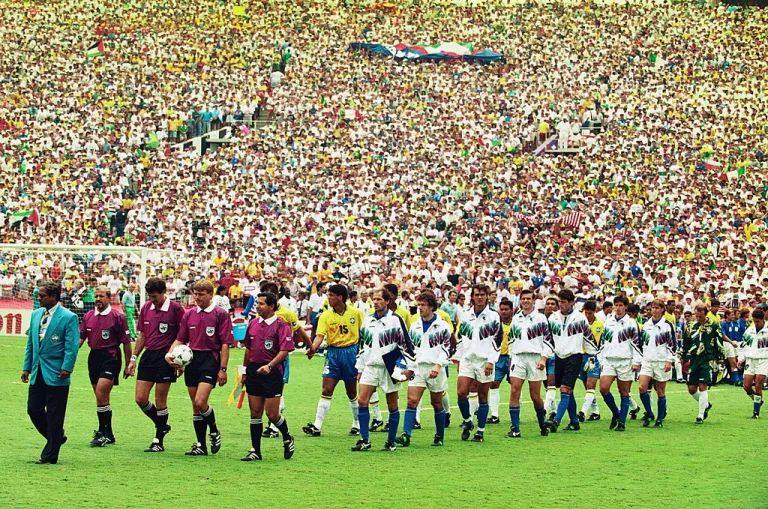
USA ’94 was the tournament nobody outside the country believed in and everybody inside it fell for. FIFA had gambled on a nation with no major professional league, and the gamble paid off with the highest average attendance in World Cup history—a record that still stands. The final drew 94,194 fans into the Rose Bowl, the same stadium that had hosted five Super Bowls and the 1984 Olympic gold medal match.
The kickoff time tells you everything about how the tournament was run for television back in Europe: 12:30 in the afternoon, under a sun pushing temperatures toward 100°F on the field. It remains the most recent World Cup final played in broad daylight. Players later described the pitch as an oven. Nobody was going to run box-to-box for 120 minutes in that.
The Retro Almanac
A monthly roundup of "on this day" highlights from that month, decades back — plus first dibs on new retro merch drops. No spam, just the good stuff.
Two Tired Giants, Zero Goals
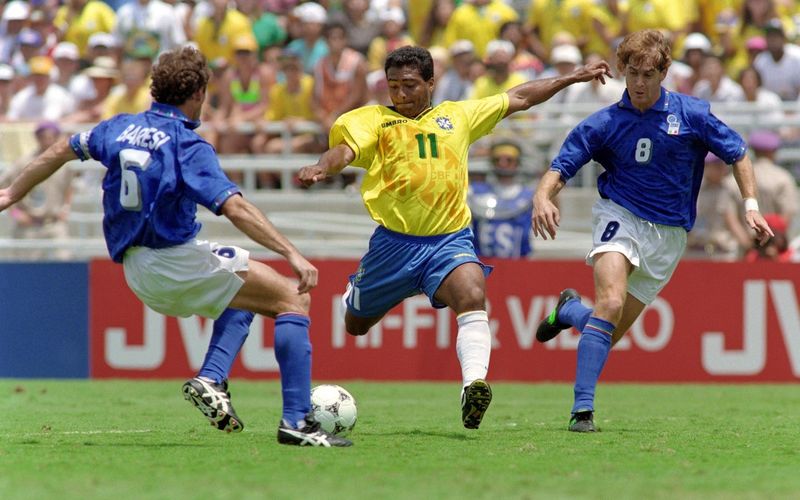
Let’s be honest about the game itself: it was not a classic. Brazil arrived under Carlos Alberto Parreira playing a pragmatic, disciplined style that horrified purists who grew up on the samba football of 1970 and 1982. Italy, coached by Arrigo Sacchi, were built on the granite defending of Franco Baresi and Paolo Maldini and the improvised genius of Baggio up top. Add the heat, the tension of a final, and two coaches terrified of making the first mistake, and you get the cautious 0–0 that played out over 90 minutes and then extra time.
Baresi was the story of Italy’s defense. He’d had knee surgery just 25 days before the tournament ended and somehow marshaled the back line through the final on a leg that had no business being out there. Brazil pushed through Romário, the tournament’s brightest star, and Bebeto, but the Italian wall held. When the referee Sándor Puhl blew for the end of extra time, the World Cup arrived somewhere it had never been: the penalty spot.
The 1994 World Cup Final Shootout: Kick by Kick
No World Cup final had ever been settled this way. That fact alone ratcheted the pressure to something almost cruel. Here is how the drama unfolded from twelve yards.
Baresi went first for Italy—and blazed it over the bar. Advantage Brazil. But Márcio Santos stepped up and Gianluca Pagliuca guessed right, saving low to level the tension right back up. Then the makes started: Demetrio Albertini scored for Italy, Romário answered for Brazil. Alberico Evani scored, Branco answered. Four kicks in, all square.
The swing came with Daniele Massaro, who had scored twice in the Champions League final for AC Milan two months earlier. His penalty was too central and too soft, and Cláudio Taffarel dived left to push it away. That gave Dunga the chance to put Brazil 3–2 ahead, and the captain calmly buried it. Suddenly the entire tournament came down to one man.
The Man Who Died Standing
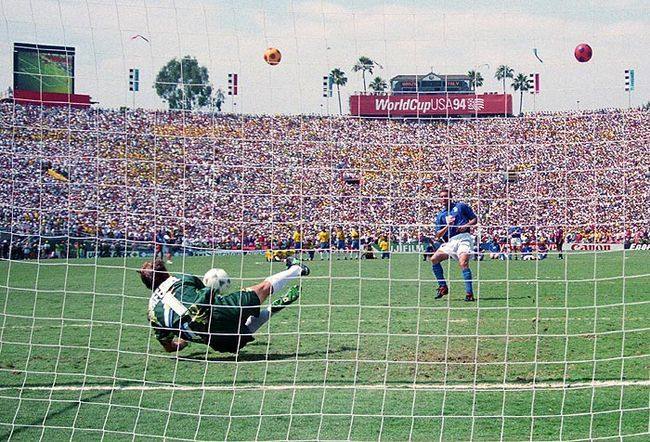
Roberto Baggio had carried Italy to this final almost single-handedly. He scored the winner against Nigeria in the round of 16, both goals against Spain in the quarters, and both against Bulgaria in the semis—the last of them while tearing a hamstring. He was hurt, exhausted, and, by his own admission afterward, running on fumes. But he was still Italy’s No. 10, and if he scored, the shootout continued.
He didn’t. Baggio struck it cleanly but sent it climbing, over Taffarel and over the bar, into the Pasadena sky. Brazil erupted. Baggio stood motionless at the spot, head bowed, and earned the haunting nickname that follows him to this day: “the man who died standing.” It is one of the most reproduced images in the sport’s history.
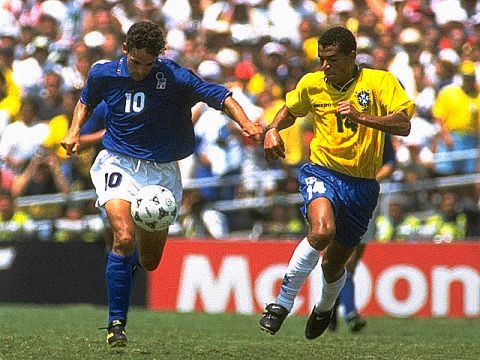
Here’s the part the highlight reels always skip: Baggio didn’t lose the World Cup by himself. Baresi had already missed. Massaro had already missed. Italy were behind before Baggio even placed the ball. He simply happened to be the man standing there when the math ran out—which is exactly why the moment cuts so deep. The best player on the field became the face of the defeat.
Brazil’s 24-Year Wait Ends—For Senna
For Brazil, the win closed a wound that had festered since 1970. Twenty-four years without a title is an eternity for a country that treats football as a national identity. This became the first team ever to win four World Cups, and they dedicated the victory to Ayrton Senna, the Formula One legend and national hero who had died in a crash at Imola that May. Taffarel, the goalkeeper who saved Massaro’s kick, spoke about winning it for Senna in the moments after the final whistle.
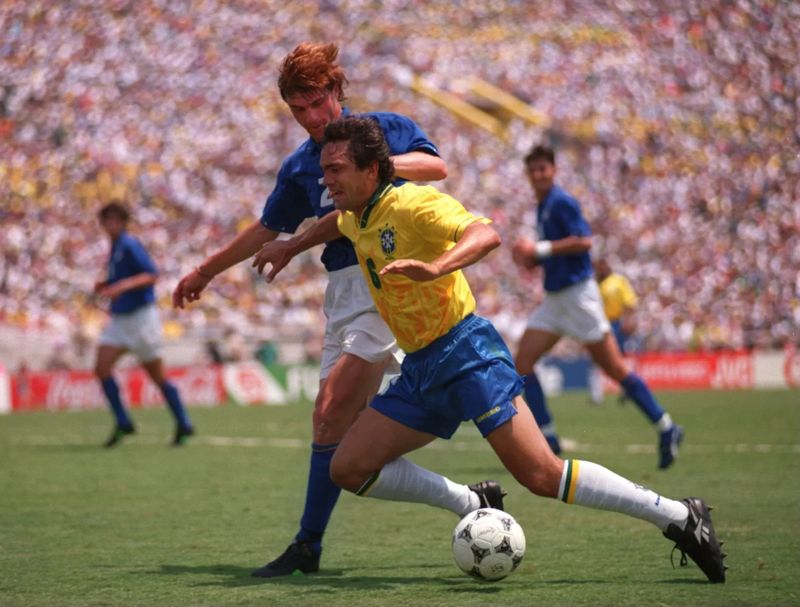
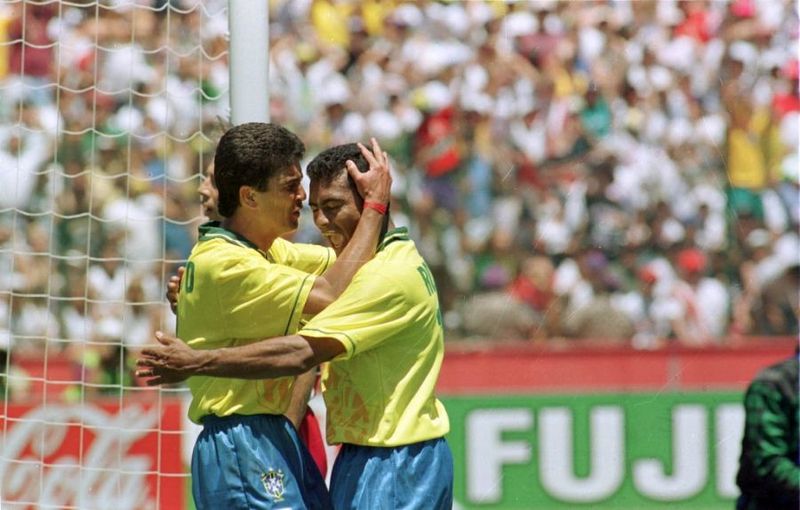
Romário walked away with the Golden Ball as the tournament’s best player, and it was deserved. He’d scored five goals across the tournament and formed a lethal, if famously frosty, partnership with Bebeto—the two reportedly weren’t on speaking terms yet still combined for the most feared strike duo of the summer. Baggio, for what it’s worth, took home the Silver Ball. Small consolation for the man in the photograph.
The Baby, the Diva, and the Dark Side of ’94
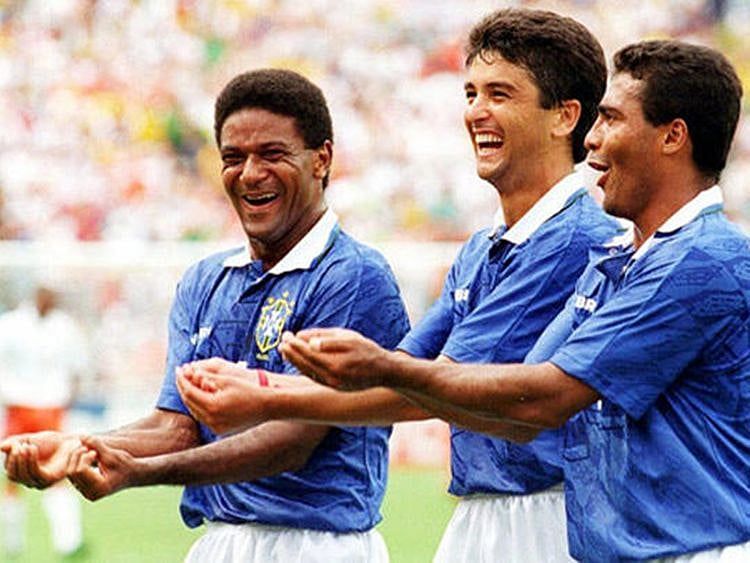
USA ’94 gave us more than the final. It gave us Bebeto’s “rock the baby” celebration against the Netherlands in the quarters, a spontaneous tribute to his newborn son that Romário and Mazinho instantly joined—a piece of goal-celebration choreography that players still copy 30 years later.
It also gave us Diana Ross missing an open goal from six yards during the opening ceremony, the goalposts theatrically splitting apart anyway—a moment that felt like foreshadowing once Baggio did the real thing a month later. And it carried a genuine tragedy: Colombian defender Andrés Escobar scored an own goal against the United States, was eliminated, and was murdered days after returning home. The summer of ’94 held all of it at once—joy, farce, and heartbreak.
The Tournament That Built American Soccer
The Rose Bowl final wasn’t just an ending—it was a beginning nobody in Pasadena was thinking about that afternoon. Part of FIFA’s deal to award the United States the 1994 World Cup was a promise: the country would finally launch a top-flight professional league. That promise became Major League Soccer, which kicked off in 1996 with ten teams and has since grown to nearly thirty. Every packed MLS stadium and every American kid who grew up idolizing a homegrown star traces a line back to that summer.
The numbers backed the bet. USA ’94 averaged just under 69,000 fans per match, a per-game attendance record that no World Cup has topped since, not even tournaments with more games. American families who’d never watched 90 minutes of soccer in their lives suddenly had Romário jerseys in the closet and a reason to care about a 0–0 draw. For a country that had spent decades treating the sport as a foreign curiosity, the shift was seismic—and it started with a month of sold-out stadiums and one unforgettable final.
Why This One Still Sticks
Plenty of finals have been better games. Almost none have been better theater. The 1994 final handed the sport its first penalty-shootout champion, its most famous miss, and an image—Baggio, alone, head down—that outlived the scoreline entirely. Ask most people who watched it what the final score was and they’ll hesitate. Ask them about Baggio’s penalty and they’ll describe it frame by frame.
That’s the strange gift of that afternoon in Pasadena. A goalless final became unforgettable not for what went in, but for what went over. If you want the rest of that World Cup summer, our look back at West Germany’s 1990 World Cup triumph sets the stage for Italy’s heartbreak, and the story of Brandi Chastain’s iconic 1999 shootout goal shows how the penalty spot kept writing history five years later. For more defining moments of the era, browse our Live Aid retrospective too.
Sources
- 1994 FIFA World Cup Final — Wikipedia — match facts, shootout order, attendance, and officials.
- Baggio’s heartbreak at the Rose Bowl — FIFA — Baggio’s decisive miss and the “man who died standing” legacy.
- Taffarel interview: winning for Senna — FIFA — Brazil’s dedication to Ayrton Senna.
- 1994 FIFA World Cup — Britannica — tournament context, Romário, and the Andrés Escobar tragedy.
The Retro Almanac
A monthly roundup of "on this day" highlights from that month, decades back — plus first dibs on new retro merch drops. No spam, just the good stuff.