Metallica’s First Concert Ever — March 14, 1982 at Radio City, Anaheim
On March 14, 1982, four teenagers walked into a strip-mall club called Radio City in Anaheim, California, charged $15 a head at the door, and played to roughly 200 friends, high school buddies, and curious heshers who had nothing better to do that Sunday night. Their lead guitarist snapped a string on the first song. The drummer admitted later he could barely hold time. Nobody had any idea — including the band — that the rest of that night would become the single most consequential 35 minutes in the history of American heavy metal.
That band was Metallica. This is the story of their first concert ever, and why the smallest gig of their career may have mattered more than any of the stadium shows that followed.
The Lineup Nobody Remembers
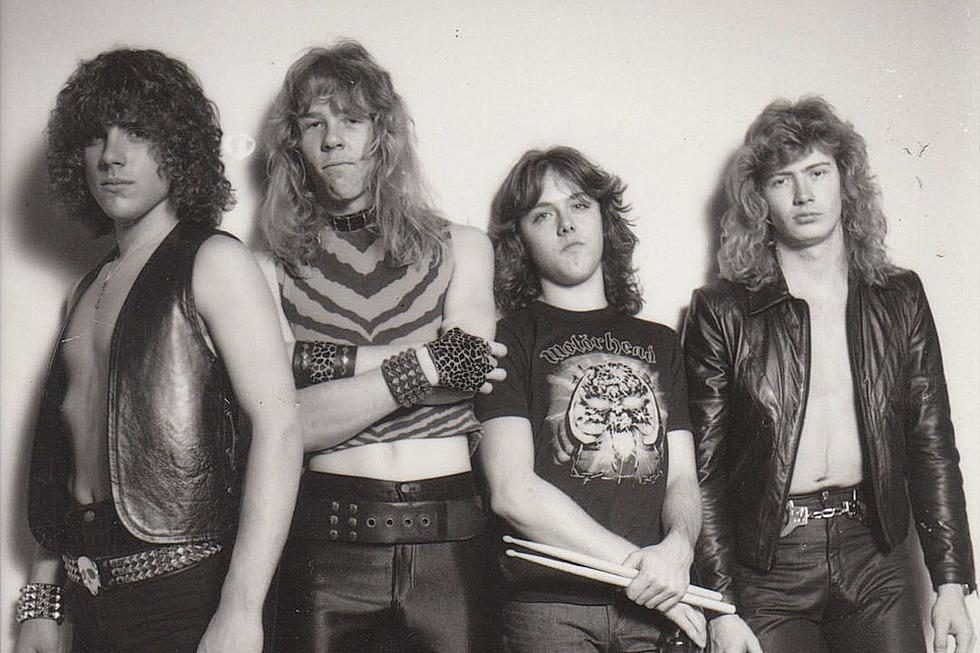
When most fans picture Metallica, they see Hetfield, Ulrich, Hammett, and Trujillo. Maybe Cliff Burton, if they’ve done the reading. Maybe Jason Newsted, if they’re old enough. But the four guys who took that stage in Anaheim were a different crew entirely, and two of them never made it onto a Metallica record.
The Retro Almanac
A monthly roundup of "on this day" highlights from that month, decades back — plus first dibs on new retro merch drops. No spam, just the good stuff.
James Hetfield handled vocals — just vocals, no guitar. Lars Ulrich sat behind a drum kit he’d just started learning. Dave Mustaine, the future founder of Megadeth, played lead. And Ron McGovney, Hetfield’s high school best friend and the guy whose house the band rehearsed in, played bass. There was no Kirk Hammett yet. There was no Cliff Burton yet. There were no leather jackets and no monogrammed drum risers. They were four broke kids who loved Diamond Head, Motörhead, and the Tygers of Pan Tang, and they wanted to play that stuff louder and faster than the British bands could.
What stings in retrospect is how casually that night gets misremembered. The Anaheim show was billed under another band’s name. The crowd was small enough that Metallica friends-and-family essentially was the crowd. And the version of Metallica that took the stage — pre-thrash, pre-Kill ‘Em All, pre-everything — was already starting to come apart at the seams. McGovney would be gone within nine months. Mustaine would be out before the first record was tracked. The band that wrote heavy metal history existed in that exact configuration for less than a year.
Anaheim’s Forgotten Heavy Metal Strip Mall
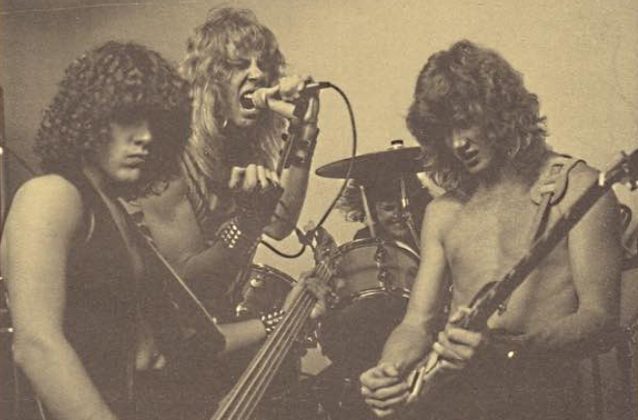
Radio City wasn’t a venue — it was a club in a strip mall on the corner of Lincoln Avenue and Brookhurst Street in Anaheim, sharing the building with two other rooms called The Woodstock and Cartoons & Capers. The complex had originally opened in 1978 as a disco called Casablanca. A fire gutted it in 1980, and the owner rebuilt it as a heavy metal pit under new management by a promoter named Jerry Roach, who had a soft spot for unsigned bands the radio wouldn’t touch.
That meant Radio City was, for a brief two-year window between 1981 and 1985, the most important small room for unsigned metal acts in Orange County. Black ‘N Blue played there. Ratt played there. So did Mötley Crüe before the labels noticed. The room was dark, the ceiling was low, the PA was barely louder than a decent home stereo, and the carpet smelled — by all accounts — like spilled Budweiser and other things that should not be discussed in print. According to the Rock and Roll Roadmap project, the club was demolished by arson on November 3, 1985, and the city pulled its license before it could reopen. Today it’s a Chase Bank parking lot.
This is the kind of place where the Sunset Strip glam scene wouldn’t have been caught dead — they were busy in West Hollywood, perfecting the hairspray-and-spandex aesthetic that defined the hair metal scene on the Sunset Strip just an hour up the freeway. Metallica played Anaheim because Anaheim would have them.
Two Originals and a Pile of NWOBHM Covers
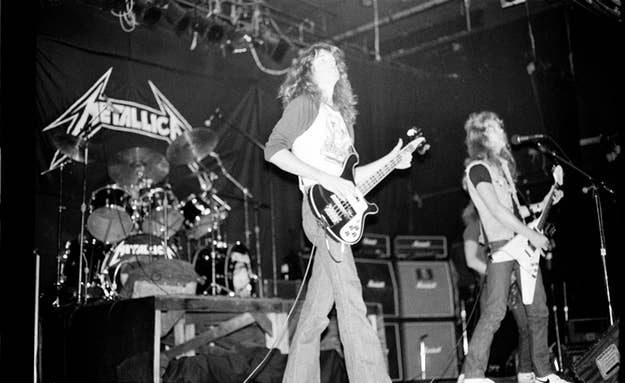
The setlist that night was preserved in Lars Ulrich’s diary and shared decades later by the band. According to Metallica’s own tour archive, they opened with “Hit the Lights” — one of only two original songs in the set. After that came a wall of New Wave of British Heavy Metal covers, including tracks by Diamond Head, Sweet Savage, Killing Joke, and Blitzkrieg. The second original came in the encore: “Jump in the Fire.”
That’s worth sitting with. The band that would write “Master of Puppets,” “One,” and “Enter Sandman” played a set in 1982 that was 90% other people’s material. They were a cover band who happened to have written two ferocious originals, and one of those originals — “Hit the Lights” — would land as track one on Kill ‘Em All sixteen months later. The DNA was already there. It just had to be sequenced.
Hetfield was nineteen. Ulrich was eighteen. Mustaine was twenty. McGovney was twenty. None of them had any business being on a stage yet, and at least three of them would say so in interviews decades later.
Hetfield Couldn’t Sing and Play Guitar Yet
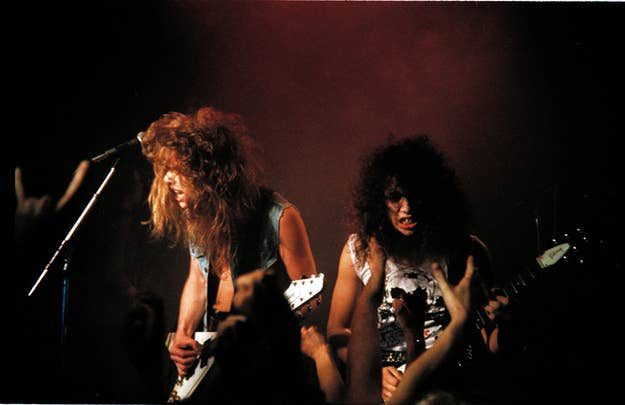
Here’s the detail that gets buried in every retelling: Hetfield wasn’t playing rhythm guitar that night. He couldn’t — or, more accurately, he didn’t trust himself to sing and play at the same time yet. So Mustaine carried both lead and rhythm duties, McGovney filled the bottom on a borrowed bass, and Hetfield stood at the mic with his hands free and his eyes fixed somewhere on the floor.
Lars Ulrich was, by his own admission, not yet a competent drummer. Speaking to Loudwire on the 40th anniversary of the show, he described his playing in early 1982 as “basically zero,” and copped to the fact that the older guys in the room were probably laughing at him. The cymbal kept falling over during the audition. The kit was held together with duct tape and optimism.
And yet — within five years, this group of half-formed kids would put out Master of Puppets, an album that Rolling Stone would later rank in the top 200 records ever made. The gap between what they were and what they would become was almost insulting. You don’t go from a strip mall in Anaheim to Donington Park in five years. Except they did.
What Happened to the Other Two
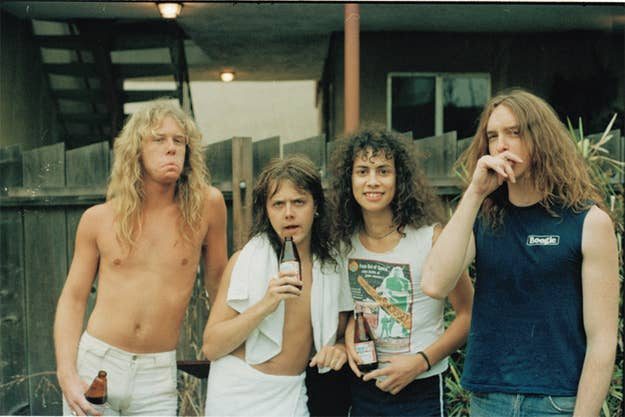
Dave Mustaine got fired in April 1983 at the Music Building in Queens, New York, after a drunken on-tour incident the band described as the final straw. He was woken up, handed a Greyhound bus ticket back to Los Angeles, and told that Kirk Hammett of Exodus had already accepted the job. Mustaine wrote most of the riffs on Kill ‘Em All. He still gets songwriting credit. He has never fully made peace with how it ended, and he eventually channeled all of that into Megadeth, a band that sold more than 50 million records on the strength of pure, focused, never-quite-resolved vengeance.
Ron McGovney left voluntarily in December 1982 after Hetfield knocked a beer onto his bass amp and the resulting short circuit burned him on stage. Or he left because the band wanted to recruit Cliff Burton and didn’t have the courage to fire him outright. The story depends on who’s telling it. McGovney went back to a normal life, took some of the best early Metallica photos that exist — including the iconic shot that appeared on the back of the No Life ‘Til Leather demo — and quietly accepted that he had played bass on the night a giant was born.
Both men were there at Radio City. Both men were essential. Neither man is on a single Metallica studio album.

The Tape That Ended Up in Every Bedroom
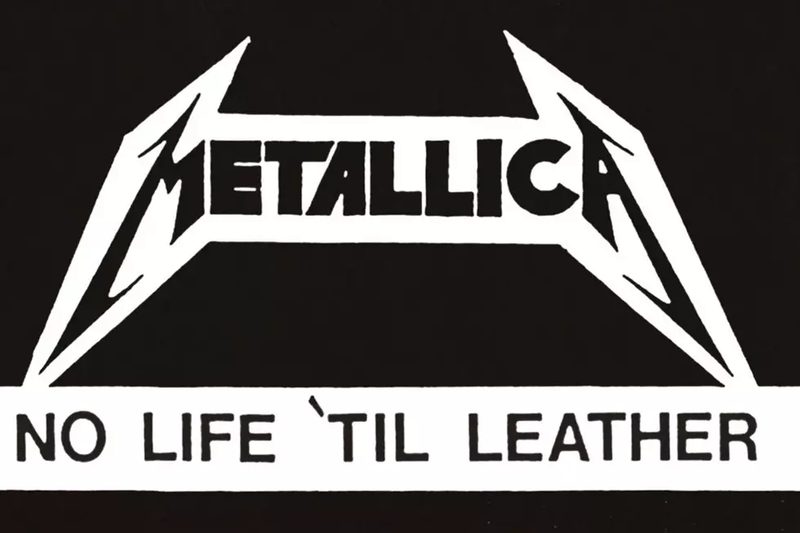
The Radio City show didn’t make Metallica famous. Almost nothing about it was preserved — no audio, no video, no professional photographs. What made Metallica famous was what happened four months later, when the band drove up to Tustin and recorded a seven-song demo cassette at Château East Recording Studio on July 6, 1982. They called it No Life ‘Til Leather, after a Motörhead lyric, and they handed copies to anyone who would take one.
That tape became one of the most heavily dubbed cassettes in metal history. Kids in Germany copied it for kids in São Paulo. Kids in São Paulo copied it for kids in Tokyo. The whole tape-trading underground — the same shadow distribution network that powered the cassette-driven listening culture the Walkman built — turned No Life ‘Til Leather into a global rumor before Metallica had a record deal. By the time Megaforce Records signed them and they recorded Kill ‘Em All, there was already a worldwide audience waiting to buy it.
Lars Ulrich, in particular, understood the economics of the tape underground better than almost anyone in the band scene. He’d grown up in Denmark trading NWOBHM bootlegs by mail. He treated No Life ‘Til Leather like an early viral product launch. The fact that the world’s biggest metal band would later become the most aggressive defender of copyright law in music history is one of the deepest ironies of the rock era — but in 1982, free distribution was the whole strategy.
From 200 Friends to 1.6 Million in Moscow
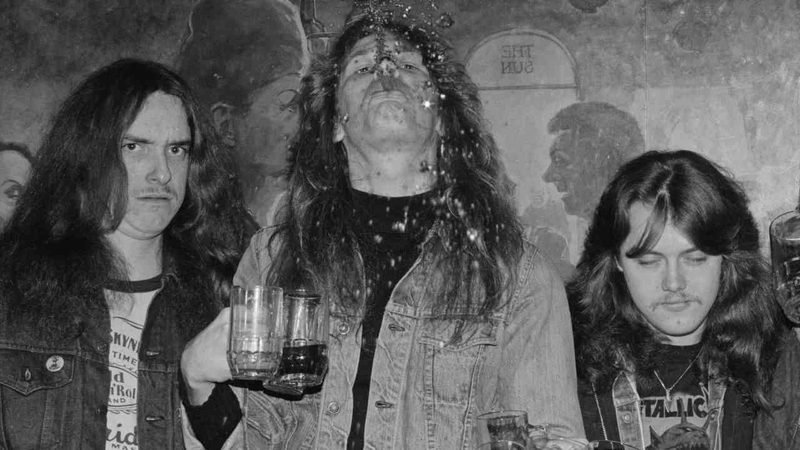
Run the math. March 14, 1982: an Anaheim strip mall, 200 paying customers, $3,000 in box office split among several bands. September 28, 1991: Tushino Airfield, Moscow, an estimated 1.6 million people in the audience for the Monsters of Rock free concert. That’s a multiplier of eight thousand, in less than ten years.
The math gets worse — or better, depending on which side of the stage you’re standing on. Metallica has now sold more than 125 million records worldwide. The Black Album alone moved 35 million copies. Their 1992 tour with Guns N’ Roses outgrossed Madonna. Their 2017 WorldWired tour pulled $390 million. They are, by every meaningful metric, the most commercially successful metal band ever, and probably the most commercially successful heavy band of any era.
None of that was inevitable. Most bands that play their first show at a strip mall in Anaheim play their last show at a strip mall in Anaheim. The reason Metallica didn’t is — and this is the part the official biographies always undersell — that Ulrich and Hetfield were obsessed in a way that’s hard to fake. They were running the band like a job before they were old enough to drink legally. They were already writing original material. They were already arguing about set lengths and tape covers. They had a plan, and the plan extended a decade out.
The Radio City show wasn’t a triumph. It was reps. It was day one of about three thousand days of relentless reps, every one of them getting them closer to Master of Puppets, then to the Black Album, then to Moscow, then to the place they hold now — the band that eventually survived the grunge wave that buried hair metal and just kept selling out arenas for another thirty years.
Why March 14, 1982 Still Matters
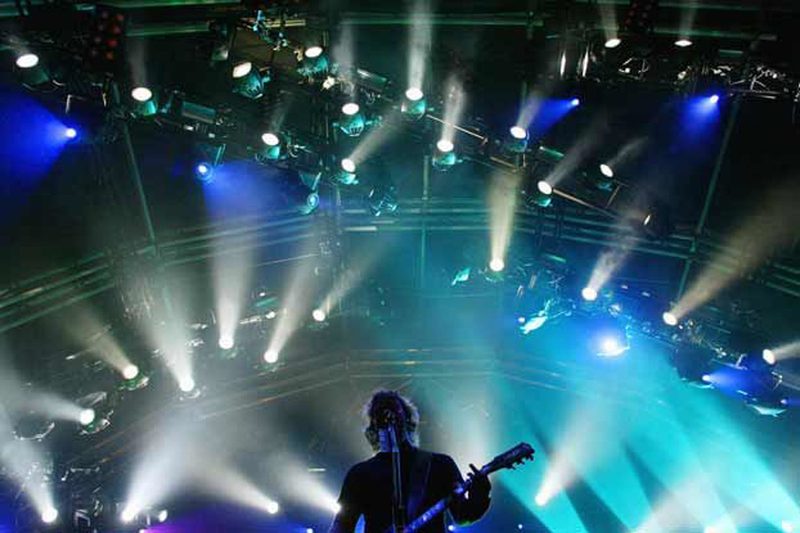
Here’s the truth a lot of music writers won’t tell you: most legendary bands sounded terrible on night one. The Beatles got booed off stages in Hamburg. The Rolling Stones were laughed at for being too American-sounding in their first London shows. The Sex Pistols played to twenty people at the 100 Club, and half of them left. The myth of the immaculate debut — the band that walked on stage fully formed — is a story we tell ourselves after the fact, once they’ve gotten huge.
Metallica was no different. The Radio City show was a mess. The lead guitarist broke a string. The drummer couldn’t really keep time. The lead singer wouldn’t pick up a guitar. The bassist was about to quit. The setlist was 90% covers. And somehow, in spite of all of it, the four kids who walked off that stage at the end of the night went home and kept practicing.
That’s the lesson worth holding onto, even forty-four years later. You don’t need a perfect first show. You need a first show. And then you need another one, and another one, and another one, and you need to be the kind of obsessive who treats every gig as a step forward even when the room is half empty and the PA buzzes.
The kids who watched Metallica play Radio City got the rarest gift in rock music: a story they’ll tell forever, and a t-shirt nobody else can ever own. Most of them probably had no idea. Some of them still tell that story today, in the kind of voice you use for things that mattered more than you knew at the time. If you owned a copy of a vintage band tee from that exact era, you’d be sitting on a small fortune now — and you’d have the receipts to prove you saw history before history noticed.

Sources
- Metallica.com — Official Tour Archive: 1982-03-14, Anaheim, California — Band’s own setlist and venue record.
- Guitar World — March 14, 1982: Metallica Play Their First Concert — Historical recap of the Radio City show.
- Loudwire — Metallica Share Photos of Promo Flyer + Setlist From First-Ever Show 40 Years Ago — Lars Ulrich’s diary entries and original flyer.
- Rock and Roll Roadmap — Radio City, Anaheim — Venue history, ownership, and the 1985 arson.
- Ultimate Classic Rock — How a Metallica Demo Became Their Career-Making Moment — Background on the No Life ‘Til Leather tape and tape-trading underground.
- Wikipedia — Metallica — Band history, sales figures, and lineup changes.
Browse retro and vintage-inspired apparel at the RetroRadical shop →
The Retro Almanac
A monthly roundup of "on this day" highlights from that month, decades back — plus first dibs on new retro merch drops. No spam, just the good stuff.